

TQI ULLAS Summit Day 3: Powerful Skills Inspire School Students
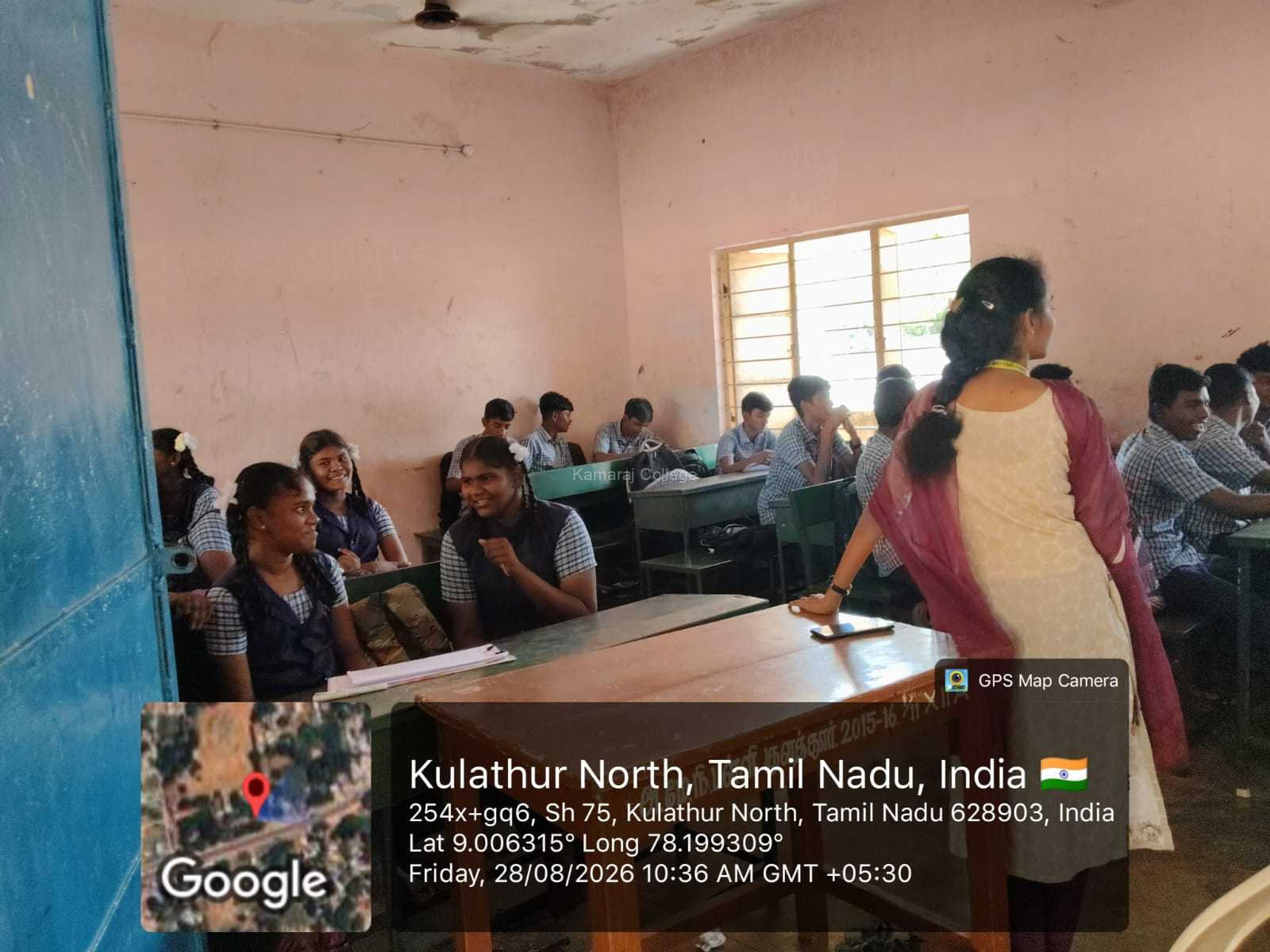
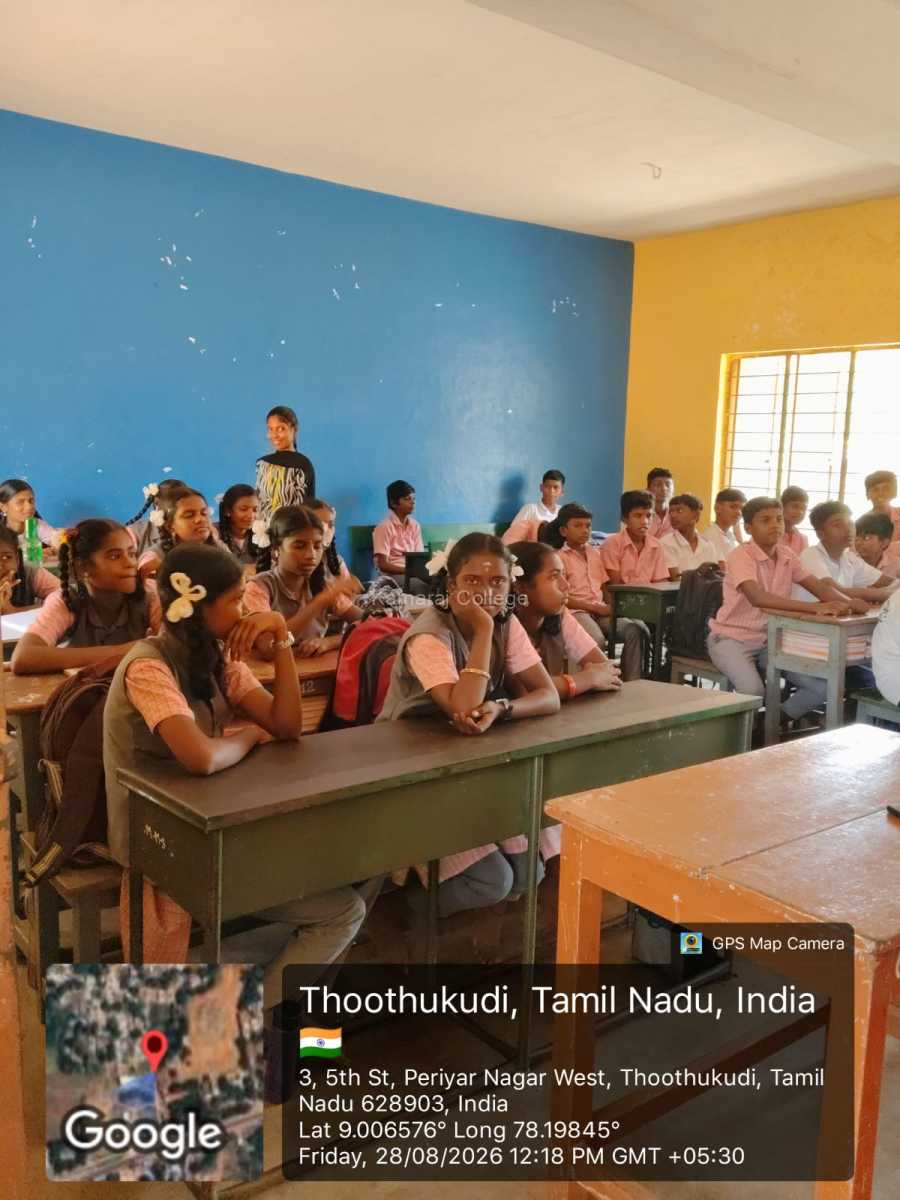
Report on TQI ULLAS Summit Day 3
TQI ULLAS Summit Day 3 was successfully conducted by the students of the PG and Research Department of English (SF), Kamaraj College (Autonomous), Thoothukudi, on 28 August 2026 for the students of Government Higher Secondary Schools at Tharuvaikulam and Kulathur.
The third day of the programme focused on five important areas: Memory Techniques, Mind Mapping, Respond and React, Learning to Organise and Plan, and Unleashing Imagination.
Through interactive activities, the student volunteers helped school students develop their memory, creativity, communication, planning, organizing, quick-thinking and problem-solving skills.
The session was designed to make learning enjoyable and practical. Moreover, active participation throughout the programme enabled the school students to understand and practise the concepts rather than simply listen to explanations.
Objectives of TQI ULLAS Summit Day 3
The TQI ULLAS Summit Day 3 session aimed to strengthen essential learning and life skills among school students through activity-based learning.
The major objectives included:
- Improve memory and concentration
- Introduce simple and effective memory techniques
- Develop creative thinking through mind mapping
- Improve communication and quick-thinking abilities
- Develop planning and organizing skills
- Encourage effective time management
- Strengthen problem-solving abilities
- Encourage imagination and creative expression
- Promote teamwork and active participation
Thus, the programme combined academic learning skills with practical abilities that students can apply in their everyday lives.
An Engaging Start with Warm-Up Activities
The session began with an interesting warm-up activity that encouraged the school students to participate actively.
The activity created an energetic and comfortable learning environment. It also helped students interact freely with the volunteers and prepared them for the activities that followed.
Furthermore, beginning the session through active participation helped capture the students’ attention and encouraged them to approach the programme with enthusiasm.
Learning Effective Memory Techniques
One of the major components of TQI ULLAS Summit Day 3 was the introduction of Memory Techniques.
The volunteers explained simple strategies that students could use to remember information more effectively.
Instead of presenting memory techniques only through explanations, the volunteers introduced them through engaging activities. Students were asked to observe, remember and recall information using easy memory strategies.
This practical approach helped students understand that memory can be strengthened through systematic techniques and regular practice.
Improving Concentration and Retention
The memory-based activities also focused on improving students’ concentration and retention.
Students learned that effective remembering begins with careful observation and attention. Therefore, they were encouraged to focus closely on the information presented during the activities.
The exercises helped students practise retaining information and recalling it when required.
Moreover, these techniques can support students in their academic learning by helping them remember concepts, facts and other important information more effectively.
Introduction to Mind Mapping
The volunteers next introduced students to the concept of Mind Mapping.
They explained how information and ideas can be visually organized by identifying a central concept and connecting related ideas around it.
Students participated in activities where they identified related ideas and presented them through simple mind maps.
As a result, they learned a practical method for organizing information in a clear and visually understandable format.
Developing Creative and Organizing Skills
Mind mapping encouraged students to combine creativity with logical organization.
Instead of viewing information as isolated points, students learned to identify connections between different ideas.
This approach helped them understand how concepts relate to one another. Furthermore, the visual structure made complex information easier to understand and remember.
The activity therefore strengthened both creative thinking and organizing skills.
Respond and React Activities
The Respond and React activities added an energetic and interactive dimension to the session.
These activities encouraged students to think quickly and respond appropriately to different situations.
Students actively participated and learned that an effective response requires more than speed. It also requires careful listening, understanding the situation and deciding how to respond appropriately.
Consequently, the activities strengthened students’ listening, comprehension, communication and quick-thinking abilities.
Building Confidence through Quick Thinking
The Respond and React exercises also encouraged students to communicate with greater confidence.
Students were given opportunities to respond without excessive hesitation. At the same time, they learned the importance of understanding a situation before reacting.
The activities therefore encouraged a balance between quick thinking and thoughtful response.
Moreover, participation in such exercises can help students become more confident when expressing themselves in classrooms and everyday situations.
Learning to Organise and Plan
Another important component of TQI ULLAS Summit Day 3 was Learning to Organise and Plan.
The volunteers explained why proper planning is essential for completing tasks effectively.
Students were introduced to simple concepts such as:
- Planning tasks in advance
- Setting clear priorities
- Managing available time
- Organizing activities systematically
- Completing tasks within the required time
- Working towards specific goals
Through simple activities, students understood how planning and organization can make everyday tasks easier and more effective.
Understanding the Importance of Time Management
The planning activities also introduced students to the importance of time management.
Students learned that completing a task successfully requires them to understand what needs to be done, determine the order of activities and use available time effectively.
Furthermore, setting priorities can help students focus on important tasks instead of becoming overwhelmed by several responsibilities at once.
These skills can support students in managing their studies, examinations, assignments and daily activities more effectively.
Unleashing Imagination
Unleashing Imagination formed another creative component of the programme.
Students were encouraged to think freely, explore possibilities and use their imagination while participating in the activities.
Imagination plays an important role in learning because it enables students to approach ideas from different perspectives.
Moreover, creative thinking can contribute to effective problem-solving by encouraging students to consider more than one possible solution.
Thus, the activity encouraged students to become more curious, imaginative and confident in expressing their ideas.
Encouraging Problem-Solving Skills
Several activities conducted during the session contributed to the development of problem-solving skills.
Memory exercises required concentration and recall. Mind mapping required students to identify relationships between ideas. Respond and React activities required quick decisions, while planning exercises encouraged systematic thinking.
Together, these activities helped students understand that problems can often be addressed more effectively through observation, organization, creativity and thoughtful decision-making.
Active Role of Student Volunteers
The student volunteers from the PG and Research Department of English (SF) played an important role in conducting the programme.
They explained the activities in a simple and engaging manner and encouraged the school students to participate actively.
Furthermore, the volunteers ensured that students had opportunities to interact, respond and work together throughout the session.
Their involvement helped create a friendly learning environment in which students could participate without hesitation.
Promoting Teamwork and Participation
Throughout the TQI ULLAS Summit Day 3 session, students were encouraged to participate actively and work together.
Collaborative activities enabled them to communicate with one another, exchange ideas and complete tasks as a team.
Such experiences help students understand the importance of cooperation, communication and mutual support.
Moreover, teamwork encouraged students who might otherwise hesitate to participate individually to become more involved in the learning process.
Activity-Based Learning Experience
A significant strength of the programme was its emphasis on activity-based learning.
Rather than limiting the session to lectures, the volunteers involved students in exercises that required observation, thinking, communication and participation.
This approach made the concepts easier to understand and remember.
Furthermore, the combination of learning and enjoyable activities maintained student interest throughout the session.
Five Key Learning Areas
The third day of the TQI ULLAS Summit concentrated on five major learning areas:
- Memory Techniques: Improving concentration, retention and recall through simple strategies
- Mind Mapping: Organizing ideas visually and understanding connections between concepts
- Respond and React: Developing listening, quick thinking and confident communication
- Learning to Organise and Plan: Improving planning, prioritization and time-management skills
- Unleashing Imagination: Encouraging creativity, innovative thinking and problem-solving
Together, these activities provided students with a balanced combination of learning, creativity and practical life skills.
Recap and Student Reflections
The session concluded with a recap of the important learning points covered during the programme.
Students were encouraged to recall what they had learned through the different activities.
The recap reinforced key concepts related to memory, mind mapping, communication, planning, organization and imagination.
In addition, students shared their reflections on the activities. This gave them an opportunity to express what they had learned and identify the skills they found particularly useful.
Programme Outcomes
The TQI ULLAS Summit Day 3 produced several meaningful learning outcomes.
Through the session, students:
- Learned simple techniques to improve memory
- Practised concentration, retention and recall
- Understood how to organize ideas using mind maps
- Developed creative thinking abilities
- Improved listening and quick-thinking skills
- Gained confidence in responding to different situations
- Understood the importance of planning and organization
- Learned the value of setting priorities and managing time
- Strengthened imagination and problem-solving abilities
- Developed teamwork and communication skills
Overall, the programme encouraged students to become more organized, creative, confident and independent learners.
Conclusion
The TQI ULLAS Summit Day 3, successfully conducted on 28 August 2026 by the students of the PG and Research Department of English (SF), Kamaraj College (Autonomous), Thoothukudi, provided an engaging learning experience for students of the Government Higher Secondary Schools of Tharuvaikulam and Kulathur.
The session effectively combined Memory Techniques, Mind Mapping, Respond and React, Learning to Organise and Plan, and Unleashing Imagination through interactive activities.
The memory exercises strengthened concentration and recall, while mind mapping helped students organize ideas creatively. Meanwhile, Respond and React activities developed quick thinking and communication skills. Planning exercises introduced students to time management and prioritization, while imagination-based activities encouraged creativity and problem-solving.
Most importantly, the student volunteers created an interactive environment in which the school students could participate, think, communicate, collaborate and learn through experience.
Overall, the third day of the TQI ULLAS Summit was interactive, creative and meaningful. It successfully strengthened essential learning and life skills while encouraging students to approach learning with greater confidence, curiosity and creativity.
Internal Link
External Links
- Ministry of Education, Government of India – Explore initiatives supporting school education, skill development and holistic learning.
- ULLAS – Understanding of Lifelong Learning for All in Society – Explore information and resources related to learning and educational development.