
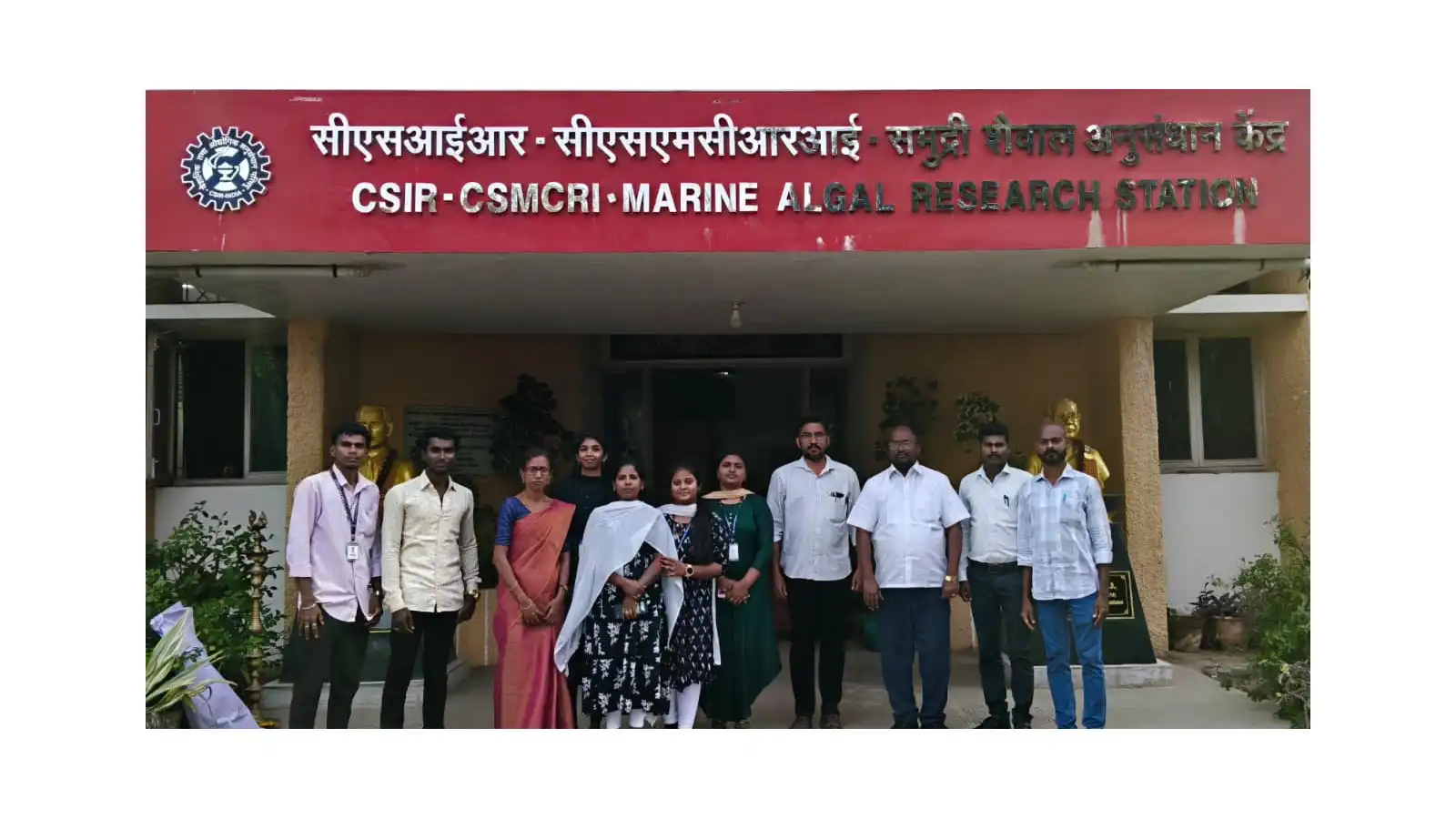
Seaweed Commercial Training Powerful Success Benefits 75+ Participants
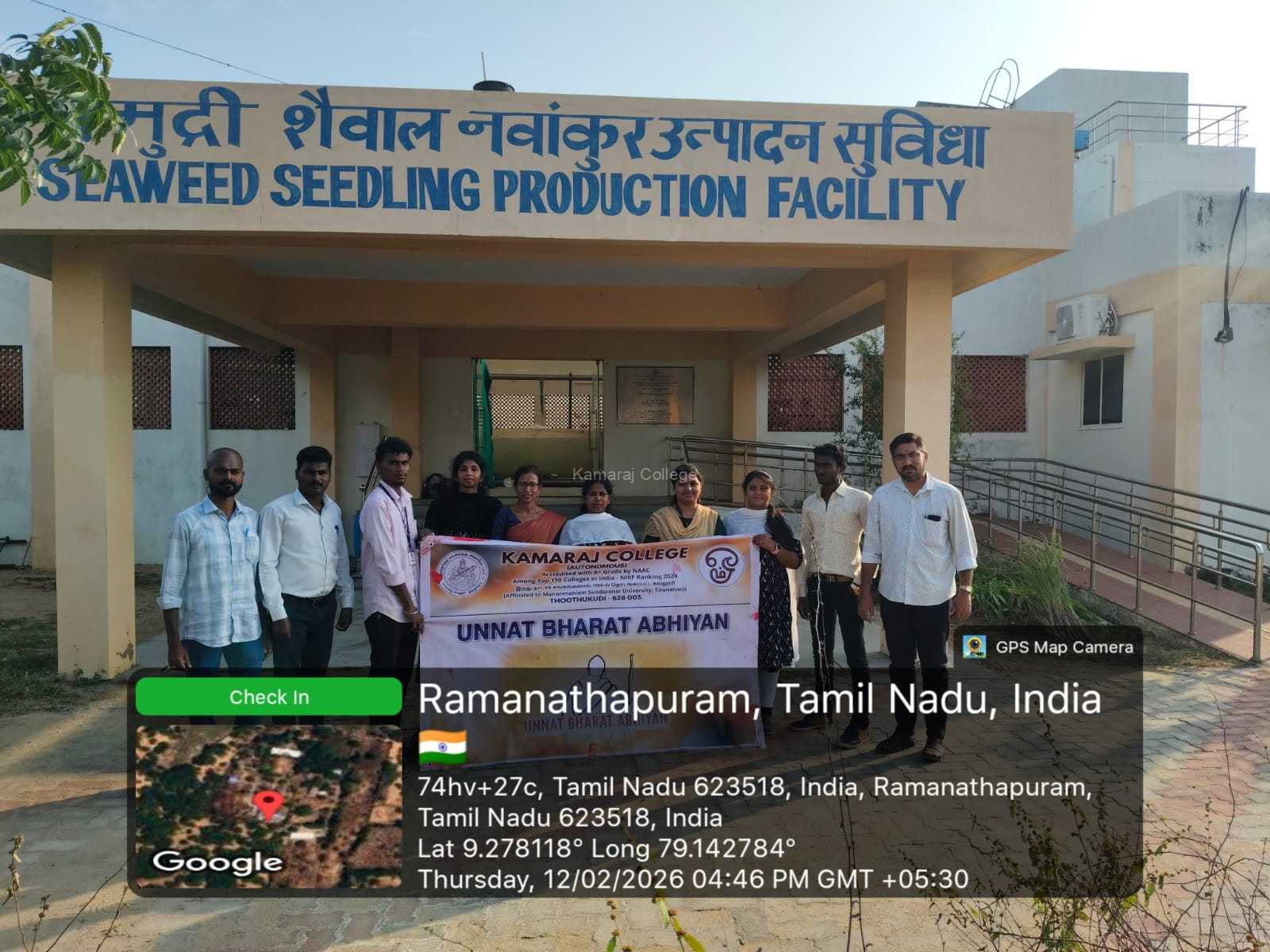
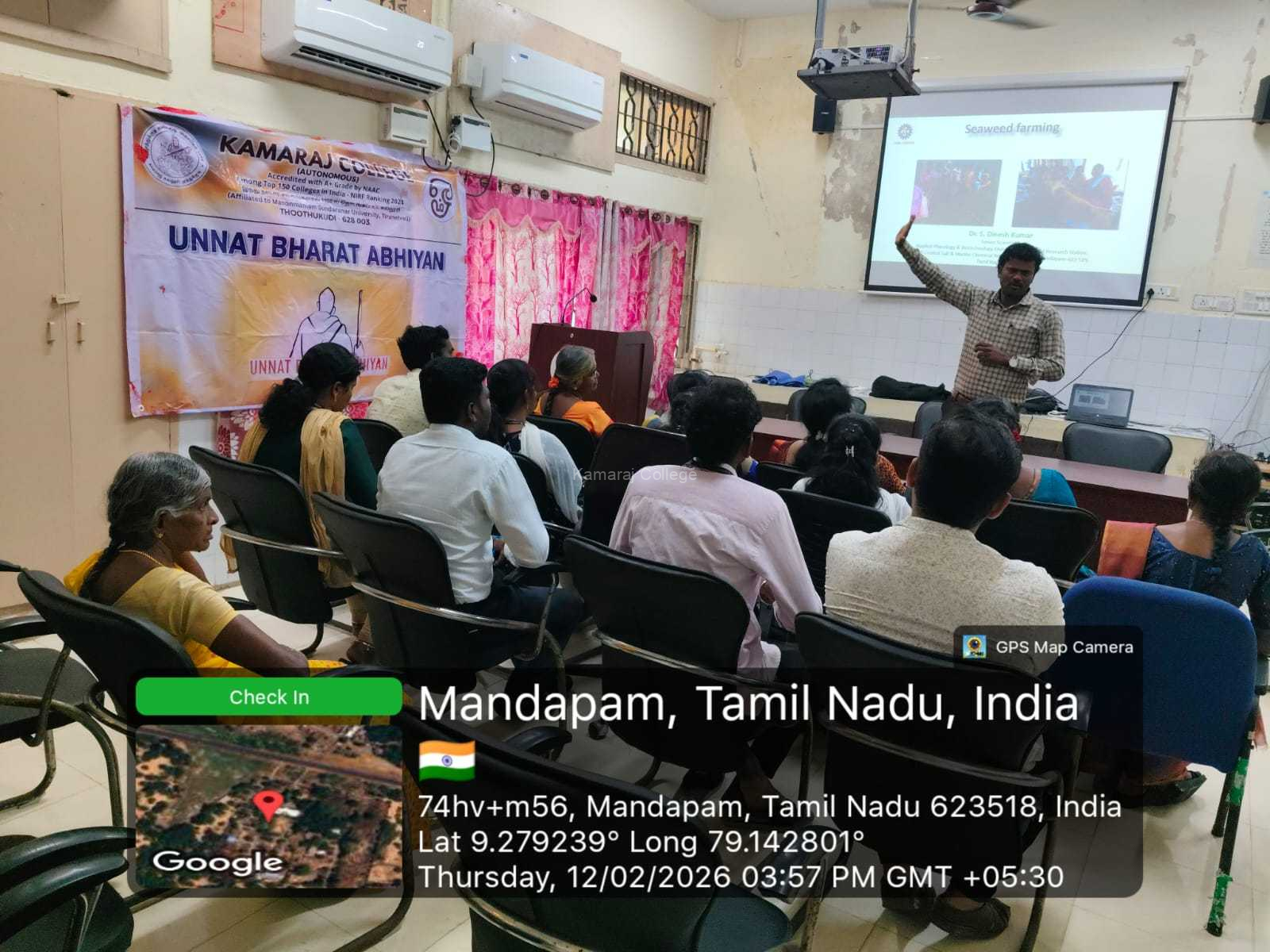
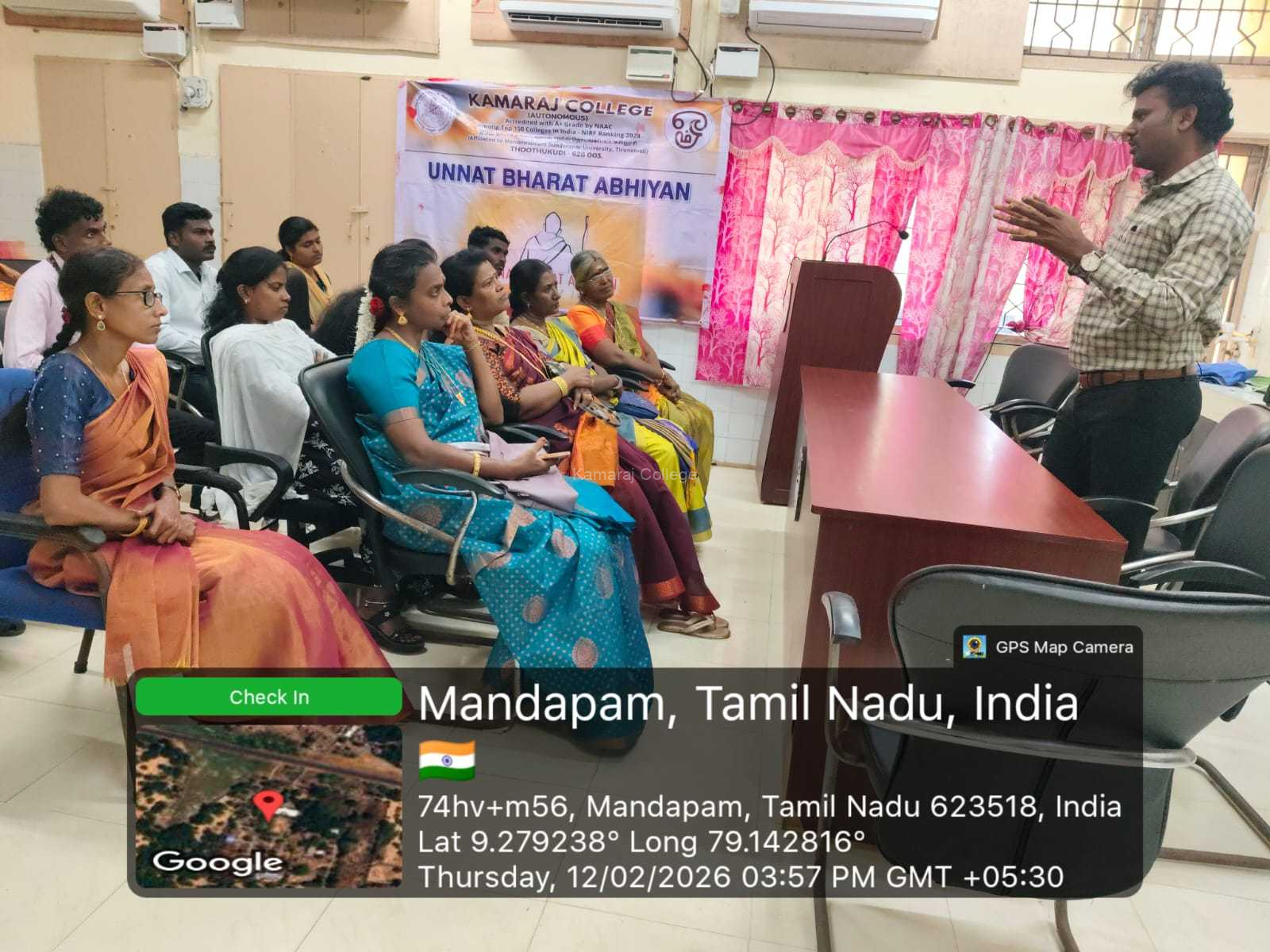
Seaweed Commercial Training – Programme Overview
The Seaweed Commercial Training programme was organized on 12 February 2026, from 10.30 a.m. to 02.00 p.m., under the Seaweed Project of Unnat Bharat Abhiyan by Kamaraj College (Autonomous), Thoothukudi.
The hands-on training camp was conducted at the prestigious CSIR Central Salt and Marine Chemicals Research Institute (CSMCRI), located in Mandapam, Ramanathapuram District. The programme focused on the commercial applications of seaweeds and their potential role in rural economic development.
Objectives of the Seaweed Commercial Training
The primary objective of the Seaweed Commercial Training was to provide scientific and practical exposure on the commercial utilization of seaweed resources. The programme aimed to strengthen livelihood opportunities and entrepreneurship development through marine-based value addition.
The key objectives included:
- To provide practical training in commercial seaweed applications
- To promote rural economic development through marine resources
- To encourage entrepreneurship among women and youth
- To connect academic knowledge with industrial research practices
Participation and Beneficiaries
The Seaweed Commercial Training programme witnessed active participation from:
- Postgraduate students of the Department of Zoology
- Women from Self Help Groups of UBA adopted village panchayats
- Women interested in entrepreneurship initiatives
The diverse participation strengthened the collaborative model between academic institutions, research centres, and rural communities.
Scientific Training Sessions at CSMCRI
The training sessions were led by Dr. V. Veera Guru Nathan, Chief Scientist, along with research scholars from CSMCRI. Participants were introduced to scientific methodologies related to seaweed processing, quality assessment, and commercial viability.
The practical sessions covered:
- Identification and classification of commercially valuable seaweeds
- Processing techniques for industrial applications
- Quality control and standardization practices
- Market potential of marine-based products
The research-oriented environment provided participants with exposure to advanced marine chemical research and industrial applications.
Entrepreneurship Guidance and Special Guest Address
The Seaweed Commercial Training programme also featured participation from Mrs. N. Jesislin Mary, Entrepreneurship Trainer from Nellai, who attended as the Special Guest.
She emphasized the importance of innovation, branding, and market linkage in transforming small-scale seaweed processing into sustainable enterprises. Her interaction motivated women participants to explore marine-based entrepreneurship with confidence and planning.
Integration of Academic and Rural Development Initiatives
The programme exemplified the objectives of Unnat Bharat Abhiyan, which promotes rural engagement through higher education institutions. By conducting the Seaweed Commercial Training at a national research institute, the initiative successfully bridged academic learning, scientific research, and rural livelihood development.
The collaboration enabled participants to gain both theoretical knowledge and hands-on industrial exposure.
Programme Coordination and Institutional Support
The arrangements for the Seaweed Commercial Training programme were made by Dr. J. Nagarajan and the Unnat Bharat Abhiyan Coordinator, Dr. P. Bownraj.
Their systematic planning ensured smooth transportation, participant coordination, and structured training delivery. The effective execution of the programme reflected strong institutional commitment to community-oriented academic initiatives.
Impact on Rural Economic Development
The Seaweed Commercial Training significantly contributed to capacity building among students and rural women. By introducing participants to commercially viable applications of seaweed, the programme opened pathways for:
- Micro enterprise development
- Value-added product manufacturing
- Marine-based livelihood diversification
- Sustainable coastal economic growth
Such initiatives support the broader goals of rural empowerment and inclusive development.
Institutional Commitment to Community Engagement
Kamaraj College (Autonomous), Thoothukudi consistently integrates academic learning with field exposure and community development programmes. The Seaweed Commercial Training reflects the institution’s commitment to experiential learning, research collaboration, and sustainable development initiatives.
Internal Link:
Kamaraj College (Autonomous), Thoothukudi
National Perspective on Marine Research and Entrepreneurship
India’s coastal economy is increasingly focusing on sustainable marine resources. Research institutes like CSMCRI play a crucial role in advancing marine chemical research and promoting industrial applications.
External Links:
CSIR Central Salt and Marine Chemicals Research Institute
Unnat Bharat Abhiyan Official Portal
Overall Impact of the Programme
The Seaweed Commercial Training camp successfully strengthened practical knowledge, entrepreneurial awareness, and research exposure among participants. The programme reinforced the importance of marine-based innovation in rural economic transformation.
Conclusion
The Seaweed Commercial Training conducted on 12 February 2026 at CSMCRI Mandapam was a well-executed and impactful initiative under the Unnat Bharat Abhiyan. The expert guidance of Dr. V. Veera Guru Nathan, the motivational support of Mrs. N. Jesislin Mary, and the coordinated efforts of Dr. J. Nagarajan and Dr. P. Bownraj ensured the success of the programme.
The initiative stands as a strong example of how academic institutions can actively contribute to rural development, scientific advancement, and entrepreneurship promotion.