

Soft Skills 2026: 8 Essential Skills for Career Success
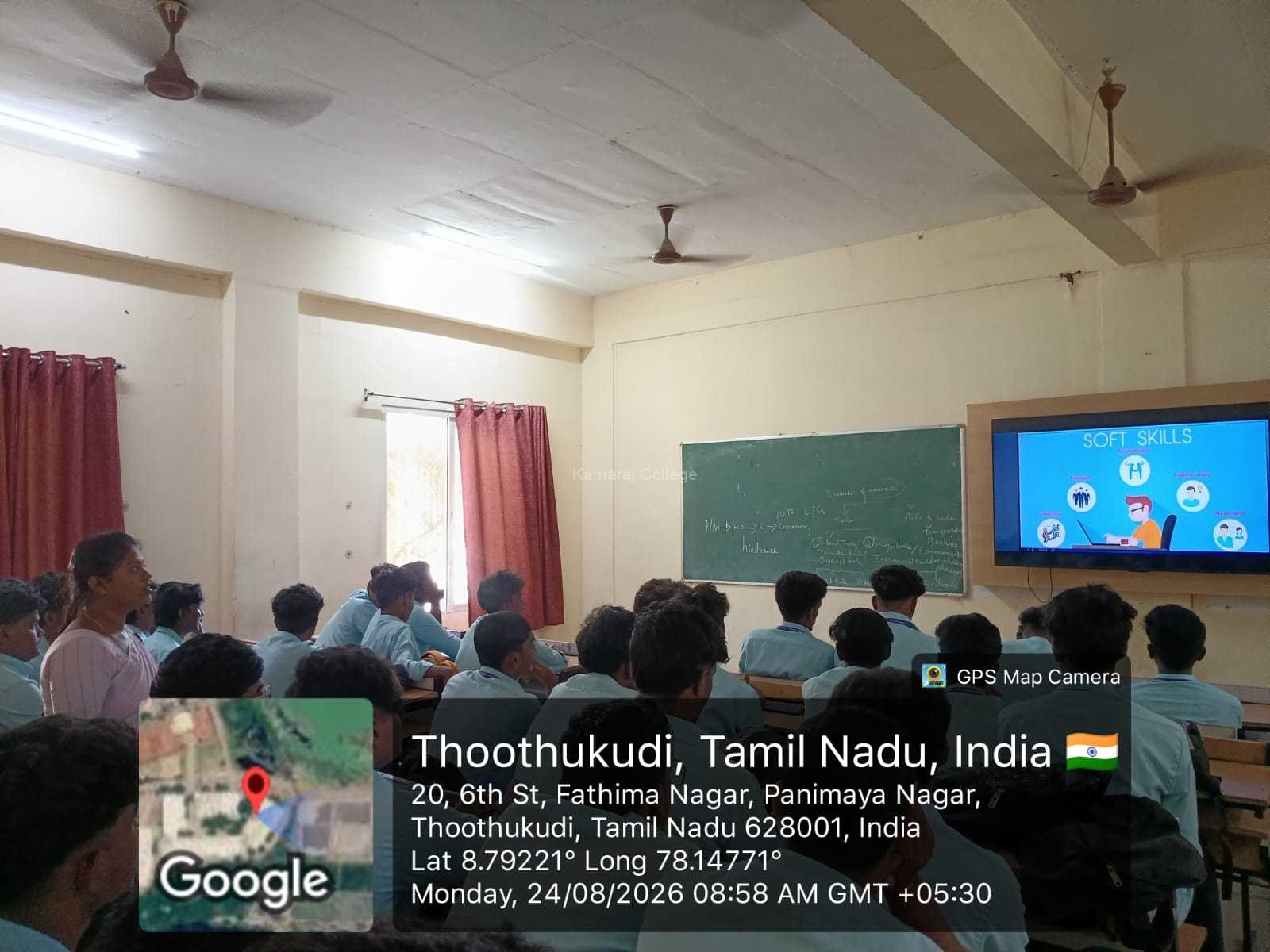
Report on Beyond Knowledge: Building Essential Soft Skills
Soft Skills play a vital role in preparing students for academic, personal and professional success. With this objective, the Department of Commerce (SF), Kamaraj College (Autonomous), Thoothukudi, organized a one-day Skill Enhancement Programme titled “Beyond Knowledge: Building Essential Soft Skills” on 24 August 2026 at the GJ Block.
The programme aimed to create awareness among students about the importance of developing essential abilities beyond academic knowledge. It focused on communication, teamwork, leadership, time management, problem-solving, adaptability, confidence and interpersonal skills.
The sessions emphasized that academic knowledge provides a strong foundation. However, students also need effective communication, positive behaviour and professional skills to succeed in today’s competitive workplace.
Objectives of the Programme
The programme was designed to help students understand the role of Soft Skills in their overall development and future careers.
The major objectives were:
- Improve communication abilities
- Develop effective teamwork
- Strengthen leadership qualities
- Promote effective time management
- Develop problem-solving abilities
- Encourage adaptability
- Build confidence
- Improve interpersonal skills
- Develop a positive professional attitude
- Prepare students for future employment opportunities
Thus, the programme focused on equipping students with practical skills that complement their academic learning.
Beyond Academic Knowledge
A key message of the programme was that academic knowledge alone is not sufficient for career success.
Subject knowledge helps students gain qualifications and understand their chosen field. However, professional environments also require individuals to communicate effectively, work with different people, manage responsibilities and respond confidently to challenges.
Therefore, students were encouraged to combine their academic knowledge with strong behavioural and professional abilities.
This approach can help them become more confident and career-ready graduates.
8 Essential Soft Skills
The programme highlighted eight important skills that students need for their personal and professional development:
- Communication
- Teamwork
- Leadership
- Time Management
- Problem-Solving
- Adaptability
- Confidence
- Interpersonal Skills
The sessions explained the practical relevance of these skills and encouraged students to develop them continuously.
Developing Effective Communication
Communication formed an important part of the programme.
Students learned that effective communication involves expressing ideas clearly and interacting appropriately with different people.
Good communication is essential in classrooms, group discussions, presentations, interviews and professional environments.
Furthermore, students were encouraged to improve their confidence while speaking and develop a positive approach towards interpersonal communication.
Strong communication abilities can help students express their knowledge effectively and create a better impression in academic and professional situations.
Importance of Teamwork
The sessions also highlighted the importance of teamwork.
Modern workplaces often require employees to collaborate with colleagues from different backgrounds and areas of expertise.
Therefore, students need to understand how to cooperate, share responsibilities and contribute effectively towards common goals.
The resource persons encouraged students to respect different ideas and develop the ability to work comfortably with others.
Moreover, effective teamwork can strengthen communication, coordination and mutual understanding.
Developing Leadership Qualities
Leadership was another important area covered during the Skill Enhancement Programme.
Students were encouraged to understand that leadership is not limited to holding a position or title. It also involves taking responsibility, making appropriate decisions, supporting others and contributing positively to a team.
The sessions encouraged students to develop initiative and confidence.
Such qualities can help them handle responsibilities effectively during their college education as well as in their future careers.
Effective Time Management
The programme emphasized the value of time management in both academic and professional life.
Students need to balance classes, assignments, examinations, skill-development activities and personal responsibilities.
Therefore, they were encouraged to plan their activities, identify priorities and use their available time effectively.
Good time management can reduce unnecessary pressure and help students complete responsibilities systematically.
Furthermore, developing this habit during college can prepare students for the demands of professional life.
Problem-Solving Skills
The programme also focused on problem-solving as an essential professional skill.
Students may face different challenges in academic, personal and workplace situations. Therefore, they need the ability to understand a problem, consider possible solutions and take suitable action.
The sessions encouraged students to approach challenges with a calm and constructive mindset.
Moreover, effective problem-solving requires observation, logical thinking, decision-making and confidence.
Developing these qualities can help students handle unfamiliar situations more effectively.
Adaptability in a Changing Workplace
The importance of adaptability was also highlighted.
Workplaces continue to change due to technology, new business practices and evolving professional expectations.
Therefore, students need to remain open to learning and be prepared to adjust to new situations.
The programme encouraged students to develop a flexible mindset and view change as an opportunity for learning and growth.
Adaptability can help young professionals respond positively to new responsibilities, environments and career opportunities.
Building Confidence
Confidence plays an important role in helping students demonstrate their knowledge and abilities.
The resource persons encouraged students to identify their strengths while also recognising areas that required improvement.
Students were motivated to participate actively in academic and co-curricular activities so that they could gradually strengthen their confidence.
Greater confidence can help students perform better in presentations, group discussions, interviews and workplace interactions.
Strengthening Interpersonal Skills
The programme also addressed the importance of interpersonal skills.
Students regularly interact with classmates, teachers, colleagues and people from different backgrounds.
Therefore, they need the ability to maintain positive and professional relationships.
Interpersonal skills include respectful communication, cooperation, understanding and appropriate behaviour.
These qualities can help students build stronger relationships and contribute positively to team environments.
Practical Insights from Resource Persons
The resource persons shared valuable insights and practical suggestions with the participants.
Dr. M. Reeda Albin Mary, Dr. I. Snow Reena and Ms. P. Santhana Meenakshi served as the speakers for the programme and guided the students on different aspects of personal and professional development.
Their sessions encouraged students to:
- Improve communication abilities
- Develop a positive attitude
- Work effectively in teams
- Build professional confidence
- Handle different situations appropriately
- Recognise personal strengths
- Identify areas requiring improvement
The practical nature of their guidance helped students understand how these abilities can be applied in real-life situations.
Interactive Learning Experience
The interactive nature of the programme encouraged students to participate actively in the sessions.
Rather than treating Soft Skills as theoretical concepts, the programme helped students understand their practical relevance.
Active participation enabled students to relate the topics to their own experiences.
Furthermore, the interaction encouraged them to think about how they communicate, work with others and respond to different situations.
Thus, the programme created an engaging environment for learning and self-reflection.
Identifying Strengths and Areas for Improvement
An important outcome of the programme was the opportunity for students to reflect on their own abilities.
Students were encouraged to identify their strengths and recognise areas where further development was needed.
Self-awareness is an important part of personal and professional growth because it helps individuals set realistic goals for improvement.
Therefore, the programme motivated students to continuously develop themselves rather than viewing skill enhancement as a one-time activity.
Developing a Professional Attitude
The programme highlighted the importance of developing a professional attitude while students are still pursuing their education.
Professionalism includes responsibility, punctuality, communication, teamwork, adaptability and appropriate behaviour.
Students who develop these qualities early can adjust more effectively to workplace expectations.
Furthermore, professional behaviour can help students perform confidently during internships, interviews and employment.
Preparing Students for Employment
Career readiness formed an important part of the programme.
Students were encouraged to understand that employers consider more than academic qualifications while selecting candidates.
Communication, confidence, teamwork, problem-solving and adaptability can significantly influence workplace performance.
Therefore, the programme motivated students to begin developing these abilities during their college education.
This preparation can help them approach future placements, interviews and career opportunities with greater confidence.
Guidance of the Head of the Department
The Skill Enhancement Programme was successfully conducted under the guidance of Dr. V. Gopala Krishnan, Head of the Department of Commerce (SF).
His guidance contributed to the effective organization of the programme and reflected the department’s commitment to developing students beyond classroom learning.
The initiative provided students with an opportunity to understand the professional abilities required for future success.
Key Areas Covered
The programme focused on:
- Communication Skills
- Teamwork
- Leadership
- Time Management
- Problem-Solving
- Adaptability
- Confidence Building
- Interpersonal Skills
- Positive Attitude
- Professional Behaviour
- Career Readiness
Together, these areas provided students with a comprehensive understanding of the abilities needed for personal and professional growth.
Programme Highlights
- Programme: Skill Enhancement Programme
- Title: Beyond Knowledge: Building Essential Soft Skills
- Date: 24 August 2026
- Venue: GJ Block
- Organized by: Department of Commerce (SF)
- Head of the Department: Dr. V. Gopala Krishnan
- Speaker: Dr. M. Reeda Albin Mary
- Speaker: Dr. I. Snow Reena
- Speaker: Ms. P. Santhana Meenakshi
- Major Focus: Soft skills, professional development and career readiness
Programme Outcomes
The Soft Skills programme provided students with several valuable learning outcomes.
Through the programme, students:
- Understood the importance of skills beyond academic knowledge
- Recognised the value of effective communication
- Learned the importance of teamwork
- Developed awareness of leadership qualities
- Understood the value of effective time management
- Recognised the importance of problem-solving abilities
- Learned the need for adaptability
- Were encouraged to develop greater confidence
- Understood the importance of interpersonal skills
- Reflected on their personal strengths and areas for improvement
- Developed greater awareness of professional behaviour
- Recognised the importance of career readiness
Overall, the programme successfully connected academic learning with the practical abilities required for future professional success.
Conclusion
The one-day Skill Enhancement Programme titled “Beyond Knowledge: Building Essential Soft Skills”, organized by the Department of Commerce (SF), Kamaraj College (Autonomous), Thoothukudi, on 24 August 2026, was informative, interactive and beneficial to the students.
The programme emphasized that academic knowledge forms an important foundation for success. However, students also need communication, teamwork, leadership, time management, problem-solving, adaptability, confidence and interpersonal skills to make effective use of future opportunities.
The valuable insights shared by Dr. M. Reeda Albin Mary, Dr. I. Snow Reena and Ms. P. Santhana Meenakshi helped students understand the practical importance of these skills.
Under the guidance of Dr. V. Gopala Krishnan, Head of the Department, the programme provided an effective platform for students to reflect on their strengths, identify areas for improvement and prepare themselves for professional life.
Most importantly, the programme reinforced a meaningful message: knowledge opens the door to opportunities, while soft skills help individuals make the most of those opportunities.
Overall, the programme was a meaningful step towards promoting the holistic development, professional confidence and career readiness of the students.
Internal Link
External Links
- National Career Service – Explore career guidance, employment opportunities and resources for professional development.
- Skill India Digital – Learn about skill-development opportunities and resources for improving career readiness.