
Sericulture Field Visit 2026: Valuable Practical Learning for Students
Report on Sericulture Field Visit 2026
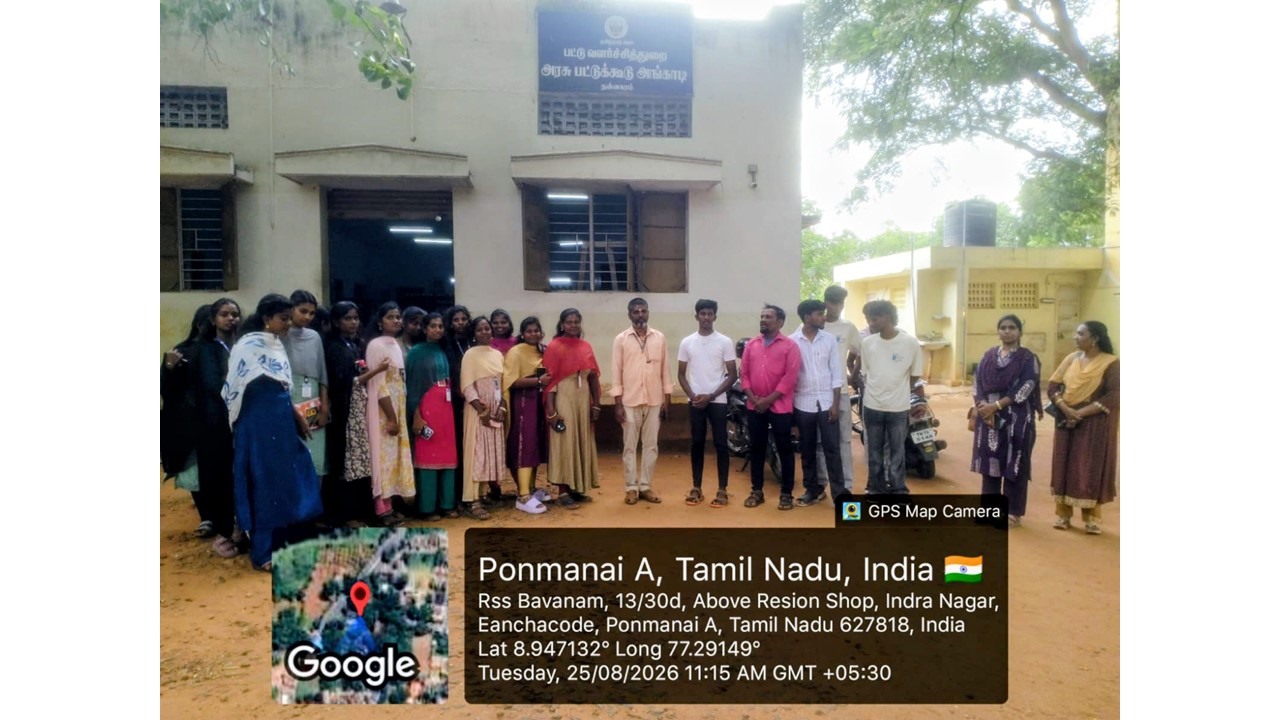
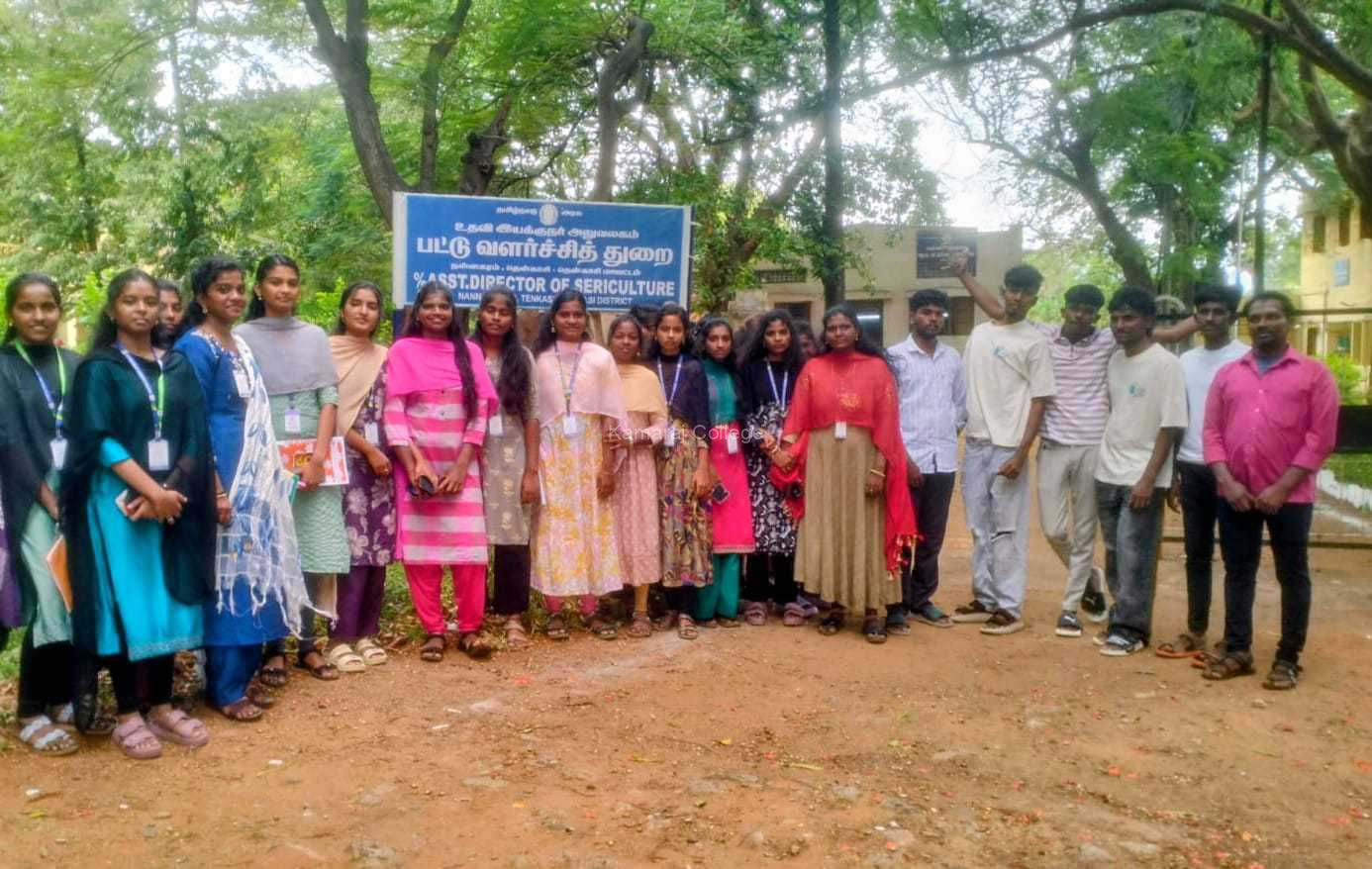
Sericulture Field Visit was organized for the third-year Zoology students of Kamaraj College (Autonomous), Thoothukudi, to the Sericulture Department at Nannagaram, Tenkasi, on 25 August 2026.
The visit formed part of the students’ academic learning programme and aimed to provide practical exposure to sericulture and silk production. It enabled students to observe the processes involved in silkworm rearing, cocoon production, silk reeling and cocoon marketing.
The field experience complemented classroom learning and helped students understand the practical and economic aspects of sericulture.
Objectives of the Field Visit
The Sericulture Field Visit aimed to provide experiential learning opportunities for Zoology students.
The major objectives included:
- Provide practical exposure to sericulture
- Understand the process of silkworm rearing
- Learn about cocoon production
- Observe the process of silk reeling
- Understand cocoon marketing methods
- Learn about the economic importance of sericulture
- Connect theoretical Zoology concepts with practical applications
- Encourage experiential and field-based learning
Thus, the visit provided students with an opportunity to learn directly from professionals working in the field.
Visit to the Sericulture Department at Nannagaram
The third-year Zoology students visited the Sericulture Department at Nannagaram, Tenkasi, where they received direct exposure to the functioning of a sericulture unit.
The visit helped students understand how scientific knowledge is applied in silk production. Moreover, observing the activities of the unit gave them a clearer understanding of the different stages involved in sericulture.
The field experience enabled students to move beyond textbook descriptions and observe practical processes directly.
Faculty Accompanying the Students
The students were accompanied by Dr. R. Nagarajan and Dr. S. Nazerath Nisha, along with one Lab Assistant.
The faculty members guided the students throughout the visit and encouraged them to observe the various processes carefully.
Their presence helped ensure that students could relate the practical demonstrations to concepts covered as part of their academic learning.
Interaction with Sericulture Expert
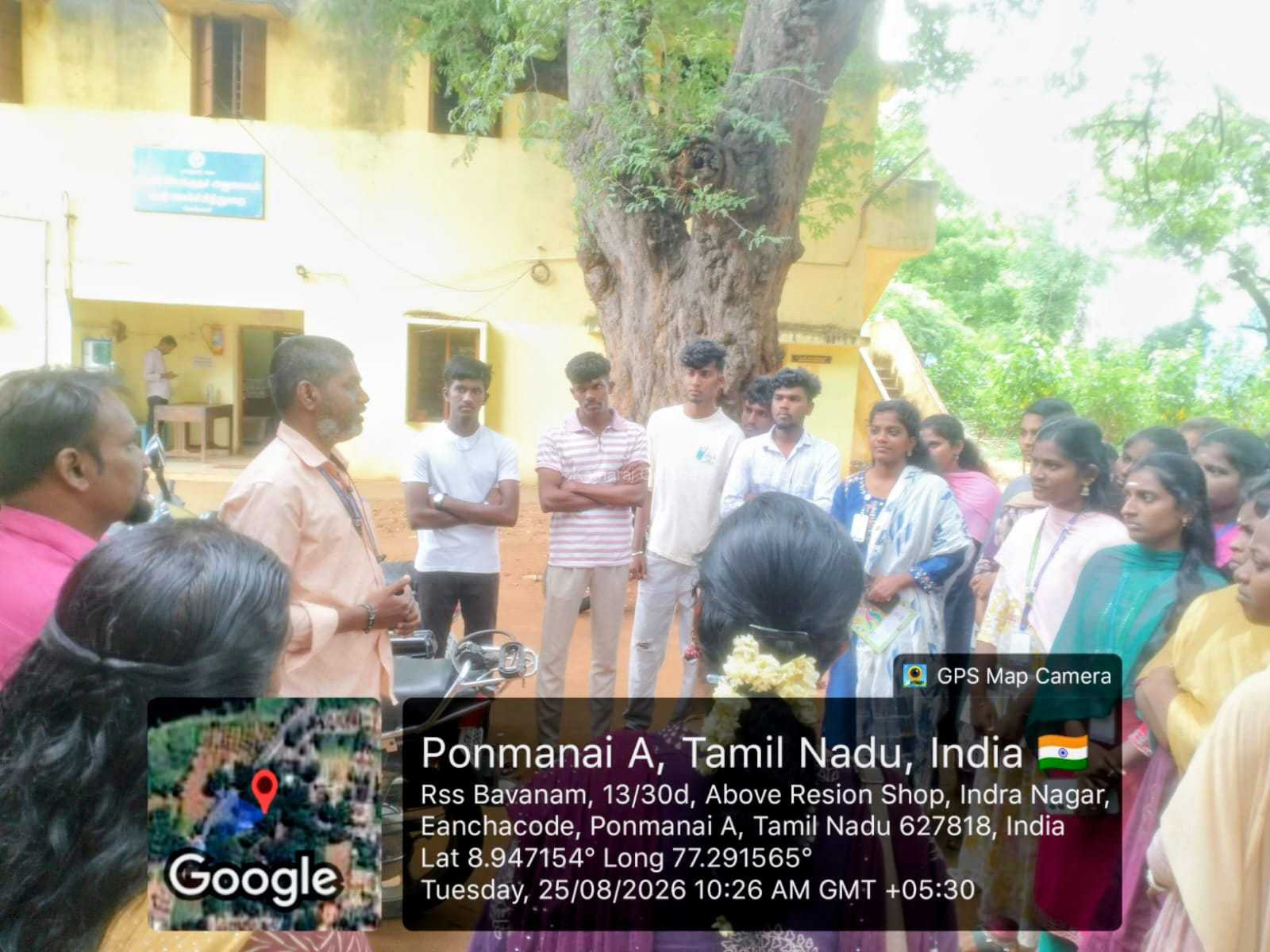
During the Sericulture Field Visit, Mr. Ragu, Assistant Inspector, Sericulture Department, interacted with the students and explained the functioning of the sericulture unit.
He shared valuable information about the different stages of silk production and provided practical insights into the activities carried out by the department.
Furthermore, students had an opportunity to learn directly from a professional with field-level experience in sericulture.
Learning about Silkworm Rearing
One of the important areas covered during the visit was silkworm rearing.
Students learned about the role of silkworms in silk production and gained an understanding of the care required during the rearing process.
The practical exposure helped students connect their knowledge of insects and their life cycles with the commercial application of silkworm cultivation.
Moreover, the session demonstrated how biological knowledge can contribute to productive economic activities.
Understanding Cocoon Production
The students also received valuable information about cocoon production.
Cocoon formation represents an important stage in the silk production process. Therefore, understanding its production helped students gain a clearer picture of how sericulture progresses from silkworm rearing to the production of silk.
The field visit allowed students to understand these stages in a practical setting rather than learning about them only through classroom instruction.
Introduction to Silk Reeling
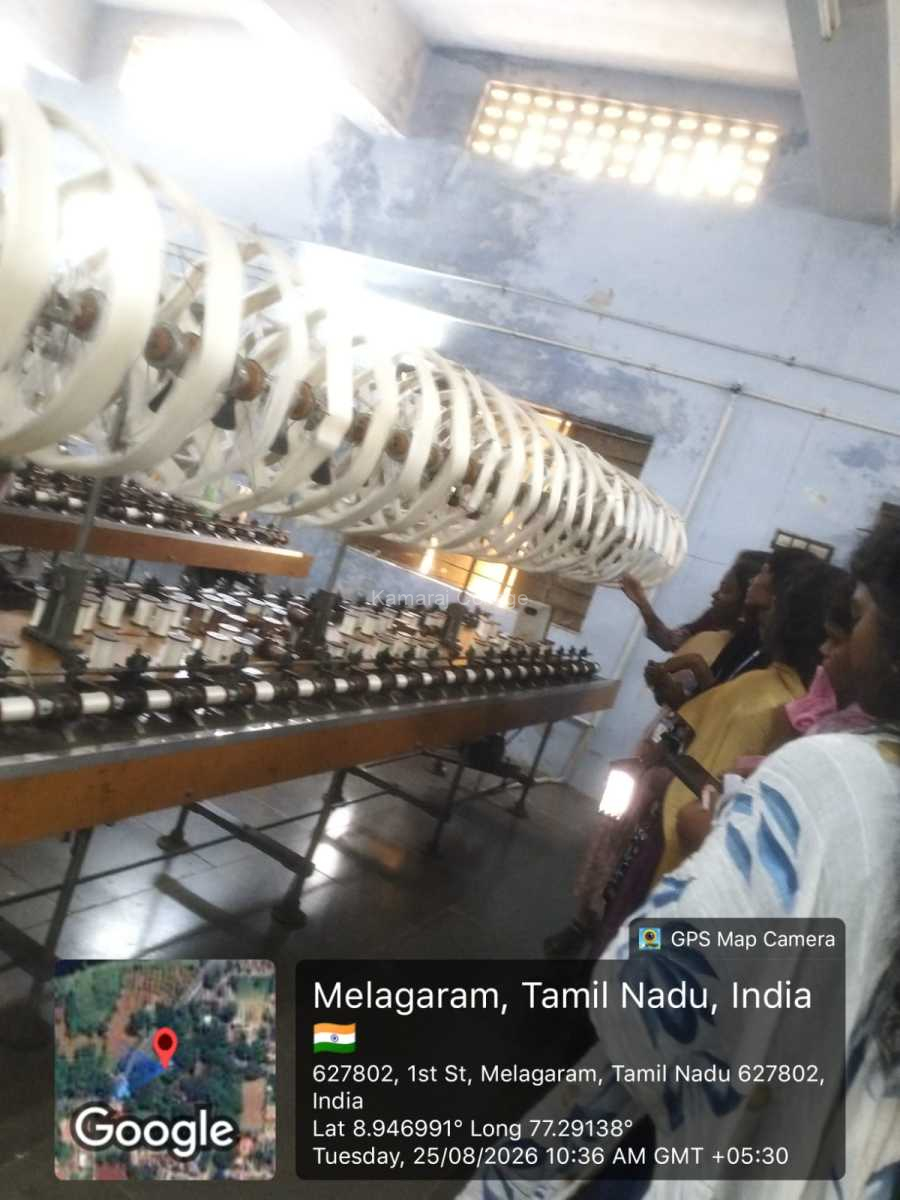
Another important aspect of the visit was the explanation of silk reeling.
Students learned how silk is obtained from cocoons and how this stage contributes to the production process. The explanation helped them understand the connection between biological production and the processing techniques used in the silk industry.
As a result, students gained a broader perspective on the complete journey from silkworm cultivation to silk production.
Cocoon Marketing and Economic Importance
The Sericulture Field Visit also introduced students to the commercial side of sericulture.
Mr. Ragu explained the methods involved in cocoon marketing and discussed its economic significance. This helped students understand that sericulture is not limited to biological processes but also contributes to livelihoods and economic activity.
Furthermore, the discussion enabled students to recognise the connection between science, production, marketing and rural economic development.
Connecting Zoology with Practical Applications
For Zoology students, sericulture offers an important example of the practical application of biological knowledge.
The study of insects, their life cycles, growth and development forms part of Zoology. During the visit, students observed how such knowledge can be applied to a productive industry.
Therefore, the programme helped bridge the gap between theoretical learning and real-world application.
Importance of Experiential Learning
Field visits play an important role in helping students understand concepts through direct observation and interaction.
During the visit, students actively observed the functioning of the sericulture unit and interacted with the resource person. Consequently, they gained practical knowledge that complemented their classroom learning.
Such experiential learning can also encourage curiosity and help students explore academic concepts from a broader perspective.
Key Learning Areas
The students gained practical exposure to several important aspects of sericulture:
- Functioning of a sericulture unit
- Silkworm rearing
- Cocoon formation and production
- Silk reeling
- Cocoon marketing
- Economic importance of sericulture
- Commercial application of biological knowledge
- Practical aspects of silk production
Thus, the field visit provided a comprehensive introduction to both the scientific and commercial dimensions of sericulture.
Active Student Participation
The students participated actively throughout the Sericulture Field Visit and showed keen interest in understanding the different processes.
The direct interaction with the Sericulture Department helped them gain greater clarity about the subject. In addition, observing the practical processes strengthened their understanding of concepts related to silkworms and silk production.
The visit therefore created an engaging learning environment outside the conventional classroom.
Field Visit Outcomes
The programme produced several positive academic outcomes for the participating Zoology students.
Through the visit, students were able to:
- Gain practical knowledge of sericulture
- Understand silkworm rearing methods
- Learn about cocoon production
- Understand the basics of silk reeling
- Gain awareness of cocoon marketing
- Understand the economic importance of sericulture
- Connect Zoology concepts with practical applications
- Gain valuable field-based learning experience
Overall, the programme successfully enhanced the students’ understanding of sericulture and its relevance to Zoology.
Conclusion
The Sericulture Field Visit to the Sericulture Department at Nannagaram, Tenkasi, on 25 August 2026 was an informative and educational experience for the third-year Zoology students of Kamaraj College (Autonomous), Thoothukudi.
The interaction with Mr. Ragu, Assistant Inspector, Sericulture Department, provided students with valuable practical knowledge about silkworm rearing, cocoon production, silk reeling and cocoon marketing. Furthermore, the students gained awareness of the economic significance of sericulture.
The field visit successfully connected classroom learning with practical experience and strengthened the students’ understanding of the commercial application of Zoology.
Overall, the programme provided meaningful experiential learning and enhanced students’ knowledge of sericulture, silk production and its economic importance.
Internal Link
External Links
- Central Silk Board – Explore official information about sericulture, silk production and the development of India’s silk industry.
- Development Commissioner for Handlooms – Learn more about India’s handloom and textile sector and its connection with silk-based livelihoods.