
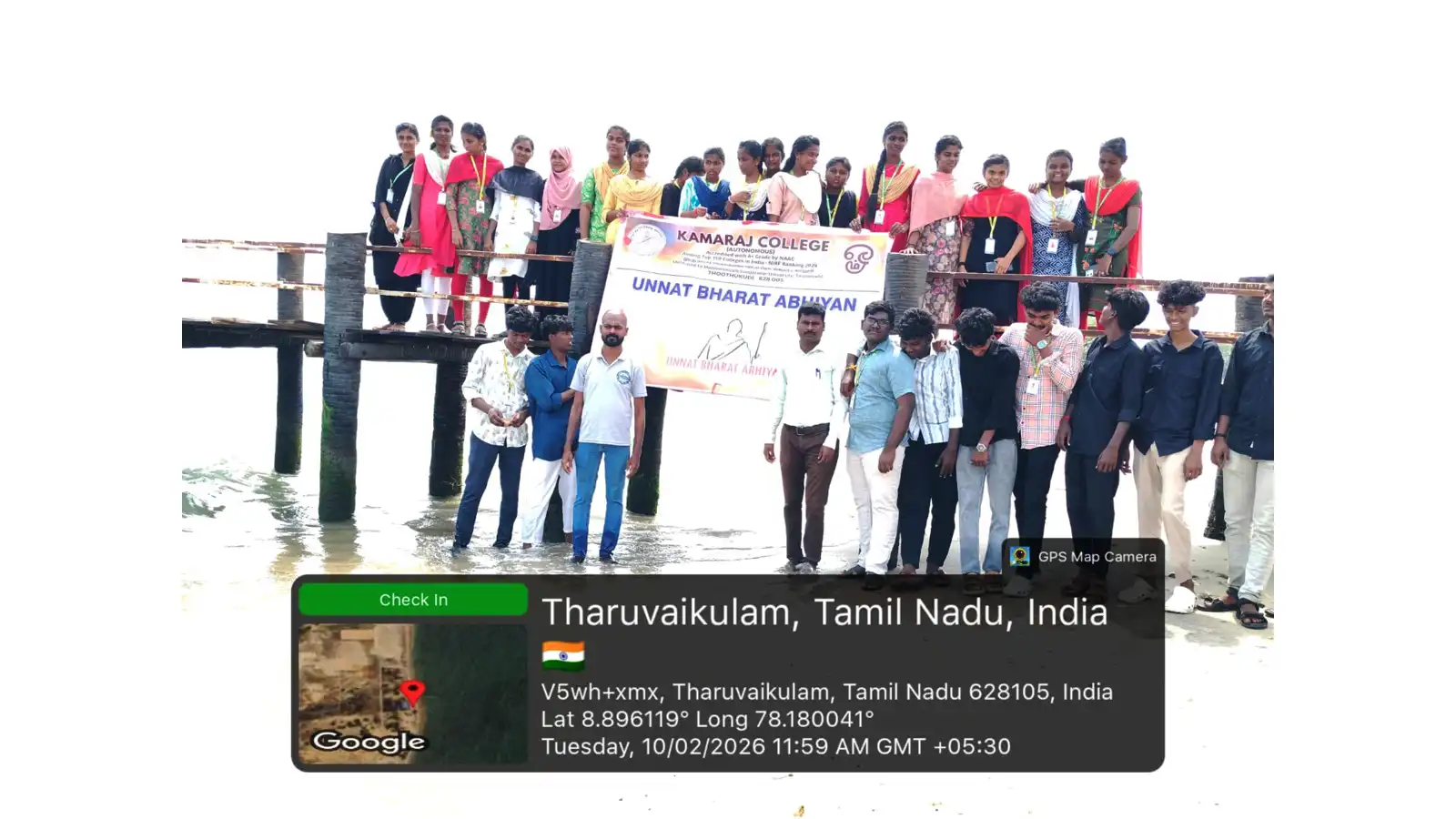
Seaweed Field Visit: Powerful Training Empowers 40+ Zoology Students
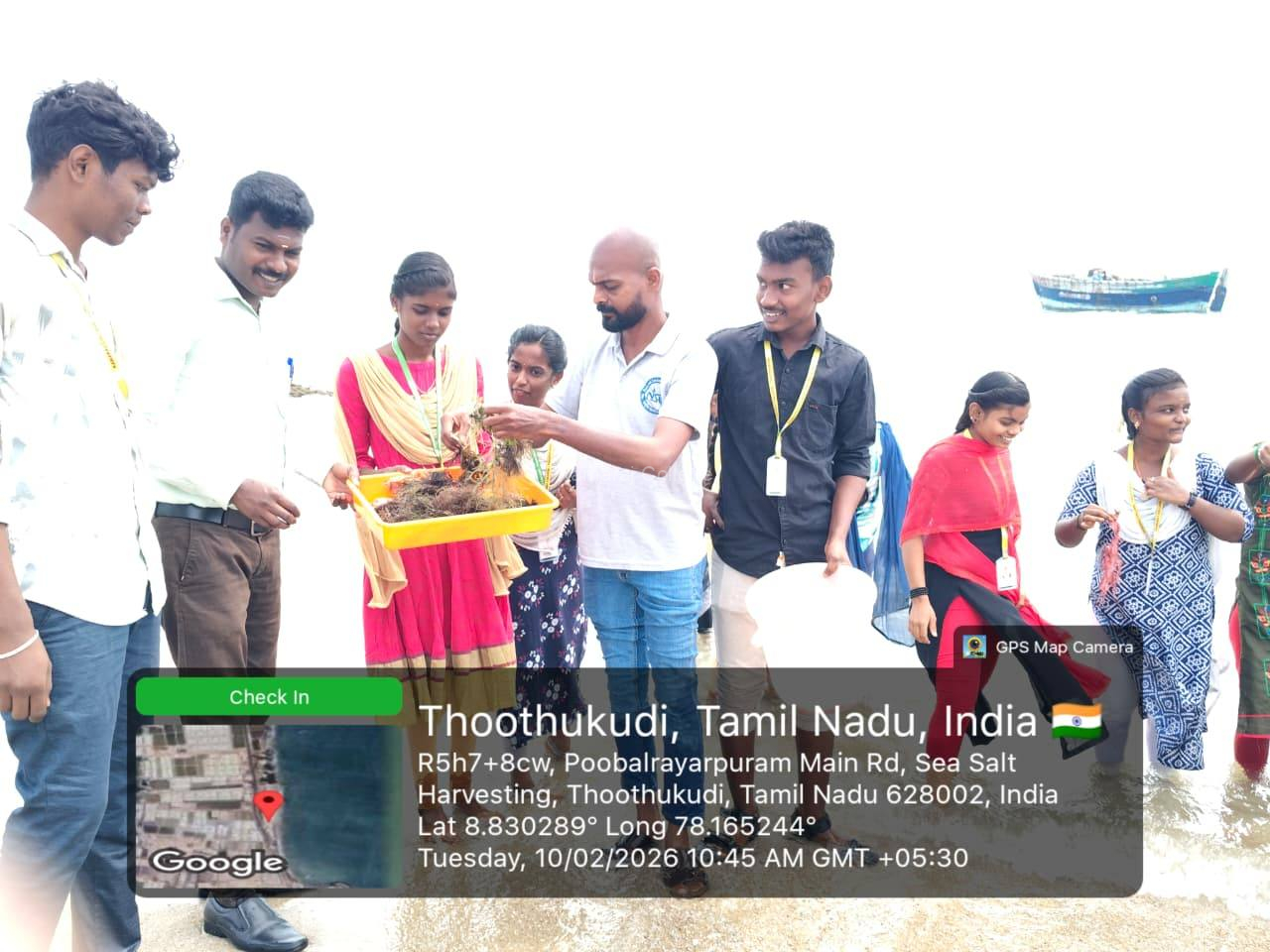
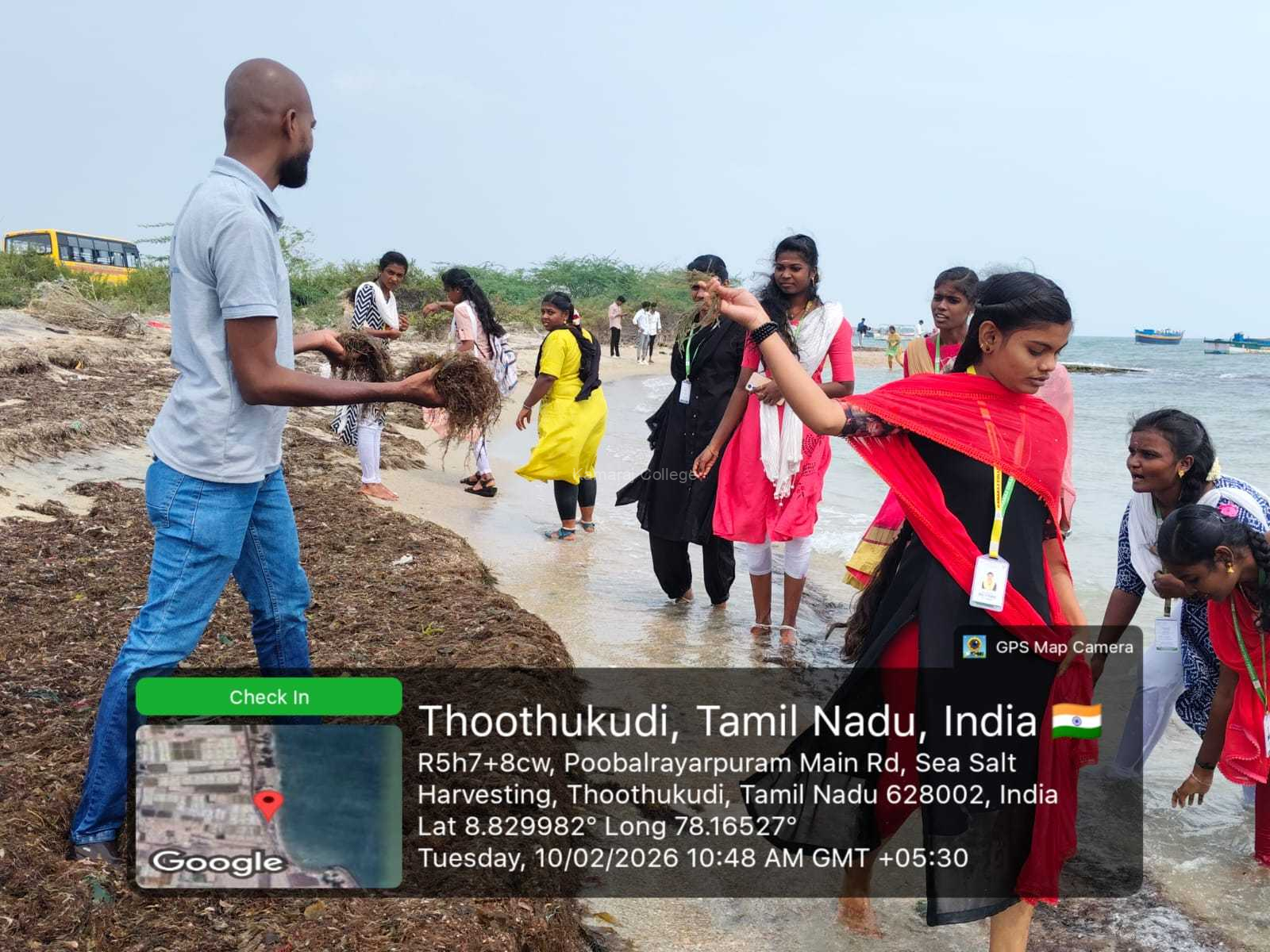
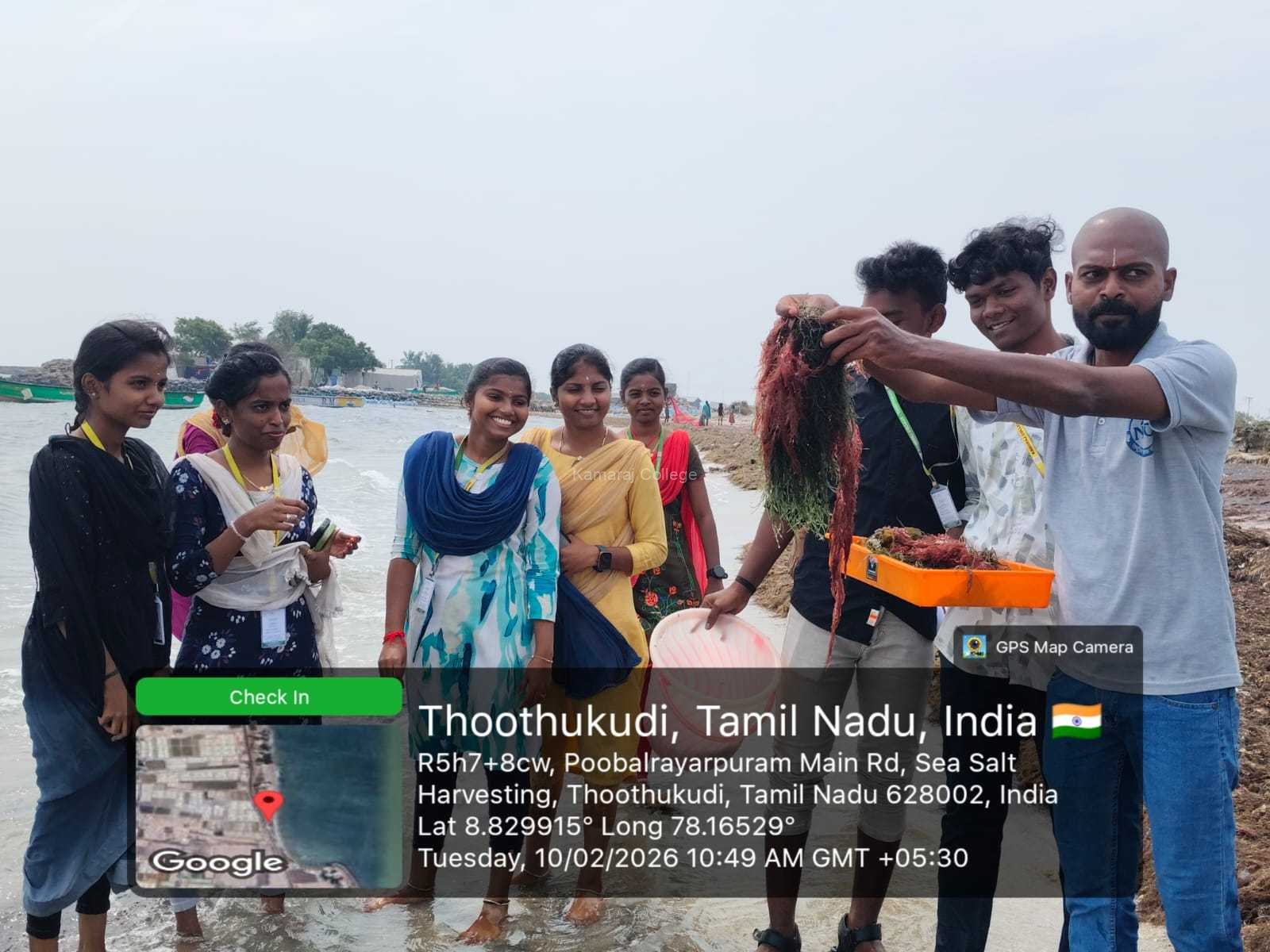
Seaweed Field Visit – Programme Overview
The Seaweed Field Visit was organized on 10 February 2026, from 09.30 a.m. to 02.30 p.m., on behalf of Kamaraj College (Autonomous), Thoothukudi under the Unnat Bharat Abhiyan. The one-day field visit was conducted for I B.Sc. Zoology students as part of the UBA Seaweed Project.
The programme aimed to provide students with practical exposure to seaweed resources, field collection methods, and real-time ecological observation through hands-on learning in natural coastal environments.
Objectives of the Seaweed Field Visit
The primary objective of the Seaweed Field Visit was to bridge classroom learning with field-based experience by exposing students to marine biodiversity and sustainable resource utilization. The visit emphasized experiential learning and skill development aligned with outcome-based education.
The key objectives of the field visit included:
- To provide hands-on training in seaweed collection techniques
- To familiarize students with coastal and marine ecosystems
- To enhance practical understanding of seaweed diversity
- To promote field-based learning and research orientation
- To support the objectives of the Unnat Bharat Abhiyan Seaweed Project
Guidance and Academic Supervision
The Seaweed Field Visit was conducted under the guidance of Dr. J. Nagarajan, Project In-charge, UBA Seaweed Project. His academic leadership and field expertise ensured that students received systematic training and scientific guidance throughout the visit.
The programme was effectively coordinated and executed by Dr. J. Nagarajan along with the UBA Coordinator, Dr. P. Pounraj, ensuring smooth planning and implementation of all field activities.
Field Visit Locations and Environmental Exposure
As part of the Seaweed Field Visit, students were taken to two ecologically significant coastal locations:
- Thirespuram Beach, Thoothukudi
- Tharuva Kulam Ecotourism Area, Thoothukudi District
These locations provided ideal natural settings for observing seaweed habitats, coastal biodiversity, and environmental factors influencing marine life. Students gained exposure to real-world ecological conditions beyond the classroom.
Hands-On Training in Seaweed Collection
A major highlight of the Seaweed Field Visit was the practical training provided in seaweed collection. Students actively participated in collecting seaweed samples under the supervision of faculty members.
The hands-on training covered:
- Identification of different seaweed species
- Scientific methods of seaweed collection
- Understanding habitat-specific seaweed growth
- Basic field documentation and sample handling
The training emphasized sustainable practices and the importance of conserving marine ecosystems while utilizing natural resources.
Learning Outcomes and Skill Development
The Seaweed Field Visit enabled students to develop practical skills essential for zoology and marine biology studies. The field exposure enhanced students’ observational abilities, ecological understanding, and research interest.
The learning outcomes of the programme included:
- Improved understanding of marine biodiversity
- Enhanced fieldwork and data collection skills
- Increased awareness of sustainable marine resource use
- Application of theoretical knowledge in real-world settings
Role of Unnat Bharat Abhiyan in Experiential Learning
The Seaweed Field Visit reflects the objectives of the Unnat Bharat Abhiyan, which focuses on connecting higher education institutions with rural and community development initiatives. By engaging students in field-based projects, UBA promotes experiential learning and social responsibility.
The UBA Seaweed Project encourages students to explore livelihood-oriented and environmentally sustainable practices that can benefit coastal and rural communities.
Institutional Support and Academic Commitment
Kamaraj College (Autonomous), Thoothukudi consistently supports field visits and experiential learning programmes that enhance students’ academic and practical competence. The Seaweed Field Visit demonstrates the institution’s commitment to integrating classroom instruction with hands-on field exposure.
Internal Link:
Kamaraj College (Autonomous), Thoothukudi
National Perspective on Seaweed Research and Training
Seaweed research and utilization are gaining importance in India due to their ecological and economic potential. Programmes like the Seaweed Field Visit prepare students to contribute to sustainable marine resource management and research initiatives.
Further information on related initiatives can be accessed through:
External Links:
Unnat Bharat Abhiyan – Government of India
Department of Fisheries – Government of India
Overall Impact of the Field Visit
The Seaweed Field Visit successfully provided students with meaningful field exposure and practical training. The programme strengthened students’ understanding of marine ecosystems and enhanced their readiness for advanced studies and research in zoology and environmental sciences.
Conclusion
The Seaweed Field Visit conducted on 10 February 2026 under the Unnat Bharat Abhiyan was a well-planned and impactful academic initiative. The expert guidance of Dr. J. Nagarajan, effective coordination by Dr. P. Pounraj, and active participation of students ensured the programme’s success.
The field visit reaffirmed Kamaraj College’s commitment to experiential learning, sustainability, and holistic student development through community-oriented academic programmes.