
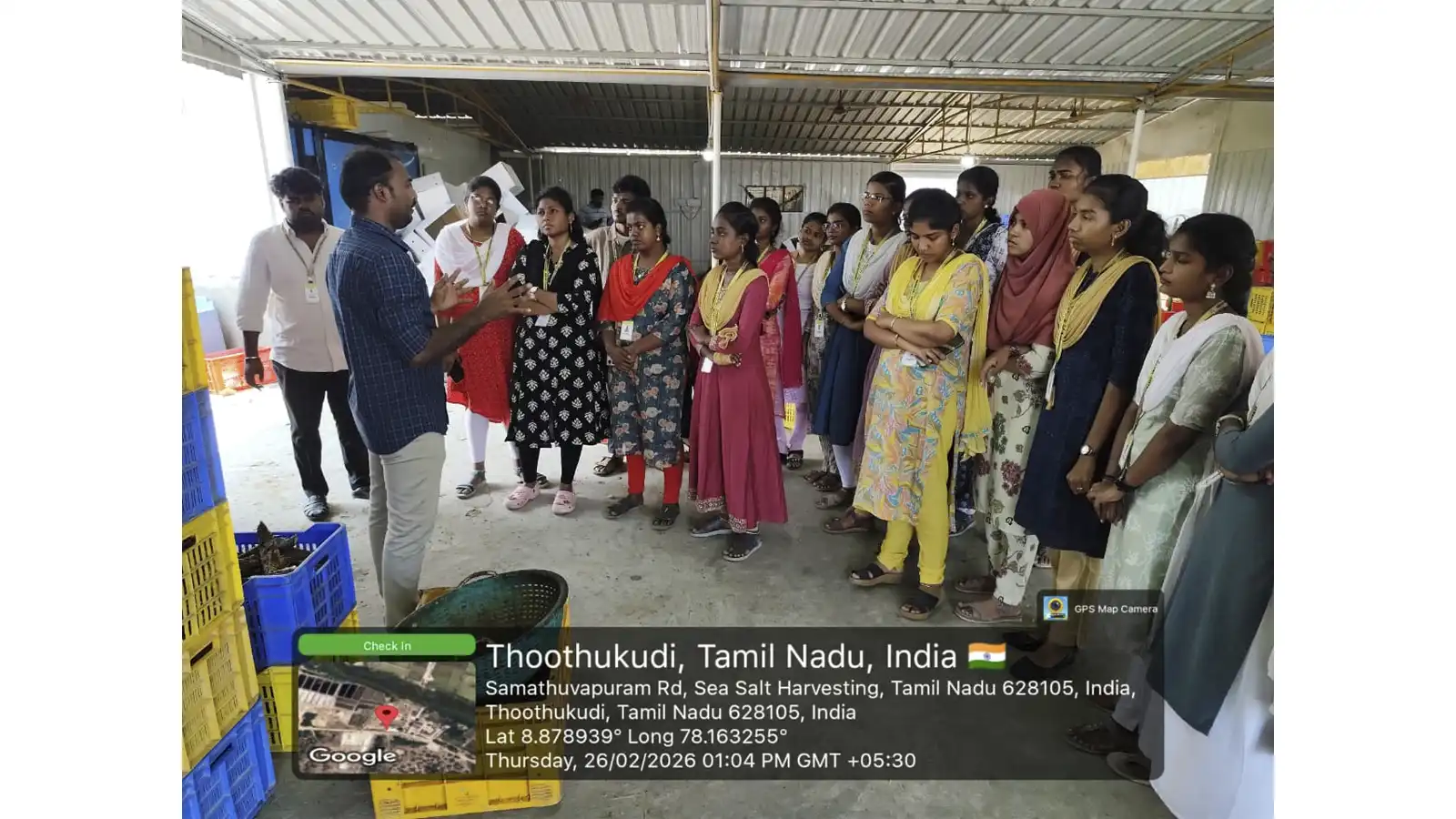
Seafood Industrial Visit Grand Success with 6 Key Insights
Seafood Industrial Visit – Programme Overview
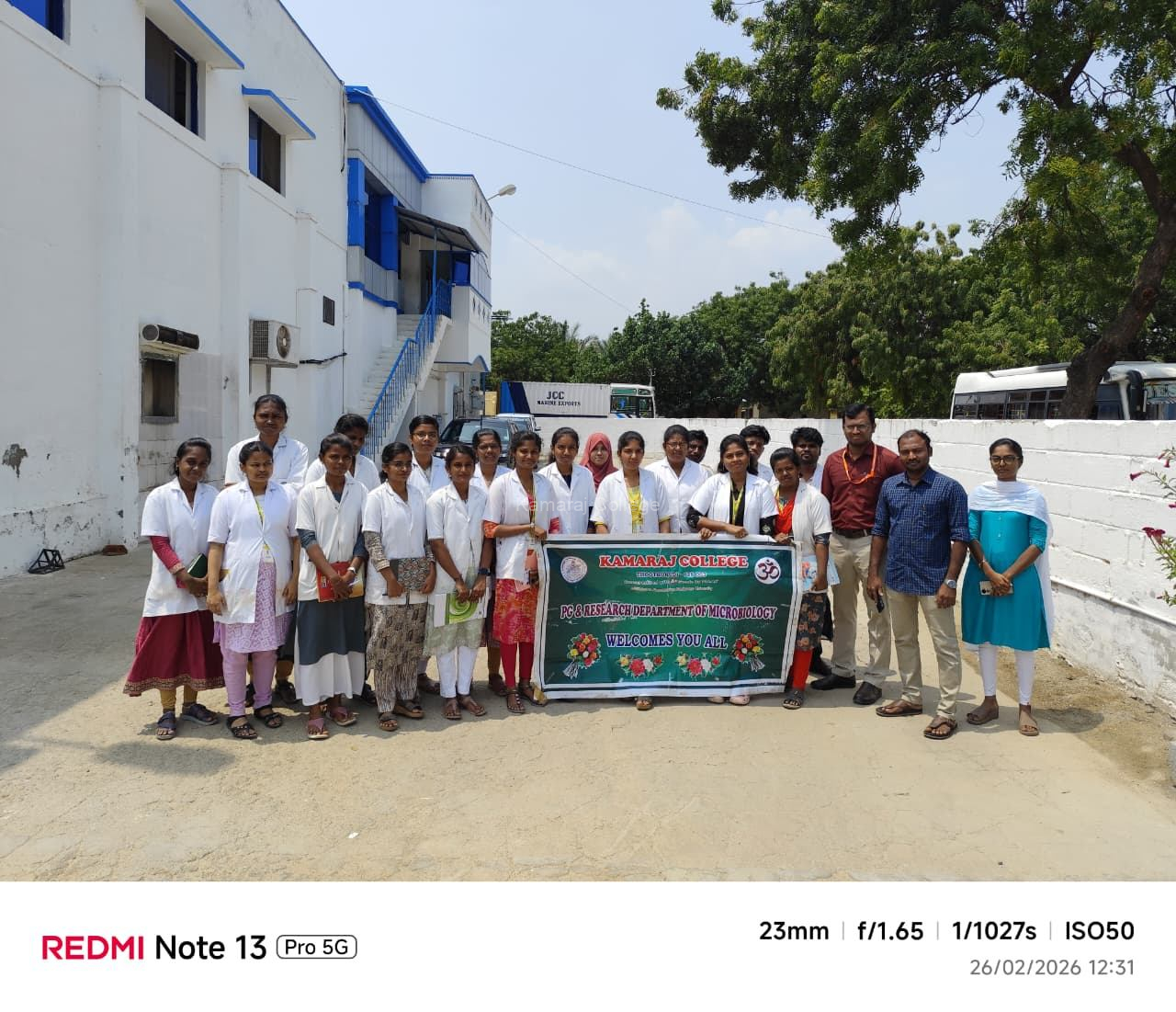
On 26 February 2026, from 10.00 a.m. to 03.00 p.m., the Post Graduate and Research Department of Microbiology of Kamaraj College (Autonomous), Thoothukudi organized a Seafood Industrial Visit to JCC Marine Exports and a nearby dried fish processing unit in Thoothukudi, Tamil Nadu.
The visit was arranged as part of the department’s academic and practical learning programme. The II M.Sc. Microbiology students, accompanied by a faculty member, participated actively in this industrial exposure visit. The programme was conducted with the support of the college management to enhance students’ understanding of industrial microbiology applications in seafood processing and export.
Objectives of the Seafood Industrial Visit
The primary objective of the Seafood Industrial Visit was to bridge classroom knowledge with real-time industrial practices in the seafood sector.
The visit aimed to:
- Understand seafood processing procedures
- Observe quality control measures in export units
- Learn freezing and preservation techniques
- Study hygienic handling and microbial safety
- Explore career opportunities in marine exports
This initiative strengthened the academic foundation of students by exposing them to applied microbiology in a commercial setting.
Visit to JCC Marine Exports
During the Seafood Industrial Visit, the first session was conducted at JCC Marine Exports. The technical staff provided a detailed explanation of the seafood processing workflow.
The process began with:
- Raw Material Receiving: Fresh fish were inspected for quality, texture, odor, and overall condition to ensure export standards.
- Pre-Processing: Washing, cleaning, trimming, and sorting procedures were demonstrated.
- Grading Process: Fish were classified according to size, weight, and quality specifications required for international markets.
Students observed strict hygiene protocols maintained throughout the facility. The importance of temperature control and sanitation in preventing microbial contamination was emphasized.
Freezing Technologies Explained
A major highlight of the Seafood Industrial Visit was the detailed explanation of advanced freezing techniques used to preserve seafood quality.
The staff demonstrated:
- Contact Plate Freezing: A rapid freezing method ensuring uniform temperature distribution.
- Blast Freezing: High-speed freezing using cold air circulation to maintain texture and prevent microbial growth.
The role of freezing in inhibiting bacterial proliferation and extending shelf life was clearly explained. Students were able to connect these techniques with microbiological preservation principles studied in class.
Visit to the Dried Fish Processing Unit
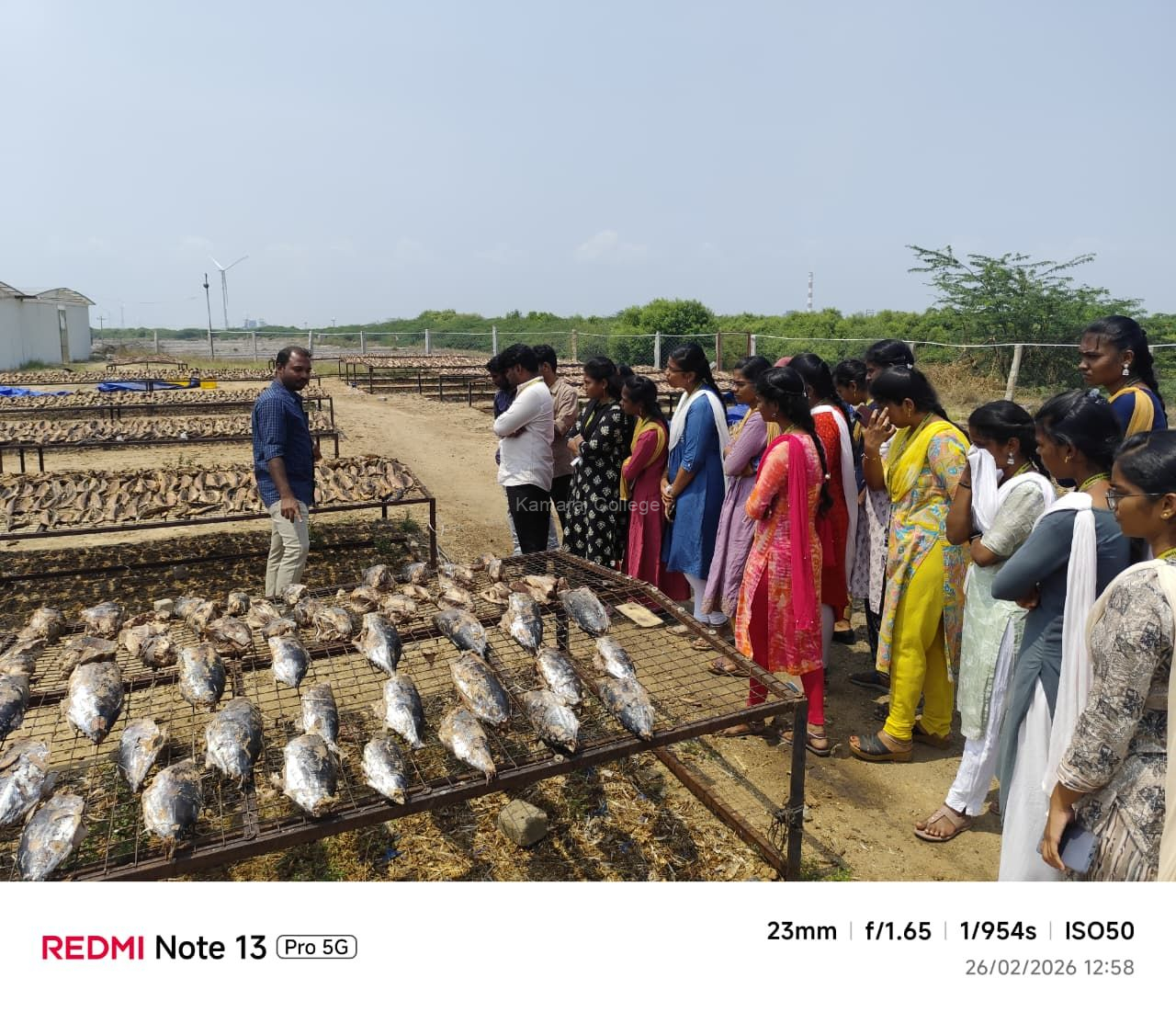
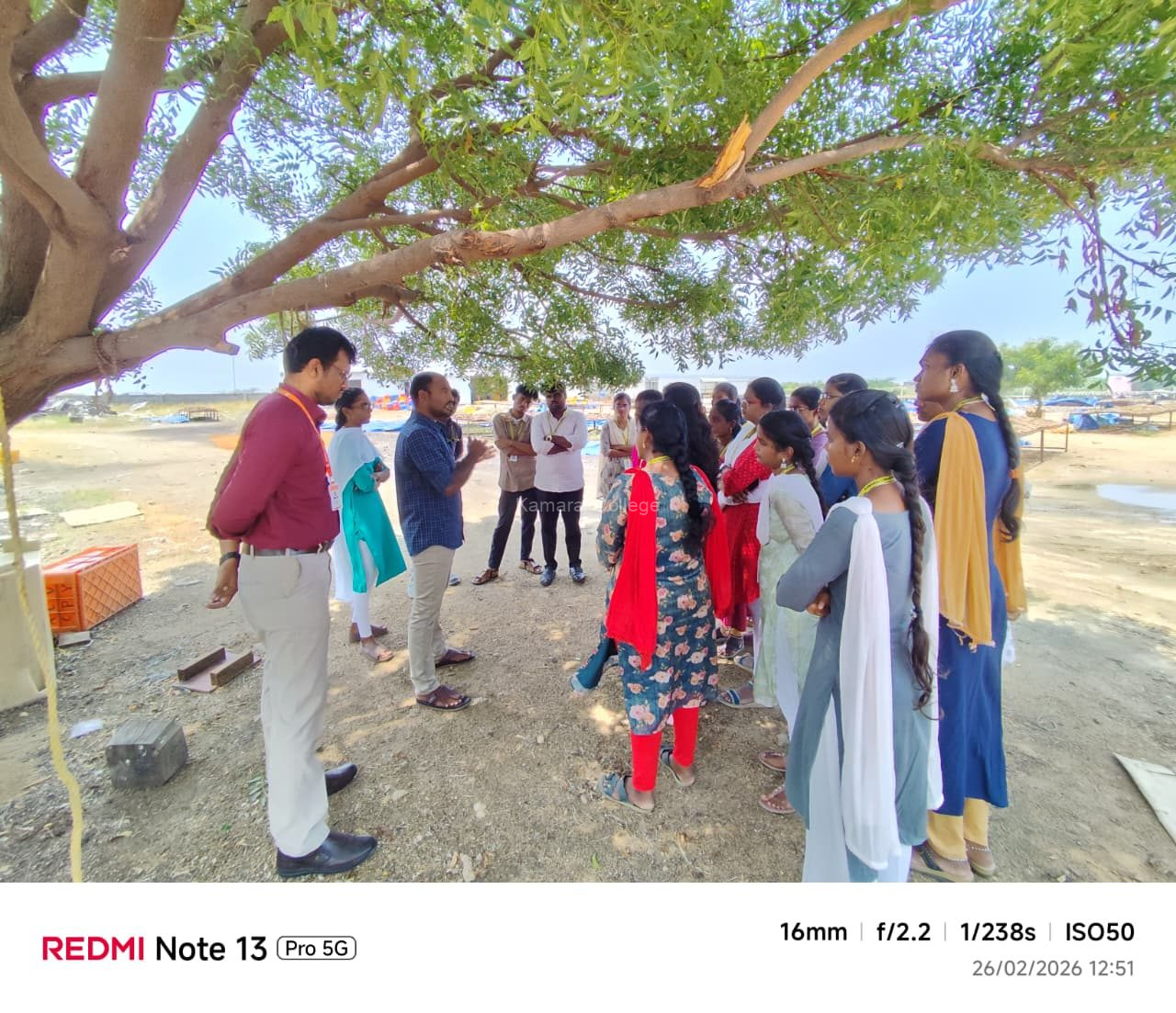
After completing the visit to JCC Marine Exports, the students proceeded to a nearby dried fish processing unit. This segment of the Seafood Industrial Visit provided exposure to traditional yet scientifically managed preservation methods.
The staff explained the stages involved:
- Raw Material Selection: Quality assessment of fish before processing.
- Cleaning and Preparation: Removal of impurities and unwanted materials.
- Boiling as Pre-Treatment: Reducing microbial load before drying.
- Drying Process: Controlled dehydration to ensure long shelf life.
The unit primarily focuses on dried tuna fish processing for export purposes. The visit highlighted the microbiological importance of moisture reduction in preventing spoilage.
Industrial Applications of Microbiology
The Seafood Industrial Visit clearly demonstrated how microbiology plays a critical role in food safety, quality assurance, and export compliance.
Students learned about:
- Hazard Analysis and Critical Control Points (HACCP)
- Microbial testing standards
- Export quality certifications
- Cold chain management systems
This exposure strengthened their understanding of industrial microbiology and food safety regulations.
Learning Outcomes
The Seafood Industrial Visit provided measurable academic and professional benefits:
- Enhanced practical knowledge of seafood processing
- Better understanding of preservation technologies
- Improved awareness of export standards
- Exposure to real-time industrial operations
- Increased confidence in applying theoretical knowledge
Students gained valuable insight into the seafood export industry, which is a major economic sector in coastal Tamil Nadu.
Institutional and Industry Collaboration
Such industrial visits strengthen industry–academia collaboration and create opportunities for experiential learning.
Internal Link:
Kamaraj College (Autonomous), Thoothukudi
External Reference:
Marine Products Export Development Authority (MPEDA)
These collaborations prepare students for professional roles in food safety, export management, and quality assurance sectors.
Conclusion
The Seafood Industrial Visit conducted on 26 February 2026 was highly informative and academically enriching. The visit to JCC Marine Exports and the dried fish processing unit provided hands-on exposure to seafood preservation, grading, freezing, and export practices.
By observing real-time industrial procedures, students gained practical understanding of microbial control, quality assurance, and food safety standards. The department sincerely acknowledges the cooperation of the management and staff of JCC Marine Exports and the dried fish processing unit for facilitating this learning opportunity.
The programme stands as a meaningful step toward integrating academic knowledge with industrial expertise, thereby enhancing the professional competence of postgraduate microbiology students.