

Rocket Workshop 2026: Powerful Hands-On Learning with Model Launch

Report on Model Rocket Building and Launch Workshop
Rocket Workshop was organized by the Department of Physics, Kamaraj College (Autonomous), Thoothukudi, on 12 August 2026 in connection with the Educational Exhibition Programme. The department conducted the one-day Model Rocket Building and Launch Workshop in association with the Educational Arm of Rocket Factory.
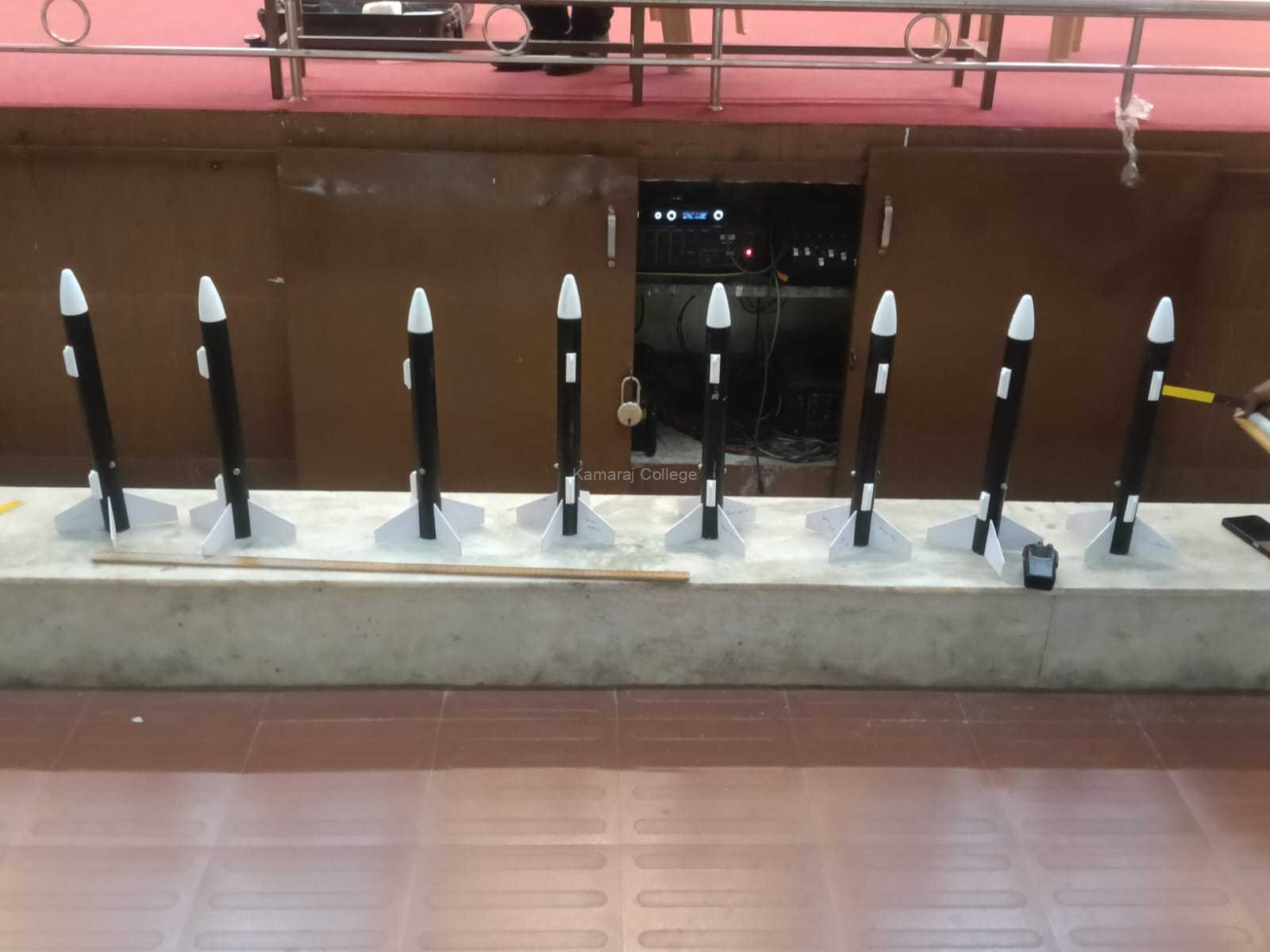
The workshop offered students an exciting opportunity to explore the fundamentals of rocket science through hands-on learning. Moreover, students designed, fabricated and assembled model rockets before witnessing their launch during the Educational Exhibition held on the following day.
Objectives of the Rocket Workshop
The Rocket Workshop aimed to introduce students to the practical aspects of rocketry and encourage scientific curiosity through experiential learning.
The key objectives included:
- Introduce students to the fundamentals of rocket science
- Provide hands-on experience in model rocket building
- Develop basic designing and fabrication skills
- Explain the principles involved in rocket flight
- Develop creativity and problem-solving abilities
- Promote teamwork through practical activities
- Encourage greater interest in science and technology
Thus, the workshop connected scientific concepts with practical application in an engaging learning environment.
Expert Guidance from Rocket Factory India
Mr. Natarajan, Founder and CEO of Rocket Factory India (Ignix Rocket Factory India Private Limited), guided the students throughout the workshop.
He introduced participants to the principles of model rocketry and provided practical instructions at different stages of rocket construction. Furthermore, his guidance helped students understand the technical considerations involved in building a flight-ready model rocket.
The interaction with an industry expert also gave students valuable exposure beyond their regular classroom learning.
Hands-On Model Rocket Building
A major highlight of the Rocket Workshop was the opportunity for students to build their own model rockets.
Under expert guidance, participants gained practical experience in:
- Designing model rockets
- Selecting and understanding components
- Fabricating different sections
- Assembling the rocket
- Checking structural readiness
- Preparing the model for launch
Instead of merely studying rocket science in theory, the students directly applied scientific and technical concepts while constructing their models. As a result, the activity made the learning process more engaging and meaningful.
Interactive Rocket Science Activities
The programme also featured interactive rocket science quizzes that tested and strengthened the students’ understanding of the subject.
These activities encouraged participants to think critically and apply their scientific knowledge. In addition, the interactive format created enthusiasm and made complex concepts easier to understand.
The students actively participated in the activities and gained a broader understanding of the science behind rocket flight.
Flight-Readiness Assessment
After completing their model rockets, the participants learned about flight-readiness assessment.
The resource person guided students on the importance of checking the assembled models before launch. This process helped them understand that successful scientific experiments require careful preparation, observation and testing.
Moreover, the activity introduced students to a systematic approach towards identifying potential problems before practical execution.
Model Rocket Launch at the Educational Exhibition
A special highlight of the Rocket Workshop took place during the Educational Exhibition Programme on 13 August 2026.
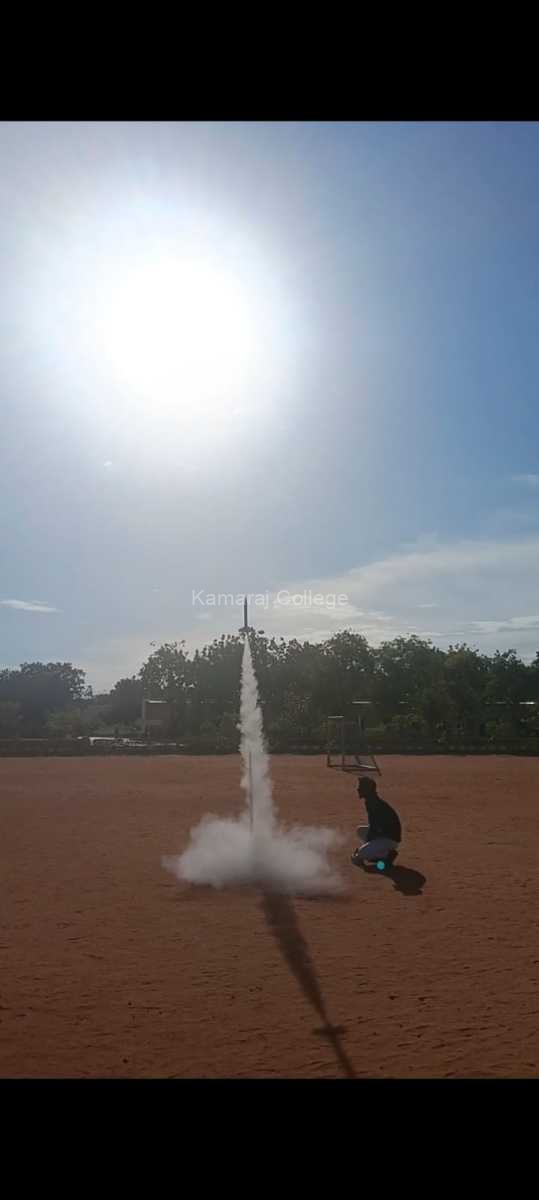
The students launched the model rockets that they had designed and assembled during the previous day’s workshop. The launch transformed their classroom and workshop learning into a real practical experience.
Furthermore, witnessing their own rockets in flight created excitement among the participants and demonstrated the practical application of the scientific principles they had learned.
From Design to Flight
The model rocket launch represented the culmination of the entire learning process.
Students progressed through different stages, from understanding the basic concepts and designing their models to fabrication, assembly, testing and finally launching the rockets.
Therefore, the Rocket Workshop provided a complete experiential learning cycle. It also helped participants understand how scientific knowledge, engineering skills and careful execution work together in practical applications.
Developing Scientific and Technical Skills
The workshop provided students with opportunities to develop several important skills.
Through model rocket building and related activities, students strengthened their:
- Scientific thinking
- Technical skills
- Creativity
- Problem-solving abilities
- Teamwork
- Observation skills
- Practical understanding of physics
Consequently, the programme demonstrated how hands-on activities can complement classroom education and deepen students’ understanding of scientific concepts.
Educational Exhibition and Scientific Demonstrations
The Educational Exhibition featured several innovative models and scientific demonstrations in addition to the model rocket launch.
School students had an opportunity to observe the exhibits and explore different scientific concepts through practical demonstrations. Moreover, the exhibition created an environment where college students could share their knowledge and enthusiasm for science with younger learners.
The model rocket launch became one of the engaging practical demonstrations associated with the exhibition.
Creating Scientific Interest Among Students
The combination of the Rocket Workshop and Educational Exhibition provided an effective platform for promoting scientific interest among both school and college students.
Hands-on activities helped participants understand that science extends beyond textbooks and classrooms. Instead, scientific principles can be tested, observed and applied to create working models and solve practical challenges.
Furthermore, the programme encouraged students to explore fields related to physics, engineering, aerospace technology and space science.
Programme Outcomes
The Rocket Workshop successfully provided students with a memorable experiential learning opportunity.
Through the programme, students were able to:
- Gain practical knowledge of model rocketry
- Understand basic principles of rocket science
- Design and assemble model rockets
- Learn about flight-readiness assessment
- Observe the practical application of scientific concepts
- Develop teamwork and problem-solving abilities
- Improve creativity and technical skills
- Develop greater interest in science and technology
As a result, the workshop successfully combined theoretical understanding with practical experience.
Conclusion
Overall, the Rocket Workshop organized by the Department of Physics, Kamaraj College (Autonomous), Thoothukudi, offered an innovative and engaging learning experience.
Under the guidance of Mr. Natarajan, Founder and CEO of Rocket Factory India, students gained hands-on experience in designing, fabricating, assembling and preparing model rockets for flight. Most importantly, the launch of their own rockets during the Educational Exhibition on 13 August 2026 allowed them to witness the practical outcome of their work.
The programme successfully promoted scientific curiosity, creativity, teamwork, technical knowledge and problem-solving skills. In addition, the Educational Exhibition and scientific demonstrations inspired both school and college students to explore science through practical learning.
Internal Links
External Links
- Indian Space Research Organisation – Explore India’s space missions, launch vehicles, scientific programmes and space technology.
- Vikram Sarabhai Space Centre – Learn more about launch vehicle research and development in India’s space programme.