
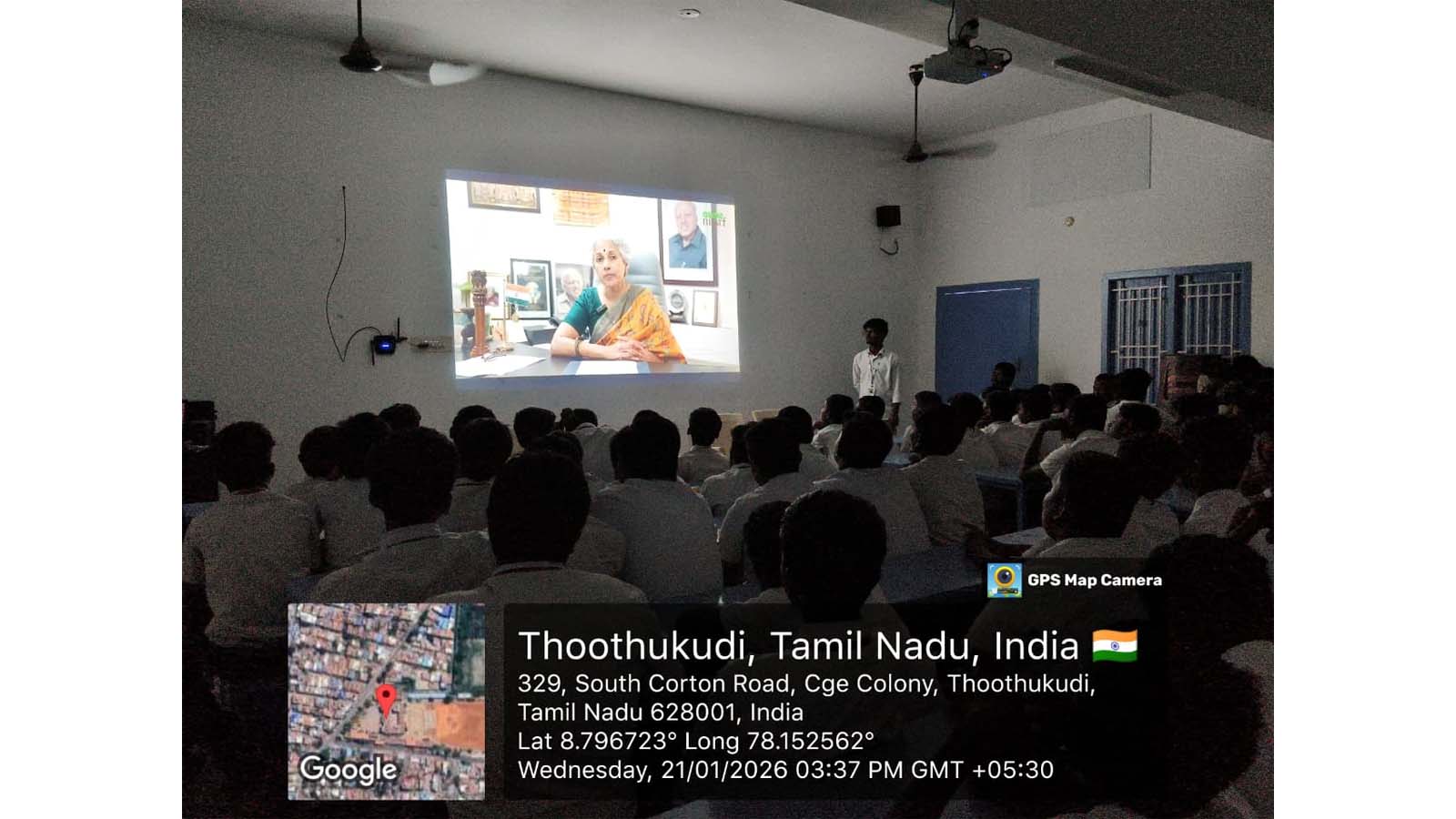
160 Students Empowered by Powerful Marine Debris Awareness Programme


Marine Debris Awareness
A school-level Marine Debris Awareness programme was successfully conducted on 21 January 2025, from 02.00 p.m. to 04.00 p.m. at Karapettai Nadar High School, Thoothukudi. The programme was jointly organized by the M.S. Swaminathan Research Foundation (MSSRF) in collaboration with the HCL Foundation, with the objective of sensitizing school students to the growing threat of marine debris and its impact on ocean ecosystems.
The programme aimed to foster environmental responsibility among young learners, with a special focus on abandoned fishing nets, plastic waste, and their harmful effects on marine biodiversity.
Objectives of the Programme
The key objectives of the Marine Debris Awareness programme were:
- To educate students about the sources and impacts of marine debris
- To highlight the dangers of abandoned fishing nets and ghost fishing gear
- To promote responsible waste management practices
- To encourage youth participation in marine conservation efforts
- To support the vision of a “Waste-free Gulf of Mannar”
Through interactive sessions and expert talks, the programme sought to inspire students to become active stewards of the marine environment.
Inaugural Session and Welcome Address
The programme commenced with an inaugural address delivered by Mr. S. Natarajan, Headmaster of Karapettai Nadar High School. In his address, he welcomed the resource persons, organizers, teachers, and students, and emphasized the importance of environmental education in shaping responsible citizens.
He encouraged students to actively participate in the sessions and apply the knowledge gained to their daily lives, particularly in reducing plastic use and preventing littering.
Special Address on Marine Biodiversity and Coastal Resources
A special address was delivered by Dr. J. Nagarajan, Assistant Professor, Department of Zoology, Kamaraj College (Autonomous), Thoothukudi. He provided a detailed and insightful explanation of how marine debris, particularly abandoned fishing nets and ghost fishing gear, pose serious threats to marine biodiversity and coastal resources.
Dr. Nagarajan highlighted the long-term ecological consequences of marine pollution, including the entanglement of marine animals, destruction of coral reefs, and disruption of marine food chains. He stressed the need for immediate action to reduce marine waste and protect fragile coastal ecosystems.
Expert Insights from MSSRF Team
The MSSRF team shared scientific insights and real-world examples to help students understand the scale and complexity of marine debris. They explained how plastic waste, fishing gear, and other debris enter marine environments and persist for years, causing widespread harm to marine life.
The team also discussed ongoing conservation initiatives and research efforts aimed at addressing marine pollution and restoring coastal ecosystems. Their presentation emphasized community participation, responsible consumption, and waste segregation as key strategies for reducing marine debris.
Student Participation and Interactive Learning
Around 160 students actively participated in the programme and engaged enthusiastically in discussions on marine conservation and responsible waste management. The interactive format allowed students to ask questions, share their observations, and explore practical ways to reduce marine pollution in their communities.
Students were encouraged to reflect on their own habits and consider how small changes, such as reducing single-use plastics and disposing of waste responsibly, can collectively make a significant impact on ocean health.
Educational and Environmental Significance
The Marine Debris Awareness programme served as an effective platform for environmental education, bridging scientific knowledge with practical action. By involving school students at an early age, the programme contributed to building a generation of environmentally conscious citizens.
The initiative aligns with the broader environmental objectives of institutions such as Kamaraj College (Autonomous), Thoothukudi and organizations like M.S. Swaminathan Research Foundation, which work towards sustainable development and ecological conservation.
It also supports national and global efforts to protect marine ecosystems, including initiatives aligned with the United Nations Environment Programme (UNEP) and the Sustainable Development Goals (SDGs), particularly Goal 14: Life Below Water.
Role of Educational Institutions in Marine Conservation
Educational institutions play a vital role in promoting environmental awareness and sustainable practices. Through programmes like this Marine Debris Awareness initiative, schools and colleges can empower students to become informed advocates for marine conservation.
The collaboration between MSSRF, HCL Foundation, and educational institutions demonstrates the importance of partnerships in addressing environmental challenges. Such collaborative efforts enhance the reach and impact of conservation initiatives, ensuring that knowledge is translated into meaningful action.
Conclusion and Key Takeaways
The Marine Debris Awareness programme at Karapettai Nadar High School was a meaningful and impactful initiative that successfully educated students about the dangers of marine debris and the importance of protecting marine ecosystems. The expert addresses, interactive sessions, and active student participation contributed to a deeper understanding of marine conservation and responsible waste management.
The programme reinforced the vision of a “Waste-free Gulf of Mannar” and encouraged students to adopt environmentally responsible behaviours in their daily lives. By nurturing awareness and responsibility among young learners, the initiative contributes to long-term environmental sustainability and the preservation of marine biodiversity.
Long-Term Impact and Community Value
This Marine Debris Awareness programme serves as a reminder that environmental protection begins with awareness and education. By engaging students in meaningful discussions and practical learning, the programme lays the foundation for a cleaner, healthier, and more sustainable marine environment.
Through continued collaboration between research institutions, schools, and community organizations, such initiatives can play a crucial role in safeguarding marine ecosystems for future generations.