
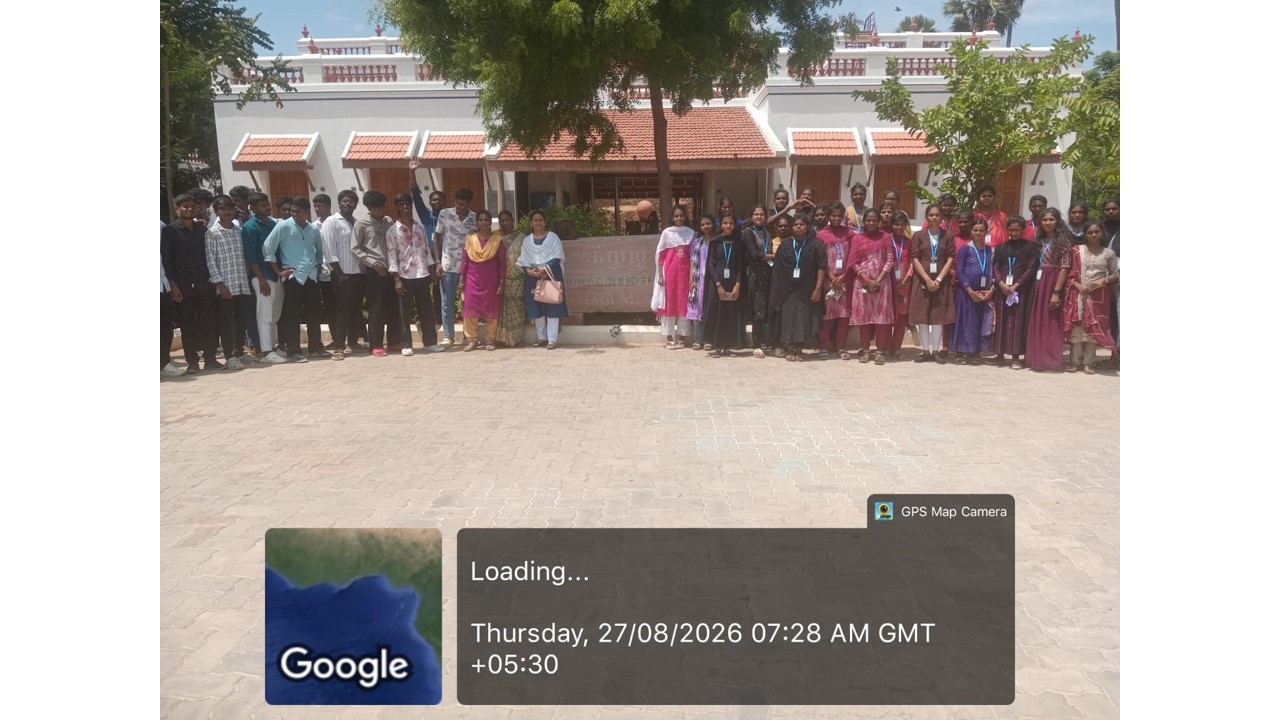
Keezhadi Field Visit: Fascinating Heritage Journey for 51 Tamil Students


Report on Keezhadi Field Visit 2026
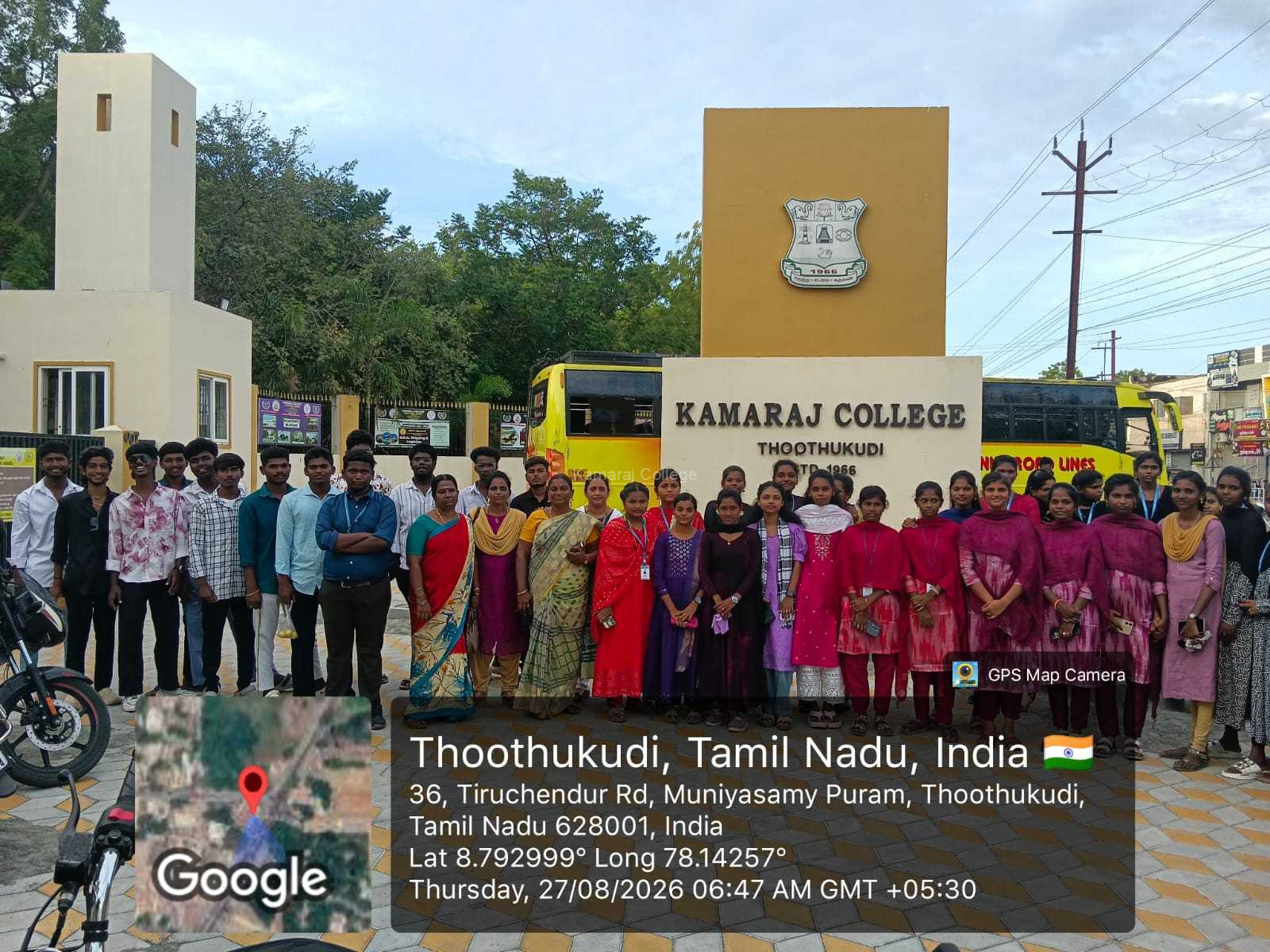
Keezhadi Field Visit was organized by the Department of Tamil, Kamaraj College (Autonomous), Thoothukudi, on 27 August 2026 to provide students with direct exposure to the archaeological, historical and cultural heritage of Tamil Nadu.
As part of the field visit, the students visited the Keezhadi Museum, Keezhadi Archaeological Excavation Site and Thirumalai Nayakkar Mahal. A total of 51 students participated in the educational visit, accompanied by faculty members of the Department of Tamil.
The visit enabled students to observe archaeological discoveries from Keezhadi, understand the heritage of ancient Tamil society and appreciate the architectural excellence of the Thirumalai Nayakkar Mahal.
Most importantly, the field experience helped students connect their study of Tamil language, literature, history and culture with tangible evidence of Tamil civilization.
Objectives of the Field Visit
The Keezhadi Field Visit aimed to provide students with experiential learning beyond the classroom and introduce them to important historical and archaeological sites associated with Tamil heritage.
The major objectives included:
- Provide practical exposure to Tamil history and archaeology
- Introduce students to the archaeological discoveries at Keezhadi
- Create awareness about ancient Tamil civilization
- Help students understand the importance of archaeological evidence
- Explore artefacts associated with the life of ancient Tamil people
- Understand the cultural significance of the Keezhadi excavations
- Appreciate the architectural heritage of Tamil Nadu
- Connect classroom learning with historical sites and material evidence
Thus, the visit provided students with an opportunity to experience history and culture through direct observation.
51 Students Participate in the Field Visit
A total of 51 students from the Department of Tamil participated enthusiastically in the field visit.
The students were accompanied and guided by faculty members of the Department of Tamil throughout the educational tour.
The programme created an opportunity for students to learn outside the conventional classroom environment. Moreover, visiting historically significant locations enabled them to gain a deeper understanding of Tamil heritage.
Visit to Keezhadi Museum
A major highlight of the Keezhadi Field Visit was the visit to the Keezhadi Museum.
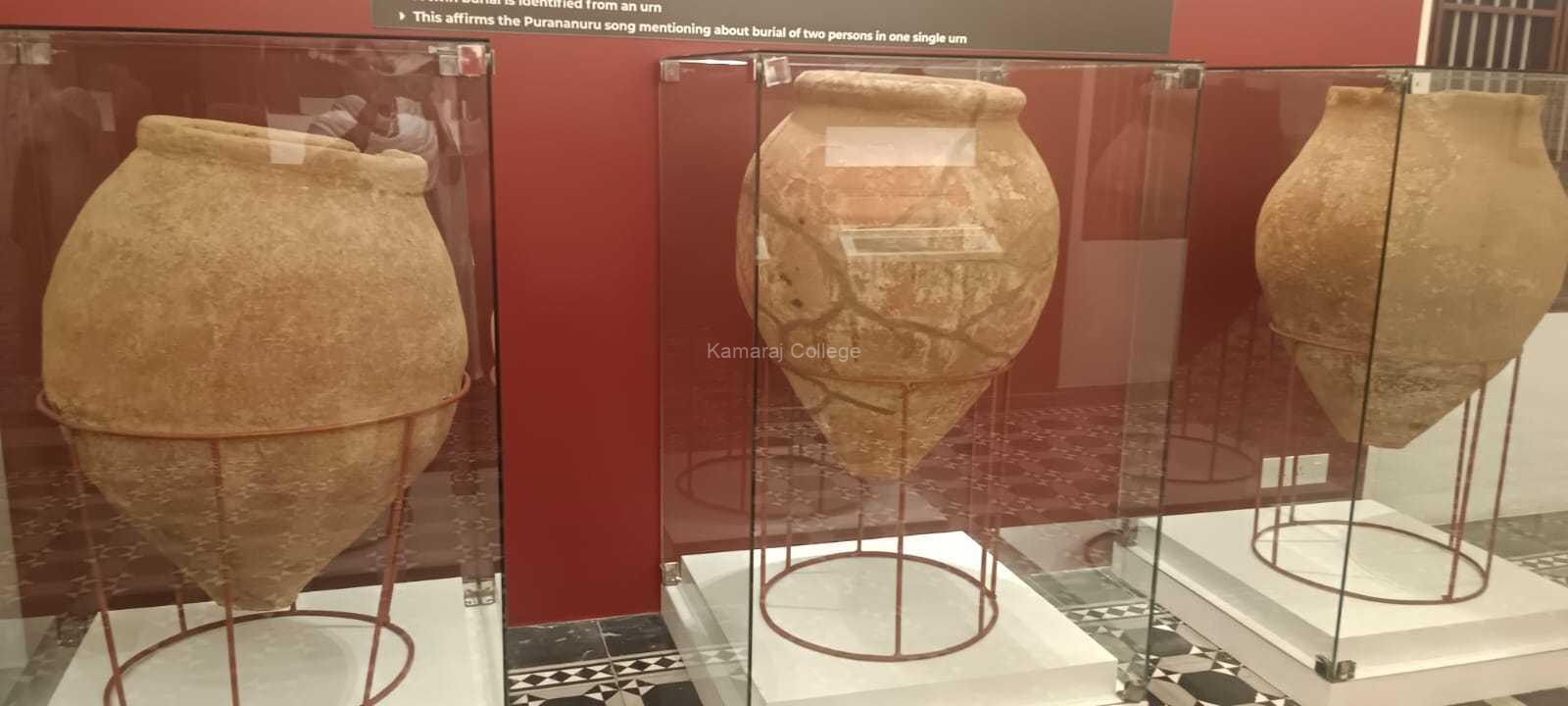
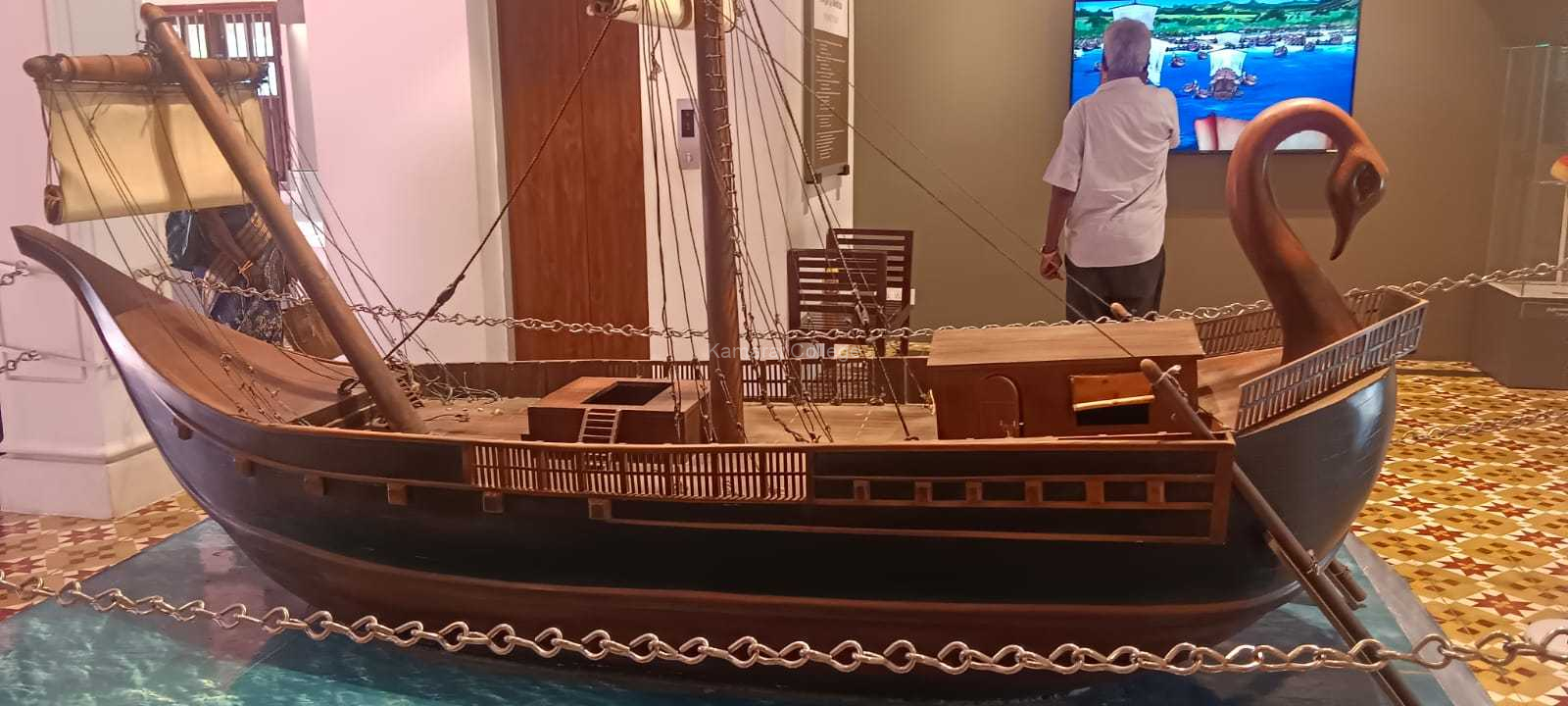
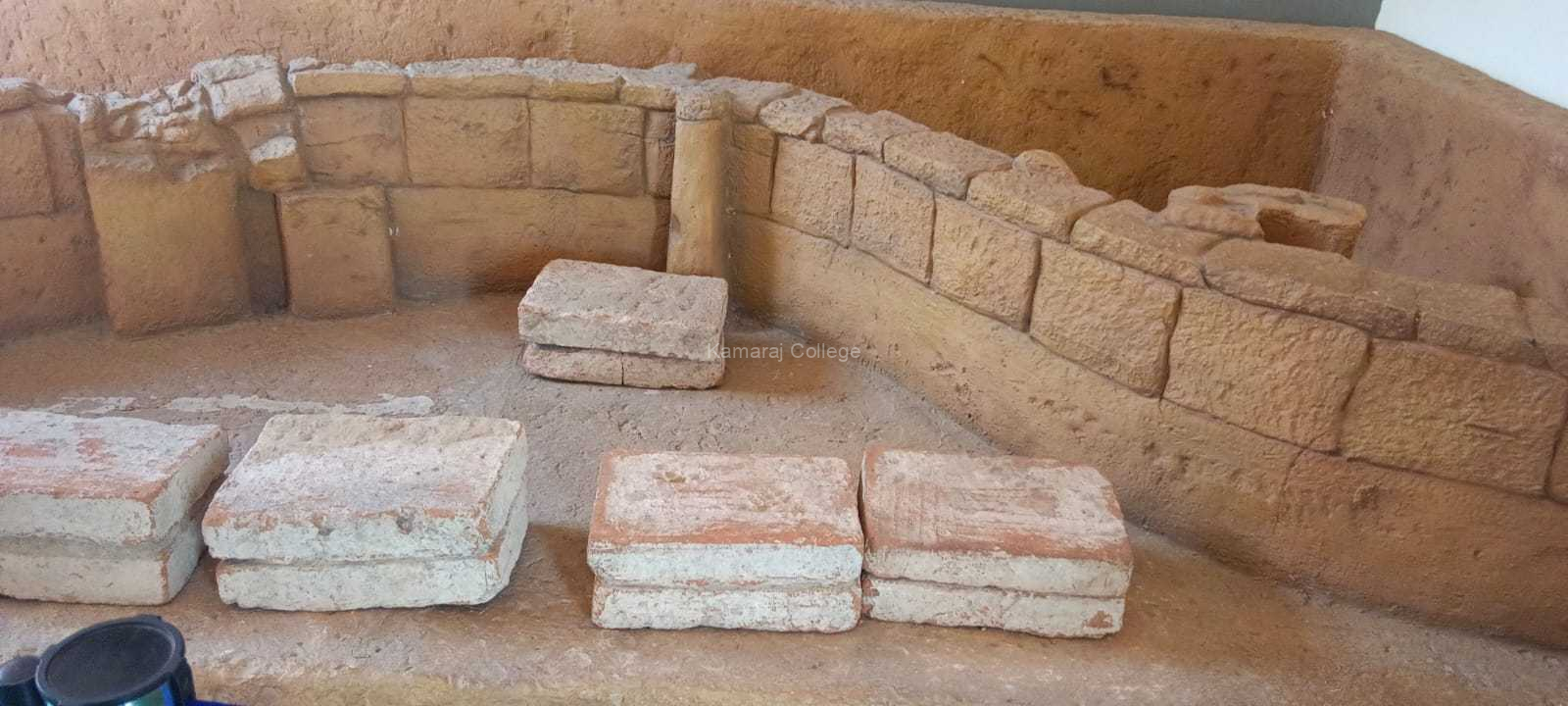
The museum provided students with an opportunity to observe archaeological objects unearthed during the excavations at Keezhadi.
Various ancient objects discovered through archaeological exploration have been preserved and displayed for visitors. Students viewed the exhibits with keen interest and learned about their historical and cultural significance.
The museum experience helped participants understand how archaeological discoveries provide valuable evidence about the life and culture of people who lived in the past.
Exploring Ancient Artefacts
The students observed a variety of archaeological artefacts displayed at the museum.
The exhibits included:
- Ancient objects and artefacts
- Coins
- Weapons
- Ornaments
- Objects associated with everyday life
- Other archaeological discoveries from Keezhadi
These exhibits gave students a valuable opportunity to observe physical evidence connected with the history and culture of ancient Tamil society.
Furthermore, the artefacts helped students understand aspects of social life, craftsmanship, economic activity and material culture.
Understanding Tamil Heritage through Archaeology
The Keezhadi Field Visit helped students understand the importance of archaeology in reconstructing history.
Archaeological discoveries provide material evidence that complements information available through literature and historical records.
For students of Tamil, this connection was particularly valuable because it enabled them to relate their study of Tamil language, literature and culture to archaeological evidence.
Consequently, the visit offered a broader perspective on the historical development of Tamil society.
3D Museum Experience
Another interesting feature of the visit was the 3D museum presentation.
Students watched visual presentations relating to the Keezhadi archaeological discoveries and Tamil heritage. The use of visual technology made the historical information more engaging and easier to understand.
The presentation offered students an opportunity to experience aspects of history through a modern digital medium.
Moreover, combining archaeology with visual technology demonstrated how museums can make historical knowledge more accessible to younger generations.
Visit to Keezhadi Archaeological Excavation Site
The students also visited the Keezhadi Archaeological Excavation Site and viewed the excavation areas with great curiosity.
They observed the locations where archaeological exploration had been carried out and examined the excavation trenches.
This direct exposure helped students understand how archaeological work is conducted and how objects buried beneath the ground are systematically discovered and studied.
The experience was particularly meaningful because students could see the actual location associated with discoveries they had viewed in the museum.
Learning through Direct Observation
Visiting the excavation site transformed archaeological concepts into a direct learning experience.
Students enthusiastically observed the excavation areas and gained a clearer understanding of the effort involved in discovering, documenting and preserving evidence from the past.
Furthermore, the experience encouraged curiosity about history, archaeology, heritage and Tamil civilization.
Such field-based learning enables students to understand historical subjects more effectively than classroom instruction alone.
Keezhadi and Tamil Identity
The Keezhadi experience created a strong awareness among students about the importance of preserving and understanding Tamil heritage.
The archaeological discoveries and exhibits provided opportunities to reflect on the life, culture and material achievements of earlier societies in Tamil Nadu.
For students of Tamil, the visit had particular academic significance because it connected their study of language and literature with broader questions about history, society and cultural identity.
Thus, the Keezhadi Field Visit became an important learning experience that highlighted the richness and continuity of Tamil heritage.
Visit to Thirumalai Nayakkar Mahal
As part of the field visit, the students also visited the historic Thirumalai Nayakkar Mahal in Madurai.
The magnificent palace provided students with an opportunity to observe an important example of Tamil Nadu’s architectural heritage.
Students explored the palace and admired its impressive design, structural features and aesthetic beauty.
The visit added another dimension to the educational tour by introducing students to the architectural and historical heritage of a later period.
Appreciating Architectural Excellence
The architectural features of Thirumalai Nayakkar Mahal attracted considerable interest among the students.
They observed the design and artistic elements of the historic structure and appreciated its architectural beauty.
The experience demonstrated how historical buildings themselves serve as valuable sources for understanding the art, architecture, culture and technological abilities of earlier periods.
Furthermore, visiting the monument encouraged students to recognise the importance of conserving historic buildings for future generations.
Connecting Tamil Studies with Heritage
The field visit was particularly relevant to students of the Department of Tamil.
Language and literature develop within a wider cultural and historical environment. Therefore, understanding the heritage of Tamil society can deepen students’ appreciation of the subjects they study.
Through the visit, students connected their academic learning with:
- Tamil history
- Archaeology
- Ancient Tamil society
- Material culture
- Art and architecture
- Cultural heritage
- Historical identity
Thus, the programme broadened the students’ understanding of Tamil studies beyond language and literature.
Importance of Field-Based Learning
The Keezhadi Field Visit demonstrated the value of experiential learning in higher education.
Students were able to observe archaeological artefacts, visit excavation sites and explore historic architecture directly.
As a result, concepts relating to history and culture became more meaningful and memorable.
Furthermore, field visits encourage students to observe, question and interpret what they encounter. This active learning approach can strengthen both academic understanding and intellectual curiosity.
Role of the Tamil Department Faculty
The faculty members of the Department of Tamil accompanied the 51 students throughout the field visit.
Their guidance helped students understand the academic relevance of the places they visited and encouraged them to observe the exhibits and historical sites carefully.
The visit therefore combined faculty guidance with direct experiential learning, making it an enriching academic activity for the students.
Key Places Visited
The field visit covered three important historical and cultural locations:
- Keezhadi Museum – To observe archaeological artefacts and understand the cultural heritage revealed through the Keezhadi excavations
- Keezhadi Archaeological Excavation Site – To view excavation areas and understand archaeological fieldwork
- Thirumalai Nayakkar Mahal, Madurai – To appreciate historic architecture, structural design and cultural heritage
Together, these locations provided students with a rich combination of archaeological, historical, cultural and architectural learning.
Key Learning Areas
During the educational visit, students gained exposure to:
- Keezhadi archaeological discoveries
- Ancient artefacts
- Coins and ornaments
- Weapons and objects of everyday life
- Archaeological excavation methods
- Tamil cultural heritage
- Historical interpretation
- Museum-based learning
- 3D presentation of archaeology and heritage
- Historic architecture
Therefore, the visit offered students a multidisciplinary learning experience combining Tamil studies, history, archaeology and architecture.
Programme Outcomes
The Keezhadi Field Visit produced several valuable academic outcomes.
Through the programme, students:
- Gained direct exposure to important archaeological sites
- Observed artefacts discovered at Keezhadi
- Developed greater awareness of Tamil heritage
- Understood the importance of archaeology in studying history
- Experienced technology-supported museum learning
- Observed archaeological excavation areas directly
- Appreciated the architecture of Thirumalai Nayakkar Mahal
- Connected classroom learning with historical evidence
- Developed greater interest in heritage conservation
- Strengthened their understanding of Tamil history and cultural identity
Overall, the field visit successfully transformed historical and cultural learning into a direct and memorable experience.
Conclusion
The Keezhadi Field Visit organized by the Department of Tamil, Kamaraj College (Autonomous), Thoothukudi, on 27 August 2026 was an enriching and educational experience for the 51 participating students.
The visit to the Keezhadi Museum enabled students to observe archaeological artefacts and learn about the cultural and historical significance of the discoveries. The 3D museum presentation further enriched their understanding of Keezhadi archaeology and Tamil heritage.
Meanwhile, the visit to the Keezhadi Archaeological Excavation Site allowed students to view the excavation areas directly and understand the importance of archaeological research.
The visit to Thirumalai Nayakkar Mahal gave students an opportunity to appreciate the architectural excellence and beauty of one of Tamil Nadu’s important historic monuments.
Most importantly, the field visit helped students recognise the depth and richness of Tamil history, culture and identity. The archaeological evidence at Keezhadi offered them a meaningful connection with the heritage they encounter through their study of Tamil language and literature.
Overall, the programme successfully combined academic learning, archaeology, history, culture and heritage and provided the students with a memorable field-based learning experience.
Internal Link
External Links
- Tamil Nadu Department of Archaeology – Explore official information about archaeological excavations, heritage sites and archaeological research in Tamil Nadu.
- Archaeological Survey of India – Explore information about India’s archaeological heritage, historic monuments and conservation activities.