

IQAC Internal Audit 2026: Powerful Quality Review Across 23 Departments




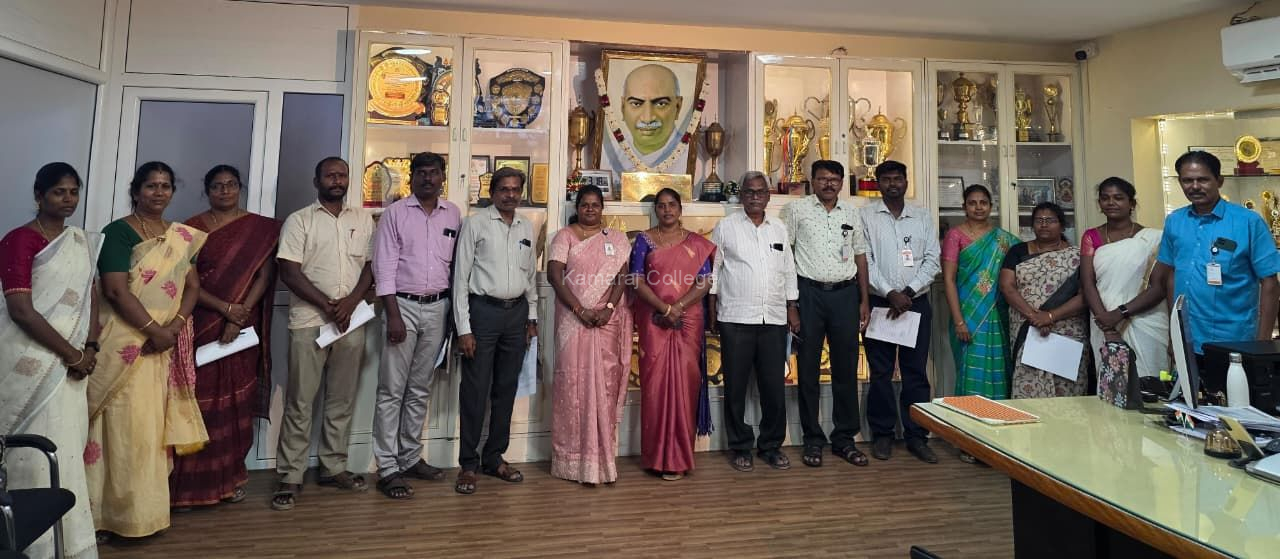
Report on IQAC Internal Audit 2025–2026
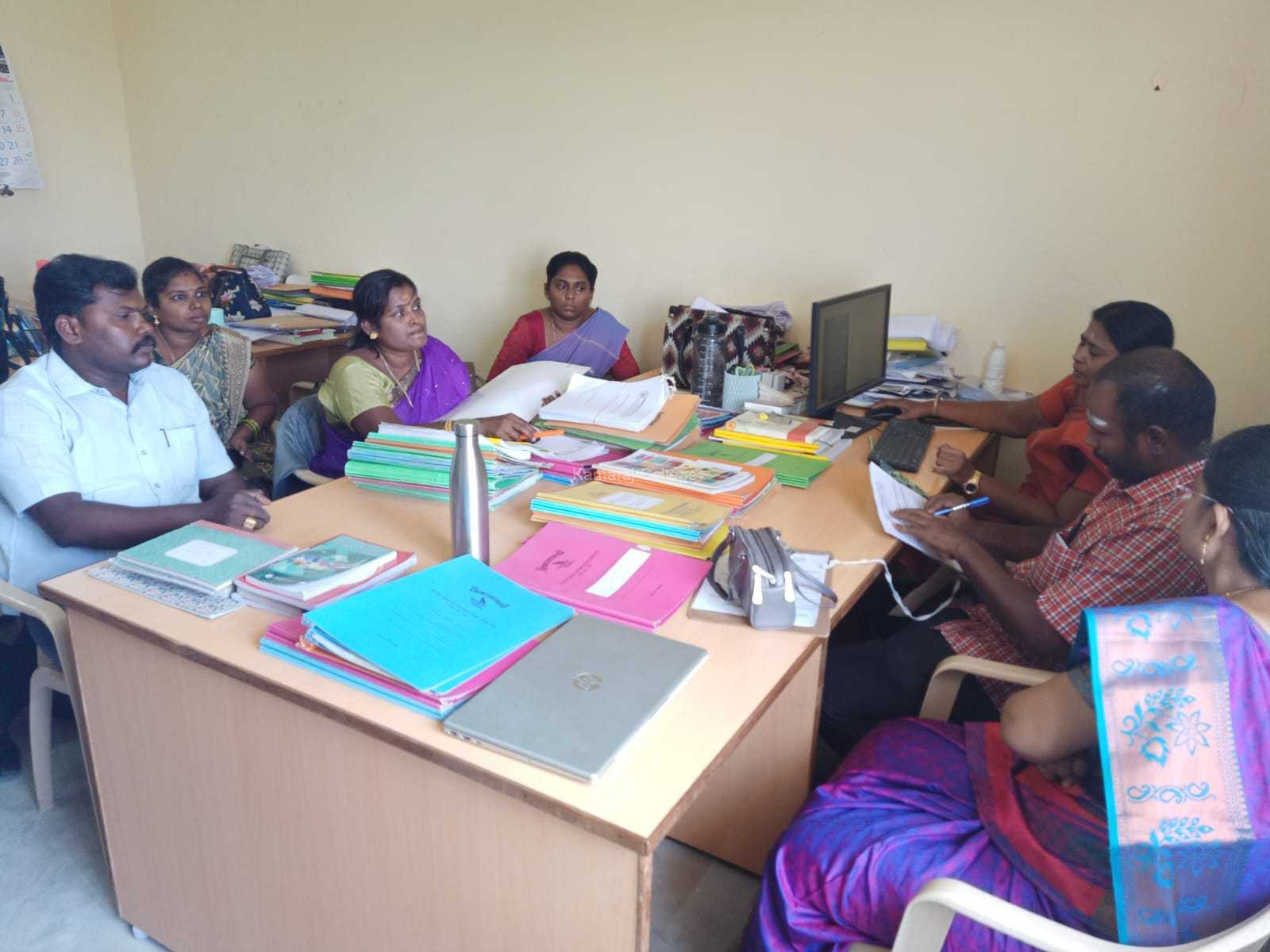
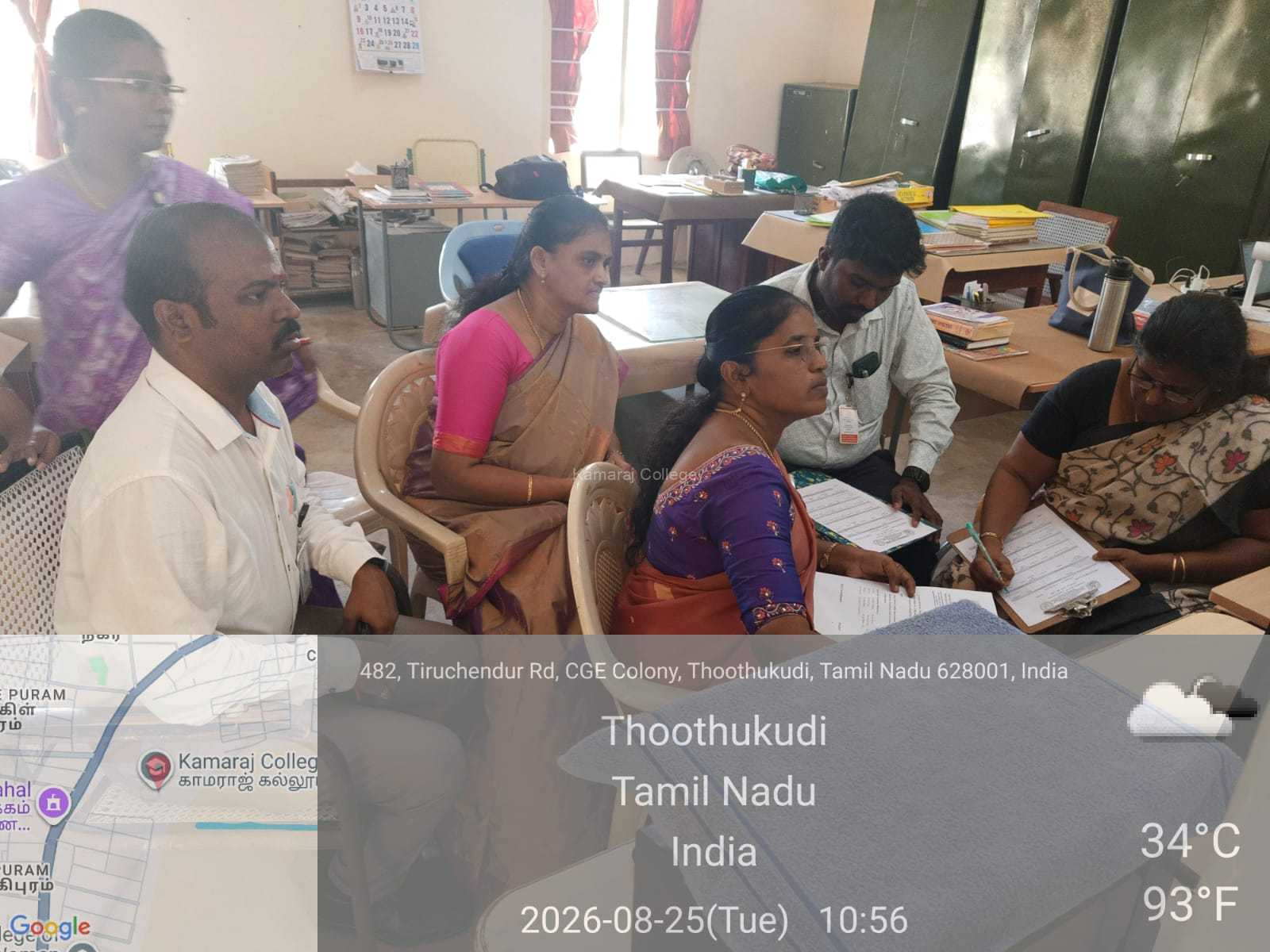
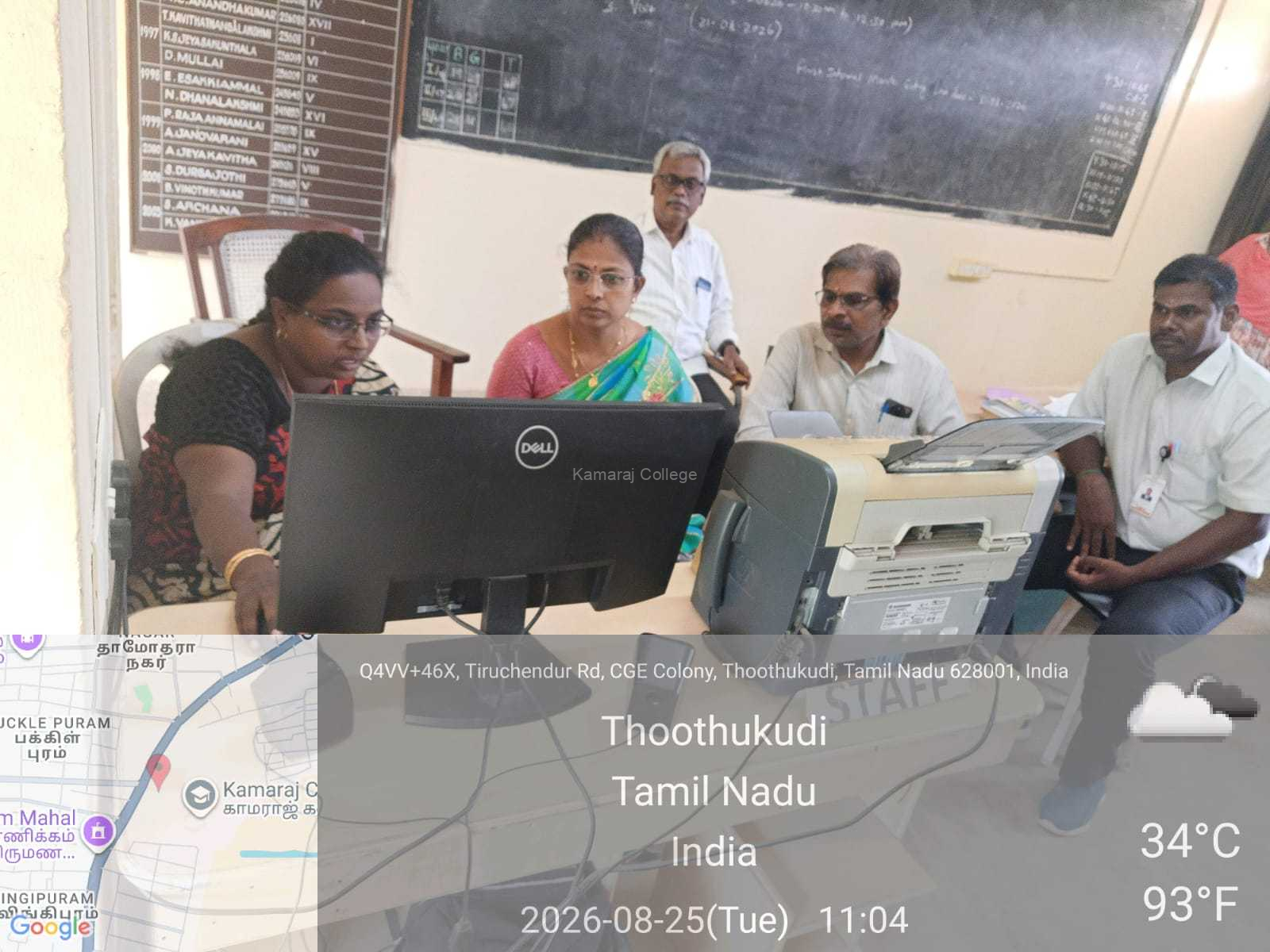
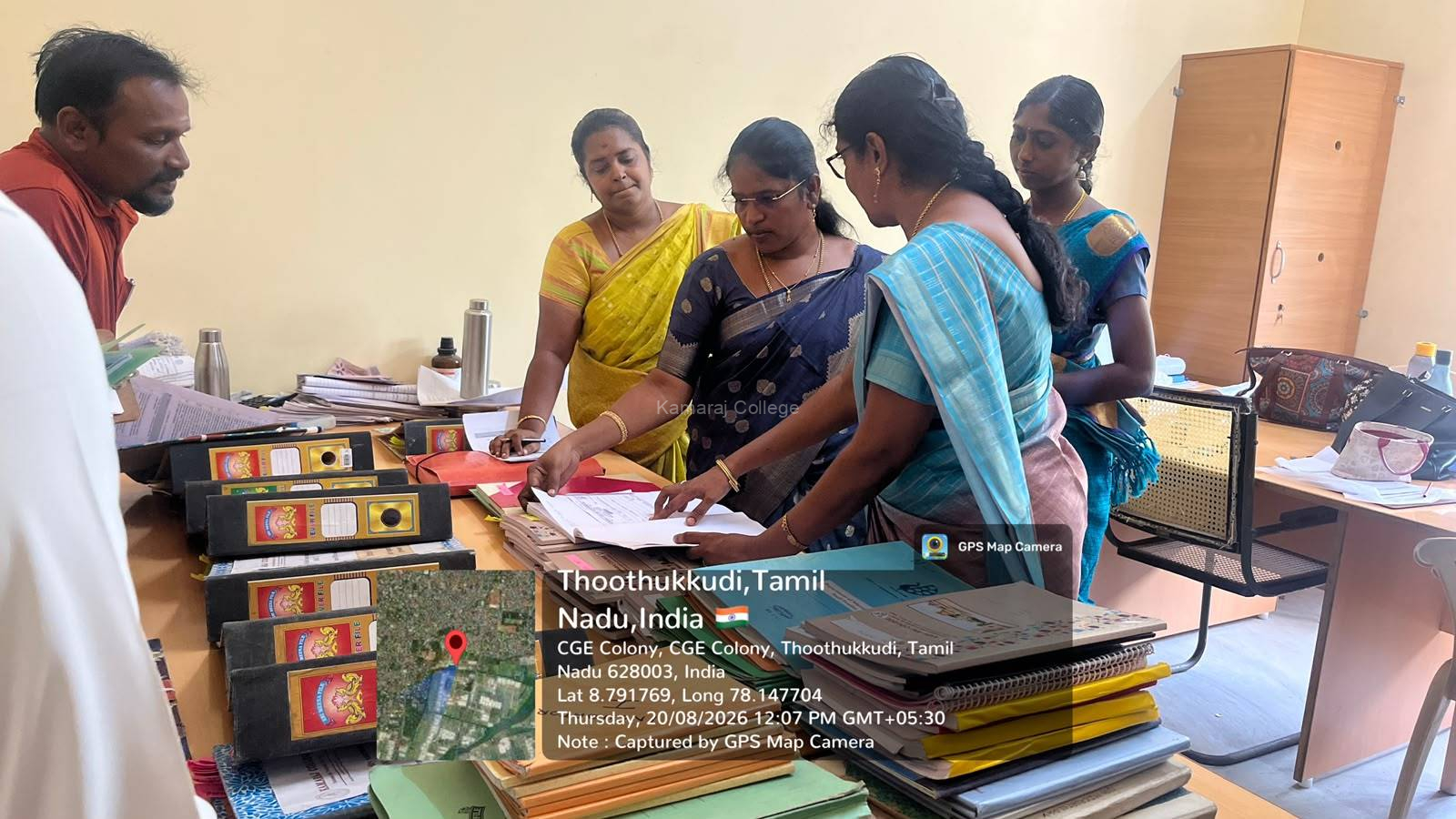
IQAC Internal Audit for the academic year 2025–2026 was conducted by the Internal Quality Assurance Cell (IQAC), Kamaraj College (Autonomous), Thoothukudi, on 20, 22, 24 and 25 August 2026. The comprehensive quality review covered 23 academic departments, including 11 aided departments and 12 self-financing departments.
The audit reviewed academic records, teaching-learning practices, faculty development, student activities, research initiatives, infrastructure and supporting evidence. Moreover, it helped identify departmental strengths, good practices and areas that require further improvement.
Objectives of the IQAC Internal Audit
The IQAC Internal Audit aimed to assess the effectiveness of academic and administrative practices across the departments and promote continuous quality enhancement.
The major objectives included:
- Verify academic and administrative records
- Review curriculum implementation
- Assess teaching-learning practices
- Review faculty development initiatives
- Evaluate student activities and progression
- Examine research and publication activities
- Assess internships and industry engagement
- Review community engagement initiatives
- Identify institutional and departmental good practices
- Recommend measures for continuous quality improvement
Thus, the audit served as an important mechanism for strengthening the institution’s quality assurance system.
23 Departments Covered in the Audit
The audit team carried out the review across 23 departments of Kamaraj College.
These comprised:
- 11 Aided Departments
- 12 Self-Financing Departments
- 23 Departments in Total
The multi-day schedule enabled the committee to review departmental practices and supporting records systematically.
Internal Audit Committee
The IQAC Internal Audit 2025–2026 was carried out by the following Internal Audit Committee members with the support of the Attribute Coordinators:
- Prof. T. Ravi – Associate Professor & Head, Department of Computer Science
- Dr. D. Kanagavel – Associate Professor & Head, Department of Chemistry
- Dr. A. Velkumar – Assistant Professor & Head, Department of Economics
- Dr. P. Periyasamy – Associate Professor, Department of Mathematics
- Dr. S. Abirami – Assistant Professor & Head, Department of Microbiology
- Dr. V. Gopala Krishnan – Assistant Professor & Head, Department of Commerce (SF)
The committee members systematically reviewed the records and interacted with the departments to understand their academic and quality initiatives.
Academic and Administrative Record Verification
A major component of the IQAC Internal Audit involved the verification of academic and administrative records.
The audit team examined departmental documentation to determine whether departments maintained their records systematically and provided suitable supporting evidence. Furthermore, the review helped departments identify areas where documentation could become more structured and consistent.
Proper documentation remains essential for institutional quality assurance because it provides measurable evidence of academic activities and outcomes.
Review of Teaching-Learning Practices
The audit team reviewed curriculum implementation, lesson plans, teaching-learning practices and examination-related records.
Special attention was given to the use of LMS and ICT-enabled teaching practices. The departments demonstrated satisfactory adoption of technology-supported teaching methods and academic planning.
Moreover, the audit recognised good practices that supported student engagement and effective curriculum delivery.
Faculty Development and Student Activities
The committee examined faculty profiles, professional development activities and student-oriented programmes.
The departments demonstrated very satisfactory performance in faculty development, mentoring and student participation. In addition, students actively participated in academic, co-curricular and skill-oriented activities.
The audit observed that these initiatives contributed positively to the overall academic environment of the institution.
Research and Innovation Review
Research formed another important component of the IQAC Internal Audit.
The committee reviewed research publications and other research-related activities carried out by the departments and faculty members. While recognising the existing research contributions, the audit recommended greater emphasis on quality research output.
In particular, departments were encouraged to strengthen:
- Quality research publications
- Patent-related activities
- Funded research projects
- Research collaboration
- Outcome-oriented research documentation
Consequently, strengthening the research ecosystem emerged as an important area for future development.
Internships and Industry Engagement
The audit also reviewed departmental activities related to internships, industry interaction and collaborative initiatives.
Departments demonstrated involvement in internship and skill-development activities. However, the committee recommended expanding meaningful industry collaborations to provide students with greater practical and professional exposure.
Furthermore, stronger industry engagement can support internships, placement opportunities, collaborative projects and career-oriented learning.
Infrastructure and Learning Resources
The IQAC Internal Audit included a review of infrastructure and learning resources.
The committee examined the available departmental infrastructure, library facilities and other academic resources. Overall, the departments demonstrated satisfactory maintenance and utilisation of their facilities.
The review also emphasised the importance of maintaining suitable records and evidence related to infrastructure utilisation and academic support services.
Alumni, MoUs and Community Engagement
The audit team reviewed alumni activities, Memoranda of Understanding (MoUs) and community engagement programmes conducted by the departments.
Several departments demonstrated good practices in community-oriented activities and student engagement. Moreover, such initiatives reflected the institution’s efforts to extend learning beyond the classroom.
The audit encouraged departments to strengthen these activities further and document their measurable outcomes systematically.
Good Practices Observed
The audit identified several positive practices across the departments.
Key strengths included:
- Effective academic planning
- ICT-enabled teaching and learning
- Faculty development initiatives
- Student mentoring
- Active student participation
- Internship activities
- Research publications
- Community engagement
- Infrastructure maintenance
Overall, the departments demonstrated a positive academic environment and active participation in institutional quality initiatives.
Key Recommendations for Quality Enhancement
While appreciating the existing practices, the IQAC Internal Audit identified areas that require additional attention.
The audit recommended greater focus on:
- Systematic documentation and evidence management
- Quality research and publications
- Patents and funded research projects
- Industry collaborations
- SWAYAM, MOOCs and NPTEL participation
- Skill-development activities
- Student placement and career progression
- Higher education progression
- Entrepreneurship development
- Complete reports and attendance records
- Proper maintenance of certificates
- Geo-tagged photographs for relevant activities
- Outcome-based supporting evidence
These recommendations provided departments with clear areas of focus for further quality improvement.
Strengthening Documentation and Evidence Management
The audit placed particular emphasis on systematic documentation.
Departments were advised to complete pending records and maintain proper reports, attendance details, certificates and supporting documents for academic and student activities. In addition, relevant activities should have suitable geo-tagged photographs and measurable outcome evidence.
The committee also recommended maintaining an attribute-wise evidence repository. This approach can make documentation easier to retrieve, verify and update.
Focus on Student Progression
The audit recommended greater attention to measurable student outcomes.
Departments were encouraged to systematically track and strengthen student progression in areas such as:
- Campus placement
- Higher education
- Competitive examinations
- Skill development
- Entrepreneurship
- Internships and professional exposure
Therefore, the audit highlighted the importance of connecting academic activities with clear student outcomes.
Overall Departmental Performance
The 23 departments covered by the audit demonstrated satisfactory overall performance.
The audit observed good academic practices, active student participation, effective mentoring, faculty development initiatives and satisfactory infrastructure maintenance. At the same time, the committee identified opportunities for further improvement in documentation, research, industry linkage, student progression and outcome-based evidence.
Departments were advised to continue their existing good practices while systematically addressing the identified gaps.
Internal Audit Review Meeting
Following the completion of the audit, the Review Meeting of Internal Audit 2025–2026 took place on 25 August 2026 at 2.30 p.m. in the Principal’s Room.
Dr. K. Bhanumathi, Principal, Kamaraj College (Autonomous), presided over the meeting.
The review provided an opportunity for the Internal Audit Committee to consolidate its observations and discuss the overall findings from the departmental visits.
Principal Appreciates the IQAC Audit Committee
During the review meeting, Dr. K. Bhanumathi appreciated and congratulated the IQAC Audit Committee for successfully completing the Internal Audit 2025–2026.
The committee members reviewed the key strengths, observations and areas for improvement identified during the audit. Furthermore, they discussed measures to address the gaps and strengthen the existing quality initiatives of the institution.
The Principal’s appreciation recognised the systematic efforts of the committee and Attribute Coordinators in completing the multi-department quality review.
Review and Continuous Improvement
The review meeting focused on converting audit observations into meaningful quality improvements.
The discussions emphasised:
- Strengthening existing quality practices
- Addressing identified academic and administrative gaps
- Improving documentation systems
- Enhancing research outcomes
- Expanding industry engagement
- Improving student progression
- Maintaining systematic supporting evidence
- Ensuring continuous academic and administrative improvement
Thus, the review meeting reinforced a structured approach towards institutional quality enhancement.
Audit Outcomes
The IQAC Internal Audit provided the institution and departments with a comprehensive understanding of their existing strengths and improvement priorities.
The audit successfully:
- Reviewed 23 aided and self-financing departments
- Verified key academic and administrative records
- Identified effective departmental practices
- Reviewed teaching-learning and ICT practices
- Assessed research and student development activities
- Identified documentation gaps
- Recommended measures for stronger research and industry engagement
- Emphasised measurable student progression
- Promoted systematic evidence management
- Strengthened the culture of continuous quality improvement
Consequently, the audit created a clear framework for departments to build upon their strengths and address areas requiring further attention.
Conclusion
Overall, the IQAC Internal Audit 2025–2026 conducted by the Internal Quality Assurance Cell of Kamaraj College (Autonomous), Thoothukudi, served as an important institutional quality enhancement exercise.
The comprehensive review of 23 departments across four audit days identified satisfactory academic practices, active student participation, faculty development, mentoring, research activities and infrastructure maintenance. At the same time, the audit provided clear recommendations for improving documentation, quality research, industry collaboration, skill development, student progression and outcome-based evidence.
The final review meeting chaired by Dr. K. Bhanumathi, Principal, further strengthened the institution’s approach towards addressing the observations and building on existing good practices.
The successful completion of the audit reaffirmed Kamaraj College’s commitment to quality assurance, continuous improvement, institutional effectiveness and academic excellence.
Internal Links
External Links
- National Assessment and Accreditation Council – Explore quality assurance and accreditation frameworks for higher education institutions.
- University Grants Commission – Learn more about higher education quality standards and academic initiatives in India.