
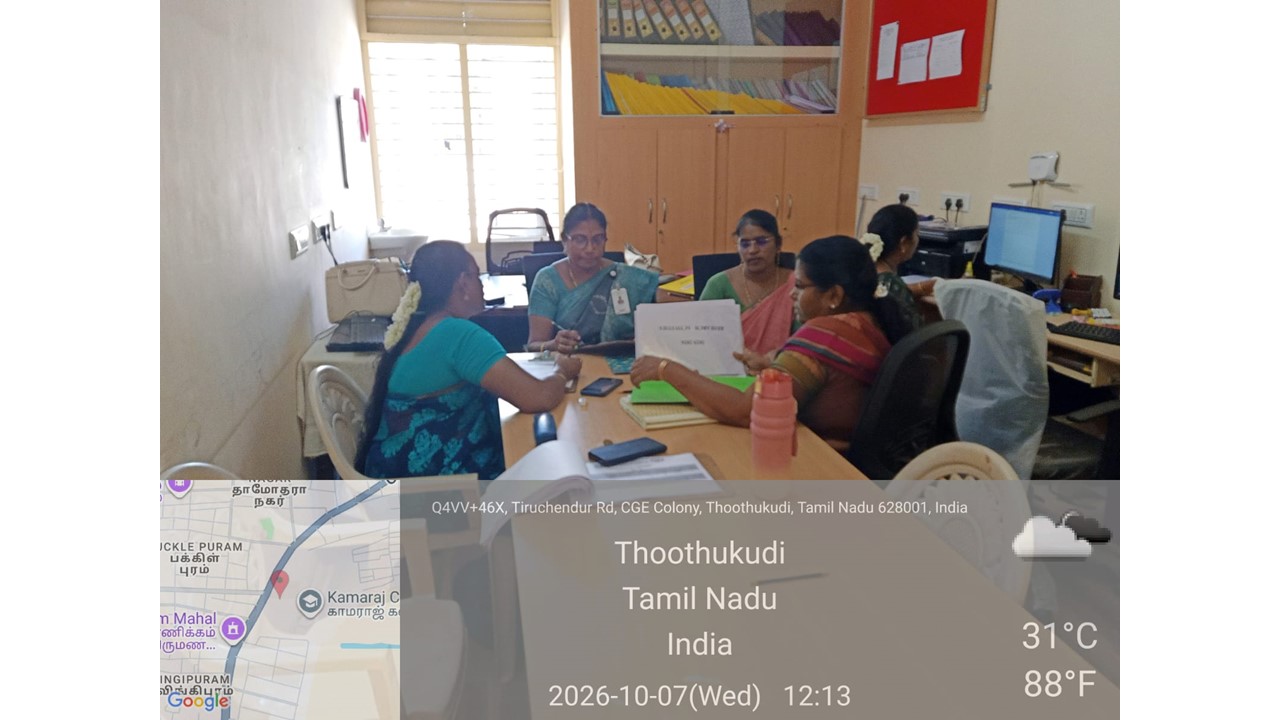
IQAC Internal Audit 2026: Strengthening Institutional Quality at Kamaraj College
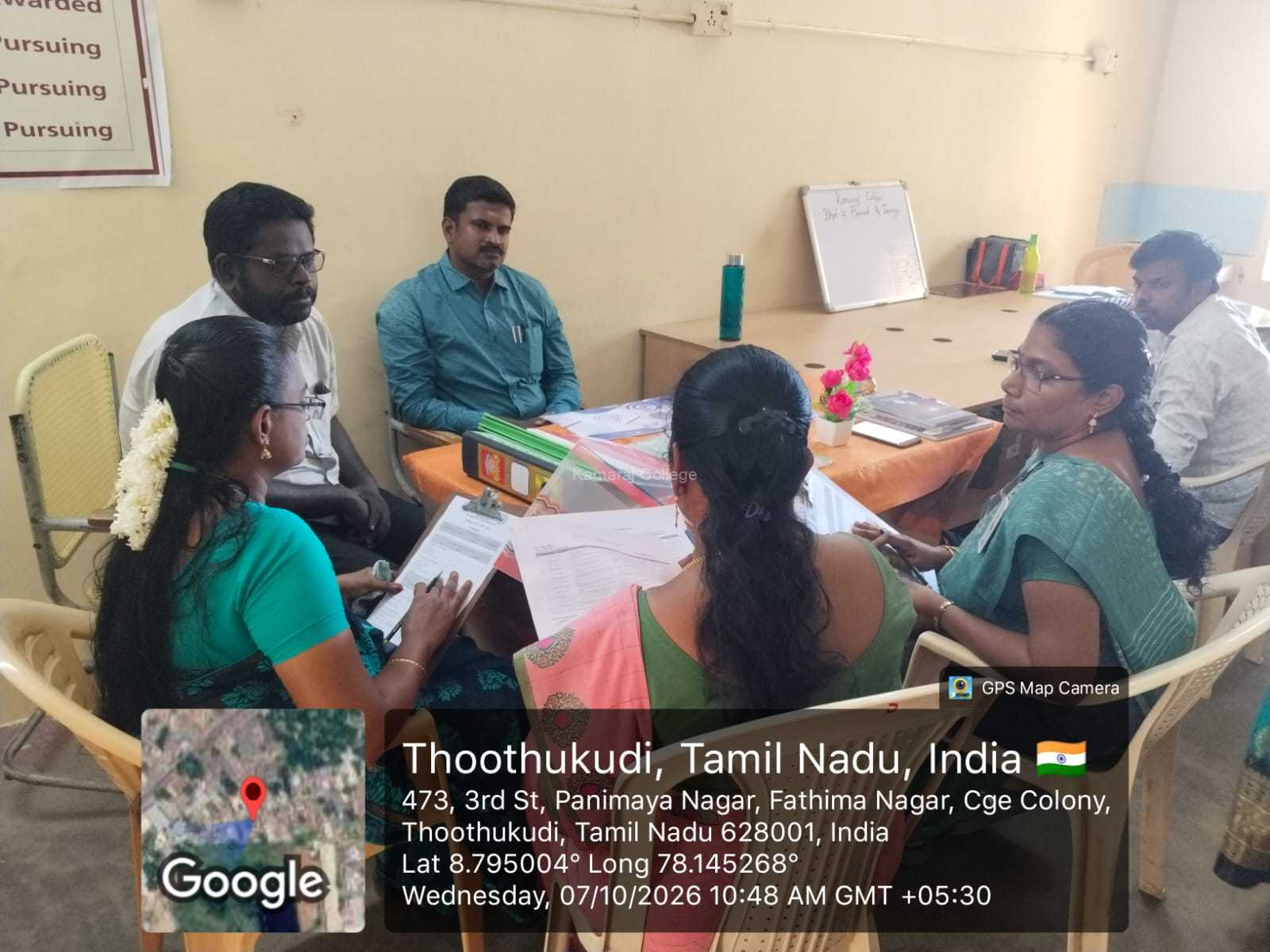
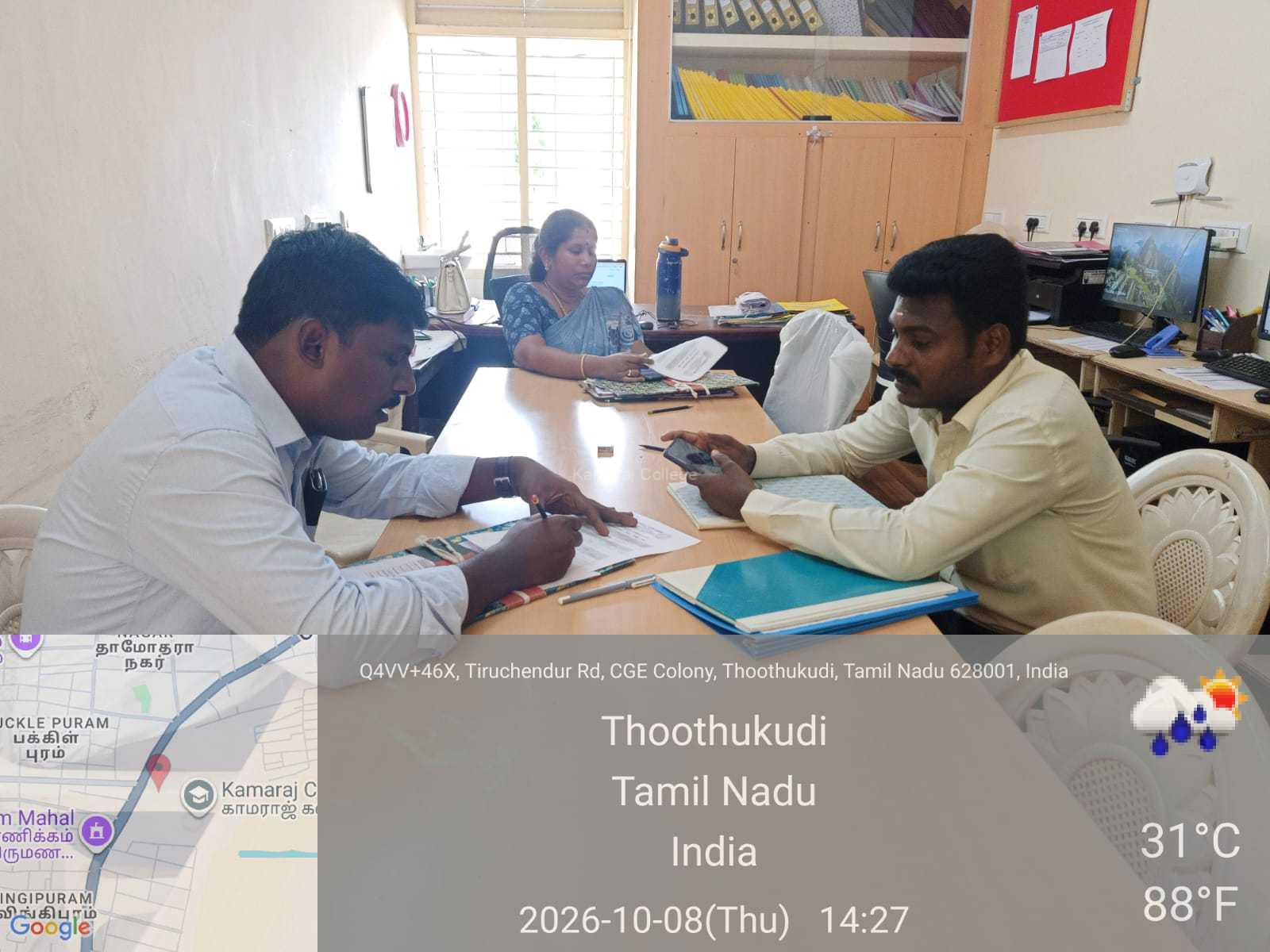
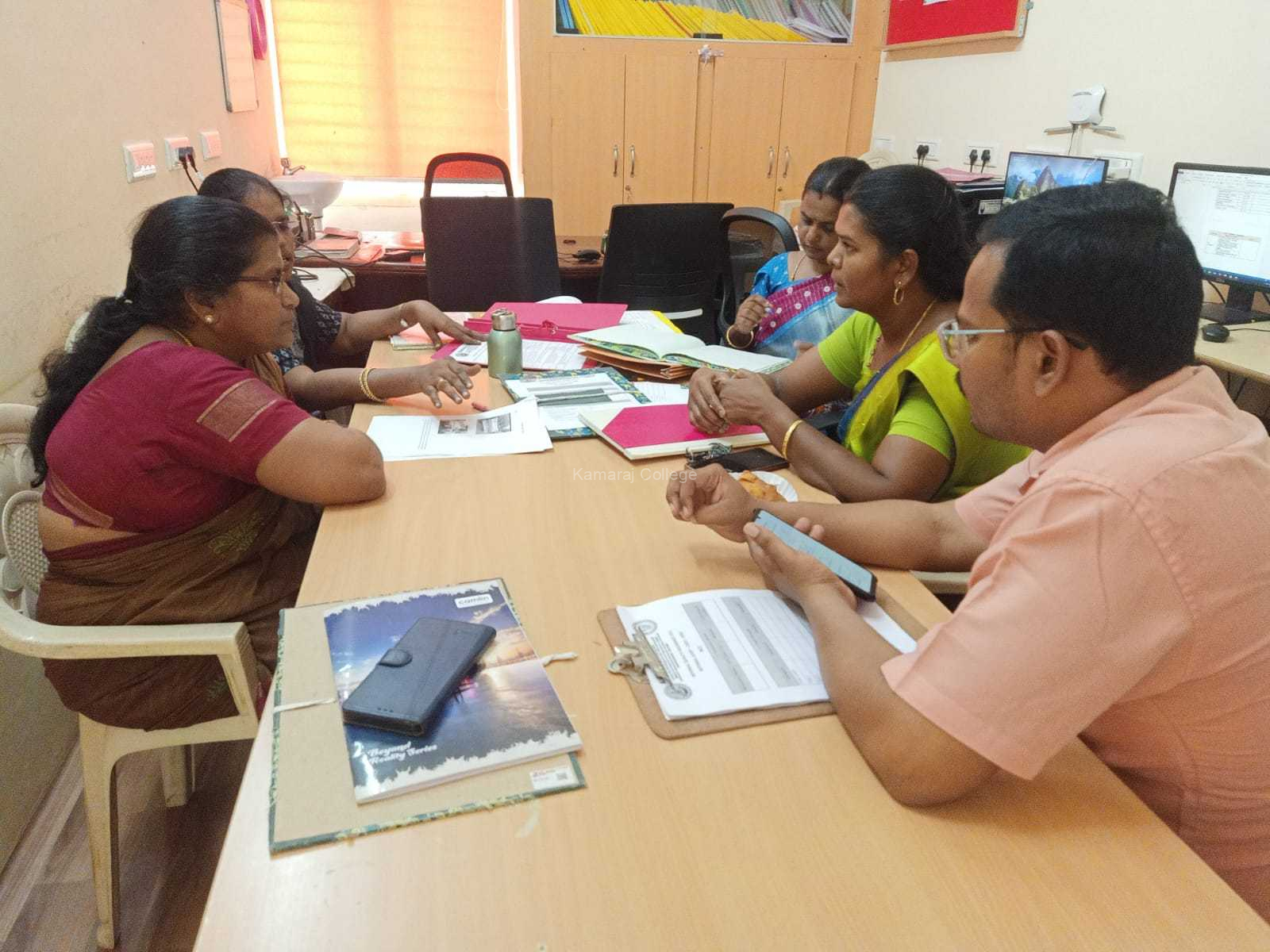
IQAC Internal Audit of Cells and Committees for the Academic Year 2025–2026 was conducted by the Internal Quality Assurance Cell (IQAC) of Kamaraj College (Autonomous), Thoothukudi, on 7 and 8 October 2026.
The audit was organised in accordance with the schedule circulated on 1 October 2026. It aimed to review the functioning of various institutional Cells and Committees, verify essential records and strengthen systematic documentation and accountability.
The audit covered a wide range of academic, administrative, student-support and community-oriented committees. Designated audit teams conducted the verification in two sessions each day, focusing on the maintenance of records, implementation of planned activities and availability of supporting evidence.
The initiative formed part of IQAC’s continuous efforts to strengthen institutional quality assurance practices and improve the overall performance of Cells and Committees.
IQAC Internal Audit 2026
The IQAC Internal Audit provided a structured mechanism for reviewing the activities, documentation and functioning of institutional Cells and Committees during the Academic Year 2025–2026.
The process emphasised the importance of maintaining accurate records and ensuring that committee activities were supported by appropriate documentary evidence.
Through systematic verification, the audit teams reviewed the implementation of planned activities and identified areas where documentation and institutional practices could be improved.
The exercise reinforced the importance of accountability, transparency and continuous improvement in institutional administration.
Internal Quality Assurance Cell Initiatives
The Internal Quality Assurance Cell plays an important role in promoting a culture of quality within higher education institutions.
The internal audit was undertaken as part of the Cell’s ongoing quality assurance initiatives to strengthen institutional practices and encourage effective functioning across different committees.
By reviewing records and activity documentation, IQAC sought to support greater consistency in institutional processes.
The audit also highlighted the importance of regular monitoring and systematic documentation in maintaining institutional standards.
Audit Schedule and Organisation
The IQAC Internal Audit was conducted on 7 and 8 October 2026, following the schedule circulated on 1 October 2026.
The verification was carried out by designated audit teams in two sessions each day.
This organised approach enabled the audit teams to examine the records maintained by various Cells and Committees.
The scheduled verification process helped ensure that the audit focused on essential documentation, committee activities and supporting records.
Cells and Committees Covered
The internal audit covered several institutional Cells and Committees responsible for academic development, student welfare, institutional administration and community engagement.
The committees reviewed included:
- Placement Committee
- Research and Development Committee
- Entrepreneurship Development Cell (EDC)
- Cultural Committee
- National Service Scheme (NSS)
- National Cadet Corps (NCC)
- Grievance and Redressal Committee
- Anti-Ragging Committee
- Discipline Committee
- Health Care Committee
- Library Committee
- Sports Committee
- Youth Red Cross
- Unnat Bharat Abhiyan (UBA)
- Indian Knowledge Systems (IKS)
- Research Consultancy Committee
- Infrastructure Maintenance Committee
- Other institutional Cells and Committees
The comprehensive coverage reflected the institution’s emphasis on reviewing the functioning of committees across different areas of responsibility.
Verification of Circulars and Notifications
An important component of the IQAC Internal Audit was the verification of circulars and notifications issued by the respective Cells and Committees.
The audit teams examined the availability of records relating to official communications and committee activities.
Maintaining circulars and notifications provides an organised record of institutional communication and supports the effective functioning of committees.
The verification reinforced the importance of preserving such documents as part of systematic institutional record management.
Review of Minutes of Meetings
The audit teams verified the minutes of meetings maintained by the Cells and Committees.
Particular attention was given to ensuring that the minutes were duly signed by the Chairperson, Coordinator and members.
Properly maintained meeting minutes provide documentary evidence of committee discussions, decisions and institutional processes.
The review highlighted the importance of accurate and authenticated records in promoting accountability and continuity in committee functioning.
Verification of Annual Activity Reports
The IQAC Internal Audit included the examination of annual activity reports submitted by various Cells and Committees.
The verification focused on reports documenting activities conducted during the academic year, their outcomes and the supporting evidence available.
Annual activity reports are important records that help institutions review the implementation and effectiveness of committee initiatives.
The audit emphasised the need for systematic reporting to ensure that institutional activities are properly documented and available for future review.
Review of Event Accounts Registers
Another important aspect of the audit was the verification of event accounts registers and related records.
The audit teams examined the availability and maintenance of these documents as part of the overall review.
Proper recordkeeping supports financial accountability and provides an organised reference for activities conducted by institutional committees.
The verification reinforced the importance of maintaining relevant accounts and supporting documents in a systematic manner.
Assessment of Planned Activities
The IQAC Internal Audit also focused on the implementation of activities planned by the Cells and Committees.
The review considered the records available to demonstrate the conduct of committee programmes and initiatives.
This process helped connect committee planning with documented activities and outcomes.
It also emphasised the importance of maintaining sufficient evidence to support institutional reporting and quality assurance processes.
Importance of Documentary Evidence
Documentary evidence formed a central component of the internal audit.
The audit teams examined the availability of supporting records related to committee meetings, activities and institutional processes.
Such evidence is essential for establishing the authenticity of reported activities and supporting institutional review.
The audit encouraged committees to maintain complete and organised records that can be readily accessed during internal verification and quality assurance exercises.
Strengthening Institutional Accountability
The IQAC Internal Audit reinforced the importance of accountability in the functioning of institutional Cells and Committees.
By reviewing essential documents and supporting records, the process encouraged committees to maintain consistency between their responsibilities, planned activities and documented outcomes.
Systematic documentation also supports transparency and enables institutions to monitor committee performance more effectively.
The audit contributed to strengthening a culture of responsibility and organised administration across the institution.
Identifying Areas for Improvement
One of the important purposes of the internal audit was to identify areas requiring improvement.
The verification process helped highlight the need for consistent record maintenance, effective documentation and systematic reporting.
The audit provided an opportunity for the institution to review existing practices and recognise areas where committee functioning could be strengthened.
This improvement-oriented approach is an important component of continuous institutional quality assurance.
Promoting Effective Committee Functioning
Institutional Cells and Committees contribute to various aspects of academic administration, student development, welfare activities and community engagement.
The IQAC Internal Audit emphasised the importance of ensuring that these committees function effectively and maintain appropriate records of their activities.
Regular review of committee documentation helps support continuity, coordination and institutional accountability.
The audit encouraged a systematic approach to committee administration and activity reporting.
Continuous Quality Assurance
The internal audit was conducted as part of IQAC’s commitment to continuous quality assurance and institutional improvement.
Quality assurance requires regular assessment of institutional practices, documentation and the effectiveness of administrative processes.
The verification of committee records provided an opportunity to strengthen these practices and promote greater consistency across different institutional activities.
The initiative also supported the institution’s efforts to align committee functioning with broader quality assurance requirements.
Objectives of the Internal Audit
The major objectives of the IQAC Internal Audit were:
- Review the functioning of institutional Cells and Committees
- Verify circulars and notifications issued by committees
- Examine duly signed minutes of committee meetings
- Review annual activity reports and supporting evidence
- Verify event accounts registers and related records
- Assess the implementation of planned committee activities
- Ensure the availability of essential documentary evidence
- Identify areas requiring improvement in record maintenance
- Promote accountability and transparency in committee functioning
- Strengthen institutional quality assurance practices
Programme Highlights
- Programme: IQAC Internal Audit of Cells and Committees
- Academic Year: 2025–2026
- Audit Dates: 7 and 8 October 2026
- Schedule Circulated: 1 October 2026
- Organised by: Internal Quality Assurance Cell (IQAC)
- Institution: Kamaraj College (Autonomous), Thoothukudi
- Audit Teams: Designated Internal Audit Teams
- Audit Sessions: Two Sessions Each Day
- Committees Covered: Academic, Administrative, Student Welfare, Research, Extension and Institutional Support Committees
- Documents Verified: Circulars, Notifications, Minutes of Meetings, Annual Activity Reports, Supporting Evidence and Event Accounts Registers
- Key Focus: Record Maintenance, Activity Implementation, Documentary Evidence and Institutional Accountability
- Purpose: Continuous Quality Assurance and Improvement of Committee Functioning
Outcomes of the Internal Audit
The IQAC Internal Audit contributed to the following institutional quality assurance objectives:
- Reviewed the maintenance of essential committee records
- Verified the availability of circulars and notifications
- Examined authenticated minutes of committee meetings
- Reviewed annual activity reports and supporting evidence
- Assessed documentation relating to planned and conducted activities
- Verified event accounts registers and related documents
- Identified areas requiring improvement in documentation practices
- Reinforced accountability among institutional Cells and Committees
- Promoted systematic recordkeeping and reporting
- Supported continuous institutional quality improvement
Importance of Systematic Documentation
Systematic documentation is essential for the effective functioning of institutional Cells and Committees.
Records such as circulars, meeting minutes, annual reports and event accounts provide evidence of committee activities and administrative processes.
The audit highlighted the importance of maintaining these documents accurately and consistently.
Organised documentation supports institutional continuity, improves accessibility of records and strengthens the quality assurance process.
Institutional Commitment to Quality
The IQAC Internal Audit reflected the commitment of Kamaraj College (Autonomous), Thoothukudi, to maintaining effective institutional practices.
The review of committee records and activities provided a structured opportunity to assess existing documentation and identify areas for improvement.
Through regular quality assurance initiatives, the institution seeks to strengthen administrative efficiency, accountability and the effectiveness of its Cells and Committees.
The audit also reinforced the importance of collective responsibility in achieving institutional quality objectives.
Conclusion
The IQAC Internal Audit of Cells and Committees for the Academic Year 2025–2026, conducted on 7 and 8 October 2026, was an important institutional quality assurance initiative of Kamaraj College (Autonomous), Thoothukudi.
The audit teams reviewed the records and supporting documents maintained by various institutional committees, including circulars, authenticated meeting minutes, annual activity reports and event accounts registers.
The verification process focused on systematic record maintenance, implementation of planned activities and the availability of documentary evidence.
The audit helped identify areas requiring improvement and reinforced the importance of accountability, effective committee functioning and organised institutional documentation.
Overall, the IQAC Internal Audit contributed to the institution’s continuous quality assurance efforts by promoting systematic documentation, transparency, accountability and institutional improvement.
Internal Link
- Kamaraj College (Autonomous), Thoothukudi – Explore more institutional activities, quality assurance initiatives and academic development programmes.
External Links
- National Assessment and Accreditation Council (NAAC) – Official information on institutional assessment, accreditation and quality assurance in higher education.
- University Grants Commission (UGC) – Official information on higher education standards, institutional development and quality enhancement.