
Food Safety Lecture Grand Success with 5 Key Insights
Food Safety Lecture – Programme Overview
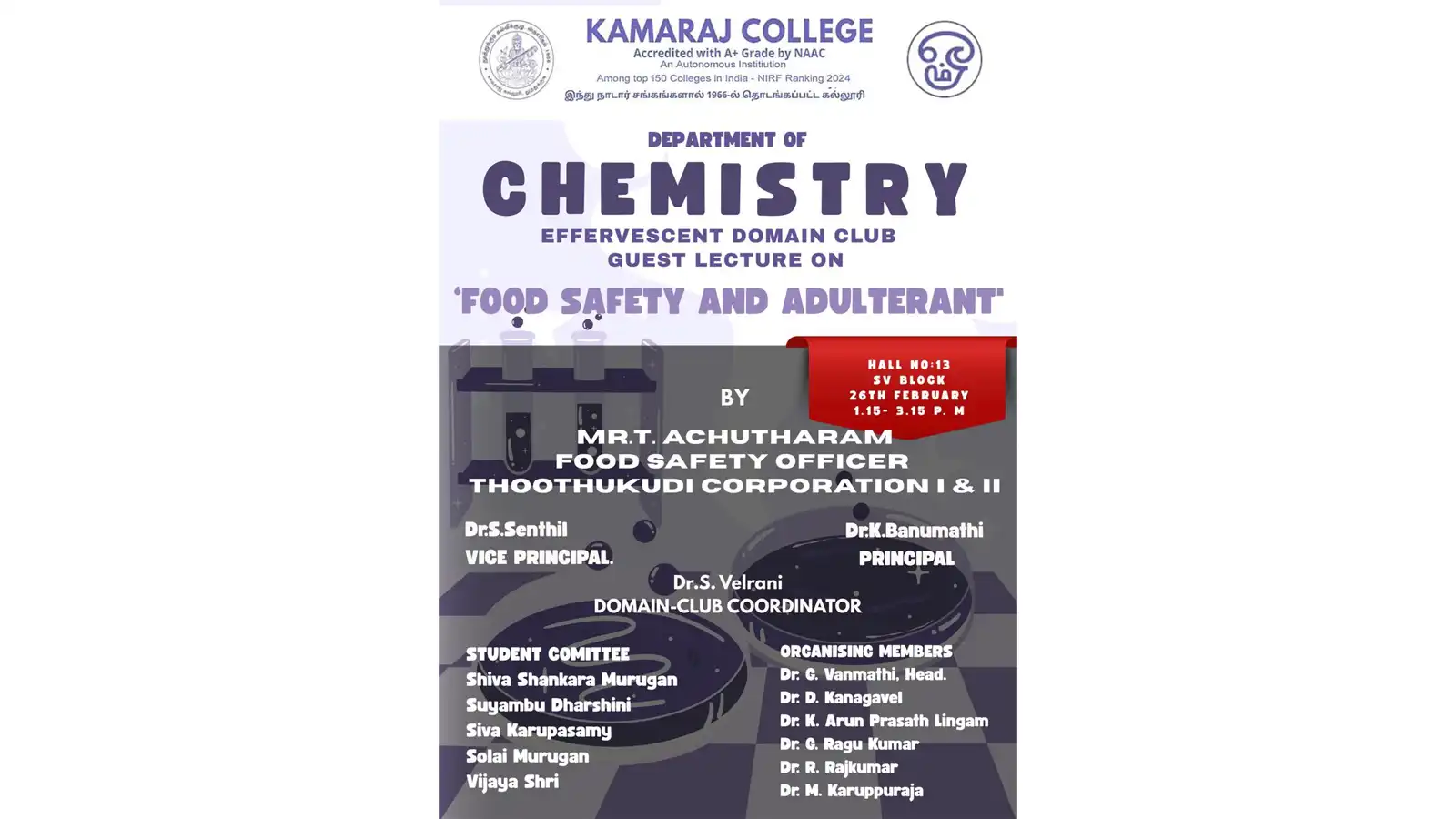
On 26 February 2026, from 01.30 p.m. to 03.15 p.m., the Effervescent Domain Lab of the Department of Chemistry at Kamaraj College (Autonomous), Thoothukudi organized a one-day Food Safety Lecture at the Swami Vivekananda Block.
The lecture was delivered by Mr. T. Achutharam, Food Safety Officer, Thoothukudi Corporation (Zones I and II). The programme focused on food safety regulations and the identification of food adulteration in commonly consumed items.
Objectives of the Food Safety Lecture
The primary aim of the Food Safety Lecture was to create scientific awareness among students regarding food quality standards and public health protection.
The session sought to:
- Educate students about food safety regulations
- Create awareness about common food adulterants
- Demonstrate testing methods for adulteration detection
- Promote consumer responsibility and ethical practices
- Encourage scientific inquiry in chemistry applications
The lecture connected theoretical chemistry concepts with real-life food quality assessment practices.
Role of Department and Faculty Motivation
Dr. G. Vanmathi, Head of the Department of Chemistry, and Dr. S. Velrani, Domain Club Coordinator, encouraged students to actively participate in the programme. Their motivation emphasized the importance of applying chemical knowledge in safeguarding public health.
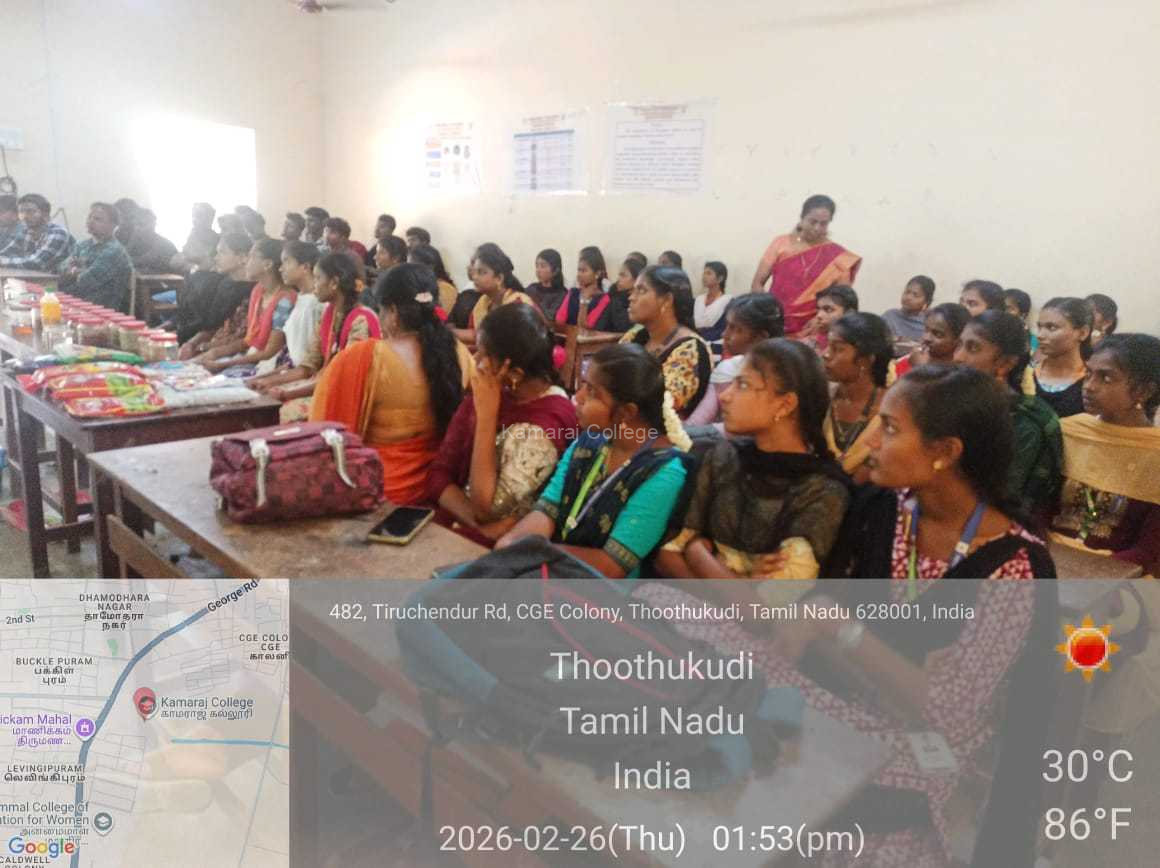
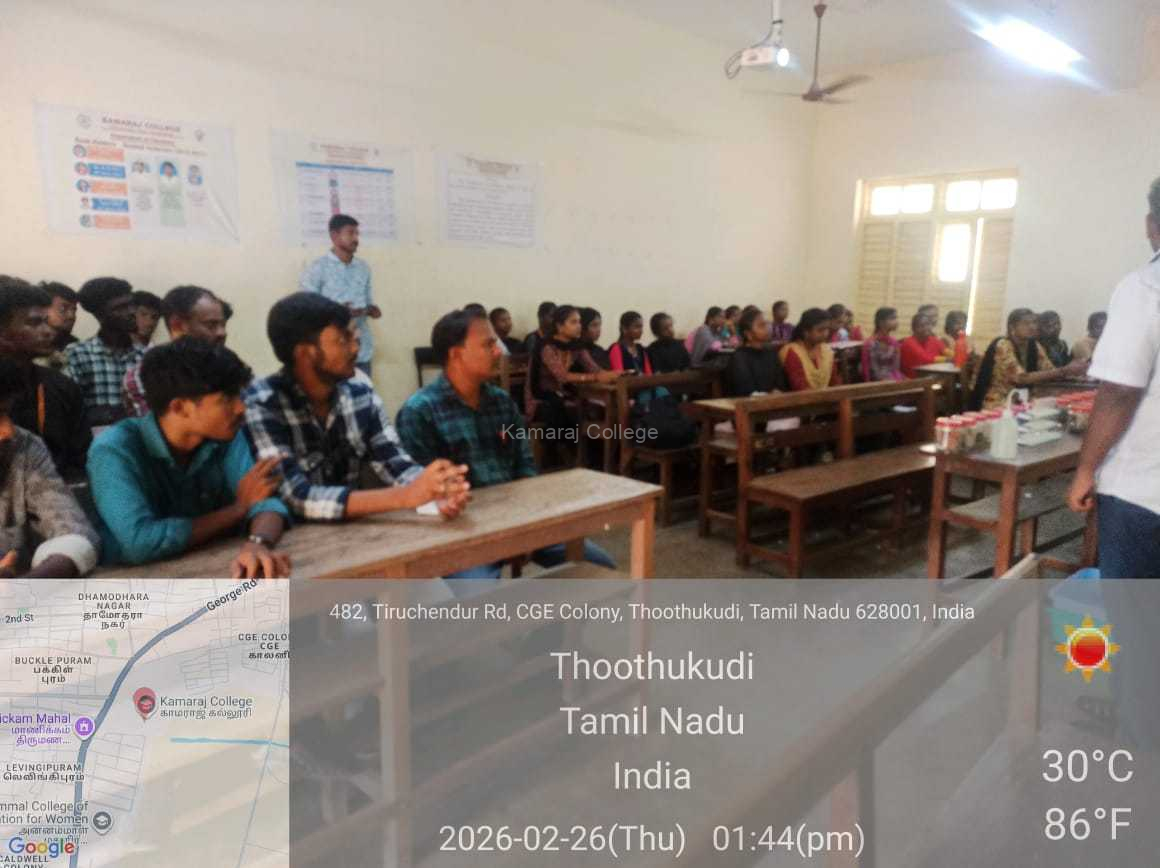
A total of 50 students attended the session, reflecting strong academic interest.
Technical Insights on Food Safety
During the Food Safety Lecture, the resource person explained various aspects of food safety laws and regulatory standards. The discussion covered:
- Common food adulterants found in milk, oils, spices, and grains
- Health hazards associated with contaminated food
- Legal penalties for food adulteration
- Preventive measures and consumer awareness strategies
Students gained clarity on the scientific and legal framework governing food quality control.
Demonstration of Adulteration Testing Methods
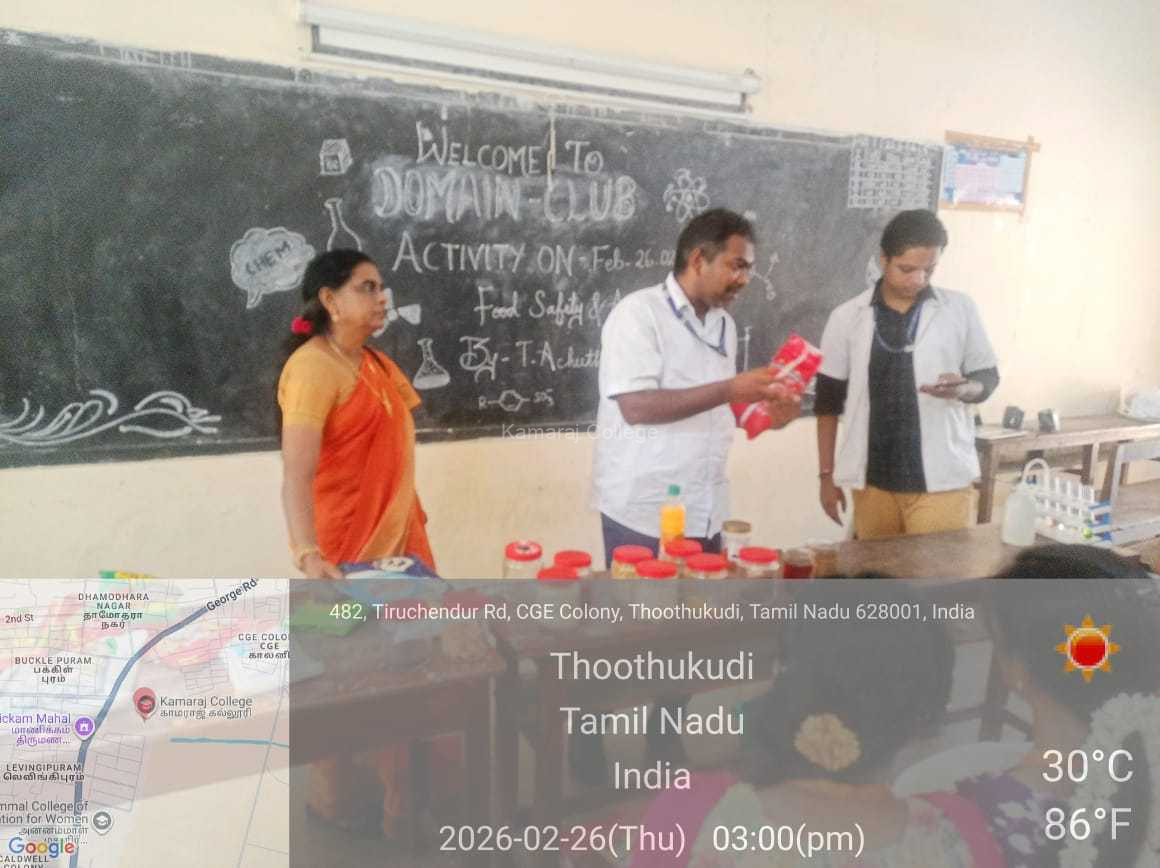
A key highlight of the Food Safety Lecture was the practical demonstration of testing procedures used to identify adulteration in everyday food products.
The officer demonstrated:
- Simple chemical tests for detecting starch in milk
- Identification of artificial colors in spices
- Detection of synthetic additives in edible oils
- Basic qualitative analysis techniques
These demonstrations reinforced laboratory-based chemistry concepts and highlighted their practical applications.
Student Engagement and Interaction
The session was interactive, with students actively raising questions related to:
- Career opportunities in food safety departments
- Laboratory testing procedures
- Government food safety inspections
- Consumer complaint mechanisms
The resource person provided clear and informative responses, ensuring conceptual clarity.
Relevance to Chemistry Education
The Food Safety Lecture demonstrated how chemistry plays a crucial role in ensuring food quality and protecting public health. The programme highlighted the importance of analytical chemistry, qualitative analysis, and regulatory compliance in real-world applications.
Such initiatives strengthen students’ understanding of applied chemistry and expand awareness of professional pathways in public health and food safety departments.
Regulatory Framework and Public Awareness
Students were informed about the regulatory authority responsible for maintaining food standards in India.
For further reference:
External Links:
Food Safety and Standards Authority of India (FSSAI)
Tamil Nadu Health Department
The lecture emphasized that consumer vigilance and scientific testing are vital in preventing food adulteration.
Institutional Commitment to Scientific Awareness
The organization of the Food Safety Lecture reflects the department’s commitment to enhancing scientific literacy and public awareness.
Internal Link:
Kamaraj College (Autonomous), Thoothukudi
By integrating academic learning with societal issues, the institution continues to promote responsible education and community engagement.
Programme Proceedings
The session began with a welcome address by Jeya Sindhiya of III B.Sc. Chemistry. The programme concluded with a vote of thanks delivered by Abinaya of III B.Sc. Chemistry, expressing gratitude to the resource person and organizers.
The structured organization of the event ensured smooth conduct and active participation.
Conclusion
The Food Safety Lecture conducted on 26 February 2026 was an informative and impactful academic programme. The expert guidance provided by Mr. T. Achutharam enabled students to understand food adulteration testing procedures and the significance of regulatory compliance.
By linking chemistry concepts to real-life food safety practices, the programme strengthened analytical understanding and professional awareness among students. The lecture successfully fulfilled its objective of promoting scientific responsibility and consumer awareness.