
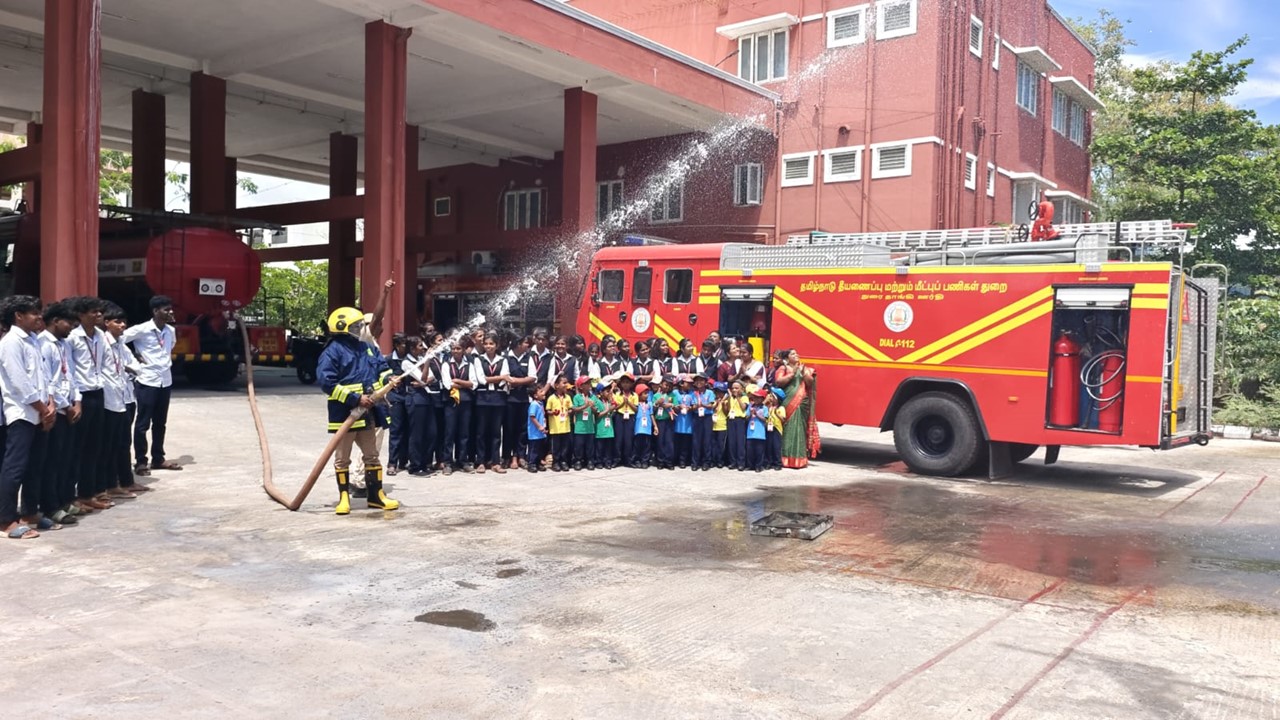
Fire and Rescue Services Visit: 5 Valuable Learning Experiences for 40 Students
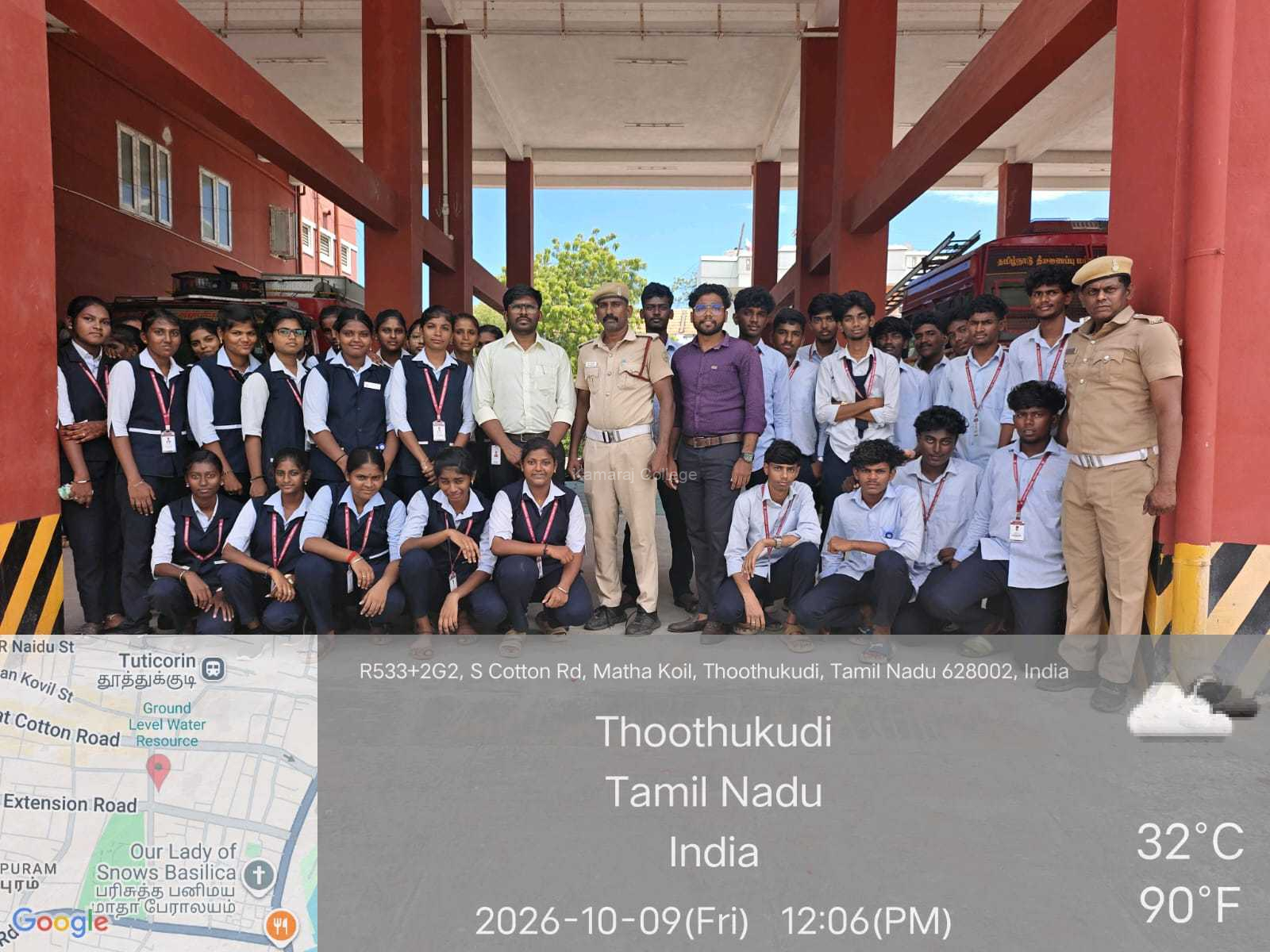
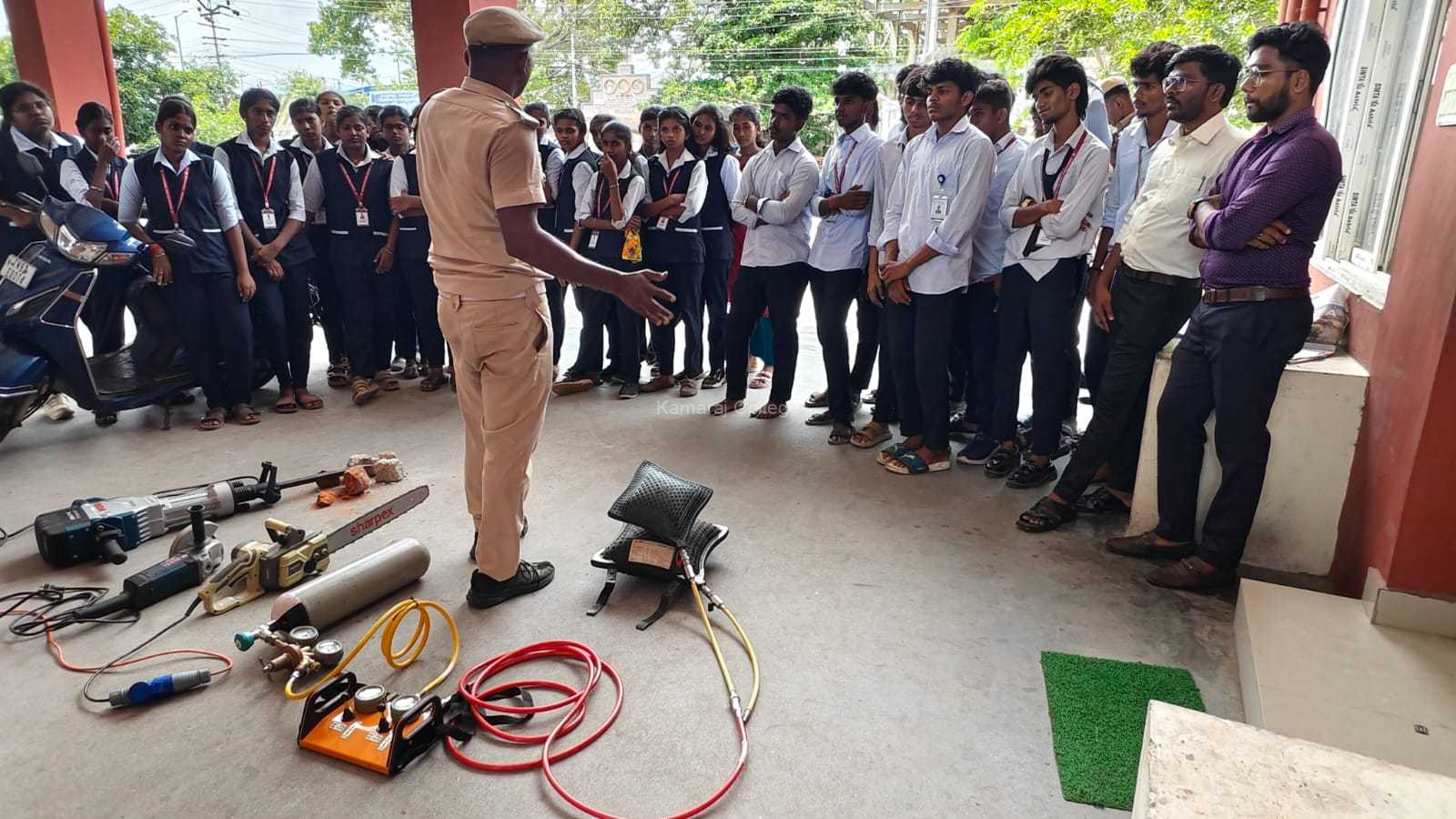
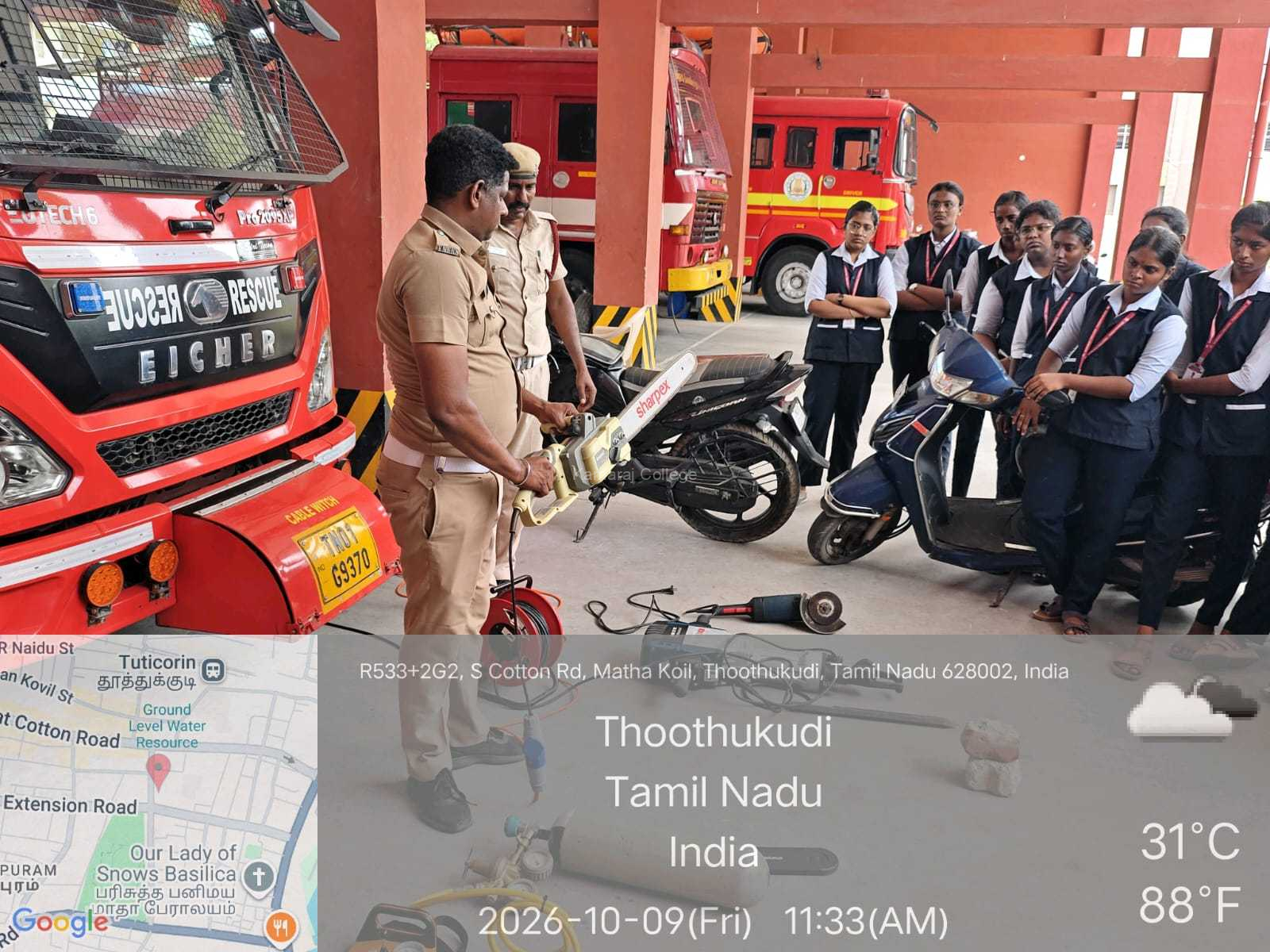
Fire and Rescue Services Visit was an educational field visit undertaken by 40 students of the Department of Criminology and Forensic Science, Kamaraj College (Autonomous), Thoothukudi, to the District Fire Station, Tamil Nadu Fire and Rescue Services (TNFRS), Thoothukudi. The institutional visit aimed to provide practical exposure to emergency response operations, fire safety procedures, rescue equipment and fire station management.
The visit offered students an opportunity to understand the functioning of fire and rescue services and the responsibilities of first responders during emergency situations. It also helped them connect classroom learning with practical aspects of emergency management, public safety and forensic investigation.
The programme was coordinated by Mr. R. Rameshkannan, Head of the Department of Criminology and Forensic Science, and Mr. Riyas N., Assistant Professor. Their guidance supported the educational objectives of the visit and helped students understand the relevance of emergency response procedures to criminology and forensic science.
Fire and Rescue Services Visit to TNFRS Thoothukudi
The Fire and Rescue Services Visit provided students with valuable institutional exposure to the operations of the Tamil Nadu Fire and Rescue Services.
The District Fire Station serves an important role in emergency response, fire prevention and rescue operations. Understanding the responsibilities of such institutions is particularly relevant for students pursuing criminology and forensic science.
The visit introduced students to the operational environment of a fire station and highlighted the importance of preparedness, coordination and timely intervention during emergencies.
Students gained an appreciation of the relationship between emergency response services, public safety and the preservation of evidence in incidents requiring investigation.
Understanding Tamil Nadu Fire and Rescue Services
The Tamil Nadu Fire and Rescue Services (TNFRS) is responsible for responding to fire emergencies and carrying out rescue operations within its operational jurisdiction.
The institutional visit helped students understand the essential functions of fire and rescue personnel and the importance of maintaining readiness to respond to emergency calls.
Students were introduced to the responsibilities associated with emergency management, fire safety and rescue operations.
The exposure demonstrated the importance of organised emergency services in protecting human life, property and public safety.
Practical Exposure to Emergency Response Operations
An important component of the Fire and Rescue Services Visit was understanding how emergency response operations are organised.
Students gained insights into the procedures involved in receiving emergency information and preparing for rescue operations.
The visit highlighted the importance of prompt communication, operational readiness and coordination among emergency response personnel.
It also helped students recognise how effective emergency management depends on systematic procedures and the ability to respond appropriately to different situations.
Understanding Emergency Helpline 101
Students gained awareness of the role of the 101 fire emergency helpline in reporting fire-related emergencies and seeking assistance.
The visit introduced them to the importance of emergency call handling and the communication processes associated with responding to incidents.
Emergency communication plays a critical role in ensuring that relevant information reaches the appropriate response personnel.
The exposure helped students understand how timely reporting and effective communication contribute to emergency response and public safety.
Emergency Response Support System 112
The visit also provided students with insights into the 112 Emergency Response Support System (ERSS).
The ERSS is an integrated emergency response mechanism designed to facilitate access to emergency assistance.
Students gained an understanding of the importance of coordinated emergency communication and the role of integrated response systems in public safety.
The exposure highlighted the value of accessible emergency services and the need for effective coordination between different response agencies.
Firefighter Preparedness and Operational Readiness
A major learning component of the Fire and Rescue Services Visit was understanding the importance of firefighter preparedness.
Fire and rescue personnel must maintain operational readiness to respond to emergencies that may involve fire, accidents and other situations requiring rescue assistance.
Students gained insights into the importance of discipline, teamwork, preparedness and safety awareness in emergency response operations.
The visit helped them appreciate the responsibilities and challenges associated with first-responder duties.
Introduction to Fire Safety Procedures
The institutional visit provided students with practical exposure to fire safety procedures.
Students gained awareness of the importance of recognising fire hazards and following appropriate safety measures.
Fire safety knowledge is essential not only for emergency response personnel but also for educational institutions, workplaces and the wider community.
The exposure encouraged students to recognise the importance of prevention, preparedness and responsible action during fire-related emergencies.
Understanding Fire and Rescue Equipment
The Fire and Rescue Services Visit introduced students to the equipment associated with firefighting and rescue operations.
The exposure helped them understand the importance of selecting and using appropriate equipment according to the nature of an emergency.
Students gained a broader appreciation of how specialised rescue equipment supports emergency personnel in performing their duties.
The visit also reinforced the importance of equipment readiness, proper maintenance and safe operational practices.
Fire Station Management and Coordination
Another important aspect of the institutional visit was understanding fire station management.
Students gained insights into the organisational responsibilities involved in maintaining emergency preparedness and coordinating rescue activities.
Effective fire station management requires clear communication, operational planning, equipment readiness and coordination among personnel.
The exposure helped students understand how institutional organisation contributes to efficient emergency response and public safety.
Understanding Rescue Operations
The visit provided students with an overview of the responsibilities associated with rescue operations.
Rescue services play a vital role in protecting people during dangerous situations and supporting emergency management efforts.
Students gained an understanding of the importance of coordinated action, preparedness and safety considerations during rescue activities.
The experience helped them recognise the professional responsibilities of rescue personnel and the importance of prioritising human safety during emergencies.
Role of First Responders in Emergency Management
The Fire and Rescue Services Visit highlighted the essential role of first responders in emergency situations.
First responders are often among the earliest personnel to reach an incident location and take necessary action to protect life and reduce immediate risks.
Their responsibilities may include assessing hazards, supporting rescue efforts and coordinating with other emergency services.
Students gained an appreciation of the importance of timely intervention, professional preparedness and cooperation among response agencies.
The exposure also helped them understand how first responders contribute to the wider emergency management system.
Importance of Preserving Physical Evidence
A particularly important learning component for criminology and forensic science students was understanding the preservation of physical evidence at fire scenes.
Fire incidents may require forensic investigation to determine the circumstances and possible causes of the event.
Physical evidence found at a fire scene can provide valuable information during subsequent investigation.
Students were introduced to the importance of protecting relevant evidence while recognising that life safety and emergency control remain the immediate priorities of first responders.
The visit reinforced the need for awareness of evidence preservation and coordination between emergency response personnel and investigative agencies.
Fire Scene Preservation and Forensic Investigation
The relationship between emergency response and forensic investigation formed an important academic focus of the visit.
Fire scenes may contain physical evidence relevant to determining whether an incident resulted from an accident, negligence or deliberate action.
Students gained an understanding of why careful handling of incident locations is important for subsequent forensic examination.
The exposure highlighted the significance of minimising unnecessary disturbance to potential evidence wherever operationally possible.
It also helped students appreciate the need for cooperation between fire and rescue services, police personnel and forensic investigators when circumstances require further investigation.
Connecting Fire Safety with Criminology
The Fire and Rescue Services Visit helped students understand the relevance of emergency response services to criminological studies.
Fire-related incidents may involve questions concerning public safety, negligence, property damage or suspected criminal activity.
Understanding the responsibilities of emergency personnel provides useful context for studying incident management and criminal investigation.
The visit encouraged students to recognise the importance of interdisciplinary cooperation in situations where emergency response and investigative responsibilities intersect.
Practical Relevance to Forensic Science
Forensic science involves the systematic examination and interpretation of evidence associated with incidents under investigation.
The institutional visit helped students connect theoretical concepts of forensic evidence with the practical realities of emergency response.
Students gained awareness of the importance of protecting incident scenes and recognising the potential evidentiary value of physical materials.
The experience also highlighted the need to balance immediate emergency intervention with appropriate consideration for subsequent investigative procedures.
Such exposure is valuable for developing a broader understanding of forensic investigation and professional responsibilities.
Emergency Communication and Public Safety
The discussion of 101 and 112 emergency response systems helped students recognise the importance of effective public communication during emergencies.
Emergency communication systems provide a means for individuals to report incidents and seek assistance.
Students gained an appreciation of the importance of communicating relevant information accurately and promptly.
The visit reinforced the role of public awareness, institutional preparedness and coordinated response in strengthening community safety.
Bridging Classroom Learning and Field Experience
A central objective of the Fire and Rescue Services Visit was to bridge theoretical learning with practical institutional exposure.
Classroom education introduces students to concepts of public safety, emergency management, criminal investigation and forensic evidence.
Field visits provide opportunities to understand how these concepts relate to the responsibilities and working environments of professional agencies.
The TNFRS visit enabled students to develop a broader understanding of emergency response systems and their relationship with investigative processes.
It also encouraged observational learning, professional awareness and analytical thinking.
Guidance of Faculty Coordinators
The educational visit was coordinated by Mr. R. Rameshkannan, Head of the Department of Criminology and Forensic Science, and Mr. Riyas N., Assistant Professor.
Their guidance supported the participation of the 40 students and the academic objectives of the programme.
The faculty coordinators helped connect the institutional exposure with relevant areas of criminology and forensic science.
Their involvement reinforced the department’s emphasis on experiential learning and practical professional awareness.
Objectives of the Institutional Visit
The major objectives of the Fire and Rescue Services Visit were:
- Provide practical exposure to Tamil Nadu Fire and Rescue Services operations
- Introduce students to emergency response procedures and fire station management
- Develop awareness of fire safety and emergency preparedness
- Explain the importance of emergency call handling through 101 and 112
- Provide insights into firefighter preparedness and operational readiness
- Familiarise students with rescue equipment and its operational importance
- Strengthen understanding of the role of first responders in emergency management
- Highlight the importance of preserving physical evidence at fire scenes
- Connect emergency response procedures with forensic investigation
- Encourage practical learning and professional awareness among students
Programme Highlights
- Programme: Institutional Visit to Tamil Nadu Fire and Rescue Services
- Department: Criminology and Forensic Science
- Institution: Kamaraj College (Autonomous), Thoothukudi
- Place Visited: District Fire Station, TNFRS, Thoothukudi
- Participants: 40 Students
- Primary Focus: Emergency Response Operations and Fire Safety Procedures
- Emergency Communication: 101 Fire Helpline and 112 Emergency Response Support System
- Operational Exposure: Firefighter Preparedness, Rescue Equipment and Fire Station Management
- Forensic Focus: Preservation of Physical Evidence at Fire Scenes
- Professional Learning: Role of First Responders in Emergency Management and Criminal Investigations
- Faculty Coordinator: Mr. R. Rameshkannan, Head of the Department
- Faculty Coordinator: Mr. Riyas N., Assistant Professor
Learning Outcomes
The Fire and Rescue Services Visit provided students with opportunities to:
- Understand the functions and responsibilities of Tamil Nadu Fire and Rescue Services
- Gain awareness of emergency response operations and procedures
- Recognise the importance of 101 and 112 emergency communication systems
- Understand firefighter preparedness and operational readiness
- Gain introductory knowledge of fire safety procedures
- Develop awareness of equipment used in rescue operations
- Understand the organisational aspects of fire station management
- Appreciate the responsibilities of first responders during emergencies
- Recognise the importance of preserving physical evidence at fire scenes
- Connect emergency management with criminology and forensic investigation
- Develop observational skills and practical professional awareness
- Understand the importance of coordination between emergency services and investigative agencies
Importance of Experiential Learning
Experiential learning is an essential component of professional education in criminology and forensic science.
Institutional visits allow students to understand the practical responsibilities of agencies involved in public safety, emergency management and investigation.
The Fire and Rescue Services Visit provided exposure to operational practices that complement classroom discussions.
The experience helped students appreciate the importance of preparedness, discipline, teamwork and evidence awareness in professional environments.
Such educational initiatives contribute to developing a stronger foundation for further academic learning and future professional responsibilities.
Conclusion
The Fire and Rescue Services Visit to the District Fire Station, Tamil Nadu Fire and Rescue Services, Thoothukudi, provided valuable practical exposure for 40 students of the Department of Criminology and Forensic Science, Kamaraj College (Autonomous), Thoothukudi.
The visit enhanced students’ understanding of emergency response operations, fire safety procedures, rescue equipment, firefighter preparedness and fire station management.
The exposure to 101 and 112 emergency communication systems strengthened their awareness of emergency call handling and coordinated response mechanisms.
A particularly significant outcome was the understanding of the importance of preserving physical evidence at fire scenes for subsequent forensic investigation.
Under the coordination of Mr. R. Rameshkannan, Head of the Department, and Mr. Riyas N., Assistant Professor, the visit successfully connected academic concepts with practical institutional learning.
Overall, the Fire and Rescue Services Visit strengthened students’ understanding of emergency management, public safety, first-responder responsibilities and forensic investigation, contributing to their academic and professional development.
Internal Link
- Kamaraj College (Autonomous), Thoothukudi – Explore more departmental field visits, institutional activities and experiential learning initiatives.
External Links
- Tamil Nadu Fire and Rescue Services – Official information on fire safety, emergency response and rescue services in Tamil Nadu.
- Emergency Response Support System (ERSS) – Information on India’s integrated 112 emergency response system.
- National Disaster Management Authority (NDMA) – Information on disaster preparedness, emergency management and public safety.