
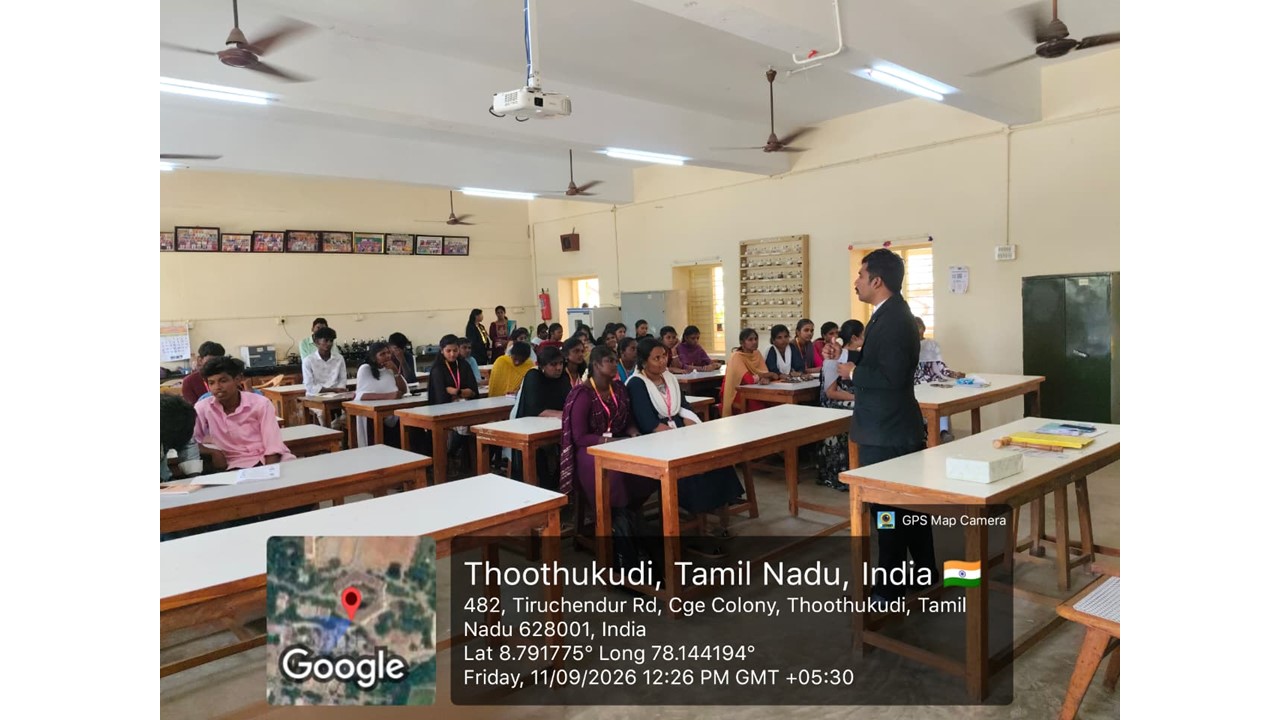
Digital Awareness Programme 2026: 5 Powerful Lessons for Responsible Citizens
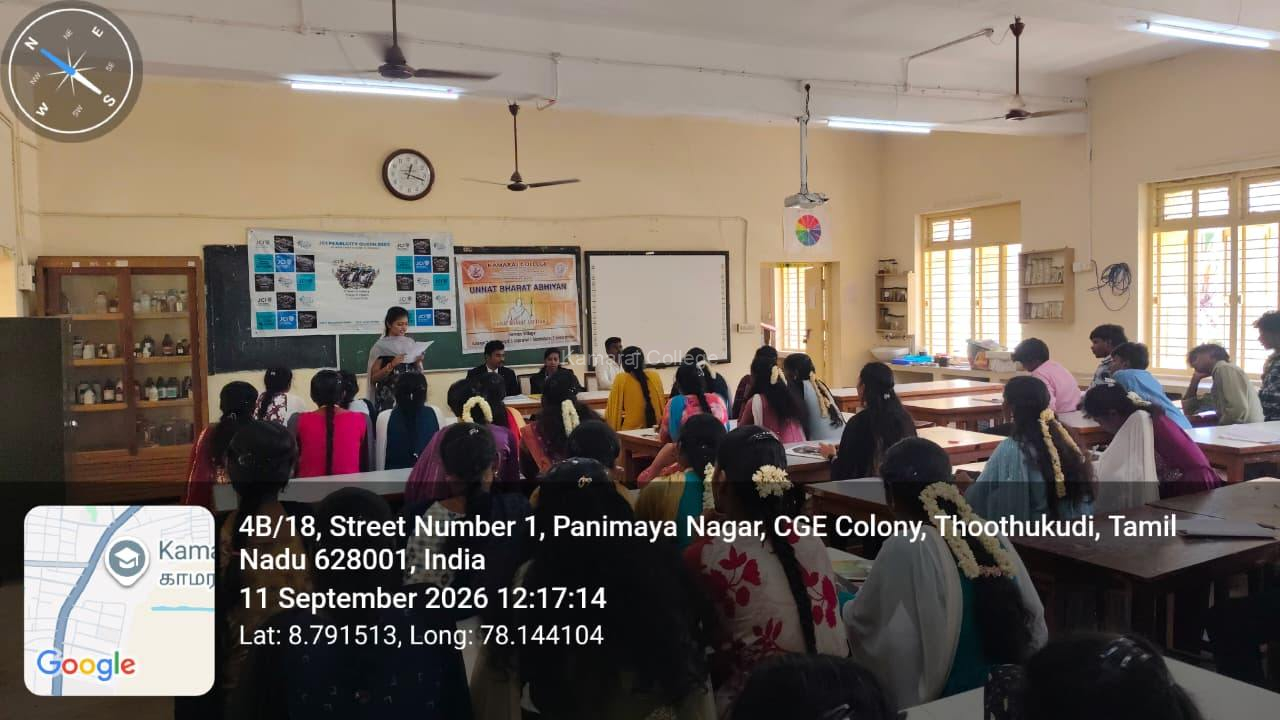

Digital Awareness Programme on “Human Duties and Digital World” was jointly organised by Unnat Bharat Abhiyan (UBA), Kamaraj College (Autonomous), Thoothukudi, and JCI on 11 September 2026 at 11.00 a.m. in the Botany Lab. The programme focused on creating awareness among students about their duties as responsible citizens and the importance of using digital technology in a safe, ethical and socially responsible manner.
The programme highlighted the need to balance technological advancement with human values, social responsibility, cyber safety and responsible digital behaviour. Students were encouraged to use digital platforms constructively for education, communication and social development while remaining conscious of privacy, personal relationships and their responsibilities towards society.
Digital Awareness Programme at Kamaraj College
The Digital Awareness Programme addressed an important contemporary theme by connecting human duties with responsible participation in the digital world.
Technology has become an integral part of education, communication and everyday life. Therefore, students need not only digital skills but also an understanding of how technology should be used responsibly.
The programme encouraged participants to recognise that responsible citizenship extends into the digital environment.
Objectives of the Programme
The programme aimed to develop socially responsible and digitally aware students.
The major objectives were:
- Create awareness about human duties and responsibilities
- Promote responsible citizenship among students
- Encourage ethical use of digital technology
- Develop awareness about cyber safety
- Highlight the importance of protecting personal information
- Encourage constructive use of digital platforms
- Promote responsible online behaviour
- Strengthen human values in the technological era
- Encourage a healthy balance between digital life and human relationships
- Promote the use of technology for education and social development
Welcome Address
The programme commenced with the Welcome Address delivered by Dr. P. Pounraj, Assistant Professor of Botany, UBA Coordinator and NSS Unit-55.
He warmly welcomed the dignitaries, faculty members, JCI representatives and student volunteers.
In his address, he highlighted the importance of integrating human values, social responsibility and digital awareness in the present technological era.
He emphasised that technological progress should be accompanied by responsible behaviour and concern for society.
Human Duties in the Digital Era
The programme encouraged students to reflect on their responsibilities as members of society.
Human duties include respect for others, responsible behaviour, social concern and contributing positively to the community.
In the digital era, these responsibilities also extend to the way individuals communicate, share information and interact through online platforms.
The programme therefore connected traditional human values with contemporary digital behaviour.
Special Address on Human Duties and Digital World
JFM M. Sivaramkumar, ZVP Region–G, Zone 18, JCI India, addressed the gathering on the theme “Human Duties and Digital World.”
He explained the responsibilities of students towards society and highlighted the importance of using technology constructively.
His session encouraged students to understand that digital technology should serve as a tool for learning, communication, personal development and social progress.
Responsible Use of Digital Technology
An important focus of the Digital Awareness Programme was responsible technology use.
Students were encouraged to use digital platforms thoughtfully and constructively rather than allowing technology to negatively affect their behaviour or relationships.
The session highlighted how responsible digital practices can help students gain the benefits of technology while reducing potential risks.
Digital Technology for Education
Digital resources have significantly expanded opportunities for learning.
The programme encouraged students to use technology productively for education, knowledge acquisition, skill development and communication.
Students were reminded that digital tools become valuable when used with clear purpose and responsibility.
The session therefore promoted technology as an instrument for intellectual and personal development.
Cyber Safety Awareness
Cyber safety formed an important part of the programme.
Students were sensitised to the need for caution while participating in digital environments.
Responsible digital behaviour includes recognising online risks, making careful decisions and avoiding actions that may compromise personal safety or privacy.
The awareness session encouraged students to develop a more thoughtful approach towards their online activities.
Protection of Personal Information
The programme specifically highlighted the importance of protecting personal information.
Students were encouraged to understand that information shared through digital platforms requires careful handling.
Awareness about privacy and personal information is essential for safer participation in the digital world.
The session helped reinforce the importance of being cautious about what is shared online and with whom it is shared.
Ethical Digital Behaviour
Technology provides individuals with considerable freedom to communicate and express themselves.
However, this freedom also requires responsibility.
The programme encouraged students to practise respectful, ethical and socially responsible behaviour in digital environments.
Students were reminded that the values followed in everyday human interactions should also guide their conduct online.
Balancing Digital Life and Human Relationships
Another significant aspect of the programme was the importance of maintaining a healthy balance between digital life and human relationships.
Technology can strengthen communication, but excessive dependence on digital interaction can affect meaningful personal relationships.
Students were encouraged to use technology in a balanced manner while continuing to value direct human interaction, family relationships, friendships and community participation.
Digital Citizenship
The Digital Awareness Programme helped students understand the concept of responsible digital citizenship.
Being a responsible digital citizen involves more than knowing how to use technology.
It also requires awareness of ethics, privacy, safety, respect, responsibility and the social consequences of online behaviour.
The programme encouraged students to carry the values of responsible citizenship into both physical and digital spaces.
Technology for Social Development
The session also emphasised the positive potential of technology in social development.
Digital platforms can support communication, awareness, education and community initiatives when used constructively.
Students were encouraged to view technology not merely as a source of entertainment but also as a tool that can contribute to society.
This perspective connected strongly with the community-oriented objectives of Unnat Bharat Abhiyan and JCI.
Honouring the JCI Representative
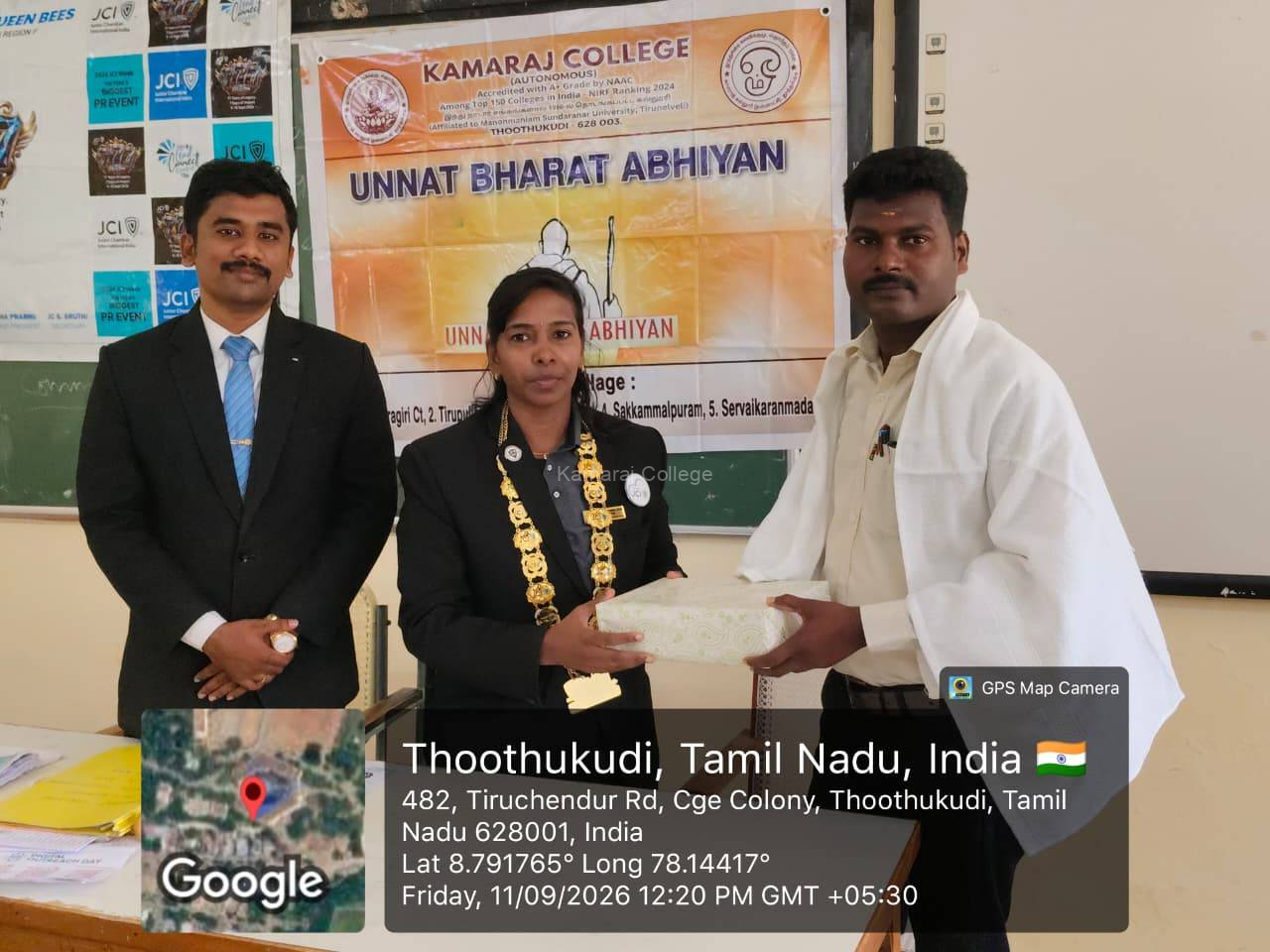
As a mark of respect and appreciation, JFM P. Balasubha Shen, President, JCI Pearl City Queen Bees, was honoured during the programme.
The recognition acknowledged his valuable contribution and support towards youth development and community-oriented activities.
The occasion also reflected the collaborative spirit between Kamaraj College and JCI in conducting meaningful awareness initiatives for students.
UBA and Community Responsibility
The involvement of Unnat Bharat Abhiyan added an important social dimension to the programme.
UBA initiatives encourage educational institutions and students to engage with society and contribute towards community development.
The theme of human duties complemented this objective by encouraging students to recognise their responsibilities beyond individual interests.
The programme therefore connected education, citizenship, technology and community responsibility.
Collaboration with JCI
The joint organisation of the programme with JCI enabled students to gain perspectives on youth leadership, community responsibility and responsible citizenship.
Such collaborative programmes help connect classroom education with broader social issues.
The interaction also encouraged students to understand their potential role as responsible young citizens capable of contributing positively to society.
Five Key Messages for Students
The Digital Awareness Programme communicated five important messages:
- Understand and fulfil responsibilities towards society
- Use digital technology safely and ethically
- Protect personal information and practise cyber safety
- Use technology constructively for education and social development
- Maintain a healthy balance between digital life and human relationships
These messages encouraged students to become responsible members of both society and the digital world.
Vote of Thanks
The programme concluded with the Vote of Thanks delivered by S. Muthusree, III B.Sc. Botany.
She expressed gratitude to the Principal, Vice Principal, chief guest, JCI members, faculty members, UBA Coordinator and students for their presence, cooperation and support in making the programme successful.
The Vote of Thanks formally concluded the awareness programme.
Programme Coordination
The programme was organised and coordinated by Dr. P. Pounraj, Assistant Professor of Botany, UBA Coordinator and NSS Unit-55, Kamaraj College (Autonomous), Thoothukudi.
His coordination helped bring together UBA, JCI, faculty members and students for an awareness programme addressing a highly relevant contemporary issue.
Programme Highlights
- Programme: Awareness Programme on “Human Duties and Digital World”
- Date: 11 September 2026
- Time: 11.00 a.m.
- Venue: Botany Lab
- Institution: Kamaraj College (Autonomous), Thoothukudi
- Jointly Organised by: Unnat Bharat Abhiyan (UBA) and JCI
- Welcome Address: Dr. P. Pounraj
- Resource Person: JFM M. Sivaramkumar, ZVP Region–G, Zone 18, JCI India
- Theme: Human Duties and Digital World
- Honoured: JFM P. Balasubha Shen, President, JCI Pearl City Queen Bees
- Vote of Thanks: S. Muthusree, III B.Sc. Botany
- Programme Coordinator: Dr. P. Pounraj
- Major Areas: Human Duties, Responsible Citizenship, Digital Ethics, Cyber Safety and Social Responsibility
Programme Outcomes
Through the Digital Awareness Programme, students:
- Developed awareness about their duties towards society
- Understood the importance of responsible citizenship
- Recognised the need for ethical digital behaviour
- Gained awareness about cyber safety
- Understood the importance of protecting personal information
- Learned to use digital technology constructively
- Recognised the educational and social potential of digital platforms
- Understood the importance of balancing technology and human relationships
- Developed greater awareness of responsible digital citizenship
- Strengthened their understanding of human values in the technological era
Overall, the programme promoted human values, responsible citizenship, digital ethics, cyber safety and socially responsible use of technology.
Conclusion
The Digital Awareness Programme on “Human Duties and Digital World”, jointly organised by Unnat Bharat Abhiyan, Kamaraj College (Autonomous), Thoothukudi, and JCI on 11 September 2026, was an informative and purposeful initiative.
JFM M. Sivaramkumar, ZVP Region–G, Zone 18, JCI India, guided the students on human duties, responsible citizenship, constructive technology use, cyber safety, personal information protection and the importance of maintaining a healthy balance between digital life and human relationships.
The programme also recognised JFM P. Balasubha Shen, President, JCI Pearl City Queen Bees, for his contribution and support towards youth development and community-oriented activities.
Organised by Dr. P. Pounraj, Assistant Professor of Botany, UBA Coordinator and NSS Unit-55, the programme successfully created meaningful awareness among students about their responsibilities in both society and the digital environment.
Overall, the initiative encouraged students to become responsible citizens who use technology safely, ethically and constructively while preserving human values and social relationships.
Internal Link
- Explore Kamaraj College – Learn more about awareness, community engagement and student development programmes at Kamaraj College.
External Links
- Unnat Bharat Abhiyan – Learn more about the national initiative connecting higher educational institutions with community and rural development.
- National Cyber Crime Reporting Portal – Access official cyber safety information and cybercrime reporting services in India.