
Cyber Fraud Awareness Programme 2026: 7 Essential Digital Safety Lessons

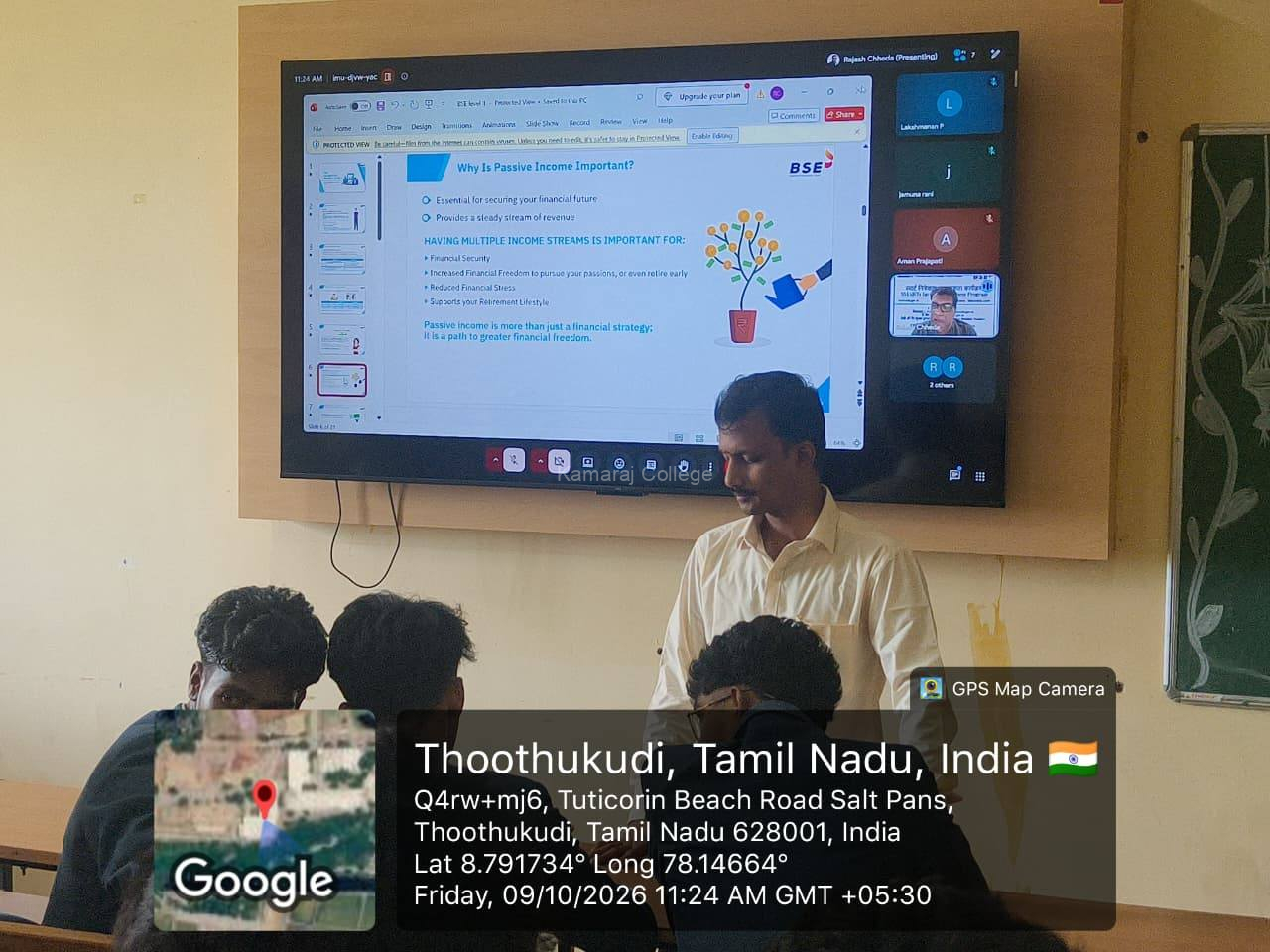

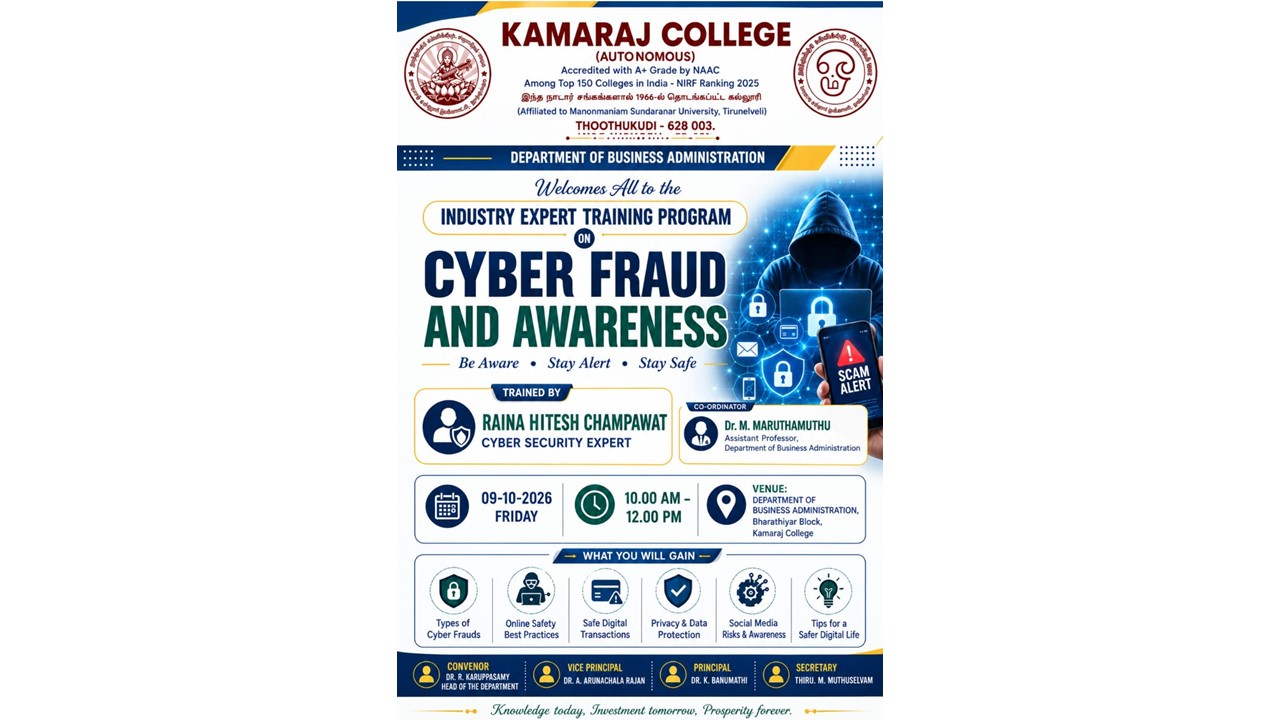
Cyber Fraud Awareness Programme was organised by the Department of Business Administration, Kamaraj College (Autonomous), Thoothukudi, as an Industry Academia Collaborative Programme on 9 October 2026, from 10:00 AM to 12:00 noon. The Industry Expert Training Programme, titled “Cyber Fraud and Awareness”, aimed to educate students about cybersecurity threats, online fraud prevention, digital privacy and responsible internet usage.
The programme featured Ms. Raina Hitesh Champawat, Cyber Security Expert, as the resource person. She provided valuable insights into various types of cyber fraud, secure digital transactions, password protection, online scams and the risks associated with social networking platforms.
The training session highlighted the importance of identifying phishing attacks, fraudulent messages, suspicious links and other cyber threats. Students were encouraged to protect their personal and financial information and develop safe digital habits.
The programme was coordinated by Dr. M. Maruthamuthu, Assistant Professor, Department of Business Administration, under the guidance of Dr. R. Karuppasamy, Head of the Department, Dr. A. Arunachala Rajan, Vice Principal, Dr. K. Bhanumathi, Principal, and Thiru. M. Muthuselvam, Secretary.
Cyber Fraud Awareness Programme 2026
The Cyber Fraud Awareness Programme was conducted as part of the Department of Business Administration’s efforts to strengthen industry-academia interaction and promote practical knowledge among students.
With the increasing use of digital technologies in education, business, banking and everyday communication, cybersecurity awareness has become an essential skill.
The programme provided students with an opportunity to learn directly from an industry expert about emerging digital threats and the importance of responsible online behaviour.
The session connected cybersecurity concepts with practical situations encountered by students while using digital payment applications, websites, email services and social media platforms.
Industry Academia Collaborative Initiative
The programme reflected the importance of collaboration between academic institutions and industry professionals in enhancing student knowledge.
Industry expert sessions provide opportunities for students to understand practical challenges and develop awareness of current professional practices.
The Cyber Fraud Awareness Programme introduced students to real-world cybersecurity concerns that affect individuals, businesses and financial institutions.
The initiative also highlighted the relevance of digital safety knowledge for students pursuing business administration and preparing for careers in an increasingly technology-driven environment.
Introduction to Cyber Fraud and Digital Threats
The resource person, Ms. Raina Hitesh Champawat, explained the importance of recognising different forms of cyber fraud.
Cyber fraud involves deceptive practices carried out through digital platforms to obtain money, personal information or unauthorised access to accounts.
The session encouraged students to understand how fraudulent activities may occur through emails, messages, websites, digital payment platforms and social networking applications.
Students gained awareness of the importance of remaining alert while interacting with unfamiliar digital communications and online services.
Understanding Common Types of Cyber Fraud
An important component of the Cyber Fraud Awareness Programme was understanding the different ways cybercriminals may attempt to deceive internet users.
The session highlighted the importance of identifying suspicious digital activities and recognising potential warning signs.
Students were encouraged to exercise caution when receiving unexpected messages, requests for sensitive information or unfamiliar links.
The programme reinforced the need to verify the authenticity of digital communications before sharing information or carrying out financial transactions.
Awareness of Phishing Attacks
The resource person highlighted phishing attacks as an important cybersecurity concern.
Phishing involves fraudulent attempts to obtain sensitive information by impersonating trusted individuals, institutions or services.
Students were encouraged to remain cautious about emails, text messages and online communications requesting passwords, financial details or personal information.
The session emphasised the importance of checking the authenticity of messages and avoiding suspicious links.
Understanding phishing risks helps individuals protect their digital identities and reduce the possibility of falling victim to online scams.
Identifying Fraudulent Messages and Suspicious Links
The Cyber Fraud Awareness Programme highlighted the risks associated with fraudulent messages and suspicious website links.
Cybercriminals may use misleading communications to encourage users to disclose confidential information or visit unsafe websites.
Students were advised to remain alert when receiving unexpected messages, particularly those requesting immediate action or sensitive information.
The session reinforced the importance of verifying information through reliable sources and avoiding unfamiliar links.
Developing these habits can help students make safer decisions while using digital communication platforms.
Importance of Secure Passwords
Password security formed an important part of the training programme.
The resource person explained the importance of using secure passwords to protect online accounts and personal information.
Students were encouraged to recognise the risks associated with weak or easily predictable passwords.
Strong and unique passwords, combined with appropriate account security measures, can reduce the risk of unauthorised access.
The session highlighted the importance of protecting login credentials and avoiding the unnecessary sharing of confidential account information.
Safe Digital Payment Practices
The programme provided valuable awareness about maintaining security while using digital payment platforms.
Digital transactions have become an important part of everyday life, making financial cybersecurity awareness essential.
Students were encouraged to verify payment requests, protect banking credentials and remain cautious about fraudulent transaction messages.
The session highlighted the importance of using trusted applications and following appropriate security practices while making online payments.
It also reinforced the need to avoid disclosing confidential financial information to unknown individuals.
Protecting Personal and Financial Information
A major objective of the Cyber Fraud Awareness Programme was to educate students about the importance of protecting personal and financial information.
Sensitive information may include passwords, account credentials, banking details and other confidential data.
The resource person emphasised the need to handle such information responsibly and avoid sharing it through unverified digital channels.
Students were encouraged to recognise that protecting personal data is an essential aspect of maintaining online security.
The session helped strengthen awareness of digital privacy and responsible information-sharing practices.
Privacy and Data Protection
The training programme highlighted the importance of privacy and data protection in the digital environment.
Students were encouraged to understand how personal information may be exposed through unsafe online practices.
The session reinforced the importance of being selective about the information shared on websites, applications and social networking platforms.
Awareness of privacy risks can help individuals make informed decisions about digital services and protect their personal information.
The programme also highlighted the responsibility of internet users to adopt secure and privacy-conscious digital habits.
Cybersecurity Risks on Social Media
Social media safety was another important focus of the Cyber Fraud Awareness Programme.
Social networking platforms provide opportunities for communication, information sharing and professional networking. However, they may also expose users to fraudulent accounts, misleading messages and privacy risks.
The resource person encouraged students to remain cautious while interacting with unfamiliar profiles and responding to unexpected requests.
The session highlighted the importance of protecting personal information and exercising responsible judgement while using social media.
Students were encouraged to develop safe online behaviour and recognise the potential consequences of careless digital interactions.
Responsible Digital Behaviour
The programme emphasised the importance of responsible digital citizenship.
Students were encouraged to understand that safe internet usage requires awareness, caution and appropriate decision-making.
Responsible digital behaviour includes protecting confidential information, respecting privacy and verifying suspicious communications.
The session reinforced the importance of developing habits that support personal security and responsible participation in digital environments.
Such awareness is valuable for both academic activities and future professional responsibilities.
Cybersecurity Awareness for Business Administration Students
Cybersecurity has become increasingly relevant to business administration because organisations rely extensively on digital communication, electronic transactions and information systems.
The Cyber Fraud Awareness Programme helped students understand the importance of digital security in business operations.
Knowledge of cyber fraud prevention is useful for recognising risks associated with online financial transactions, customer information and organisational communication.
The programme encouraged students to appreciate the relationship between cybersecurity, professional responsibility and business management.
It also highlighted the importance of protecting information and maintaining trust in digital business environments.
Preventing Online Financial Scams
The training session encouraged students to remain alert to online financial scams.
Fraudulent payment requests, misleading communications and attempts to obtain banking information can expose individuals to financial loss.
The resource person emphasised the importance of recognising suspicious activities and following secure transaction practices.
Students were encouraged to exercise caution before approving payment requests or sharing financial information.
The programme reinforced the value of awareness and careful verification in reducing exposure to digital financial fraud.
Importance of Cybersecurity in Everyday Life
The Cyber Fraud Awareness Programme demonstrated that cybersecurity is relevant to everyday activities, not only to technology professionals.
Students regularly use digital platforms for education, communication, entertainment, shopping and financial transactions.
Understanding common cyber threats helps individuals make safer decisions while using these services.
The session encouraged students to remain informed about digital risks and adopt practical security measures.
It also reinforced the importance of continuous awareness as digital technologies and online threats evolve.
Developing Awareness of Cybercrime Prevention
The programme encouraged students to recognise the importance of preventing cybercrime through informed and responsible online behaviour.
Awareness of fraudulent messages, suspicious links and unauthorised requests for information can help individuals identify potential threats.
Students were encouraged to develop a cautious approach towards unfamiliar digital communications.
The training highlighted the value of preventive awareness in protecting personal information and reducing vulnerability to online fraud.
Practical Learning through Industry Expertise
The participation of Ms. Raina Hitesh Champawat, Cyber Security Expert, added practical value to the training programme.
Her professional expertise helped connect cybersecurity awareness with situations encountered in everyday digital activities.
The session provided students with an opportunity to understand the importance of secure online practices from an industry perspective.
The programme reinforced the value of industry-academia collaboration in preparing students to respond responsibly to contemporary technological challenges.
Programme Coordination
The Cyber Fraud Awareness Programme was coordinated by Dr. M. Maruthamuthu, Assistant Professor, Department of Business Administration.
His coordination contributed to the organisation and successful conduct of the industry expert training session.
The programme reflected the department’s commitment to providing students with opportunities to develop practical knowledge beyond classroom learning.
The initiative also supported the integration of industry-oriented awareness into academic activities.
Guidance of College Management
The programme was conducted under the guidance of Dr. R. Karuppasamy, Head of the Department of Business Administration, Dr. A. Arunachala Rajan, Vice Principal, Dr. K. Bhanumathi, Principal, and Thiru. M. Muthuselvam, Secretary.
Their guidance supported the organisation of the programme and the department’s efforts to enhance students’ practical understanding of cybersecurity.
The initiative reflected the institution’s emphasis on academic enrichment, professional awareness and responsible digital citizenship.
Objectives of the Programme
The major objectives of the Cyber Fraud Awareness Programme were:
- Create awareness about different types of cyber fraud and online scams
- Educate students about phishing attacks and fraudulent digital communications
- Highlight the importance of identifying suspicious links and messages
- Promote secure password practices and account protection
- Encourage safe digital payment and online banking practices
- Strengthen awareness of privacy and personal data protection
- Explain cybersecurity risks associated with social media platforms
- Encourage responsible digital behaviour and informed decision-making
- Connect industry expertise with academic learning
- Promote cybersecurity awareness among future business professionals
Programme Highlights
- Programme: Industry Academia Collaborative Programme
- Topic: Cyber Fraud and Awareness
- Date: 9 October 2026
- Day: Friday
- Time: 10:00 AM to 12:00 Noon
- Organised by: Department of Business Administration
- Institution: Kamaraj College (Autonomous), Thoothukudi
- Resource Person: Ms. Raina Hitesh Champawat
- Designation: Cyber Security Expert
- Programme Coordinator: Dr. M. Maruthamuthu, Assistant Professor, Department of Business Administration
- Head of the Department: Dr. R. Karuppasamy
- Vice Principal: Dr. A. Arunachala Rajan
- Principal: Dr. K. Bhanumathi
- Secretary: Thiru. M. Muthuselvam
- Key Focus: Cyber Fraud Prevention, Online Safety, Digital Transactions, Privacy and Data Protection
- Special Focus: Phishing Awareness, Password Security, Social Media Safety and Responsible Digital Behaviour
Learning Outcomes
The Cyber Fraud Awareness Programme provided students with opportunities to:
- Understand common types of cyber fraud and online scams
- Recognise phishing attacks and suspicious digital communications
- Identify potential risks associated with fraudulent links and messages
- Understand the importance of strong and secure passwords
- Develop awareness of safe digital payment practices
- Recognise the need to protect personal and financial information
- Understand the importance of online privacy and data protection
- Identify common cybersecurity risks associated with social media
- Develop responsible digital habits and informed online behaviour
- Appreciate the importance of cybersecurity in business environments
- Connect industry knowledge with practical digital safety practices
- Strengthen awareness of cybercrime prevention and digital citizenship
Seven Essential Digital Safety Lessons
The awareness programme reinforced several important digital safety principles relevant to students and internet users.
- Identify Online Scams: Remain cautious about suspicious offers, misleading messages and unfamiliar digital communications.
- Recognise Phishing Attempts: Verify unexpected requests for passwords, financial details and other sensitive information.
- Use Secure Passwords: Protect online accounts with strong, unique passwords and appropriate security measures.
- Practise Safe Digital Payments: Verify transaction details and avoid sharing confidential banking credentials.
- Protect Personal Information: Exercise caution when sharing private information through websites and applications.
- Maintain Social Media Safety: Be alert to fraudulent profiles, suspicious messages and privacy risks.
- Develop Responsible Digital Habits: Use online services carefully and remain informed about cybersecurity threats.
These principles provided a practical framework for understanding the importance of cybersecurity in everyday life.
Importance of Industry-Oriented Training
Industry-oriented training programmes help students connect academic knowledge with practical professional requirements.
The Cyber Fraud Awareness Programme introduced students to cybersecurity concerns relevant to modern business operations and personal digital activities.
The participation of an industry expert helped strengthen awareness of digital threats and the importance of preventive security practices.
Such programmes contribute to developing informed, responsible and professionally aware graduates.
Promoting Responsible Digital Citizenship
The training programme reinforced the importance of becoming responsible digital citizens.
Students were encouraged to recognise that safe digital participation requires awareness of security risks, protection of personal information and careful online decision-making.
The programme highlighted the importance of adopting secure practices while using digital services for academic, personal and professional purposes.
By strengthening cybersecurity awareness, the initiative encouraged students to contribute towards a safer digital environment.
Conclusion
The Cyber Fraud Awareness Programme, organised by the Department of Business Administration, Kamaraj College (Autonomous), Thoothukudi, on 9 October 2026, was a valuable Industry Academia Collaborative Programme focused on digital safety and cybercrime prevention.
The expert session delivered by Ms. Raina Hitesh Champawat, Cyber Security Expert, provided students with insights into online scams, phishing attacks, secure passwords, digital payment safety, privacy protection and social media risks.
The programme encouraged students to remain alert to fraudulent digital communications and adopt responsible online practices.
The event was coordinated by Dr. M. Maruthamuthu, under the guidance of Dr. R. Karuppasamy, Dr. A. Arunachala Rajan, Dr. K. Bhanumathi and Thiru. M. Muthuselvam.
Overall, the Cyber Fraud Awareness Programme successfully promoted cybersecurity awareness, digital responsibility, financial information protection and safe internet usage, helping students develop the knowledge required to become informed and responsible digital citizens.
Internal Link
- Kamaraj College (Autonomous), Thoothukudi – Explore more industry-academia collaborative programmes, departmental activities and student-development initiatives.
External Links
- National Cyber Crime Reporting Portal – Official Government of India portal for reporting cybercrime and accessing related information.
- Indian Computer Emergency Response Team (CERT-In) – Information on cybersecurity threats, advisories and digital security practices.
- Reserve Bank of India (RBI) – Official information on banking security, digital payment awareness and financial consumer protection.