
Computer Science Domain Club 2026: Exciting Web Design and Quiz Activities
Report on Computer Science Domain Club Event 2026
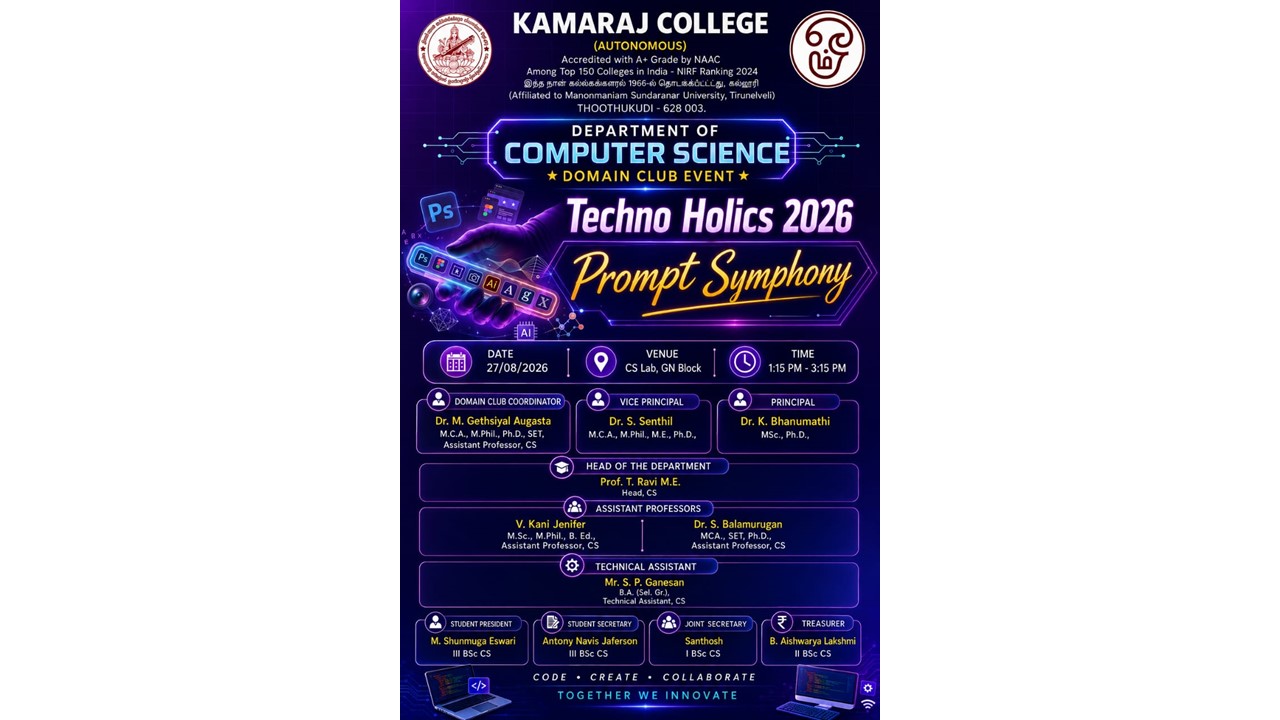
Computer Science Domain Club organized an engaging academic and skill-development event for the students of the Department of Computer Science, Kamaraj College (Autonomous), Thoothukudi, on 27 August 2026.
The programme was conducted from 1.15 p.m. to 3.15 p.m. at the Computer Science Lab as part of the regular Domain Club activities. Students and faculty members actively participated in the programme.
The event featured an interactive learning session, webpage creation activity and quiz competition. These activities provided students with opportunities to strengthen their technical knowledge, creativity, communication and teamwork.
Objectives of the Domain Club Event
The Computer Science Domain Club event aimed to promote practical learning and active student participation beyond regular classroom activities.
The major objectives included:
- Improve students’ practical computer skills
- Encourage creativity through webpage creation
- Strengthen subject knowledge
- Develop problem-solving abilities
- Promote teamwork and peer learning
- Improve communication and presentation skills
- Provide opportunities for student-led learning
- Encourage active participation in departmental activities
Thus, the programme combined technical learning with creativity and collaborative participation.
Opening of the Programme
The programme commenced with P. Thanushya of III B.Sc. Computer Science serving as the Master of Ceremony. She coordinated the proceedings and ensured the smooth flow of the programme.
Following this, M. Shanmuga Eswari and S. Gayathri Devi of III B.Sc. Computer Science delivered the welcome addresses.
They warmly welcomed the faculty members and students and introduced the purpose of the Domain Club programme. Moreover, their welcome set a positive and enthusiastic tone for the activities that followed.
Address by the Head of the Department
Prof. T. Ravi, Head of the Department of Computer Science, addressed the gathering and encouraged students to make effective use of opportunities provided through departmental activities.
He motivated students to participate actively in technical and academic programmes. Furthermore, his guidance highlighted the value of developing practical skills alongside theoretical knowledge.
The address encouraged students to approach the day’s activities with enthusiasm and a willingness to learn.
Interactive Learning Session
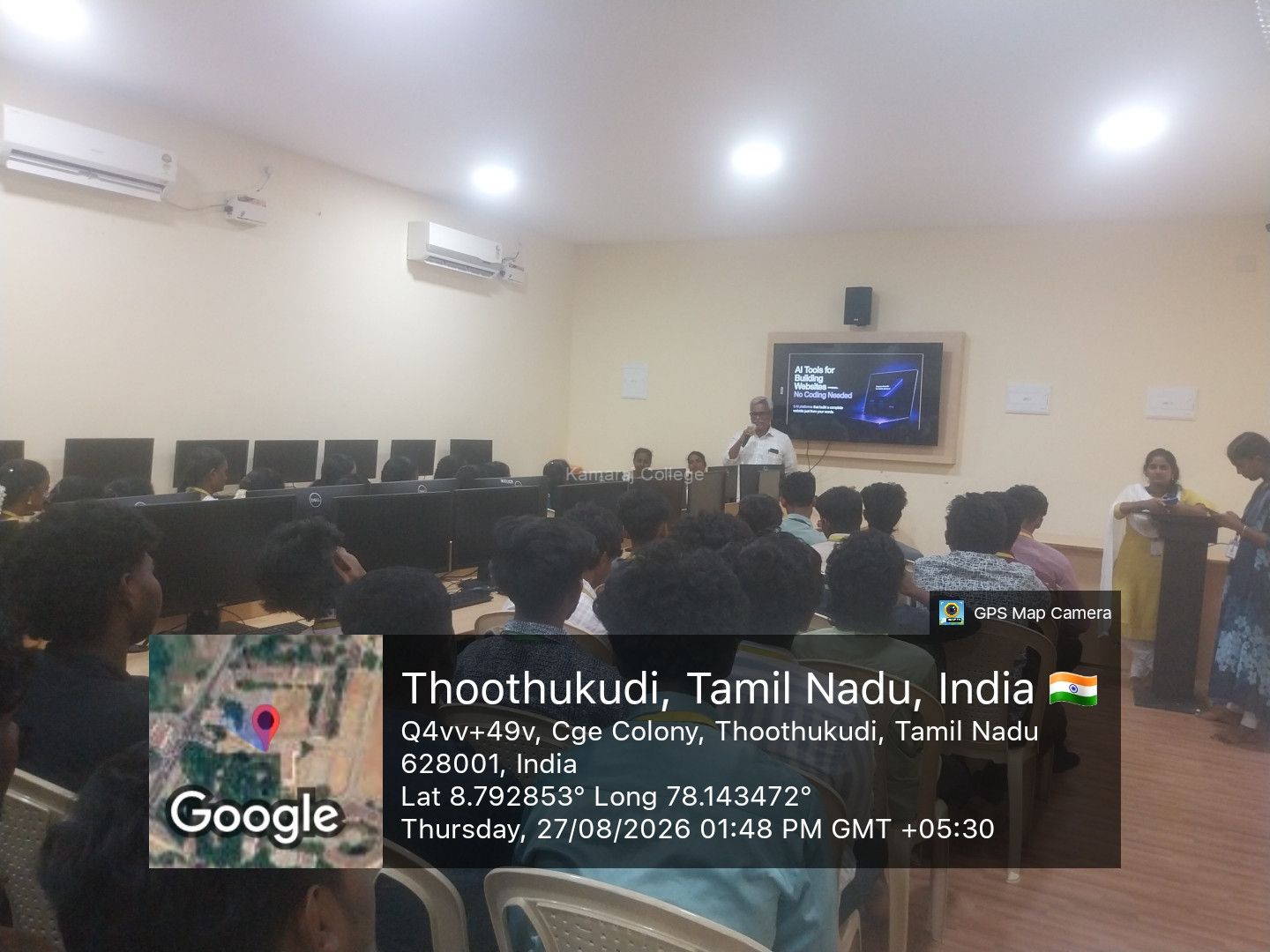
The programme continued with an informative learning session conducted by S. Saravana Priya and C. Malathi of III B.Sc. Computer Science.
The student-led session followed an interactive approach and encouraged participation from the audience. It provided an opportunity for students to learn from their peers while developing a better understanding of the topic.
Moreover, conducting the session themselves helped the student presenters improve their communication, presentation and leadership skills.
Webpage Creation Activity
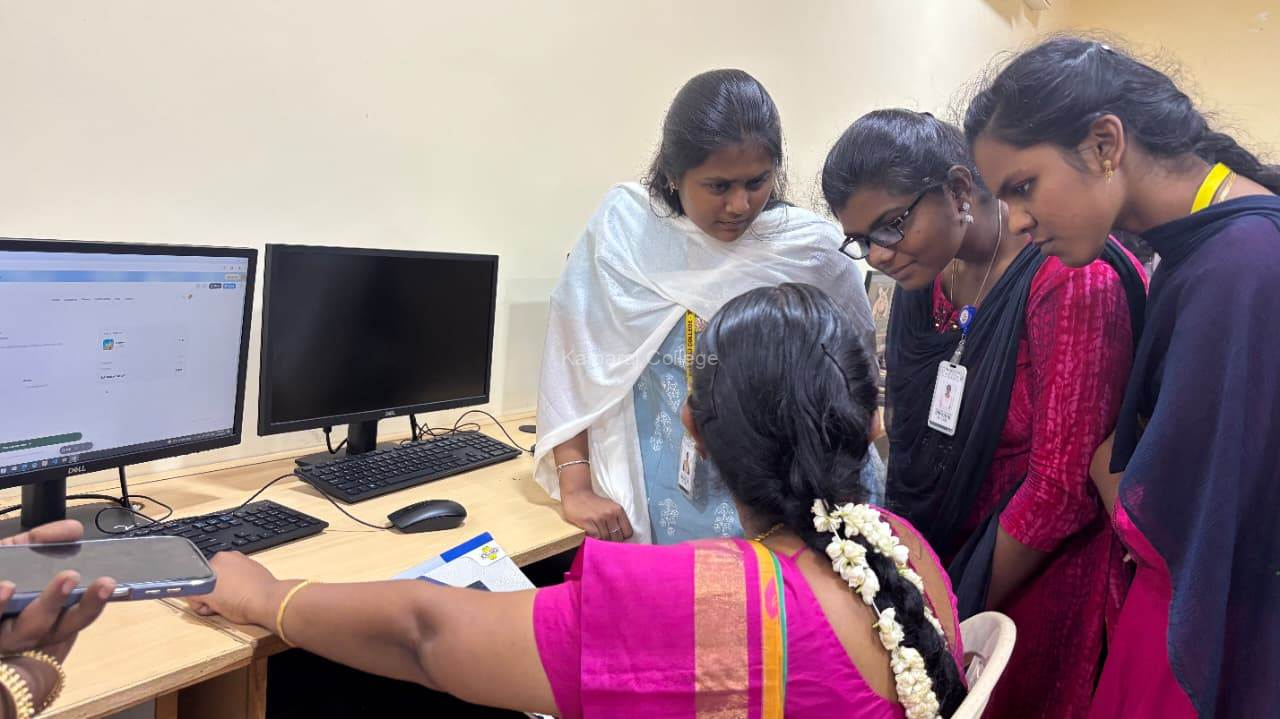
A major highlight of the Computer Science Domain Club event was the webpage creation activity conducted for students of II and III B.Sc. Computer Science.
The activity provided participants with an opportunity to apply their technical knowledge in a practical environment. Students actively engaged in creating webpages and demonstrated their creativity and understanding of web technologies.
The activity encouraged them to combine technical knowledge with design, content organization and creative thinking.
Student Coordinators for Webpage Creation
The content preparation and coordination of the webpage creation activity were handled by:
- S. Saravana Priya
- M. Priya Mani
- V. Rajalakshmi
- G. Micheal Selvam
Their coordination contributed to the smooth conduct of the activity and encouraged active participation among the students.
Furthermore, involving students in organizing the programme helped develop their leadership, coordination and teamwork abilities.
Evaluation of Webpage Creation
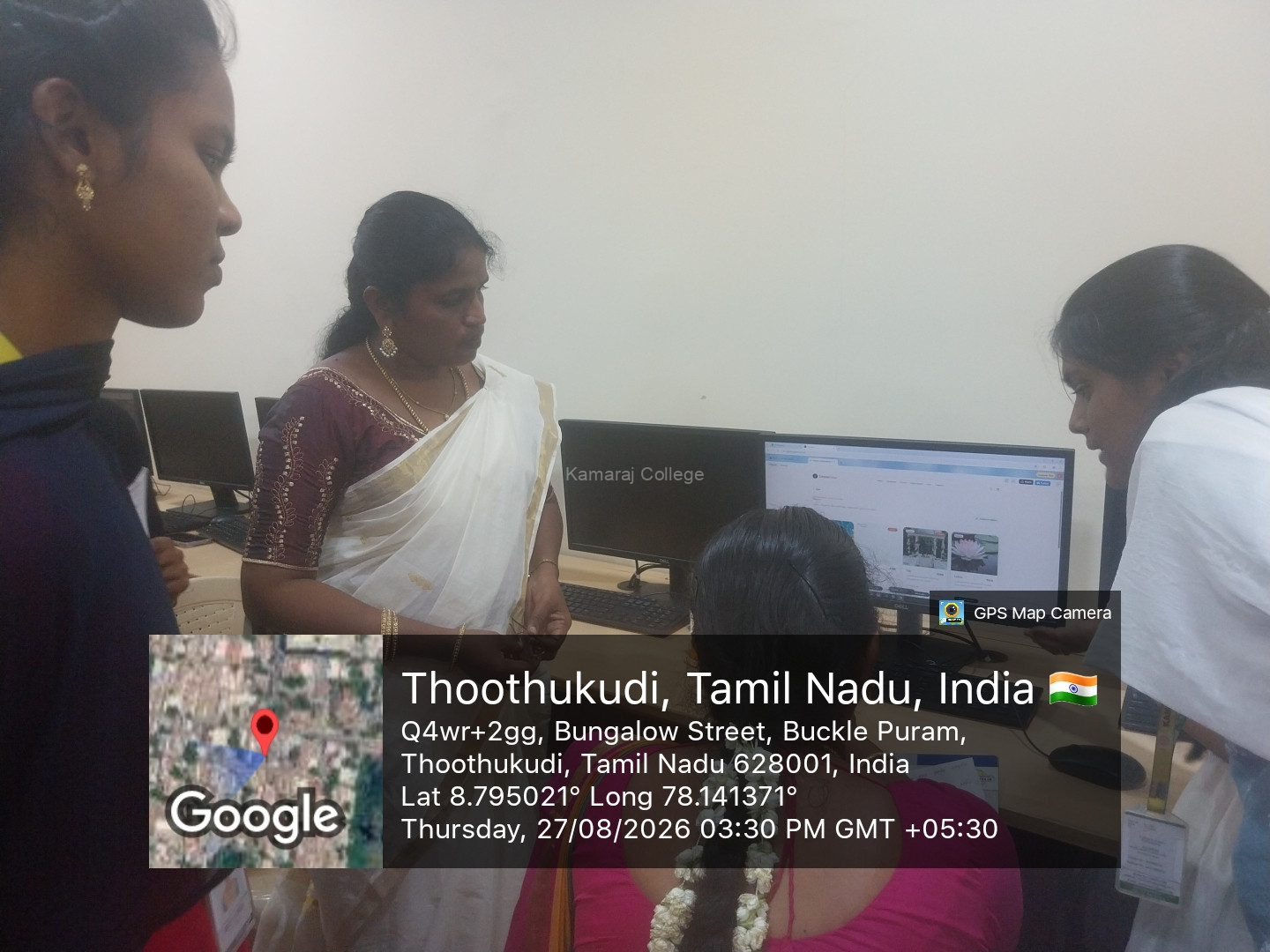
Dr. S. Jinduja, Assistant Professor of Computer Science (SF), Kamaraj College (Autonomous), served as the judge for the webpage creation activity.
She evaluated the performance of the participants and assessed their work during the competition.
The evaluation provided students with an opportunity to demonstrate their technical ability, creativity and practical understanding of webpage development. In addition, the competitive environment motivated participants to apply their knowledge effectively.
Practical Learning through Web Development
The webpage creation activity offered students valuable hands-on learning experience.
Rather than limiting their understanding to theoretical concepts, participants applied their knowledge to develop webpages. As a result, students gained greater confidence in using their technical skills in a practical setting.
Such activities also help students understand the connection between programming concepts, web technologies and real-world digital applications.
Quiz Competition
Another major activity of the programme was the quiz competition conducted in the III B.Sc. Computer Science classroom.
Students of II and III B.Sc. Computer Science participated enthusiastically in the competition. The quiz tested their subject knowledge while encouraging quick thinking and collaborative problem-solving.
Moreover, the competition created a lively learning environment where students could assess their knowledge in an enjoyable and challenging format.
Student Coordinators for Quiz Competition
The quiz competition was coordinated and conducted by:
- C. Malathi
- M. Malini
- P. Thanushya
- S. Gayathri Devi
The student coordinators successfully managed the competition and encouraged active participation from the teams.
Their involvement also demonstrated the importance of student leadership and peer-driven academic activities.
Developing Knowledge and Teamwork
The quiz competition provided participants with an opportunity to demonstrate their subject knowledge, problem-solving ability and teamwork.
Students worked together and responded to questions in a competitive setting. Therefore, the activity helped develop both academic knowledge and interpersonal skills.
Furthermore, the competition encouraged students to broaden their knowledge and remain curious about developments in Computer Science.
Prize Distribution
At the conclusion of the competitive activities, prizes were distributed to the winning teams of the quiz competition.
The winners were congratulated for their excellent performance and enthusiastic participation.
The prize distribution recognised student achievement and encouraged participants to continue taking part in similar academic and technical activities.
Student-Led Learning and Leadership
An important feature of the Computer Science Domain Club programme was the significant role played by students in conducting and coordinating the activities.
Students served as the Master of Ceremony, delivered welcome addresses, conducted the learning session, prepared activity content and coordinated competitions.
This student-led approach provided valuable opportunities to develop:
- Leadership skills
- Communication abilities
- Event coordination
- Teamwork
- Decision-making
- Confidence
- Presentation skills
Consequently, the programme supported both academic learning and the overall development of students.
Key Activities of the Programme
The Domain Club event featured a combination of learning and competitive activities:
- Welcome and introductory session
- Motivational address by the Head of the Department
- Student-led interactive learning session
- Webpage creation activity
- Evaluation of webpage creation
- Quiz competition
- Student coordination and teamwork
- Prize distribution
Thus, the event offered students a balanced combination of technical learning, creativity and competition.
Programme Outcomes
The Computer Science Domain Club event produced several positive learning outcomes.
Through the programme, students were able to:
- Improve their technical knowledge
- Gain practical experience in webpage creation
- Demonstrate creativity and digital skills
- Strengthen subject knowledge through the quiz
- Develop problem-solving abilities
- Improve communication and presentation skills
- Experience student-led learning
- Develop leadership and coordination skills
- Strengthen teamwork
- Gain confidence through active participation
Overall, the programme encouraged students to learn through participation, interaction and practical application.
Conclusion
The Computer Science Domain Club event conducted on 27 August 2026 was an engaging and informative programme that successfully combined technical learning, creativity, teamwork and competition.
The interactive learning session encouraged peer learning, while the webpage creation activity enabled students to apply their technical knowledge practically. Meanwhile, the quiz competition tested their subject knowledge, problem-solving abilities and teamwork.
The active involvement of students in organizing and conducting various parts of the programme also strengthened their communication, leadership and coordination skills.
Overall, the event provided a valuable learning experience and encouraged students to explore Computer Science beyond regular classroom learning. The programme was successfully conducted with the active participation and support of the students and faculty members of the Department of Computer Science, Kamaraj College (Autonomous), Thoothukudi.
Internal Link
External Links
- Skill India Digital – Explore digital learning and skill-development opportunities for students.
- SWAYAM – Explore online courses in Computer Science, technology and other academic disciplines.