
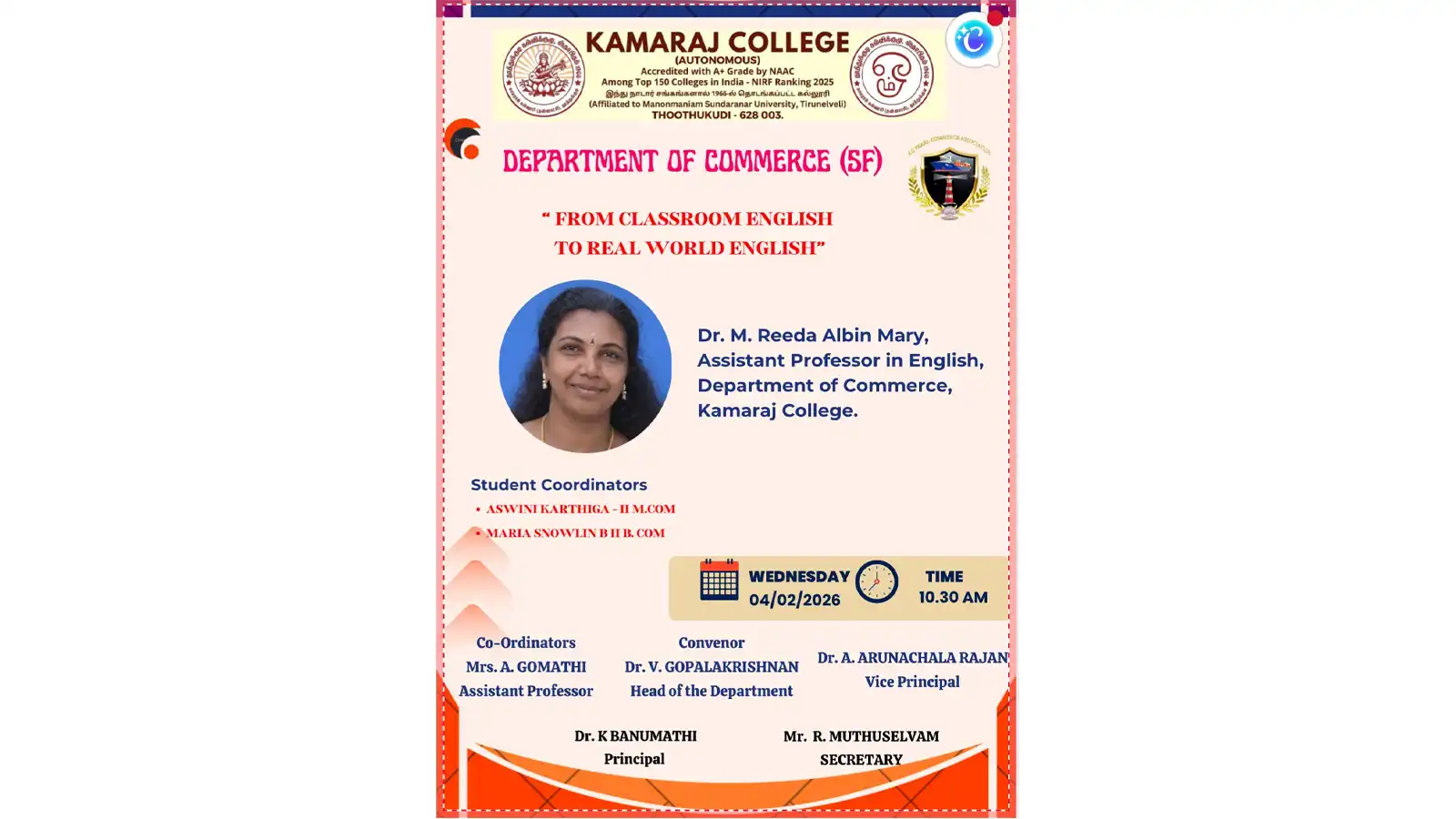
Communication Skills Programme Powerful Impact Trains 56 Commerce Students
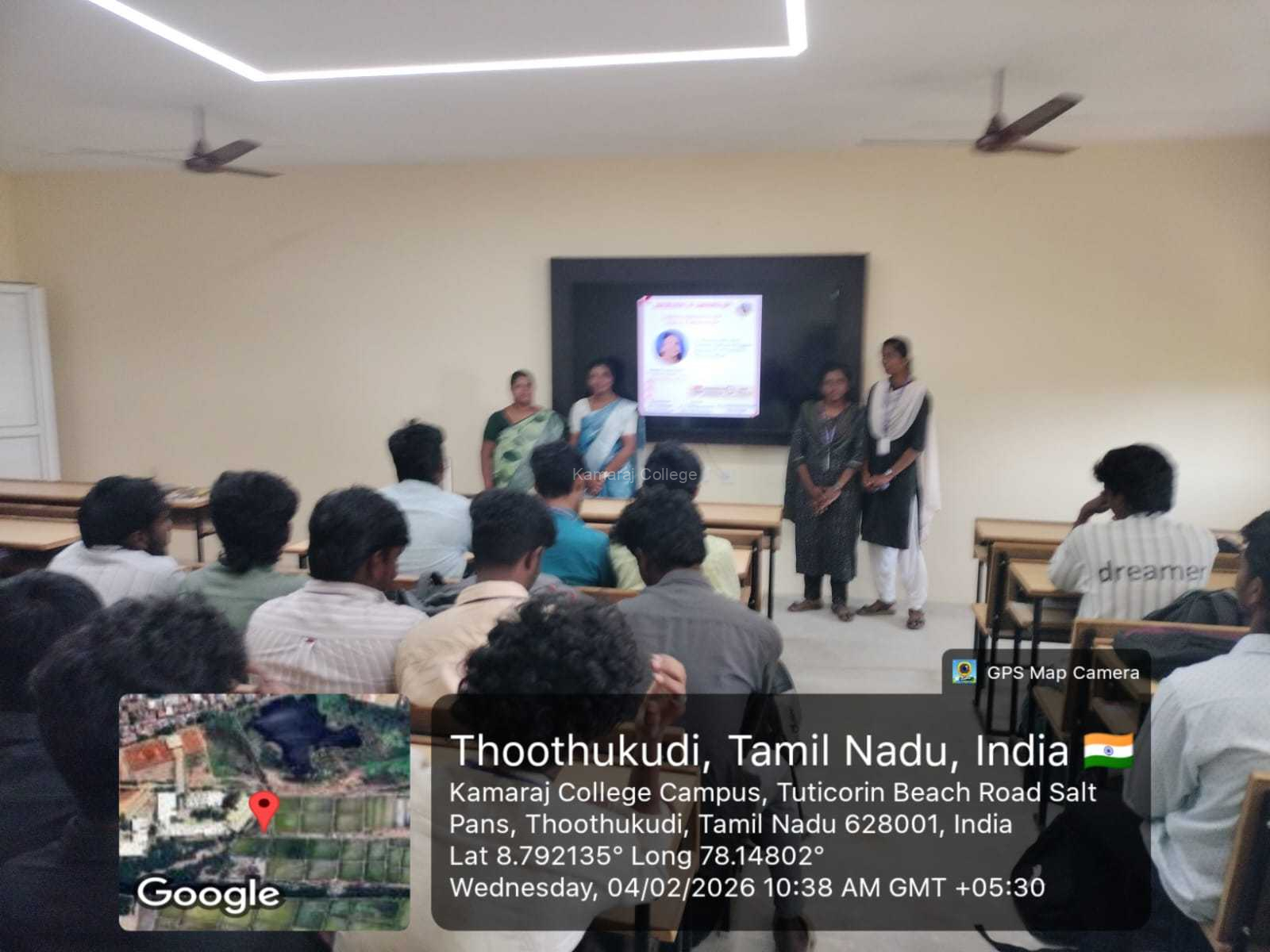
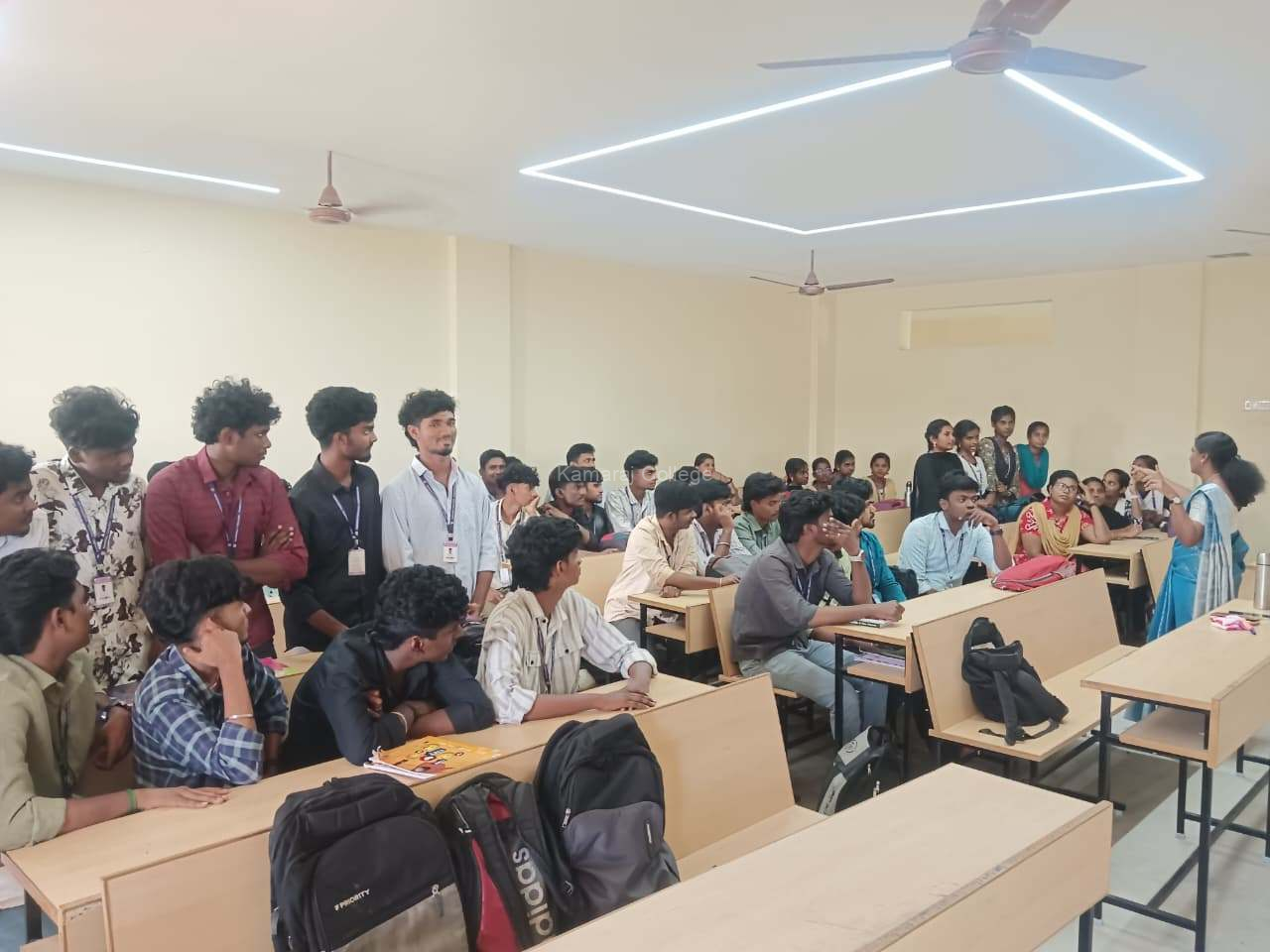
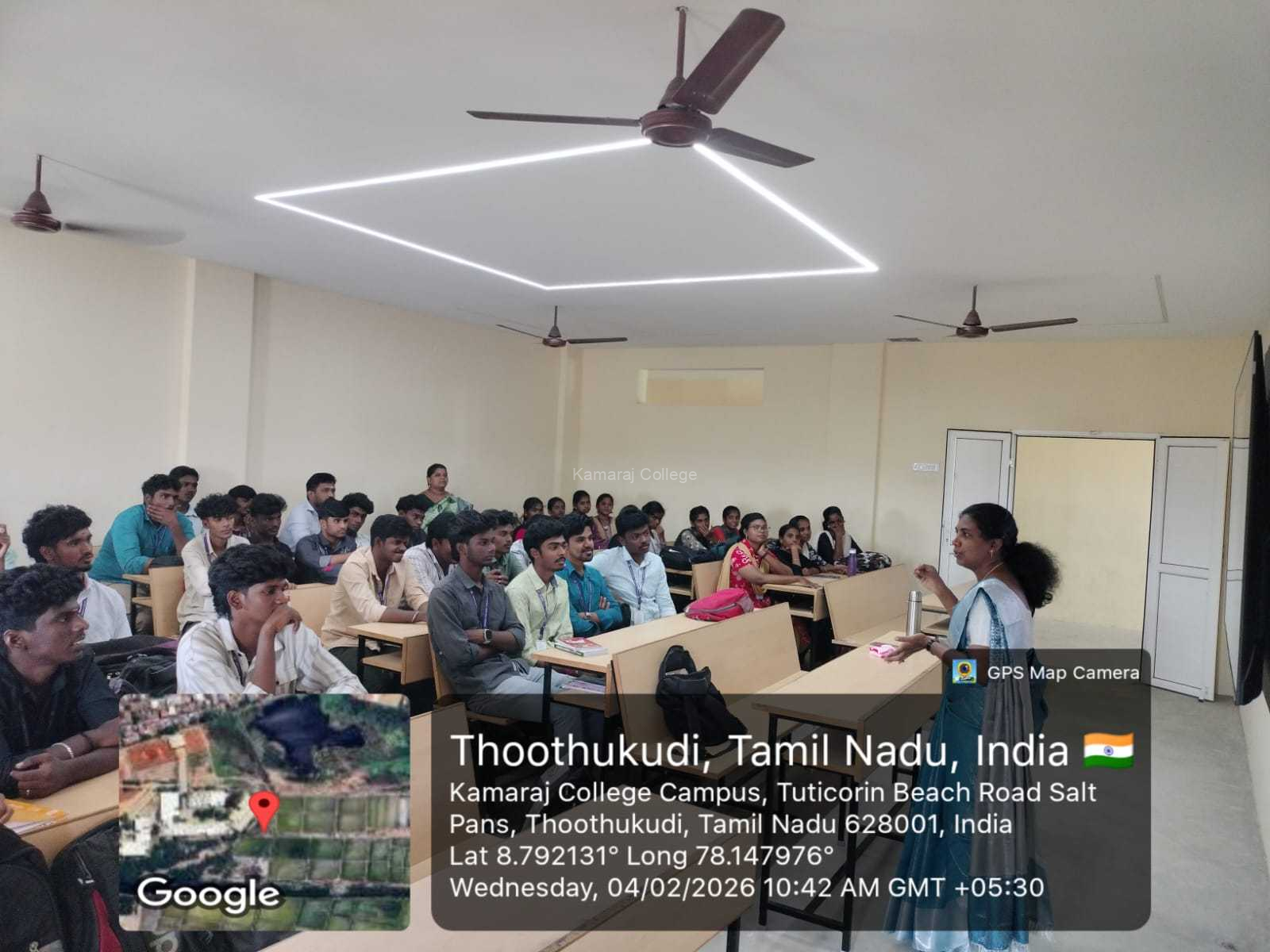
Communication Skills Programme – Programme Overview
The Communication Skills Programme titled “From Classroom English to Real World English” was organized by the Department of Commerce (Self-Finance) of Kamaraj College (Autonomous), Thoothukudi on Wednesday, 04 February 2026, from 10.30 a.m. to 12.00 p.m., at the Golden Jubilee Block.
The programme was designed as a capacity building initiative with the objective of strengthening students’ functional English proficiency and enhancing their communication competencies required for academic success, employability, and professional growth.
Objectives of the Communication Skills Programme
The primary objective of the Communication Skills Programme was to bridge the gap between theoretical learning of English and its effective use in real-life and workplace contexts. The programme emphasized outcome-based learning and skill development in alignment with contemporary educational and professional requirements.
The specific objectives of the programme included:
- To improve students’ functional and professional English skills
- To enhance verbal communication and confidence
- To prepare students for interviews and workplace interactions
- To strengthen employability and career readiness
Resource Person and Academic Expertise
The programme was conducted by Dr. M. Reeda Albin Mary, Assistant Professor in English, Department of Commerce, Kamaraj College (Autonomous), Thoothukudi, who served as the resource person.
Drawing from her academic expertise and teaching experience, the resource person effectively guided students on the practical application of English language skills in academic and professional environments.
Focus on Classroom English and Real-World Application
A central theme of the Communication Skills Programme was the transition from classroom-based English learning to real-world usage. The session focused on helping students understand how language skills learned in academic settings can be applied confidently in everyday communication scenarios.
The resource person emphasized that effective communication is not limited to grammatical accuracy but also involves clarity, confidence, and context-appropriate language use.
Key Areas Covered During the Programme
The programme addressed a wide range of practical aspects related to English communication. Through structured explanations and real-time examples, students were guided on:
- Effective verbal communication techniques
- Use of professional and workplace vocabulary
- Sentence construction and clarity of expression
- Pronunciation and voice modulation
- Confidence building in spoken English
Real-life situations such as interviews, presentations, group discussions, and professional interactions were used as examples to help students relate theoretical learning to practical usage.
Interactive and Learner-Centric Approach
The Communication Skills Programme adopted an interactive and learner-centric approach, encouraging active participation from students. Students were motivated to reflect on their communication challenges and engage in discussions aimed at improving clarity and fluency.
This interactive format helped students overcome hesitation, develop self-confidence, and improve their ability to express ideas effectively in English.
Student Participation and Learning Outcomes
A total of 56 students actively participated in the Communication Skills Programme. The participants showed keen interest throughout the session and benefitted from the practical insights shared during the programme.
The learning outcomes of the programme included:
- Improved confidence in spoken English
- Enhanced clarity and fluency in communication
- Better preparedness for interviews and presentations
- Increased awareness of employability-oriented skills
Alignment with Outcome-Based Education
The Communication Skills Programme aligned closely with outcome-based education and skill development objectives. By focusing on real-world communication requirements, the programme contributed to developing students’ critical thinking, professional competence, and self-assurance.
Such initiatives support holistic student development by integrating academic learning with practical skill enhancement.
Institutional Commitment to Skill Development
Kamaraj College (Autonomous), Thoothukudi consistently organizes capacity building and skill-oriented programmes to enhance student employability. The Communication Skills Programme reflects the institution’s commitment to experiential learning, quality enhancement, and holistic education.
Internal Link:
Kamaraj College (Autonomous), Thoothukudi
Relevance of Communication Skills in Career Development
Effective communication skills are essential for academic success and career advancement. Programmes like the Communication Skills Programme prepare students to meet workplace expectations and adapt to professional environments with confidence.
Additional information on skill development initiatives can be accessed through:
External Links:
University Grants Commission
National Career Service – Government of India
Overall Impact of the Programme
The Communication Skills Programme was highly informative and enriching, equipping students with practical language skills essential for academic performance and employability. The programme successfully achieved its intended outcomes by enhancing communication competence and self-confidence among participants.
Conclusion
The Communication Skills Programme titled “From Classroom English to Real World English”, organized on 04 February 2026, was a meaningful and impactful initiative by the Department of Commerce (Self-Finance). The expert guidance of Dr. M. Reeda Albin Mary, combined with active student participation, ensured a productive learning experience.
The programme reaffirmed Kamaraj College’s commitment to capacity building, employability enhancement, and holistic student development through skill-oriented academic initiatives.