
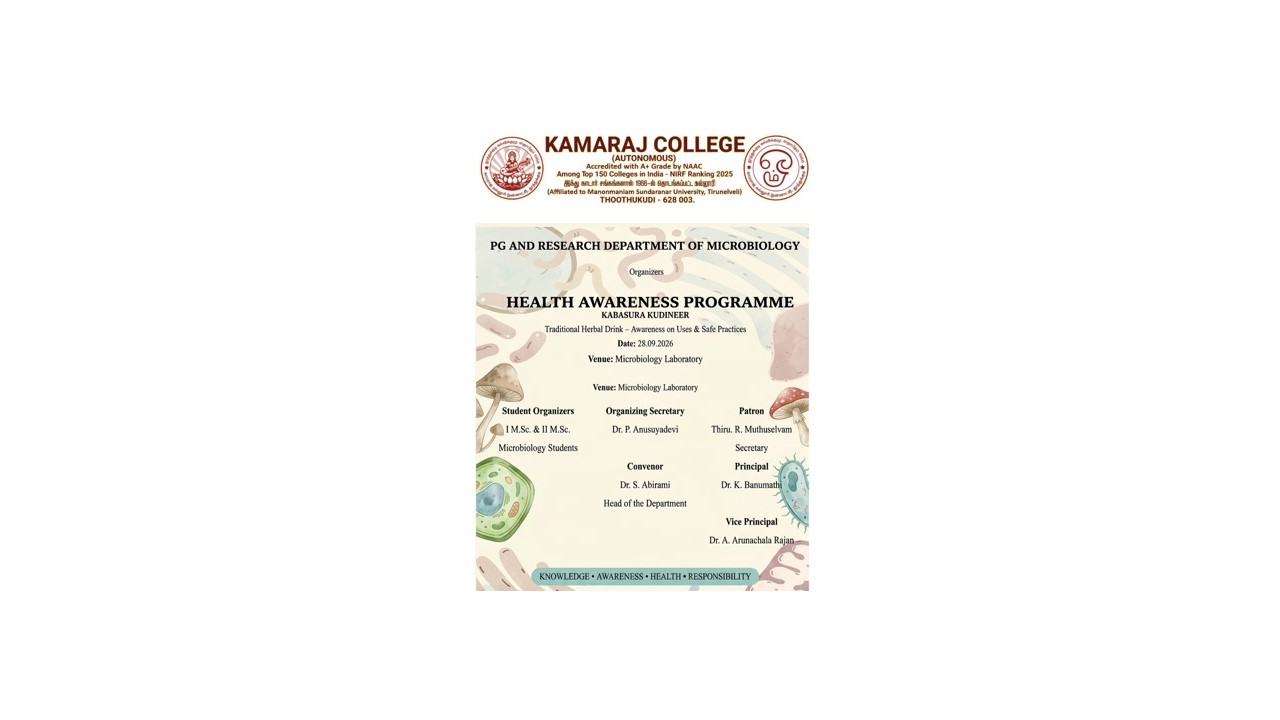
Communicable Disease Awareness 2026: Powerful Prevention and Hygiene Initiative
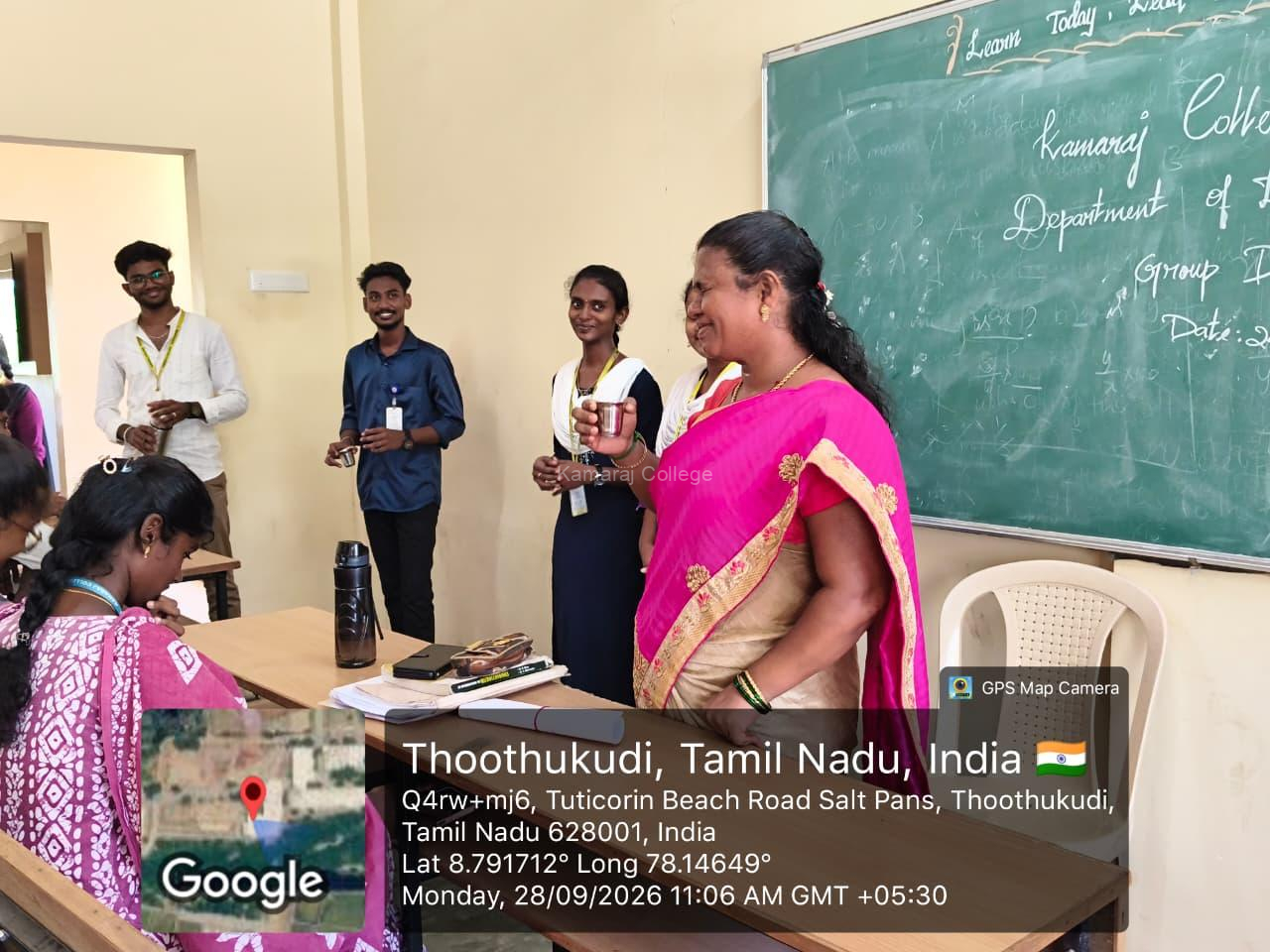
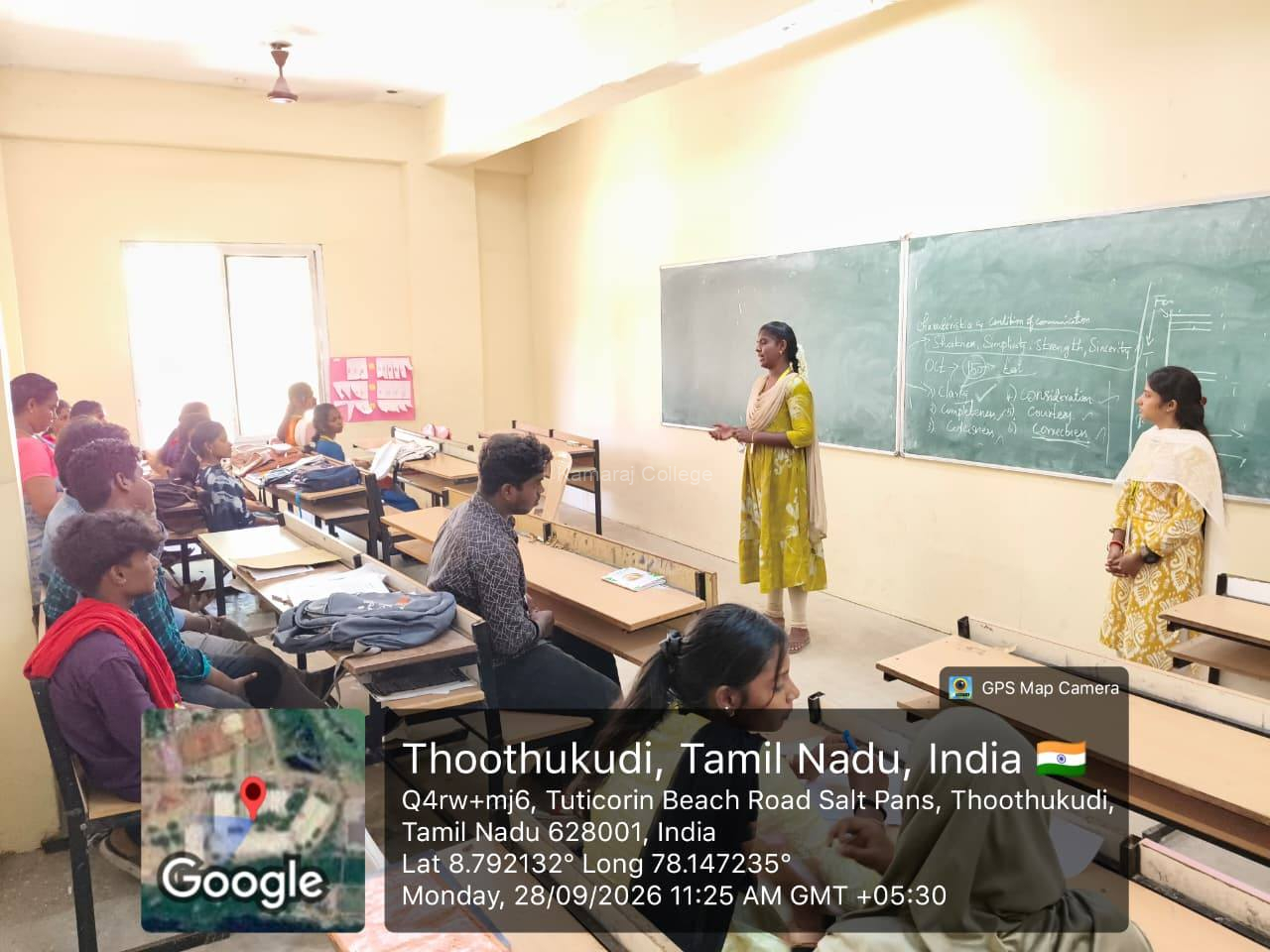
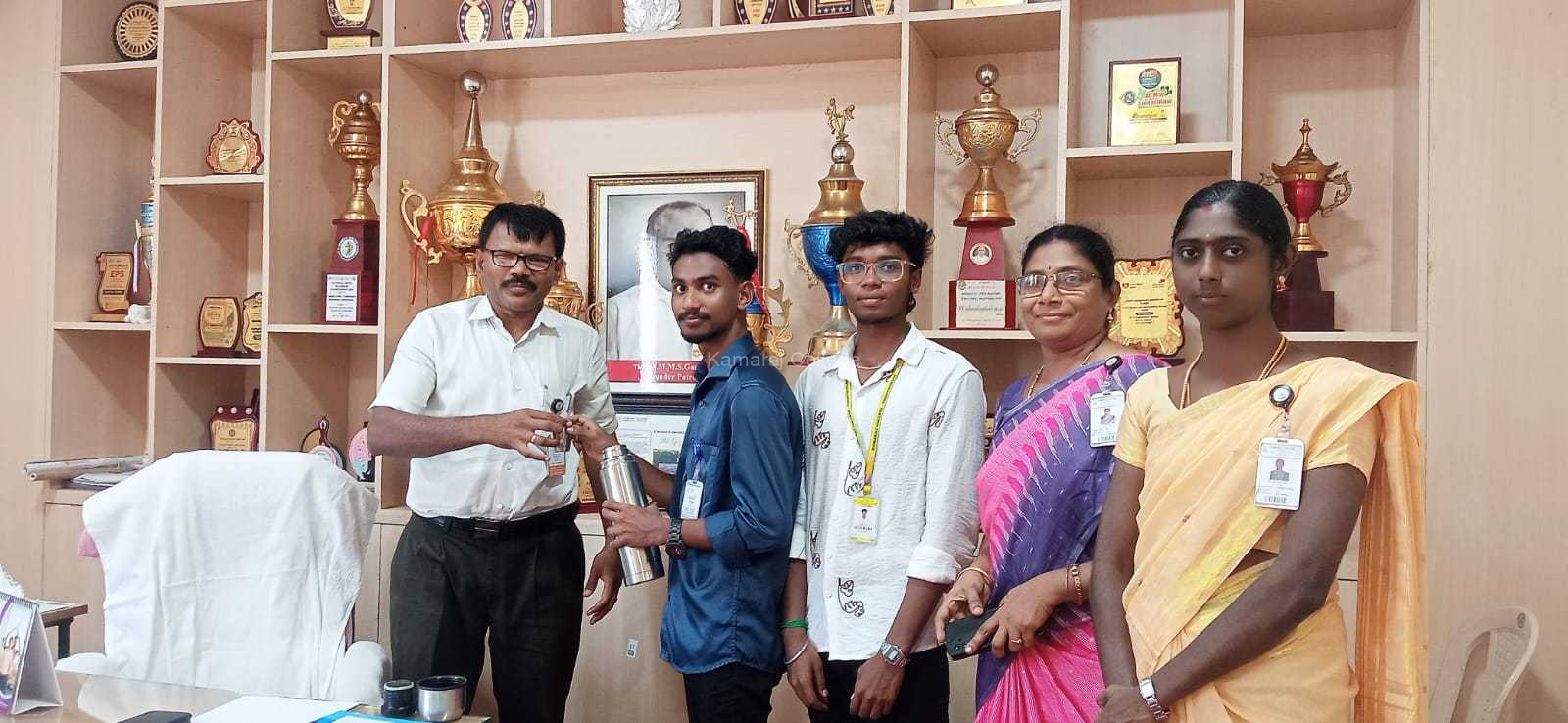
Communicable Disease Awareness programme on the Prevention of Fever and Communicable Diseases was organised by the PG and Research Department of Microbiology, Kamaraj College (Autonomous), Thoothukudi, on 28 September 2026 for the benefit of students and staff.
The programme aimed to create awareness about the causes and modes of transmission of communicable diseases, preventive measures, personal hygiene, environmental sanitation and responsible health practices.
The awareness activity was actively coordinated by the I PG and II PG Microbiology students under the guidance of the faculty members of the Department.
The student volunteers interacted with students and staff and shared important preventive messages relating to hand hygiene, safe drinking water, hygienic food, clean surroundings, mosquito breeding prevention and timely medical consultation.
Communicable Disease Awareness 2026
The Communicable Disease Awareness programme was designed to help the College community understand how simple preventive practices can contribute to reducing the spread of fever and infectious illnesses.
The activity focused particularly on the importance of personal cleanliness, environmental hygiene and awareness of possible symptoms of infection.
Students and staff were encouraged to adopt responsible health practices and seek appropriate medical attention whenever necessary.
Understanding the Spread of Communicable Diseases
An important aspect of the programme was creating awareness about the causes and modes of transmission of communicable diseases.
The Microbiology students explained the importance of understanding how infections can spread and how preventive practices can help reduce the risk of transmission.
The activity helped connect scientific knowledge with practical health awareness relevant to everyday life.
Personal Hygiene and Hand Washing
The student volunteers emphasised the importance of maintaining good personal hygiene and frequent hand washing.
Participants were encouraged to follow appropriate hygiene practices as part of their daily routine, particularly during periods when febrile illnesses and infections are more common.
The Communicable Disease Awareness programme reinforced the importance of individual responsibility in maintaining personal and community health.
Safe Drinking Water and Hygienic Food
Awareness was also created about the importance of consuming safe drinking water and hygienically prepared food.
Students and staff were encouraged to remain conscious of food and water hygiene as part of preventive health practices.
The programme highlighted that maintaining good hygiene in everyday habits is an important component of disease prevention.
Maintaining Clean Surroundings
Environmental cleanliness formed another important part of the awareness activity.
The volunteers encouraged students and staff to maintain clean surroundings both within institutional premises and in residential areas.
The programme highlighted the connection between environmental sanitation and the prevention of communicable diseases.
Preventing Mosquito Breeding
Special attention was given to the importance of preventing mosquito breeding.
Students and staff were encouraged to identify and eliminate stagnant water around residential and institutional premises.
The volunteers also created awareness about the role of mosquitoes and other vectors in the transmission of several communicable diseases.
The Communicable Disease Awareness initiative therefore encouraged everyone to contribute towards maintaining clean surroundings and reducing conditions favourable for vector breeding.
Recognising Symptoms and Seeking Medical Care
The student volunteers created awareness about symptoms such as fever, cough, cold, body pain and other signs of infection.
Participants were encouraged to seek appropriate medical attention when such symptoms occurred, particularly when symptoms persisted or became severe.
The programme stressed the importance of responsible health practices and timely consultation with qualified healthcare professionals.
Awareness During Periods of Febrile Illness
Students and staff were advised to be particularly careful during periods when there is an increased incidence of febrile illnesses.
Maintaining personal hygiene, keeping the environment clean and following appropriate preventive practices were highlighted as important measures.
Participants were also encouraged to avoid close contact with infected individuals where appropriate and to remain attentive to symptoms that may require medical consultation.
Distribution of Nilavembu Kashayam
As part of the awareness activity, Nilavembu Kashayam was distributed to students and staff as a traditional wellness measure.
Importantly, the students clearly explained that Nilavembu Kashayam should not be considered a substitute for medical diagnosis or treatment.
Participants were advised that anyone experiencing persistent or severe fever should consult a qualified healthcare professional for appropriate evaluation and treatment.
This responsible message helped ensure that the traditional wellness component of the programme was accompanied by appropriate guidance on professional medical care.
Microbiology Knowledge in Practice
The programme provided the I PG and II PG Microbiology students with an opportunity to apply their subject knowledge in a practical awareness setting.
Instead of limiting their learning to classroom concepts, the students used their knowledge to communicate meaningful health information to the College community.
The activity strengthened their understanding of the relationship between microbiology, disease transmission, hygiene, environmental sanitation and public health awareness.
Students as Health Awareness Volunteers
The active involvement of Microbiology students was a significant feature of the Communicable Disease Awareness programme.
By interacting directly with students and staff, the volunteers developed their ability to communicate scientific and health-related information in an understandable manner.
The activity also promoted social responsibility, teamwork, communication and community awareness among the participating students.
Objectives of the Programme
The major objectives of the programme were:
- Create awareness about fever and communicable diseases
- Explain the causes and modes of transmission of infections
- Promote good personal hygiene and frequent hand washing
- Encourage the consumption of safe drinking water and hygienic food
- Highlight the importance of environmental sanitation
- Create awareness about mosquito and vector control
- Encourage the elimination of stagnant water
- Promote timely medical consultation when necessary
- Enable Microbiology students to apply their academic knowledge in a practical awareness activity
Programme Highlights
- Programme: Awareness Programme on Prevention of Fever and Communicable Diseases
- Date: 28 September 2026
- Organised by: PG and Research Department of Microbiology
- Institution: Kamaraj College (Autonomous), Thoothukudi
- Student Coordinators: I PG and II PG Microbiology Students
- Guidance: Faculty Members of the Department
- Beneficiaries: Students and Staff
- Key Areas: Personal Hygiene, Hand Washing, Safe Food and Water, Environmental Sanitation, Mosquito Control and Timely Medical Care
- Awareness Activity: Distribution of Nilavembu Kashayam as a Traditional Wellness Measure
Learning Outcomes
The Communicable Disease Awareness programme helped participants to:
- Understand preventive measures against communicable diseases
- Recognise the importance of personal hygiene
- Understand the value of frequent hand washing
- Recognise the importance of safe drinking water and hygienic food
- Understand the role of environmental cleanliness in disease prevention
- Become aware of mosquito breeding prevention
- Recognise the importance of seeking appropriate medical attention
- Develop responsible health practices
Promoting Responsible Health Practices
The programme encouraged the College community to understand that disease prevention requires both individual responsibility and collective action.
Personal hygiene, clean surroundings, prevention of mosquito breeding and timely medical consultation were presented as important components of responsible health behaviour.
At the same time, the programme enabled Microbiology students to use their academic knowledge for a meaningful awareness initiative benefiting the wider College community.
Conclusion
The Communicable Disease Awareness programme organised on 28 September 2026 was a meaningful health education initiative by the PG and Research Department of Microbiology.
Through direct interaction with students and staff, the I PG and II PG Microbiology students created awareness about personal hygiene, hand washing, safe food and drinking water, environmental sanitation, mosquito control and timely medical consultation.
The responsible guidance accompanying the distribution of Nilavembu Kashayam also emphasised that traditional wellness measures should not replace appropriate medical diagnosis or treatment.
Overall, the Communicable Disease Awareness programme provided valuable health information to the College community while giving Microbiology students practical experience in communicating scientific knowledge for disease prevention and public awareness.
Internal Link
- Kamaraj College (Autonomous), Thoothukudi – Explore more academic activities, health awareness initiatives and student programmes.
External Links
- Ministry of Health and Family Welfare, Government of India – Official information on public health programmes and disease prevention initiatives.
- National Centre for Disease Control – Official information and resources related to communicable disease prevention and control in India.