
Botany Field Visit 2026: Inspiring Marine and Algal Learning Experience
Report on Educational Field Visit to Rameshwaram
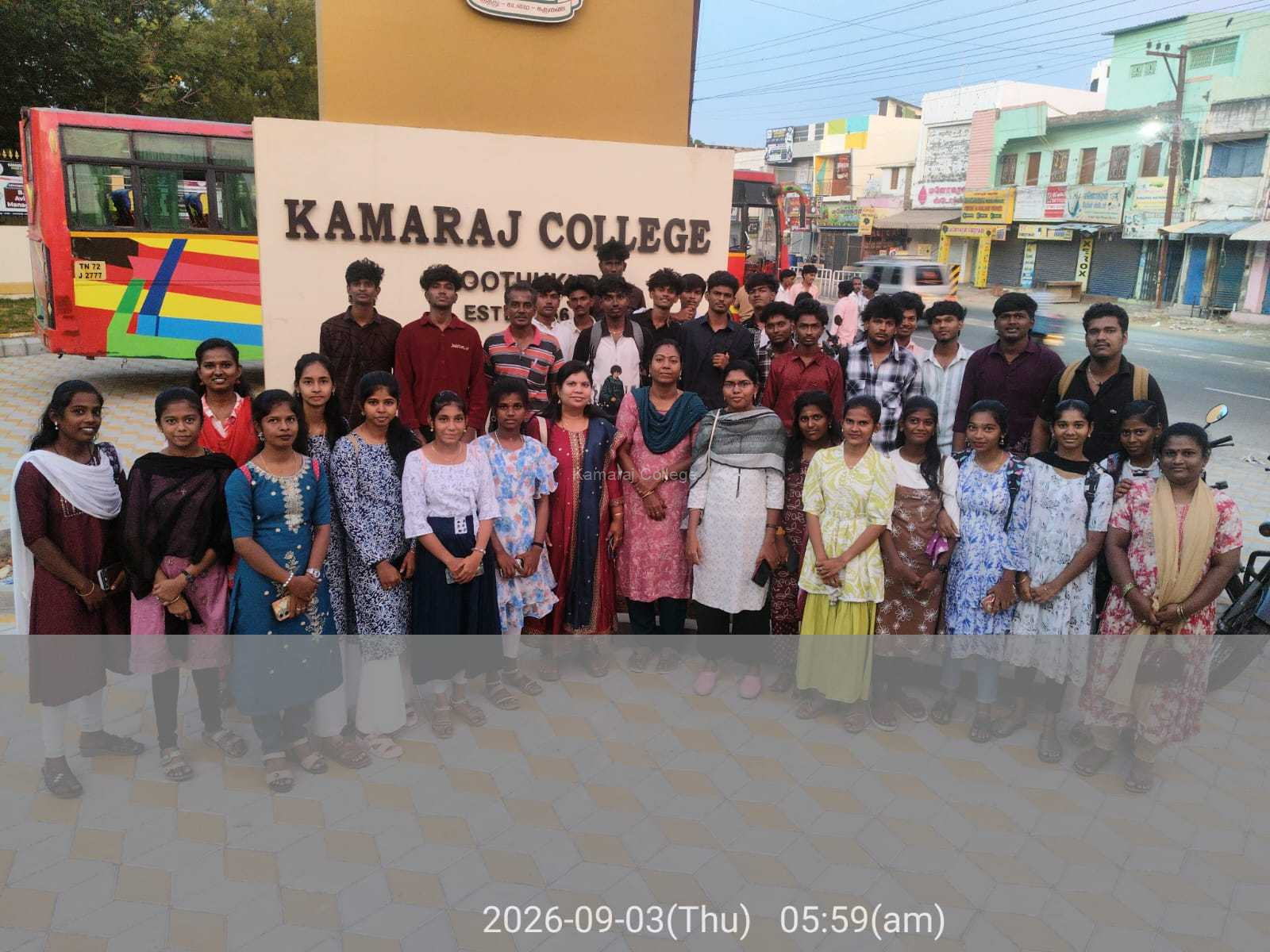
Botany Field Visit was organised by the Department of Botany, Kamaraj College (Autonomous), Thoothukudi, on 3 September 2026 for the students of UG First Year Botany, PG First Year Botany and Final Year Farm Science.
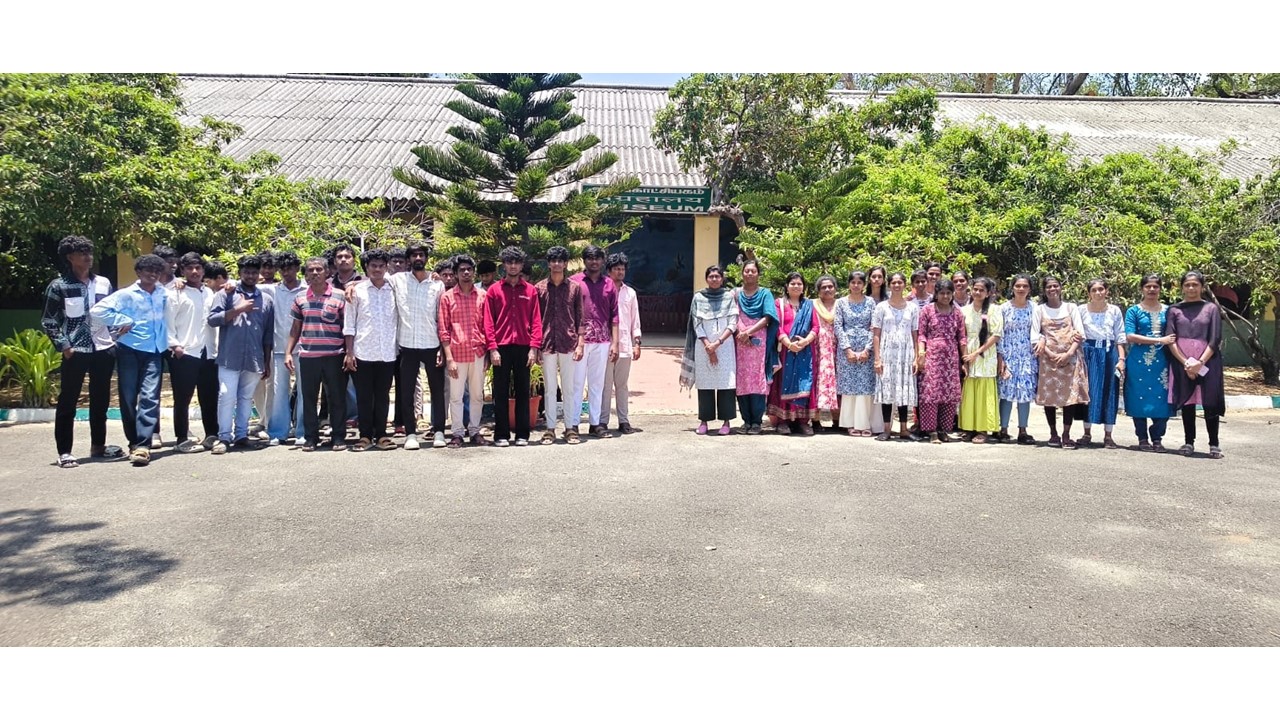
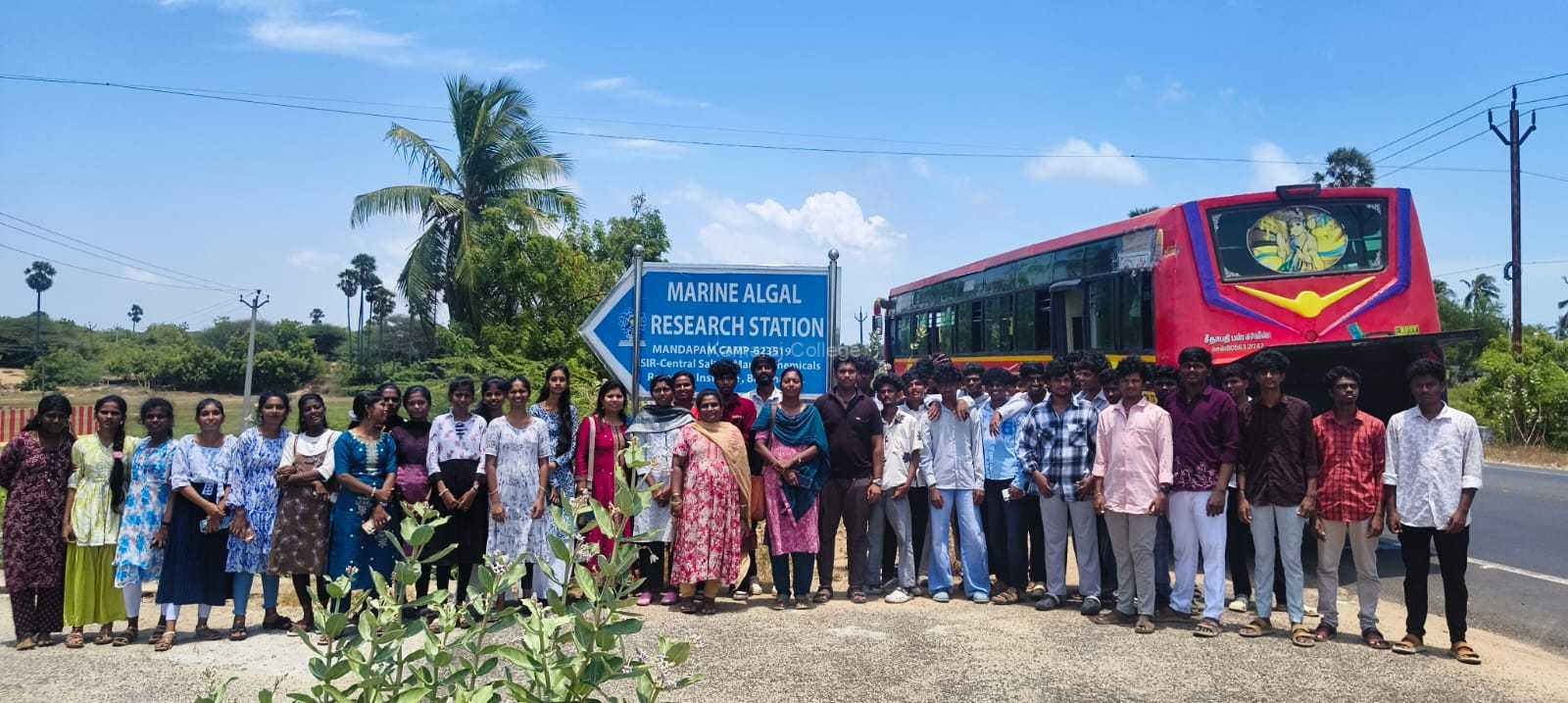
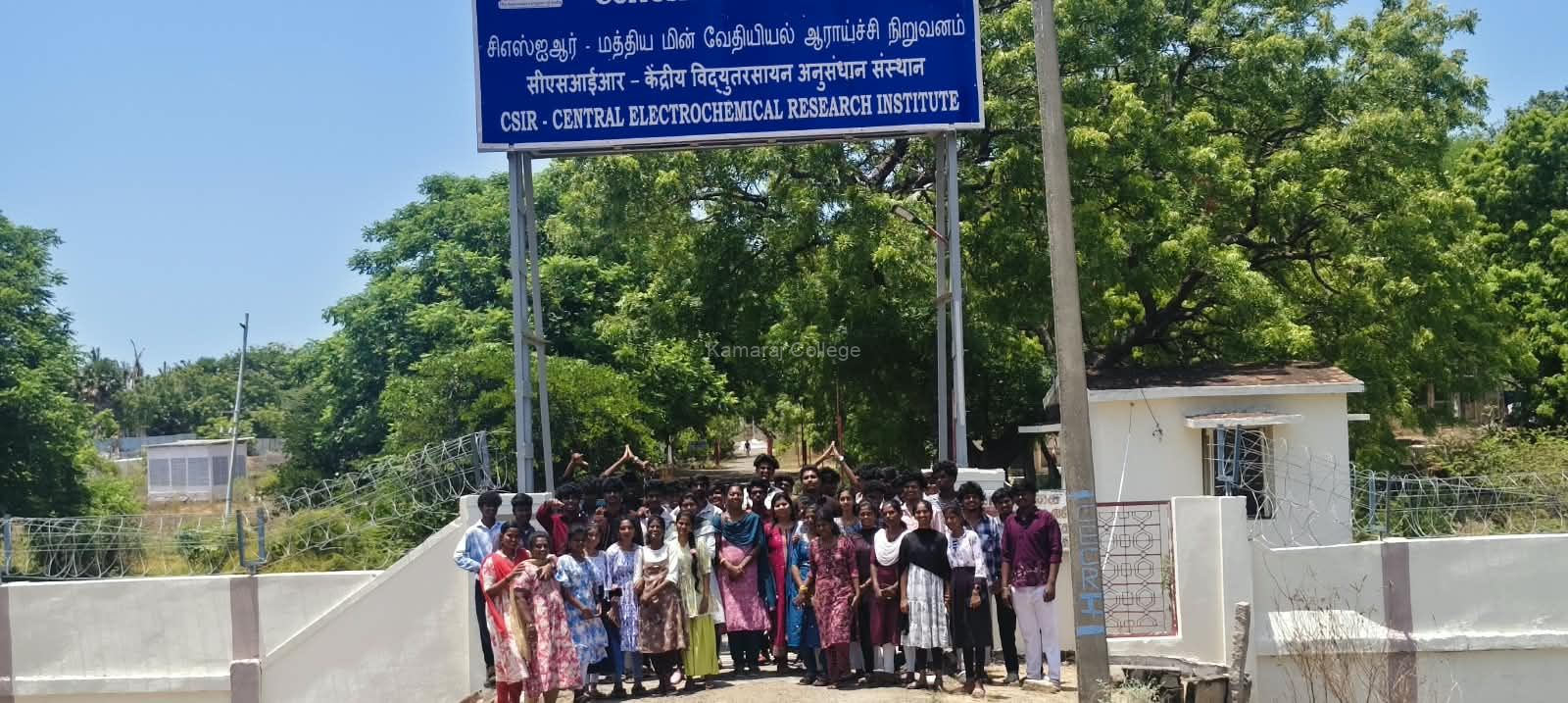
As part of the academic programme, the students visited the Algal Museum, CSIR Algal Research Centre and Dhanushkodi.
The visit provided valuable practical exposure to algal diversity, identification, morphology, research applications and economic importance.
At the Algal Museum and CSIR Algal Research Centre, students gained insights into algal resources, scientific study and ongoing research activities.
Furthermore, the visit to Dhanushkodi enabled students to observe the coastal ecosystem and marine algal resources in their natural habitat.
Overall, the programme was an enriching academic experience that strengthened students’ understanding of algae, marine biodiversity, ecological significance and botanical research.
Objectives of the Educational Field Visit
The field visit aimed to extend classroom learning through direct observation and field-based study.
The major objectives were:
- Provide practical exposure to algal diversity
- Understand algal identification and morphology
- Introduce students to algal research activities
- Understand the economic importance of algae
- Observe marine algal resources in their natural habitat
- Study coastal ecosystems directly
- Develop awareness of marine biodiversity
- Understand the ecological significance of algae
- Encourage field-based botanical learning
- Develop greater interest in botanical research
Thus, the programme combined academic learning, field observation and research exposure.
Participation in the Botany Field Visit
The educational programme involved students from three academic groups:
- UG First Year Botany
- PG First Year Botany
- Final Year Farm Science
Bringing together students from different levels created a wider learning environment.
It also provided an opportunity for students to observe scientific concepts beyond their regular classroom lessons.
Furthermore, the field-based approach encouraged active learning and direct engagement with botanical resources.
Visit to the Algal Museum
The students visited the Algal Museum as part of the programme.
The museum offered valuable exposure to algal resources and helped students understand the diversity of algae.
Students were able to relate their academic knowledge to specimens, displays and scientific information available at the museum.
The visit therefore strengthened their understanding of algal classification, structure and practical significance.
Understanding Algal Diversity
One of the important learning areas during the Botany Field Visit was algal diversity.
Algae occur in different forms and environments and represent an important component of aquatic ecosystems.
The museum visit helped students appreciate the variety of algal forms and their biological significance.
Furthermore, direct exposure enabled them to connect theoretical concepts of classification and diversity with practical observation.
Learning Algal Identification
The field visit helped students understand the importance of identifying algal forms based on their observable characteristics.
Identification is an essential part of botanical study because it enables students to distinguish between different groups and understand their features.
The practical exposure strengthened their ability to observe and compare algal characteristics.
Moreover, it encouraged greater attention to detail during botanical study.
Understanding Algal Morphology
Students also gained practical understanding of algal morphology.
Morphological study helps learners understand the external form and structural organisation of algae.
The museum and research centre provided opportunities to relate these concepts to real specimens and examples.
Therefore, the visit made the study of algae more meaningful and visually engaging.
Visit to the CSIR Algal Research Centre
The students also visited the CSIR Algal Research Centre.
The visit introduced them to scientific research activities related to algal resources.
Students gained insights into how algae are studied scientifically and how research can contribute to wider applications.
The exposure helped them understand that botanical research extends beyond academic theory and can lead to practical and economic applications.
Exposure to Scientific Research
The visit to the research centre introduced students to the importance of systematic scientific investigation.
Research institutions play an important role in studying biological resources and developing knowledge that can support innovation and applications.
Students gained an understanding of how algae can become subjects of research in areas such as biodiversity, ecology and resource utilisation.
This exposure helped strengthen their interest in research-oriented learning.
Understanding Research Applications
The Botany Field Visit also helped students understand the wider research applications of algae.
Algal research is relevant to several areas of biological and environmental science.
The visit demonstrated how botanical knowledge can be connected with practical scientific investigations.
Furthermore, students developed a broader perspective on the role of research in addressing biological and ecological questions.
Economic Importance of Algae
Students gained awareness of the economic importance of algae during the programme.
Algal resources can contribute to various fields through research, processing and utilisation.
Understanding their economic importance helped students appreciate algae not only as botanical organisms but also as useful biological resources.
This perspective broadened their knowledge and encouraged them to explore the practical relevance of Botany.
Visit to Dhanushkodi
The visit to Dhanushkodi provided a different type of learning experience.
Here, students were able to observe the coastal environment directly.
The natural setting enabled them to understand marine and coastal ecology in a real-world context.
The visit was particularly valuable because it allowed students to study biological resources in their natural habitat rather than only through laboratory or classroom learning.
Observation of the Coastal Ecosystem
At Dhanushkodi, students observed features of the coastal ecosystem.
Coastal ecosystems are dynamic environments where marine and terrestrial influences interact.
Observing such an ecosystem helped students understand the relationship between environmental conditions and biological diversity.
Furthermore, it encouraged them to appreciate the ecological importance of coastal regions.
Marine Algal Resources in Natural Habitat
A major advantage of the visit to Dhanushkodi was the opportunity to observe marine algal resources in their natural habitat.
Field observation helps students understand how organisms interact with their environment.
Seeing marine algae in natural coastal conditions strengthened their understanding of habitat, distribution and ecological relevance.
This first-hand learning experience complemented the knowledge gained at the museum and research centre.
Understanding Marine Biodiversity
The programme also enhanced students’ understanding of marine biodiversity.
Marine environments support diverse forms of life, including algae and other organisms.
Field observation helped students recognise the richness and complexity of coastal biological communities.
Furthermore, it encouraged awareness of the need to understand and conserve marine ecosystems.
Ecological Significance of Algae
The field visit helped students understand the ecological significance of algae.
Algae form an important part of aquatic ecosystems and contribute to ecological processes.
Observing algal resources in natural environments helped students understand their role within marine ecosystems.
This knowledge strengthened their appreciation of algae from both botanical and ecological perspectives.
Connecting Museum Learning with Field Observation
The programme provided a valuable combination of museum-based learning and field observation.
At the Algal Museum, students studied algal resources in a structured academic setting.
At the CSIR Algal Research Centre, they gained research exposure.
At Dhanushkodi, they observed coastal and marine algal resources directly in nature.
Together, these three learning environments created a comprehensive educational experience.
Experiential Learning
The Botany Field Visit strongly supported experiential learning.
Students were able to observe biological specimens, research activities and natural ecosystems directly.
Such experiences help make scientific concepts easier to understand and remember.
Furthermore, experiential learning encourages students to ask questions, observe carefully and develop independent scientific thinking.
Strengthening Classroom Learning
Field visits complement classroom instruction by providing opportunities to apply theoretical knowledge.
Students often learn about algae, marine ecosystems and biodiversity through textbooks and lectures.
During the visit, they had an opportunity to observe these concepts directly.
Therefore, the programme strengthened their academic understanding and made learning more practical.
Encouraging Botanical Observation
Observation is an essential skill in Botany.
The programme encouraged students to examine algal forms, museum exhibits, research resources and coastal environments carefully.
Such field-based observation improves students’ ability to identify patterns and understand biological relationships.
Furthermore, it develops scientific curiosity and attention to detail.
Promoting Interest in Botanical Research
The visit encouraged students to develop greater interest in botanical research.
Exposure to a research centre helps learners understand how scientific questions are investigated beyond the classroom.
Students can also begin to recognise possible areas for future projects, postgraduate work and research.
Thus, the visit served as an academic motivation for students interested in higher studies and scientific careers.
Relevance for UG and PG Botany Students
The programme was particularly useful for both undergraduate and postgraduate Botany students.
UG students gained foundational practical exposure, while PG students could connect the visit with more advanced scientific concepts.
The experience therefore supported learning at different academic levels.
Furthermore, field exposure can encourage students to explore specialised topics within Botany.
Learning Value for Farm Science Students
The participation of Final Year Farm Science students added another dimension to the programme.
Understanding biological diversity and resource utilisation is relevant to applied biological sciences.
The visit helped these students broaden their knowledge of algal resources and environmental systems.
It also demonstrated the interdisciplinary nature of plant sciences.
Interdisciplinary Learning
The field visit demonstrated that Botany connects with several other fields.
The study of algae is linked with ecology, marine biology, environmental science, biotechnology and resource management.
Students were able to see these connections through museum exhibits, research activities and coastal observation.
This interdisciplinary exposure broadened their understanding of botanical science.
Awareness of Natural Resources
The visit also created greater awareness of natural biological resources.
Marine algae represent valuable components of coastal ecosystems and also have potential applications.
Students learned that understanding natural resources requires both scientific knowledge and ecological responsibility.
Therefore, the field visit encouraged a balanced view of utilisation and conservation.
Environmental Awareness
The Dhanushkodi visit contributed to environmental awareness.
Coastal ecosystems are sensitive environments that require responsible management and conservation.
Field exposure helped students understand the importance of protecting marine biodiversity and natural habitats.
Furthermore, it encouraged them to appreciate the connection between scientific study and environmental responsibility.
Learning Beyond the Classroom
One of the greatest strengths of the programme was learning beyond the classroom.
Students had opportunities to observe, analyse and connect scientific concepts with real places and resources.
This kind of learning can strengthen academic motivation and encourage greater participation in scientific activities.
The field visit therefore complemented the regular curriculum effectively.
Developing Scientific Curiosity
Direct exposure to algae and marine ecosystems encouraged students to ask questions and explore new ideas.
Scientific curiosity develops when students are exposed to real-world examples of concepts they study.
The programme therefore helped create a more engaging learning environment.
Furthermore, curiosity can motivate students to pursue further reading, projects and research.
Potential Applications of Algal Resources
The students also gained awareness of the potential applications of algal resources.
Algae have scientific, ecological and economic significance.
The visit helped learners understand that botanical resources can contribute to research and applied fields.
This broader perspective encouraged them to consider the practical relevance of their academic subject.
Key Areas of Learning
The educational field visit covered several important areas:
- Algal Diversity
- Algal Identification
- Algal Morphology
- Algal Resources
- Research Applications
- Economic Importance of Algae
- Marine Biodiversity
- Coastal Ecosystems
- Marine Algal Resources
- Ecological Significance
- Field-Based Learning
- Botanical Research
Together, these learning areas provided students with a well-rounded understanding of algae and marine botanical resources.
Places Visited
The programme included visits to:
- Algal Museum – For understanding algal diversity, identification, morphology and resources
- CSIR Algal Research Centre – For exposure to algal research and scientific applications
- Dhanushkodi – For observing coastal ecosystems, marine biodiversity and algal resources in their natural habitat
Each destination contributed a distinct learning experience.
Programme Highlights
- Programme: Educational Field Visit
- Date: 3 September 2026
- Organised by: Department of Botany
- Institution: Kamaraj College (Autonomous), Thoothukudi
- Participants: UG First Year Botany, PG First Year Botany and Final Year Farm Science students
- Destination: Rameshwaram
- Places Visited: Algal Museum, CSIR Algal Research Centre and Dhanushkodi
- Academic Focus: Algae, marine biodiversity, coastal ecology and botanical research
- Practical Exposure: Algal diversity, identification, morphology and research applications
- Field Exposure: Marine algal resources and coastal ecosystems
Programme Outcomes
The Botany Field Visit resulted in several meaningful learning outcomes.
Through the programme, students:
- Gained practical exposure to algal diversity
- Improved their understanding of algal identification
- Learned about algal morphology
- Gained awareness of algal research activities
- Understood the economic importance of algae
- Observed marine algal resources in their natural habitat
- Developed greater understanding of coastal ecosystems
- Strengthened their knowledge of marine biodiversity
- Recognised the ecological significance of algae
- Connected classroom learning with field experience
- Developed greater interest in botanical research
- Recognised the value of field-based scientific learning
Overall, the programme successfully strengthened theoretical knowledge through practical and field-based learning.
Conclusion
The Botany Field Visit organised by the Department of Botany, Kamaraj College (Autonomous), Thoothukudi, to Rameshwaram on 3 September 2026 was an informative and enriching academic experience.
Students from UG First Year Botany, PG First Year Botany and Final Year Farm Science participated in the programme and visited the Algal Museum, CSIR Algal Research Centre and Dhanushkodi.
The visit provided valuable practical exposure to algal diversity, identification, morphology, research applications and economic importance.
At the Algal Museum and CSIR Algal Research Centre, students gained insights into algal resources and scientific research activities. Meanwhile, the visit to Dhanushkodi enabled them to observe coastal ecosystems, marine biodiversity and marine algal resources in their natural habitat.
Furthermore, the programme helped students understand the ecological significance and potential applications of algae.
Overall, the educational visit successfully strengthened their understanding of algae, marine biodiversity and botanical research. It also encouraged students to develop greater interest in field-based learning, scientific observation and future botanical research.
Internal Link
External Links
- CSIR – Central Salt & Marine Chemicals Research Institute – Explore scientific research related to marine resources, algae and coastal biotechnology.
- Ministry of Environment, Forest and Climate Change – Explore information on biodiversity, ecosystems and environmental conservation in India.