
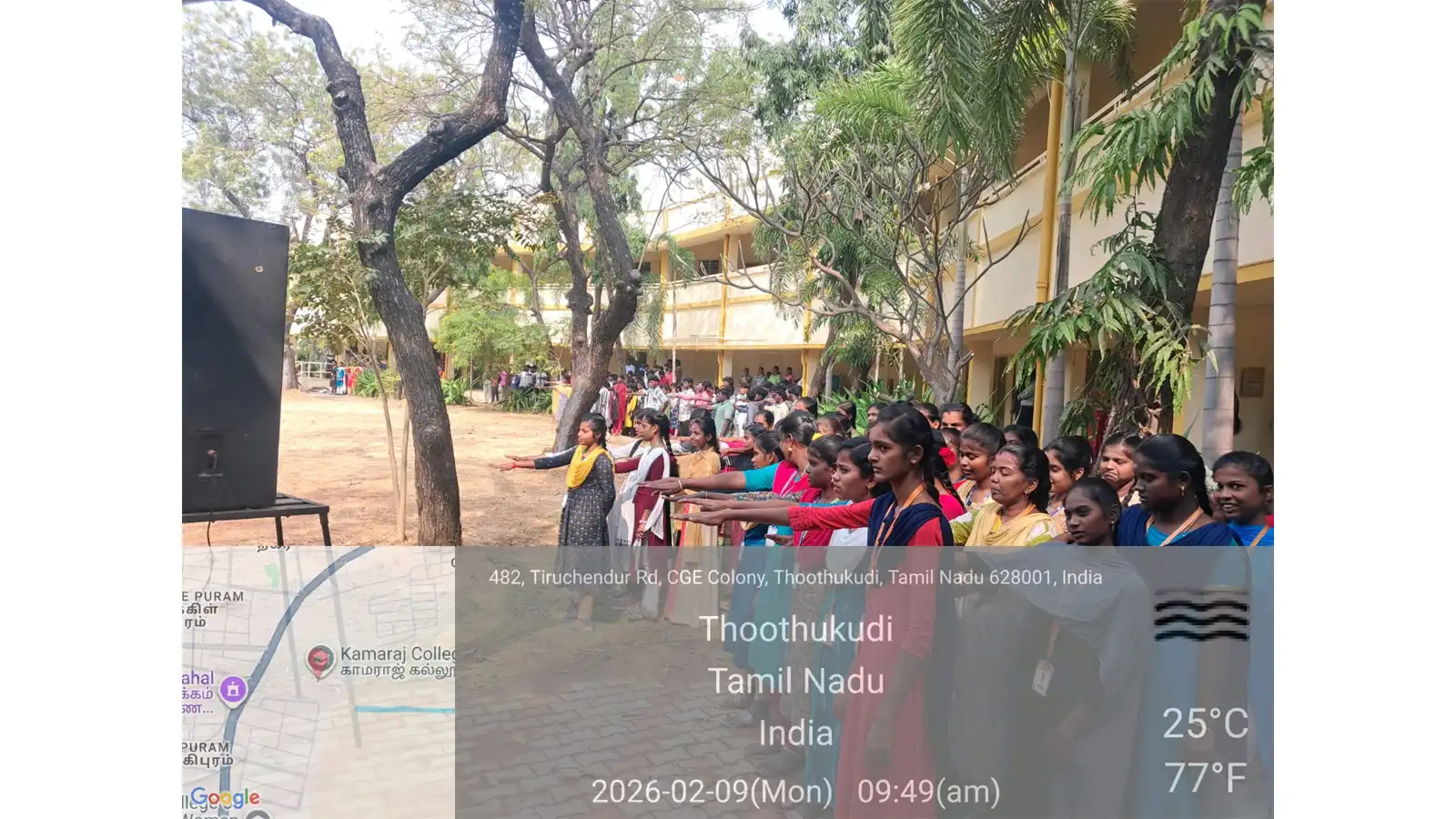
Bonded Labour Abolition Pledge Powerful Unity of 800+ Students
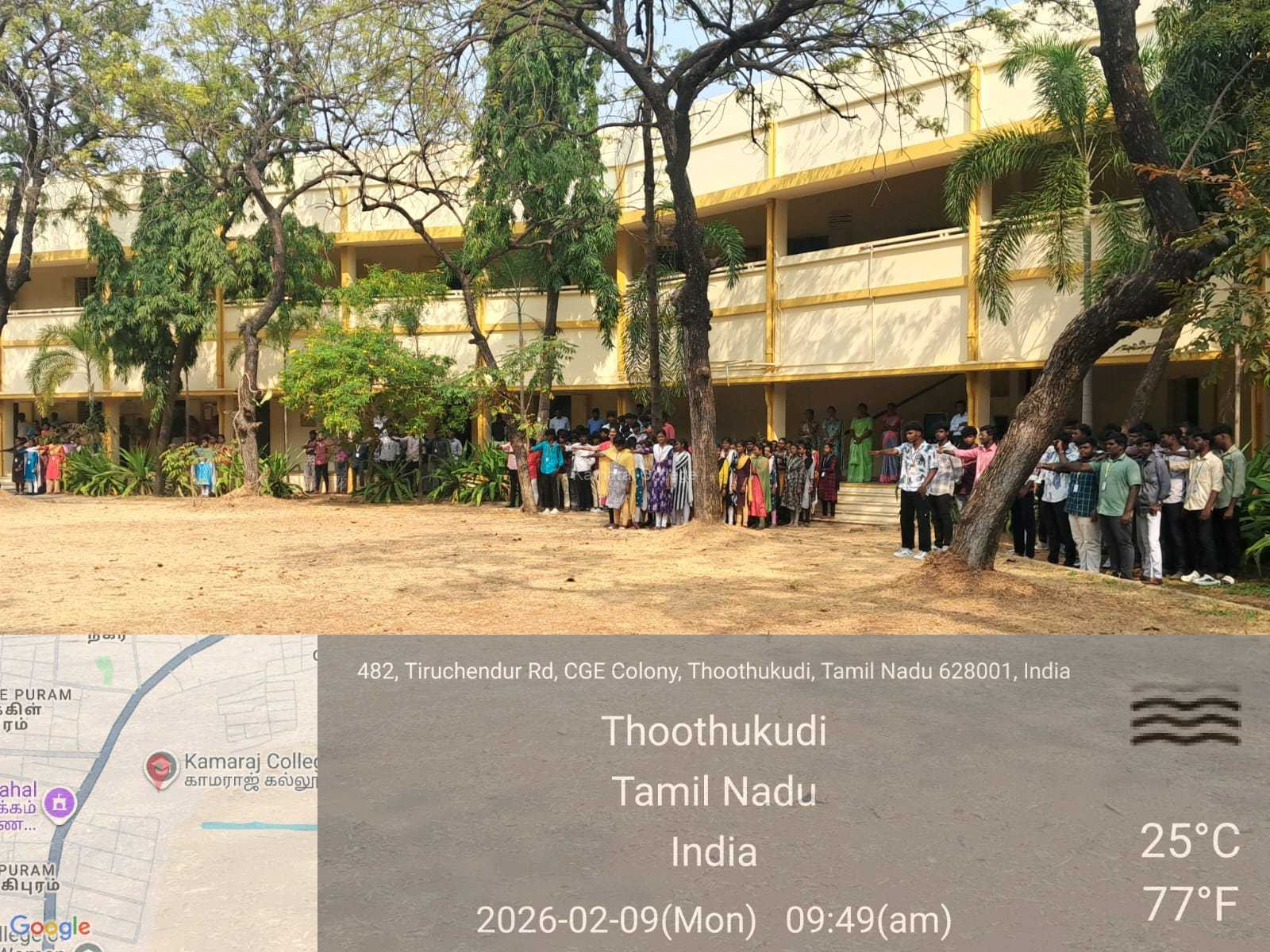

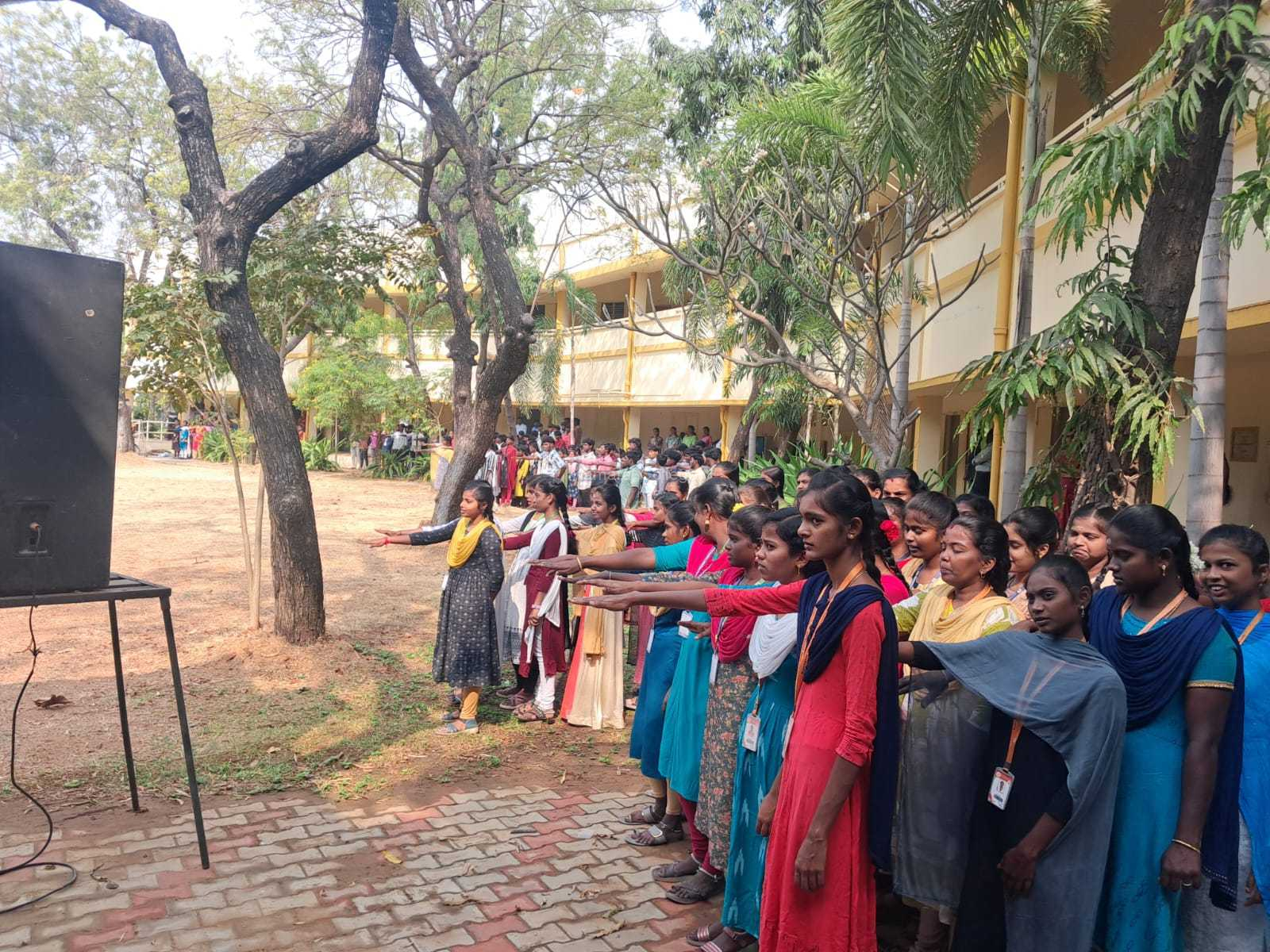
Bonded Labour Abolition Pledge – Programme Overview
The Bonded Labour Abolition Pledge was observed on Monday, 09 February 2026, from 09.40 a.m. to 10.00 a.m., during the morning assembly at the College Campus of Thoothukudi Kamaraj College. The programme was organized on behalf of the National Service Scheme Units 54 and 56.
The observance marked Bonded Labour Abolition Day, which is commemorated annually on 9 February by the Government of Tamil Nadu, with the objective of eradicating bonded labour practices and safeguarding human dignity and freedom.
Significance of Bonded Labour Abolition Day
Bonded Labour Abolition Day is observed to create awareness about the inhuman practice of bonded labour, where individuals are forced to work under conditions of debt, coercion, or attachment. Despite legal prohibitions, bonded labour continues to affect vulnerable sections of society, making awareness and education essential tools in combating this social injustice.
The Bonded Labour Abolition Pledge serves as a collective reminder of society’s responsibility to uphold constitutional values such as equality, freedom, and dignity for all citizens.
Objectives of the Bonded Labour Abolition Pledge
The primary objective of the Bonded Labour Abolition Pledge was to sensitize students to the realities of bonded labour and to instill a sense of social responsibility among young citizens.
The key objectives of the programme included:
- To create awareness about the bonded labour system and its consequences
- To promote respect for human rights and dignity
- To encourage students to oppose all forms of forced labour
- To reinforce commitment towards social justice and equality
Conduct of the Pledge Programme
On 09 February 2026, during the morning assembly, students and faculty members gathered on the college campus to observe the Bonded Labour Abolition Pledge. At 10.00 a.m., the pledge was administered, emphasizing the collective responsibility to oppose bonded labour and support the freedom and rehabilitation of affected individuals.
The programme was conducted in a disciplined and solemn manner, reflecting the seriousness of the issue and the institution’s commitment to social awareness.
Mass Participation and Student Involvement
More than 800 students actively participated in taking the Bonded Labour Abolition Pledge. The large turnout highlighted the strong sense of unity and social consciousness among the student community.
The collective participation reinforced the message that the fight against bonded labour requires awareness, empathy, and sustained action from all sections of society, particularly the youth.
Role of National Service Scheme
The programme was organized under the guidance of the National Service Scheme Units 54 and 56. NSS plays a vital role in promoting social awareness and community engagement among students.
Through initiatives such as the Bonded Labour Abolition Pledge, NSS encourages students to understand social issues and actively participate in nation-building activities rooted in justice and equality.
Educational Institutions and Social Responsibility
Educational institutions play a crucial role in shaping socially responsible citizens. By observing the Bonded Labour Abolition Pledge, Thoothukudi Kamaraj College reaffirmed its commitment to fostering ethical values and civic responsibility among students.
Such observances help students recognize their role in identifying, reporting, and preventing exploitative practices within society.
Institutional Commitment to Human Rights Awareness
Thoothukudi Kamaraj College consistently supports programmes that promote human rights, social justice, and inclusive development. Observing the Bonded Labour Abolition Pledge aligns with the institution’s broader mission of nurturing informed and socially conscious graduates.
Internal Link:
Thoothukudi Kamaraj College (Autonomous)
Legal and Governmental Perspective
The abolition of bonded labour is supported by legal frameworks and government initiatives aimed at protecting vulnerable populations. Awareness programmes play a key role in strengthening the implementation of these laws.
Additional information can be accessed through:
External Links:
Labour Welfare Department – Government of Tamil Nadu
Government of India – Labour and Employment
Overall Impact of the Pledge Programme
The Bonded Labour Abolition Pledge created meaningful awareness among students and reinforced collective responsibility towards eliminating forced labour practices. The programme strengthened students’ understanding of social justice issues and encouraged them to stand against exploitation in all forms.
Conclusion
The Bonded Labour Abolition Pledge observed on 09 February 2026 at Thoothukudi Kamaraj College was a significant and impactful initiative. With the participation of over 800 students, the programme reflected strong institutional commitment to human rights, dignity, and social equality.
The observance reaffirmed the role of educational institutions in nurturing socially responsible citizens who are aware, compassionate, and committed to building a just society.