
Beach Cleanup Drive 2026: Powerful 2-Day Action for Cleaner Coasts
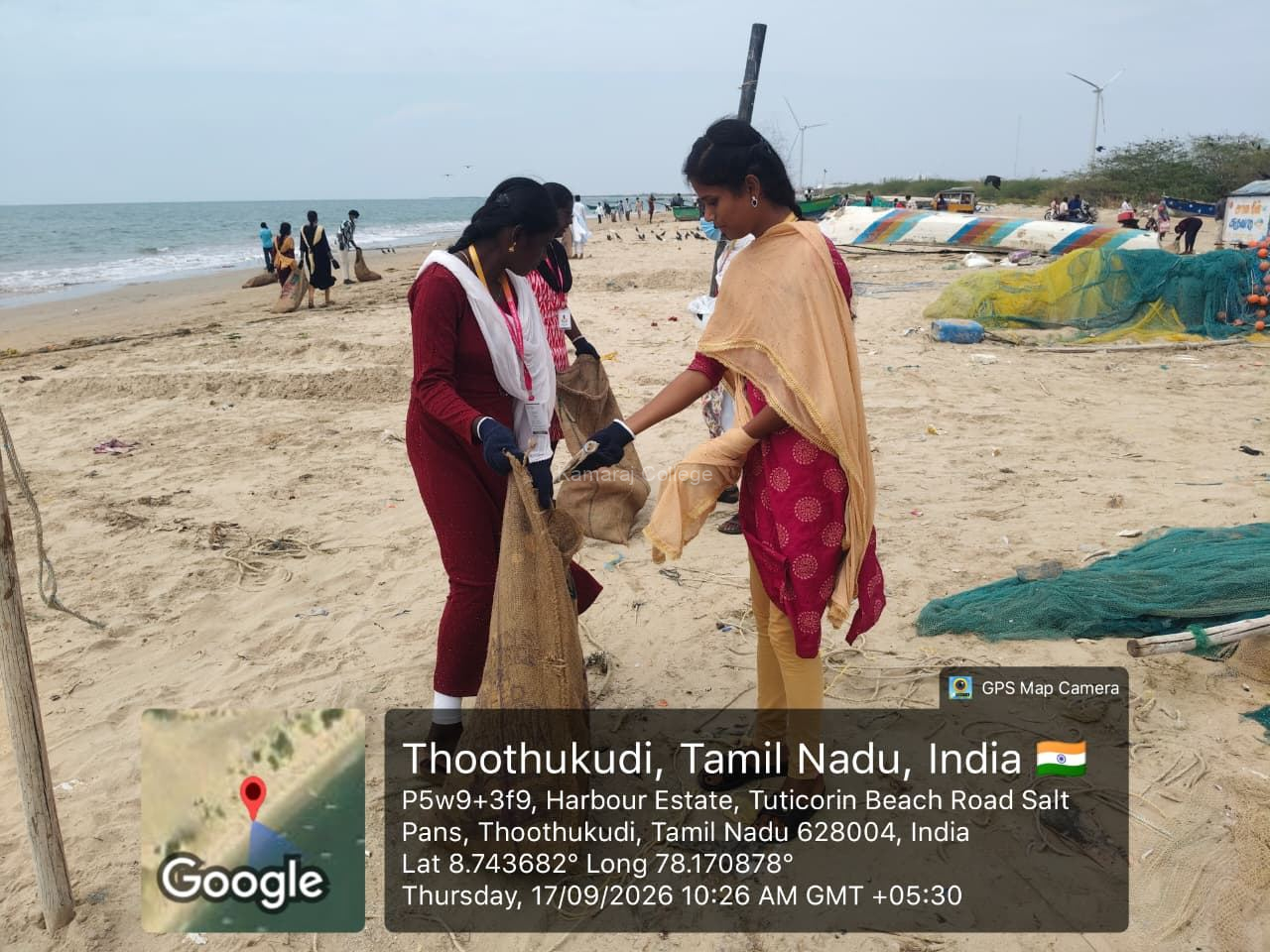
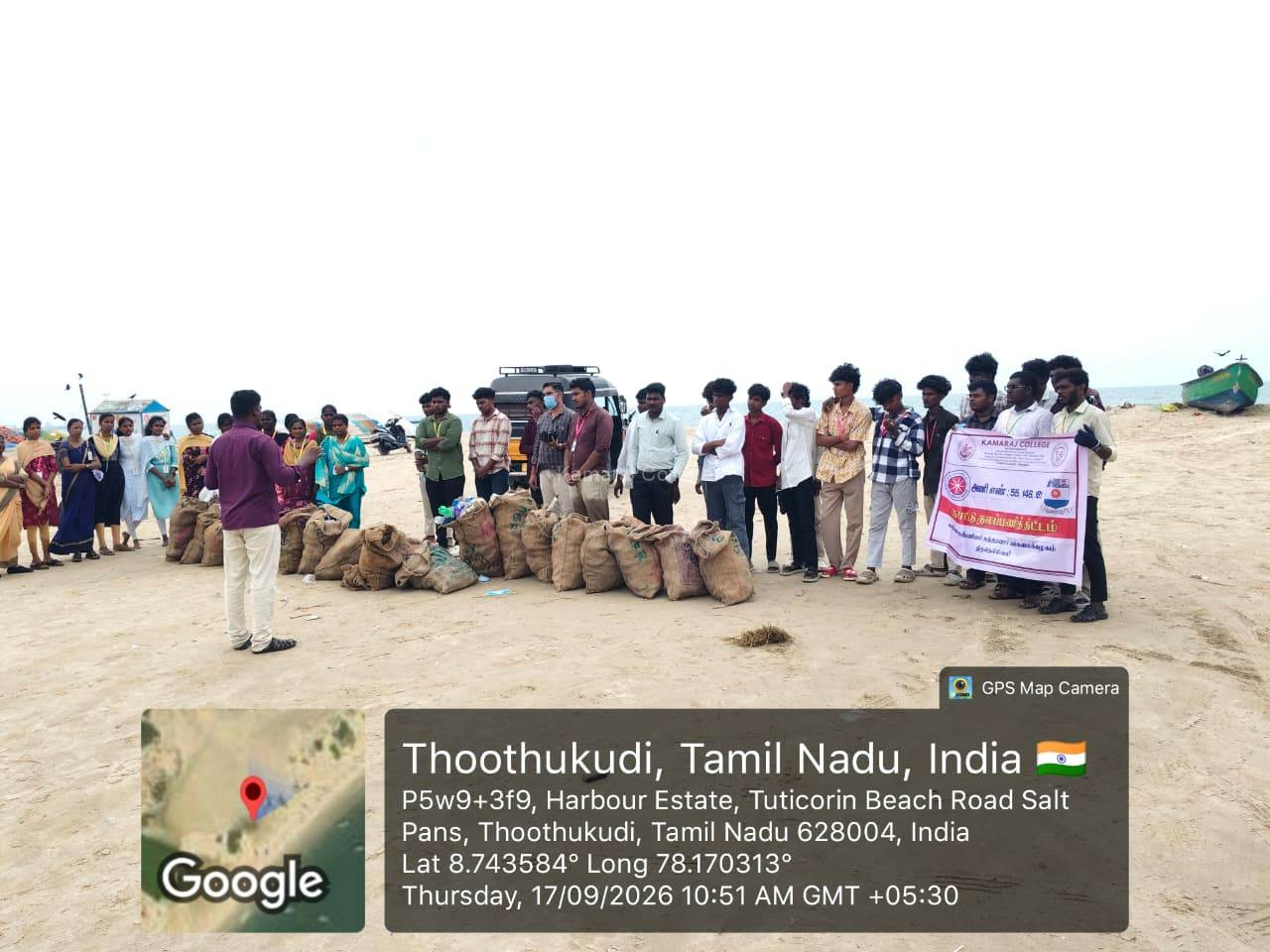
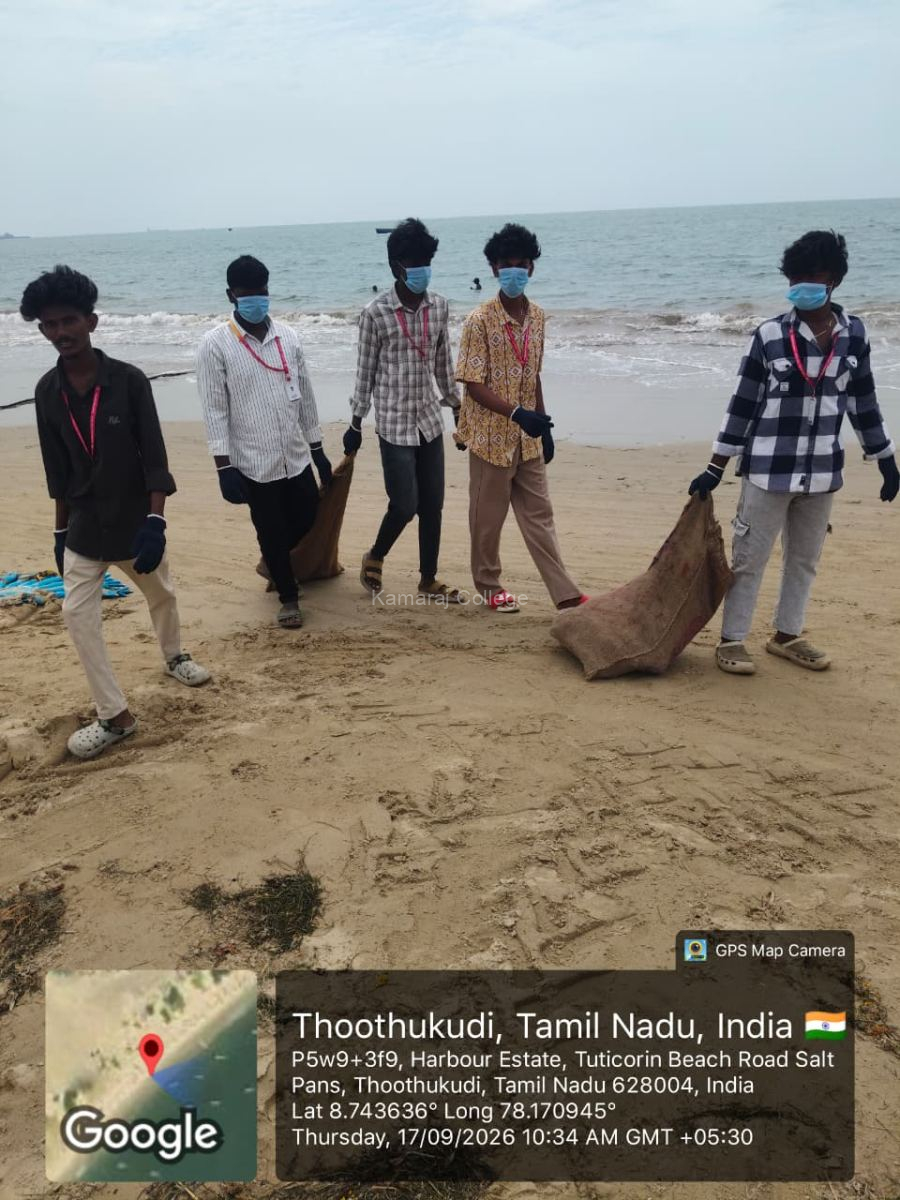
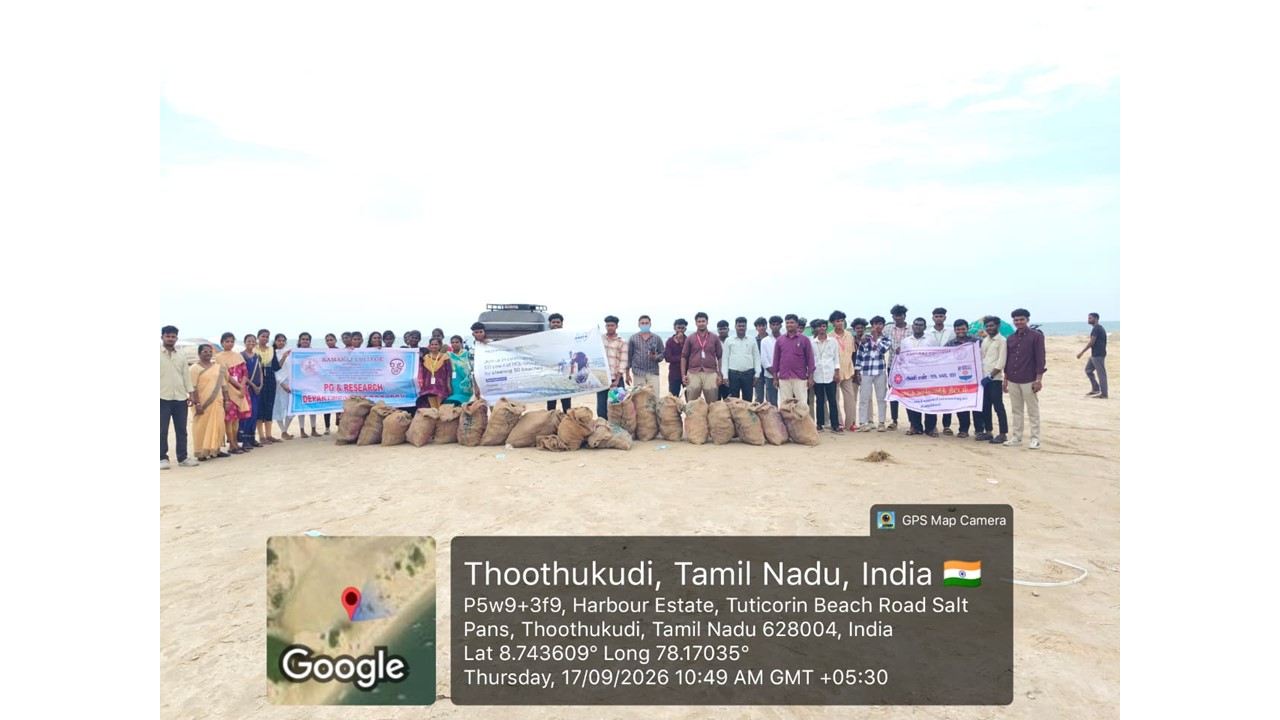
Beach Cleanup Drive was organised on 16 and 17 September 2026 at Muthu Nagar Beach and Harbour Beach, Thoothukudi, through a collaborative initiative involving M.S. Swaminathan Research Foundation (MSSRF), HCL Foundation, NSS Units 55, 146 and 181 of Kamaraj College (Autonomous), Thoothukudi, and I M.Sc. Zoology students.
The two-day programme aimed to create awareness among students about marine pollution and its impact on coastal biodiversity while encouraging responsible waste disposal and segregation. Students and NSS volunteers worked together to remove waste from the designated coastal areas, with particular attention given to plastic waste, discarded packaging materials and other non-biodegradable materials.
Beach Cleanup Drive at Thoothukudi
The two-day environmental initiative provided students with an opportunity to contribute directly to the cleanliness and protection of coastal ecosystems.
The programme combined community service with environmental education, enabling participants to understand the connection between improperly discarded waste, marine pollution and the health of coastal habitats.
By participating directly in the cleanup activity, students gained practical awareness of the environmental challenges faced by coastal areas.
Collaboration for Coastal Conservation
The Beach Cleanup Drive brought together multiple organisations and student groups committed to environmental protection.
The programme was organised in collaboration with:
- M.S. Swaminathan Research Foundation (MSSRF)
- HCL Foundation
- NSS Unit 55, Kamaraj College
- NSS Unit 146, Kamaraj College
- NSS Unit 181, Kamaraj College
- I M.Sc. Zoology Students
The collaboration demonstrated the value of collective action in addressing environmental issues affecting coastal communities and marine ecosystems.
Two-Day Cleanup at Muthu Nagar and Harbour Beaches
The programme was conducted over two days, 16 and 17 September 2026, covering Muthu Nagar Beach and Harbour Beach.
Students and NSS volunteers worked together to clean the designated coastal areas.
The activity focused particularly on removing waste materials that could remain in the coastal environment for long periods and pose risks to marine organisms.
The collective effort helped improve the cleanliness of the selected beach areas while providing students with direct experience in environmental conservation.
Removing Plastic and Non-Biodegradable Waste
Special attention was given to the removal of:
- Plastic Waste
- Discarded Packaging Materials
- Other Non-Biodegradable Waste
Such materials can persist in coastal environments and contribute to marine litter.
Students were encouraged to understand that preventing waste from reaching marine ecosystems is an important part of protecting coastal biodiversity.
Waste Segregation and Responsible Disposal
The Beach Cleanup Drive went beyond simply collecting litter.
The waste collected during the activity was segregated as far as practicable and handled for appropriate disposal.
Through this process, students gained practical awareness about the importance of waste segregation and responsible disposal practices.
The activity reinforced the message that environmental protection requires both proper waste management and responsible individual behaviour.
Understanding Marine Pollution
Marine pollution was a major focus of the awareness initiative.
Students were encouraged to understand how waste discarded on beaches and in coastal areas can eventually enter the marine environment.
Plastic and other non-biodegradable materials can remain in the environment for extended periods and adversely affect coastal habitats and marine organisms.
The programme therefore connected the physical cleanup activity with a broader understanding of marine environmental protection.
Practical Learning for Zoology Students
For the participating Zoology students, the programme provided valuable learning beyond the classroom.
As students of biological sciences, they were able to connect their academic understanding of ecosystems and organisms with practical environmental conservation.
The activity helped them appreciate the importance of maintaining healthy coastal habitats and protecting marine organisms from pollution caused by improperly discarded waste.
This field-based experience complemented their academic learning by demonstrating how human activities can directly influence marine and coastal ecosystems.
Role of NSS Volunteers
The involvement of NSS Units 55, 146 and 181 strengthened the community-service dimension of the programme.
NSS volunteers actively participated in the cleanup activity and worked alongside Zoology students in removing and segregating waste.
Their participation reflected the NSS values of social responsibility, community participation and environmental stewardship.
The activity also encouraged students to recognise that maintaining clean public spaces and protecting natural resources require collective responsibility.
Faculty Participation and Support
The programme was inaugurated with the participation and support of faculty members from Kamaraj College.
The faculty members associated with the programme included:
- Dr. J. Nagarajan – Assistant Professor
- Dr. S. Nazerath Nisha – NSS Unit 181
- Dr. S. Saraswathi – NSS Unit 146
- Dr. P. Pounraj – NSS Unit 55
- Dr. H. Sivanesh – Assistant Professor
- Ms. M. Vijayalakshmi – Assistant Professor
Their involvement encouraged the students and NSS volunteers to participate actively in the coastal conservation initiative.
Creating Awareness About Coastal Biodiversity
The programme highlighted the relationship between clean beaches and healthy coastal biodiversity.
Coastal environments support diverse organisms and perform important ecological functions. Pollution and improperly discarded waste can disturb these habitats and create risks for marine life.
The Beach Cleanup Drive therefore encouraged students to view beach cleanliness not merely as an aesthetic issue but as an important component of ecosystem conservation.
Promoting Environmental Responsibility
The activity encouraged students to recognise their individual responsibility towards the environment.
Participants were encouraged to practise responsible waste disposal, avoid littering and support waste segregation in their daily lives.
The programme demonstrated how simple behavioural changes, when adopted collectively, can contribute to cleaner surroundings and healthier ecosystems.
Objectives of the Programme
The major objectives of the two-day programme were:
- Create awareness about marine pollution
- Highlight the impact of waste on coastal biodiversity
- Remove plastic and non-biodegradable waste from coastal areas
- Promote responsible waste disposal
- Encourage waste segregation
- Provide practical environmental exposure to Zoology students
- Encourage NSS volunteers to participate in environmental conservation
- Develop a sense of collective responsibility among students
- Promote cleaner and healthier coastal ecosystems
Programme Highlights
- Programme: Two-Day Beach Cleanup Drive
- Dates: 16 and 17 September 2026
- Locations: Muthu Nagar Beach and Harbour Beach, Thoothukudi
- Collaborators: MSSRF, HCL Foundation and Kamaraj College (Autonomous), Thoothukudi
- NSS Units: 55, 146 and 181
- Student Participants: I M.Sc. Zoology Students and NSS Volunteers
- Major Activity: Collection and Segregation of Coastal Waste
- Special Focus: Plastic, Packaging and Other Non-Biodegradable Waste
- Key Theme: Marine Pollution and Coastal Biodiversity Conservation
Programme Outcomes
The Beach Cleanup Drive contributed to:
- Improved cleanliness at Muthu Nagar Beach and Harbour Beach
- Greater awareness about marine litter among students
- Better understanding of the impact of pollution on marine organisms
- Practical exposure to coastal habitat conservation
- Awareness about responsible waste segregation and disposal
- Greater student participation in environmental activities
- Strengthened cooperation between Zoology students and NSS volunteers
- Enhanced awareness about individual and collective environmental responsibility
Collective Commitment to Cleaner Coasts
One of the significant outcomes of the programme was the collective involvement of college students, NSS volunteers, faculty members and collaborating organisations.
Working together at the coastal sites demonstrated how coordinated community action can contribute to environmental protection.
The initiative also encouraged participants to carry the message of responsible waste management and marine conservation beyond the two-day programme.
Conclusion
The Beach Cleanup Drive conducted on 16 and 17 September 2026 at Muthu Nagar Beach and Harbour Beach, Thoothukudi, successfully combined environmental awareness with practical conservation activity.
The collaborative involvement of MSSRF, HCL Foundation, NSS Units 55, 146 and 181 of Kamaraj College, and I M.Sc. Zoology students demonstrated a shared commitment to protecting coastal ecosystems.
By collecting and segregating plastic, discarded packaging materials and other non-biodegradable waste, the participants contributed to improving the cleanliness of the selected coastal areas.
For Zoology students, the programme provided meaningful practical exposure to the importance of protecting marine organisms and maintaining healthy coastal habitats. For NSS volunteers, it reinforced the values of community service and environmental responsibility.
Overall, the two-day initiative strengthened awareness about marine pollution, responsible waste management, coastal biodiversity and collective environmental responsibility, while encouraging students to become active participants in the protection of clean and healthy coastal ecosystems.
Internal Link
- Kamaraj College (Autonomous), Thoothukudi – Explore more NSS, environmental awareness and student outreach programmes conducted by the College.
External Links
- M.S. Swaminathan Research Foundation (MSSRF) – Learn more about initiatives in biodiversity, sustainable development and environmental conservation.
- National Service Scheme – Explore NSS programmes promoting community service and environmental responsibility among students.
- United Nations Environment Programme – Information and resources on marine pollution, plastic waste and ecosystem protection.