
BBA Mentoring 2026: Powerful Guidance for Student Success


Report on BBA Mentor–Mentee Meeting
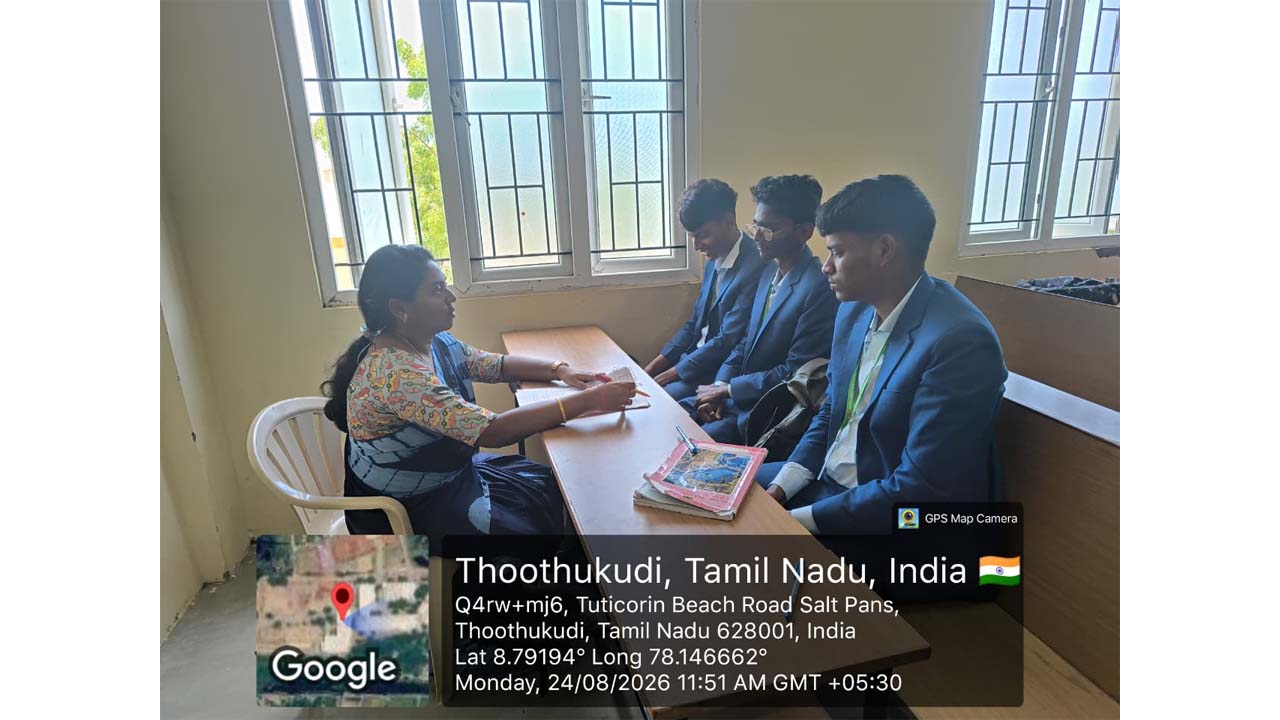
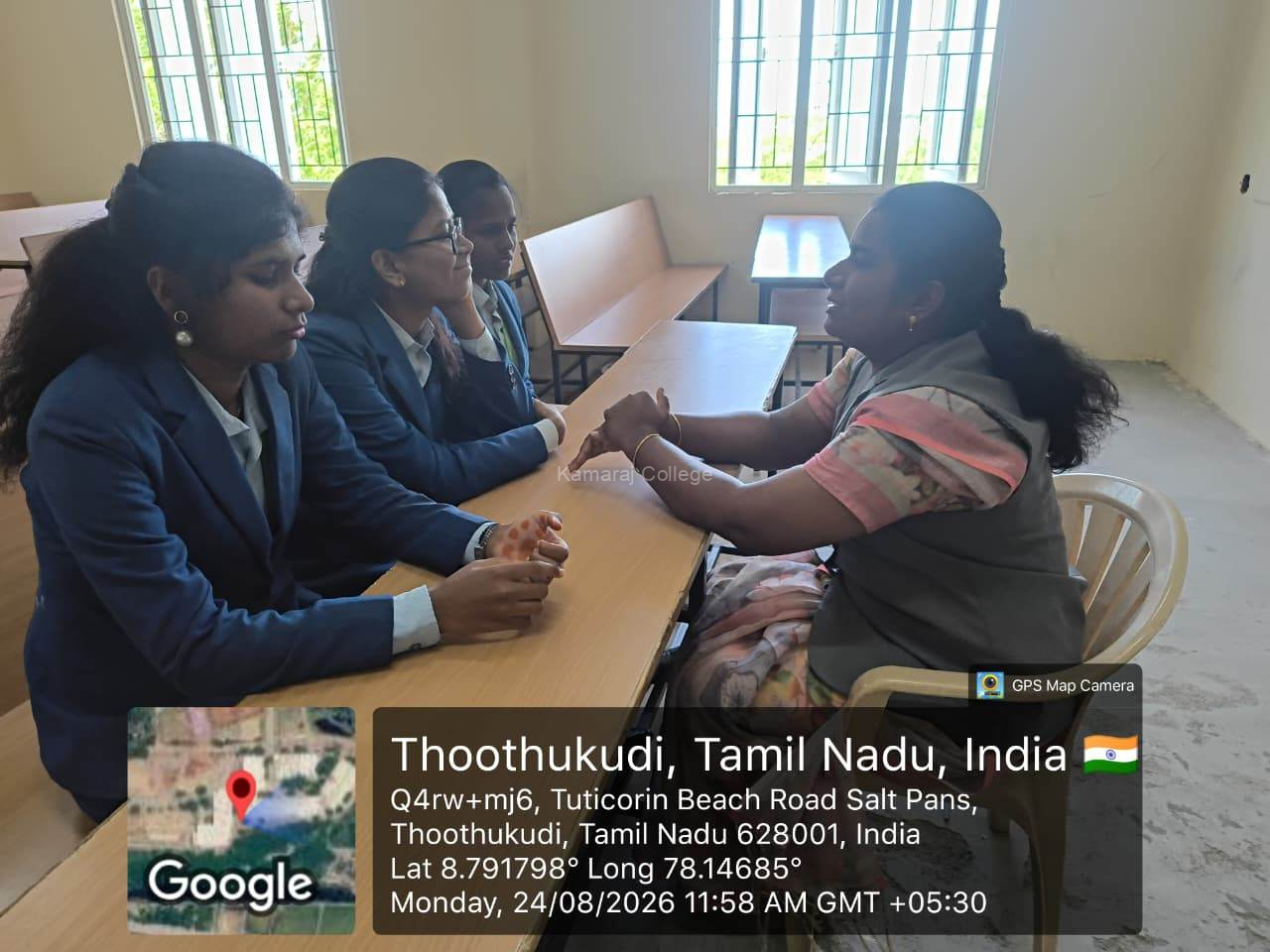
BBA Mentoring was conducted by the Department of Business Administration, Kamaraj College (Autonomous), Thoothukudi, on 24 August 2026 from 11.00 a.m. to 1.00 p.m.
The Mentor–Mentee Meeting aimed to strengthen the relationship between faculty mentors and students while providing academic guidance, personal support and career-oriented advice.
The programme created an opportunity for mentors to interact individually with students, understand their academic progress and identify specific concerns that required guidance.
Students actively participated in the interaction and shared their academic and personal challenges with their mentors. As a result, the meeting created a supportive environment for meaningful communication between students and faculty members.
Objectives of BBA Mentoring
The BBA Mentoring programme aimed to support students in different areas of their academic and personal development.
The major objectives included:
- Strengthen the mentor–mentee relationship
- Review students’ academic progress
- Monitor attendance and academic performance
- Identify individual learning difficulties
- Provide personal guidance and support
- Understand students’ career aspirations
- Encourage effective time management
- Develop communication and interpersonal skills
- Encourage participation in co-curricular and extracurricular activities
- Promote responsible academic behaviour
Thus, the programme focused on supporting the overall development of students rather than concentrating only on academic performance.
Strengthening the Mentor–Mentee Relationship
One of the main purposes of the meeting was to develop a stronger relationship between mentors and mentees.
Regular interaction with faculty mentors enables students to discuss their concerns openly and seek appropriate guidance.
The mentors encouraged students to communicate freely about their academic experiences and challenges. Furthermore, the interaction helped faculty members understand the individual needs of their mentees.
Such communication plays an important role in creating a supportive academic environment.
Review of Academic Progress
Academic performance formed an important part of the BBA Mentoring session.
Mentors reviewed the students’ progress and discussed areas where improvement was required.
Students were encouraged to approach their studies systematically and maintain consistency in their academic work.
The mentors also helped students understand that academic improvement requires regular learning, proper planning, self-discipline and timely clarification of doubts.
Importance of Regular Attendance
The mentors discussed students’ attendance and emphasized the importance of attending classes regularly.
Regular attendance enables students to follow lessons continuously and participate actively in classroom activities.
Furthermore, consistent attendance helps students remain connected with their academic work and reduces learning gaps.
Students were therefore encouraged to maintain good attendance and take responsibility for their academic commitments.
Identifying Learning Difficulties
The meeting provided students with an opportunity to discuss their learning difficulties with their mentors.
Students may experience different challenges depending on their academic background, learning style and individual circumstances.
Therefore, mentors listened to their concerns and offered suitable suggestions.
Identifying difficulties at an early stage can help students take corrective steps before those challenges affect their overall academic performance.
Personal Guidance and Support
The BBA Mentoring programme also provided space for students to discuss personal concerns that could influence their academic development.
Mentors listened to students and provided appropriate guidance wherever required.
The interaction encouraged students to approach their mentors whenever they needed support.
Moreover, a strong mentoring system can help students develop greater confidence and feel more connected with their department and institution.
Effective Time Management
The mentors emphasized the importance of time management in achieving academic and personal goals.
Students were encouraged to plan their daily activities, prioritize important tasks and allocate sufficient time for their studies.
Effective time management can help students balance:
- Regular classes
- Assignments and academic work
- Examination preparation
- Skill-development activities
- Co-curricular programmes
- Extracurricular activities
- Career preparation
Therefore, students were encouraged to develop disciplined study routines and avoid unnecessary delays in completing academic responsibilities.
Developing Communication Skills
Communication skills were another important area discussed during the programme.
Business Administration students need strong communication abilities for both academic and professional success.
The mentors encouraged students to develop confidence in expressing their ideas and interacting with others.
Furthermore, students were advised to make effective use of classroom presentations, group activities and departmental programmes to strengthen their communication and interpersonal skills.
Goal Setting and Career Aspirations
The mentors interacted with students about their career aspirations and future plans.
Students were encouraged to identify clear goals and begin preparing for them during their college education.
Setting realistic goals can help students understand the knowledge and skills they need to develop.
Moreover, early career planning provides sufficient time to improve communication, aptitude, subject knowledge and other professional abilities.
Thus, the mentoring session encouraged students to take a more structured approach towards their future.
Career-Oriented Guidance
Career guidance formed an important component of the BBA Mentoring programme.
Students were encouraged to explore different career opportunities and prepare themselves according to their interests and abilities.
The mentors highlighted the importance of combining academic qualifications with practical and professional skills.
Students were also encouraged to develop qualities such as:
- Communication
- Leadership
- Teamwork
- Problem-solving
- Decision-making
- Time management
- Adaptability
- Professional discipline
These skills can strengthen students’ readiness for higher education, employment and entrepreneurship.
Participation in Co-Curricular Activities
The mentors also reviewed students’ participation in co-curricular and extracurricular activities.
Students were encouraged to make effective use of opportunities available through departmental programmes, competitions, clubs and other college activities.
Such participation can help students develop confidence, leadership, creativity and teamwork.
Furthermore, these experiences contribute to holistic development and prepare students to handle responsibilities beyond the classroom.
Promoting Responsible Academic Behaviour
The programme emphasized the importance of responsible academic behaviour.
Students were encouraged to maintain discipline, complete their academic responsibilities on time and develop a positive approach towards learning.
The mentors explained that personal responsibility plays an important role in academic success.
Therefore, students were encouraged to take ownership of their progress and seek guidance whenever they faced difficulties.
Guidance of the Head of the Department
The programme was conducted under the guidance of Dr. R. Karuppasamy, Head of the Department and Convenor.
His guidance contributed to the effective organization of the Mentor–Mentee Meeting and reinforced the department’s commitment to student development.
The mentoring initiative focused on providing continuous academic and personal support so that students could progress confidently towards their educational and career goals.
Institutional Support
The programme received the valuable support and encouragement of the college administration.
The presence and support of Dr. A. Arunachala Rajan, Vice-Principal; Dr. K. Banumathi, Principal; and Thiru. R. Muthuselvam, Secretary, added significance to the programme.
Their support reflected the institution’s emphasis on providing students with an environment that encourages academic achievement, personal development and career readiness.
Meaningful Interaction with Students
A significant feature of the meeting was the active involvement of the students.
They shared their academic challenges and personal concerns with their mentors and sought suitable guidance.
This two-way interaction enabled mentors to understand students individually rather than addressing them only as a group.
As a result, the mentors could provide more relevant suggestions based on the needs of each student.
Key Areas Discussed
The BBA Mentoring programme covered several important aspects of student development:
- Academic performance
- Attendance
- Learning difficulties
- Discipline
- Personal concerns
- Time management
- Communication skills
- Goal setting
- Career aspirations
- Co-curricular participation
- Extracurricular participation
- Professional development
The comprehensive nature of the interaction helped mentors address both immediate academic concerns and long-term student development.
Programme Highlights
- Programme: Mentor–Mentee Meeting
- Date: 24 August 2026
- Time: 11.00 a.m. to 1.00 p.m.
- Organized by: Department of Business Administration
- Head of the Department and Convenor: Dr. R. Karuppasamy
- Vice-Principal: Dr. A. Arunachala Rajan
- Principal: Dr. K. Banumathi
- Secretary: Thiru. R. Muthuselvam
- Major Focus: Academic guidance, personal support and career development
Programme Outcomes
The BBA Mentoring programme produced several positive outcomes.
Through the interaction, students:
- Received individual academic guidance
- Reviewed their academic performance and attendance
- Discussed learning difficulties with their mentors
- Received appropriate personal support
- Understood the importance of regular attendance
- Recognised the value of effective time management
- Received guidance on communication skills
- Developed awareness about goal setting
- Discussed career aspirations and future plans
- Recognised the value of co-curricular and extracurricular participation
- Developed greater awareness of responsible academic behaviour
Overall, the programme strengthened communication between mentors and students while providing meaningful support for their academic and professional development.
Conclusion
The BBA Mentoring programme organized by the Department of Business Administration, Kamaraj College (Autonomous), Thoothukudi, on 24 August 2026 was a meaningful student-support initiative.
The meeting provided students with an opportunity to discuss their academic performance, attendance, learning difficulties, personal concerns, discipline and career aspirations directly with their mentors.
Furthermore, the programme emphasized regular attendance, effective time management, communication skills, goal setting and responsible academic behaviour.
Under the guidance of Dr. R. Karuppasamy, Head of the Department and Convenor, mentors encouraged students to make effective use of the academic and personal support available through the department.
The support of Dr. A. Arunachala Rajan, Vice-Principal; Dr. K. Banumathi, Principal; and Thiru. R. Muthuselvam, Secretary, added significance to the programme.
The meeting concluded with mentors encouraging students to work consistently towards their academic and career goals and to seek guidance whenever necessary.
Overall, the Mentor–Mentee Meeting successfully promoted meaningful interaction, individual guidance, student responsibility and holistic development.
Internal Link
External Links
- University Grants Commission – Explore higher education initiatives and resources supporting student development in India.
- Ministry of Education, Government of India – Learn about initiatives related to higher education, skills and holistic student development.