
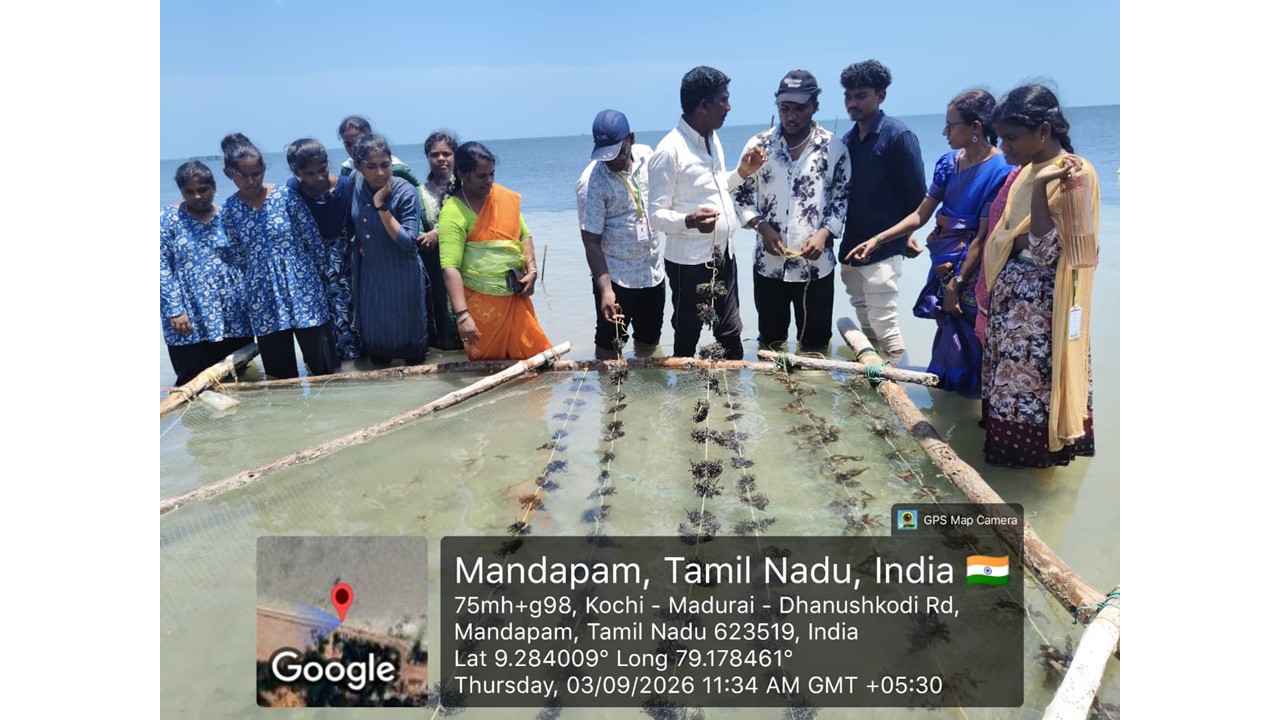
Algae Field Visit 2026: Inspiring Practical Learning and Entrepreneurship
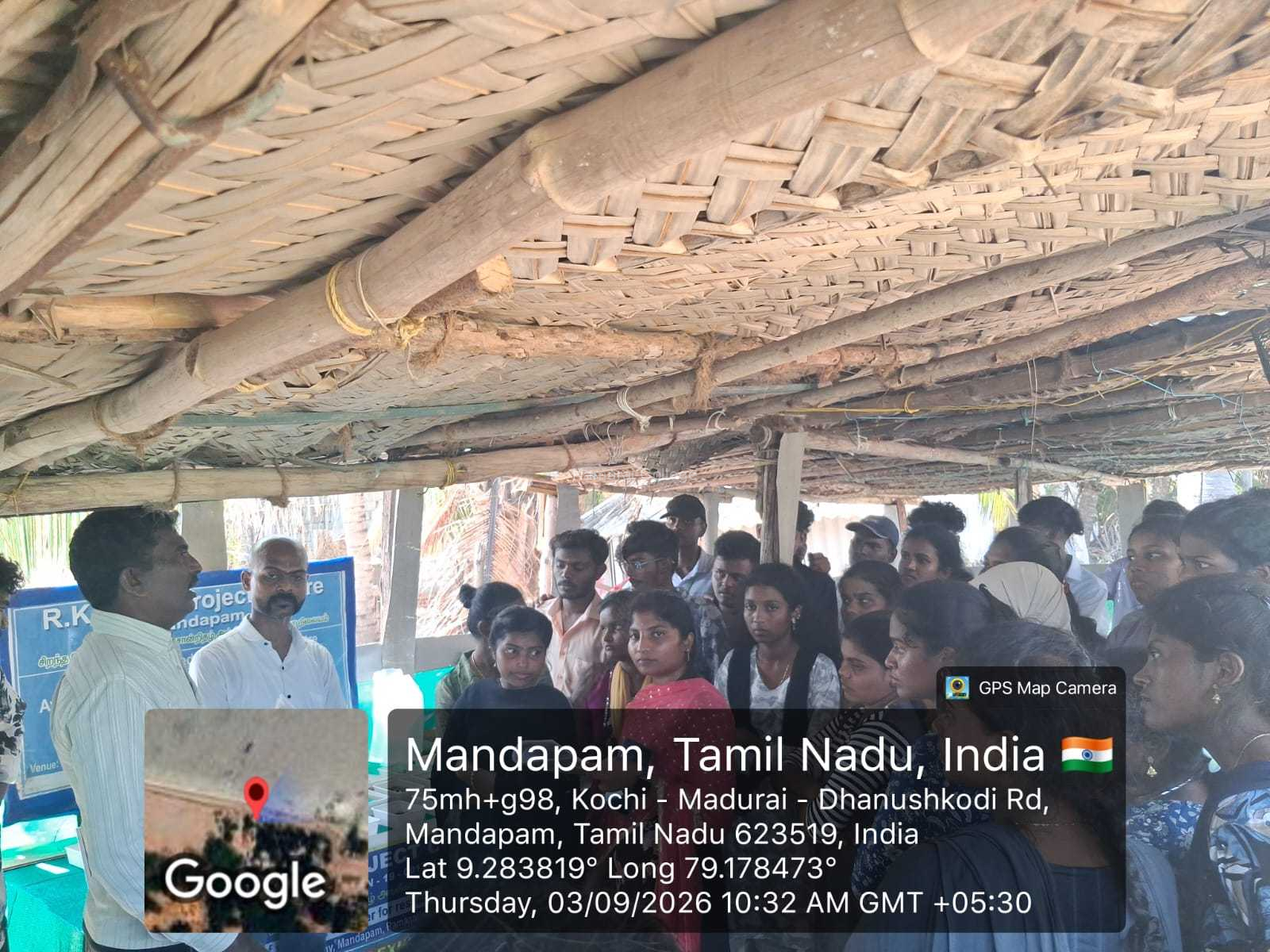
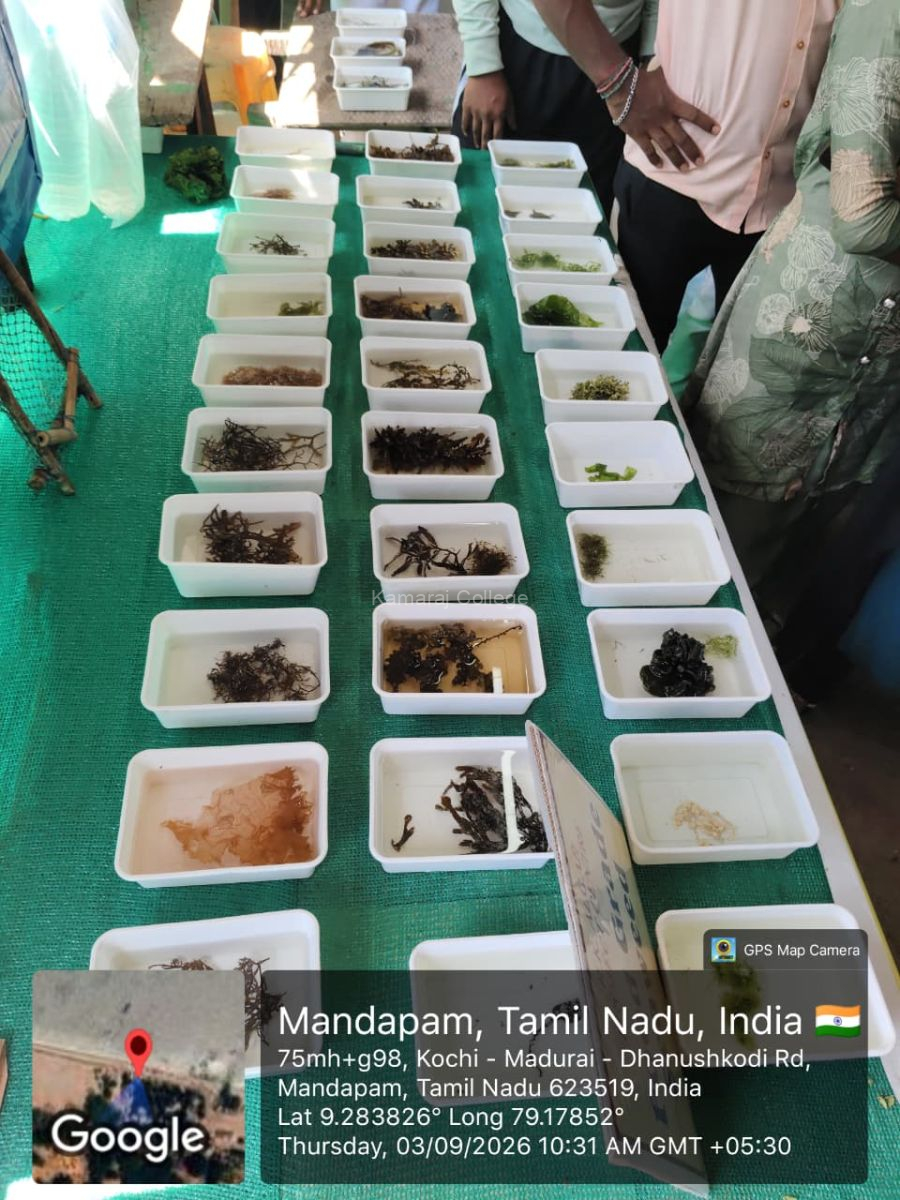
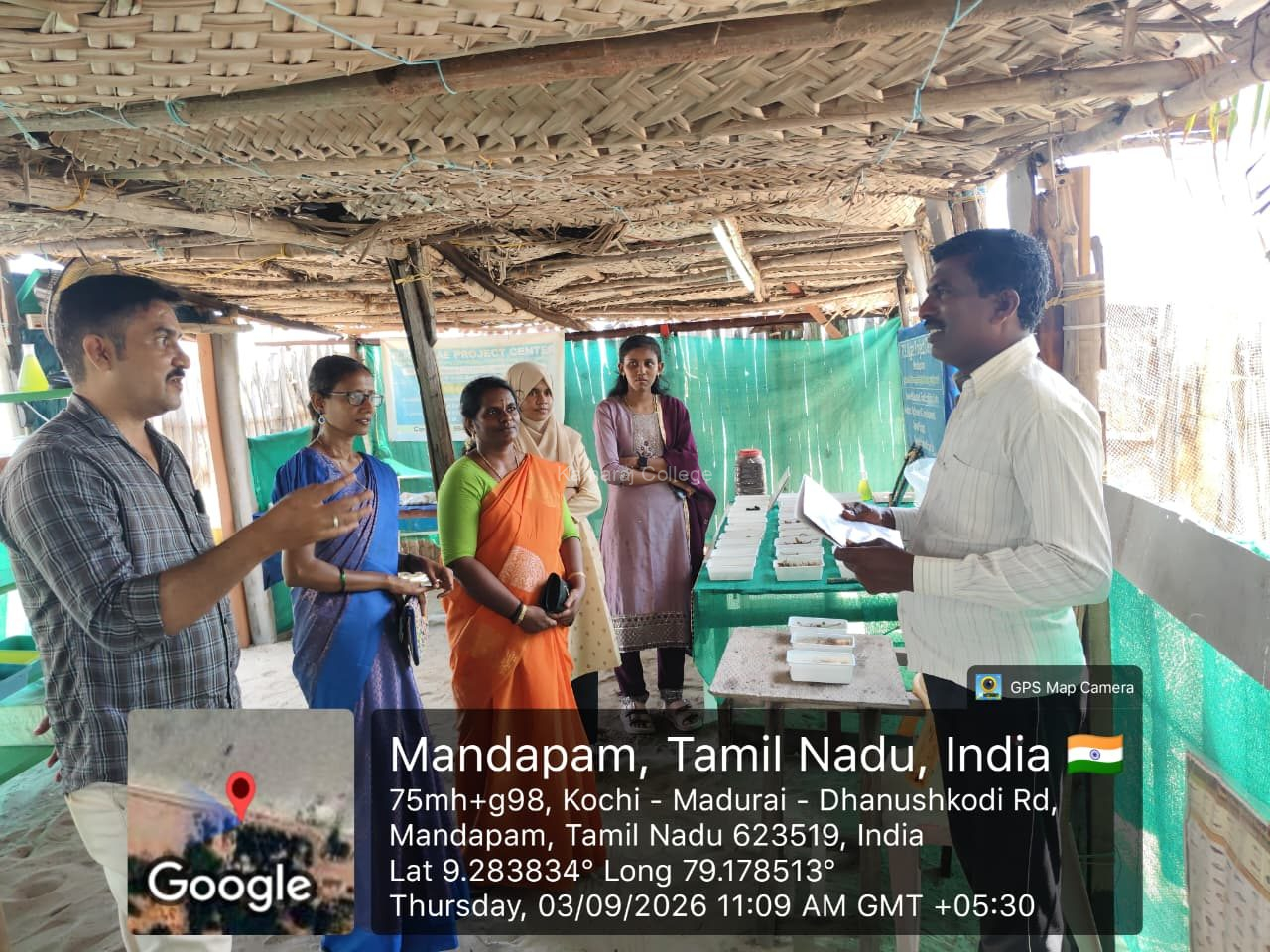
Report on Field Visit to R.K. Algae Project Centre, Mandapam, Rameswaram
Algae Field Visit was organised by the Department of Zoology, Kamaraj College (Autonomous), Thoothukudi, to the R.K. Algae Project Centre, Mandapam, Rameswaram, on 3 September 2026 as part of the Certificate Course on Algal Culture.
The educational visit was organised for B.Sc. and M.Sc. students to provide practical exposure to algal resources, cultivation techniques, harvesting, processing methods, value addition and commercial applications.
During the visit, students gained valuable knowledge about the complete process associated with algae, beginning with collection and cultivation and extending to harvesting, drying, processing and utilisation.
The resource person also explained the importance of algae and their applications in various sectors, including food, pharmaceuticals, nutraceuticals, agriculture, cosmetics and other value-added products.
Furthermore, the programme introduced students to the economic potential of marine algal resources and created awareness about research, entrepreneurship and sustainable livelihood opportunities.
Objectives of the Algae Field Visit
The field visit aimed to complement classroom learning under the Certificate Course on Algal Culture with direct practical exposure.
The major objectives were:
- Provide practical exposure to algal cultivation and processing
- Understand the commercial importance of algae
- Learn about algal collection and cultivation
- Understand harvesting and drying methods
- Gain knowledge about algal processing techniques
- Explore the concept of value addition
- Become familiar with algae-based products
- Understand applications of algae in different industries
- Create awareness about entrepreneurship opportunities
- Connect academic knowledge with practical and commercial applications
Thus, the programme provided students with an opportunity to understand algal culture from scientific, practical and commercial perspectives.
Certificate Course on Algal Culture
The field visit formed an important practical component of the Certificate Course on Algal Culture offered by the Department of Zoology.
Certificate courses provide students with opportunities to acquire specialised knowledge in addition to their regular academic curriculum.
In this context, the visit enabled students to observe how the concepts learned during the course are applied in practical situations.
Furthermore, direct exposure to algal cultivation and processing strengthened their understanding of the subject and made the learning experience more meaningful.
Visit to R.K. Algae Project Centre
The R.K. Algae Project Centre, Mandapam, Rameswaram, provided students with practical exposure to various stages associated with algal resources and their utilisation.
Students observed the practical aspects of algal processing and learned how marine algal resources can be transformed into useful products.
This direct exposure enabled them to understand the connection between biological resources, processing techniques and commercial applications.
Therefore, the visit served as an effective bridge between academic knowledge and practical learning.
Understanding Algal Resources
The Algae Field Visit helped students develop a better understanding of algal resources and their significance.
Algae represent an important biological resource with applications across several sectors.
The visit enabled students to understand that algae are not limited to academic or laboratory study. Instead, they can also serve as useful raw materials for developing a variety of products.
This broader understanding encouraged students to view algal resources from scientific, environmental and economic perspectives.
Learning About Algal Collection
Students gained knowledge about the collection of algae as one of the initial stages in algal utilisation.
Understanding the source and handling of algal resources is important before moving to cultivation, harvesting or processing.
The practical exposure helped students connect fundamental biological knowledge with the methods followed in working with algal resources.
Furthermore, the visit encouraged them to understand the importance of responsible utilisation of marine biological resources.
Practical Exposure to Algal Cultivation
Algal cultivation formed an important learning component of the visit.
Students learned about the practical aspects involved in growing algae and maintaining resources for further utilisation.
The experience complemented the concepts introduced through the Certificate Course on Algal Culture.
Moreover, observing cultivation practices directly helped students understand the importance of controlled and systematic approaches in obtaining algal biomass for different applications.
Understanding Algal Harvesting
The students were introduced to the process of algal harvesting.
Harvesting is an important stage because cultivated or collected algal material needs to be gathered appropriately before further processing.
The field exposure helped students understand how different stages are connected within the overall production process.
Therefore, the visit enabled learners to see algal utilisation as a sequence extending from resource collection to final product development.
Drying and Processing of Algae
The students also learned about the drying and processing of algae.
Processing plays an important role in converting biological resources into forms suitable for further utilisation and value addition.
The practical exposure helped students understand that processing methods are important for developing usable products from algal resources.
Furthermore, this learning experience demonstrated how biological knowledge can connect with production and commercial practices.
Understanding Value Addition
Value addition was another important concept explored during the field visit.
Raw biological resources can gain greater utility and economic value when they are processed into useful products.
Students learned how marine algal resources can contribute to different value-added applications.
This understanding helped them appreciate the connection between science, innovation, processing and entrepreneurship.
Moreover, it introduced students to possibilities beyond conventional academic learning.
Applications of Algae in the Food Sector
The resource person explained the applications of algae in the food sector.
Algal resources can contribute to the development of different food-related products depending on the species and processing methods involved.
The session helped students understand how biological resources studied in Zoology can have direct commercial applications.
Such knowledge broadened their understanding of algae and demonstrated the practical relevance of algal studies.
Applications in Pharmaceuticals
The students were also introduced to the relevance of algae in the pharmaceutical sector.
Marine biological resources are of interest in research and product development because of the diverse compounds they may contain.
The field visit therefore helped students recognise the connection between algal studies and wider scientific applications.
Furthermore, it encouraged them to understand how biological research can contribute to product-oriented fields.
Algae and Nutraceutical Applications
The resource person discussed the use of algae in nutraceutical applications.
This provided students with another example of how algal resources can move from biological study to value-added utilisation.
The exposure helped participants understand the interdisciplinary nature of algal biotechnology.
It also demonstrated how Zoology, biotechnology and product development can intersect in emerging areas of research and industry.
Applications in Agriculture
The programme introduced students to the applications of algae in agriculture.
Understanding such applications helped students appreciate the diverse utility of algal resources.
Furthermore, it showed how biological resources can contribute to sectors beyond traditional laboratory or academic environments.
This multidisciplinary perspective can encourage students to explore broader career and research possibilities.
Applications in Cosmetics
Students also learned about the use of algal resources in the cosmetics sector.
The inclusion of cosmetics among the application areas demonstrated the wide commercial potential of algae.
It helped students understand that biological resources can contribute to multiple industries through appropriate research, processing and value addition.
Therefore, the field visit expanded their awareness of the diverse economic possibilities associated with algae.
Exploring Algae-Based Products
One of the major benefits of the Algae Field Visit was exposure to algae-based products and their applications.
Students learned how algal resources can move through different stages from collection and cultivation to processing and final utilisation.
Understanding this process helped them connect biological knowledge with product development.
Furthermore, it encouraged them to think about how scientific resources can be converted into useful and commercially relevant products.
Economic Importance of Algae
The visit provided students with valuable insights into the economic importance of algae.
The wide range of applications demonstrates that algal resources can have value beyond their ecological and scientific significance.
Students gained awareness of how cultivation, processing and value addition can create economic opportunities.
This understanding was particularly valuable because it connected scientific knowledge with livelihood and entrepreneurship possibilities.
Entrepreneurship Opportunities
Creating awareness about entrepreneurship was an important objective of the programme.
Students learned that knowledge of algal culture and processing can potentially support innovative product development and enterprise opportunities.
Entrepreneurial awareness encourages students to think beyond conventional employment pathways.
Furthermore, understanding value addition can help them recognise how scientific knowledge may be transformed into commercially useful ideas.
The programme therefore encouraged students to explore entrepreneurship as one possible pathway for their future.
Sustainable Livelihood Opportunities
The field visit also highlighted the potential of marine algal resources in supporting sustainable livelihood opportunities.
Responsible utilisation of biological resources can create economic opportunities while encouraging sustainable practices.
Students were encouraged to understand the importance of balancing resource utilisation with environmental responsibility.
Thus, the programme connected algal biotechnology with the broader concept of sustainable development.
Marine Resources and Sustainable Development
Marine ecosystems provide diverse biological resources that can support research, innovation and livelihood activities.
However, sustainable utilisation requires scientific knowledge and responsible practices.
The educational visit helped students appreciate this connection.
Furthermore, learning about marine algae enabled them to understand how biological resources can contribute to sustainable development when used appropriately.
Bridging Classroom Learning and Practical Experience
A major outcome of the programme was its ability to bridge the gap between classroom learning and practical experience.
Students had already been introduced to concepts related to algal culture through their Certificate Course.
During the field visit, they observed practical aspects of cultivation, processing and utilisation.
This direct exposure strengthened their understanding and made theoretical concepts easier to relate to real-world practices.
Therefore, the visit added significant practical value to the course.
Experiential Learning for B.Sc. and M.Sc. Students
Both B.Sc. and M.Sc. students benefited from the programme.
Field-based learning encourages students to observe, ask questions and connect concepts with actual practices.
Such exposure is particularly valuable in biological sciences because many concepts become clearer when students see practical processes directly.
The visit therefore strengthened experiential learning and encouraged greater academic engagement.
Promoting Research Interest
Exposure to algal resources and their applications can encourage students to explore future research possibilities.
Algal studies connect with areas such as marine biology, biotechnology, product development and environmental science.
The programme introduced students to this wider scientific context.
Furthermore, understanding practical applications can help students identify topics that they may wish to explore through projects, postgraduate studies or research.
Algal Biotechnology
The field visit introduced students to the practical relevance of algal biotechnology.
Algal biotechnology brings together biological knowledge, cultivation methods, processing and product development.
Students gained awareness of how these elements can contribute to research and commercial applications.
This interdisciplinary exposure broadened their understanding and encouraged them to view Zoology as a field with connections to emerging technologies and industries.
Guidance by the Course In-Charge
The field visit was accompanied by Dr. Saraswathi, Course In-charge.
Her guidance supported students throughout the programme and helped connect the field experience with the objectives of the Certificate Course on Algal Culture.
Faculty guidance plays an important role during educational visits because it helps students observe relevant aspects and understand their academic significance.
Thus, the programme effectively combined expert exposure with departmental guidance.
Support from Faculty Members
The students were also accompanied and supported by:
- Dr. J. Nagarajan
- Dr. H. Sivanesh
- Ms. M. Vijayalakshmi
The faculty members guided and supported the students throughout the programme.
Their involvement contributed to the smooth conduct of the field visit and helped ensure that students gained maximum educational benefit from the experience.
Holistic Learning Experience
The field visit combined scientific learning, practical exposure, commercial awareness and entrepreneurship orientation.
Students were not limited to learning about algae as biological organisms.
Instead, they explored the broader journey from algal resources to cultivation, harvesting, processing, value addition and commercial utilisation.
This comprehensive perspective made the programme a valuable holistic learning experience.
Key Areas of Learning
The programme covered several important areas:
- Algal Resources
- Algal Collection
- Algal Cultivation
- Harvesting
- Drying Techniques
- Processing Methods
- Value Addition
- Algae-Based Products
- Commercial Applications
- Entrepreneurship
- Sustainable Livelihoods
- Algal Biotechnology
Together, these areas provided students with a broad understanding of the scientific and commercial importance of algae.
Major Application Areas
During the visit, students gained awareness of applications of algae in areas including:
- Food
- Pharmaceuticals
- Nutraceuticals
- Agriculture
- Cosmetics
- Value-Added Products
The diversity of these applications demonstrated the scientific and economic potential of algal resources.
Programme Highlights
- Programme: Educational Field Visit
- Date: 3 September 2026
- Organised by: Department of Zoology
- Institution: Kamaraj College (Autonomous), Thoothukudi
- Course: Certificate Course on Algal Culture
- Participants: B.Sc. and M.Sc. Students
- Place Visited: R.K. Algae Project Centre, Mandapam, Rameswaram
- Course In-charge: Dr. Saraswathi
- Supporting Faculty: Dr. J. Nagarajan, Dr. H. Sivanesh and Ms. M. Vijayalakshmi
- Major Learning: Collection, cultivation, harvesting, drying and processing of algae
- Application Areas: Food, pharmaceuticals, nutraceuticals, agriculture, cosmetics and value-added products
- Additional Focus: Entrepreneurship and sustainable livelihood opportunities
Programme Outcomes
The Algae Field Visit resulted in several valuable learning outcomes.
Through the programme, students:
- Gained first-hand practical knowledge of algal culture
- Understood algal cultivation techniques
- Learned about harvesting and drying processes
- Observed practical aspects of algal processing
- Understood the concept of value addition
- Gained awareness of algae-based products
- Explored commercial applications of algal resources
- Understood the economic importance of algae
- Gained awareness of entrepreneurship opportunities
- Recognised the potential for sustainable livelihoods
- Connected classroom knowledge with practical practices
- Developed greater interest in research and algal biotechnology
Overall, the visit effectively bridged the gap between theoretical learning and practical applications.
Conclusion
The Algae Field Visit to the R.K. Algae Project Centre, Mandapam, Rameswaram, organised by the Department of Zoology, Kamaraj College (Autonomous), Thoothukudi, on 3 September 2026, was informative, practical and enriching for both B.Sc. and M.Sc. students.
Conducted as part of the Certificate Course on Algal Culture, the programme provided first-hand exposure to algal collection, cultivation, harvesting, drying, processing, value addition and utilisation.
Students also gained valuable awareness of the applications of algae in food, pharmaceuticals, nutraceuticals, agriculture, cosmetics and other value-added products.
Furthermore, the programme highlighted the economic importance of marine algal resources and introduced students to possibilities in entrepreneurship and sustainable livelihoods.
The visit was guided by Dr. Saraswathi, Course In-charge, with the support of Dr. J. Nagarajan, Dr. H. Sivanesh and Ms. M. Vijayalakshmi.
Overall, the educational visit successfully bridged the gap between classroom learning and practical application. It enhanced students’ understanding of algae while encouraging them to explore future opportunities in research, algal biotechnology, sustainable product development and entrepreneurship.
Internal Link
External Links
- CSIR – Central Salt & Marine Chemicals Research Institute – Explore research related to marine resources, seaweed cultivation, biotechnology and value-added applications.
- Ministry of Micro, Small & Medium Enterprises – Explore entrepreneurship, enterprise development and opportunities for value-added products and sustainable livelihoods.