
5 Powerful Insights from Acupuncture Healing Lecture


Acupuncture Healing Lecture
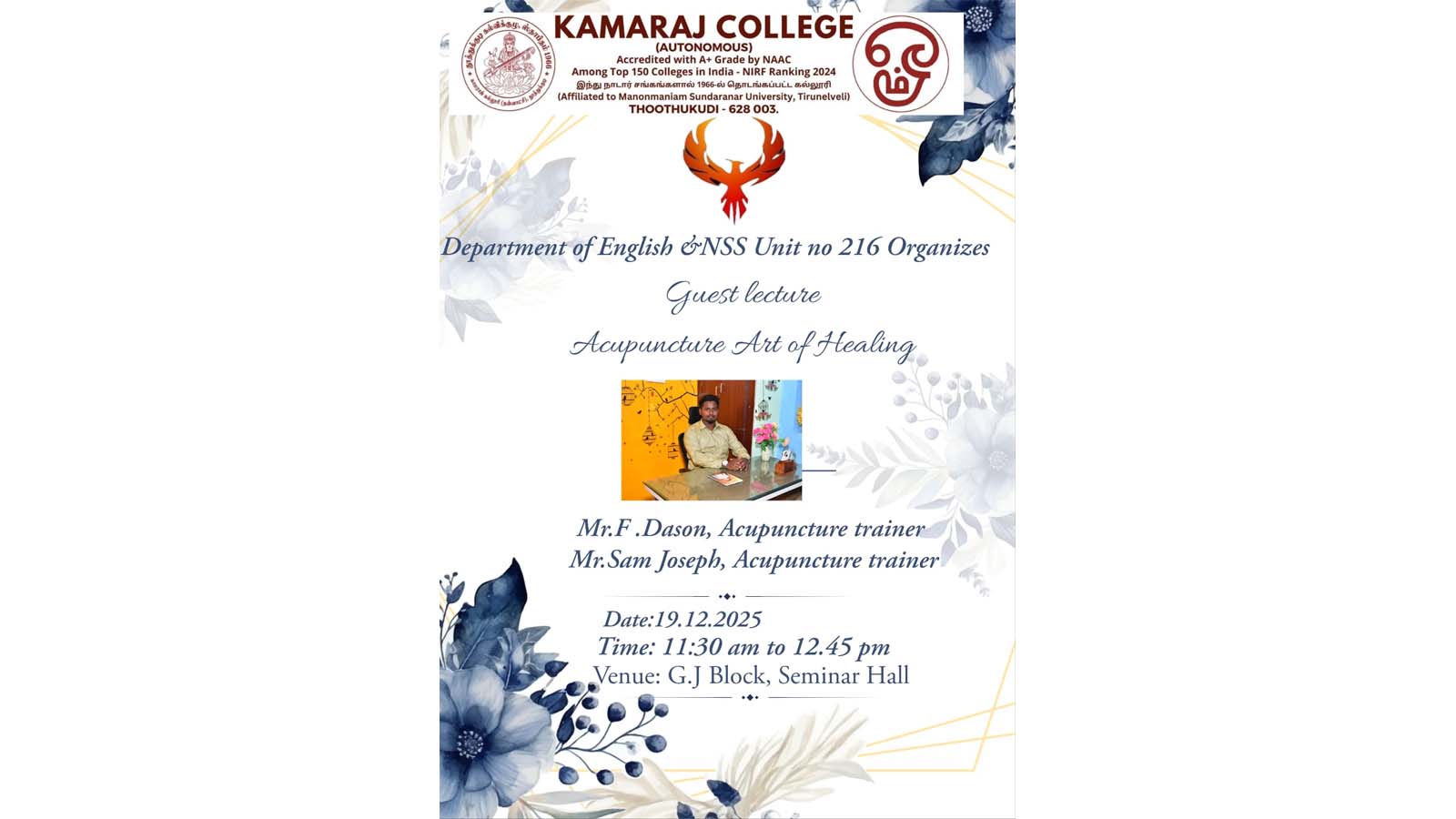
The PG & Research Department of English (SF), in collaboration with NSS Unit No. 216 of Kamaraj College (Autonomous), Thoothukudi, successfully organized a highly informative guest lecture titled “Acupuncture: Art of Healing” on 19 December 2025. The programme was conducted from 11.00 a.m. to 01.00 p.m. at the Seminar Hall, Golden Jubilee Block. The event aimed to create awareness among students about alternative medicine, holistic healing practices, and the relevance of natural therapies in today’s fast-paced lifestyle.
This Acupuncture Healing Lecture served as an eye-opening platform for students to understand the science, philosophy, and health benefits of acupuncture as a complementary medical system.
Objectives of the Acupuncture Healing Lecture
The primary objectives of the programme were to:
- Create awareness about acupuncture as an effective alternative healing system
- Educate students on natural approaches to managing lifestyle-related diseases
- Promote stress-free and healthy living practices
- Encourage interest in holistic and preventive healthcare methods
- Support the NSS objective of promoting health awareness in society
The programme strongly aligned with the institution’s mission of nurturing physically, mentally, and socially healthy individuals.
Resource Persons and Expertise
The guest lecture was conducted by two eminent and experienced professional acupuncture trainers:
- Mr. F. Dason
- Mr. Sam Joseph
Both speakers possess extensive practical knowledge and training experience in acupuncture therapy. Their ability to explain complex medical concepts in a simple and engaging manner made the Acupuncture Healing Lecture highly impactful and accessible to students from non-medical backgrounds.
Key Themes Covered During the Session
During the lecture, the resource persons delivered a comprehensive overview of acupuncture and its applications in modern healthcare. The major topics discussed included:
- Origin and history of acupuncture
- Basic principles of acupuncture therapy
- Energy flow (Qi) and meridian systems
- Role of acupuncture in pain management
- Effectiveness of acupuncture in treating lifestyle diseases
- Natural healing versus chemical-based treatments
Special emphasis was placed on how acupuncture helps in managing stress, anxiety, insomnia, migraines, joint pain, and chronic conditions without side effects.
Relevance of Acupuncture in Modern Lifestyle
The speakers highlighted how modern lifestyle patterns—such as excessive screen time, irregular sleep habits, unhealthy diets, and mental stress—have led to an increase in lifestyle-related disorders. In this context, acupuncture offers a safe, non-invasive, and natural healing solution.
Students were encouraged to view health not merely as the absence of disease but as a balanced state of physical, mental, and emotional well-being. This message resonated strongly with the audience, especially in an academic environment often associated with stress and pressure.
Interactive Session and Student Participation
One of the most notable aspects of the Acupuncture Healing Lecture was the active interaction between the speakers and the students. The session was highly engaging, with students raising thoughtful questions related to:
- Career opportunities in acupuncture therapy
- Scientific validation of acupuncture
- Safety and effectiveness of treatment
- Integration of alternative medicine with modern healthcare
The resource persons patiently addressed all queries, making the session both informative and inspiring. This interactive exchange enhanced students’ understanding and curiosity about alternative medicine systems.
Impact on Students
The lecture had a significant positive impact on the students. Participants gained:
- Awareness of alternative medicine and holistic healing
- Knowledge about preventive healthcare practices
- Motivation to adopt stress-free and healthy lifestyles
- Respect for traditional and natural healing systems
Many students expressed appreciation for the session, stating that it broadened their perspective on health and wellness beyond conventional medical approaches.
Role of NSS and Departmental Initiative
The collaboration between the PG & Research Department of English (SF) and NSS Unit No. 216 played a crucial role in the successful organization of the programme. The initiative reflected the commitment of the institution to promote community-oriented education and holistic student development.
Such programmes align with the broader goals of the National Service Scheme, which focuses on creating socially responsible and health-conscious citizens.
Institutional Support and Learning Environment
The management of Kamaraj College (Autonomous) extended full support for the programme, providing necessary facilities and an encouraging academic environment. The well-organized venue at the Golden Jubilee Block Seminar Hall contributed to the smooth conduct of the event.
For more institutional initiatives, visit the official college website:
https://www.kamarajcollege.ac.in
External Learning Resources
Students interested in learning more about acupuncture and holistic medicine were encouraged to explore reputable resources such as:
World Health Organization – Traditional Medicine
Conclusion
The Acupuncture Healing Lecture organized on 19 December 2025 was a resounding success. It effectively educated students about the importance of natural healing methods and their relevance in addressing modern health challenges. The session inspired participants to adopt healthier lifestyles and remain open to alternative systems of medicine.
Overall, the programme stood as a meaningful academic and wellness initiative, reinforcing the institution’s commitment to holistic education and student well-being.