
Social Science Research Conference 2026: 4 Inspiring Academic Sessions
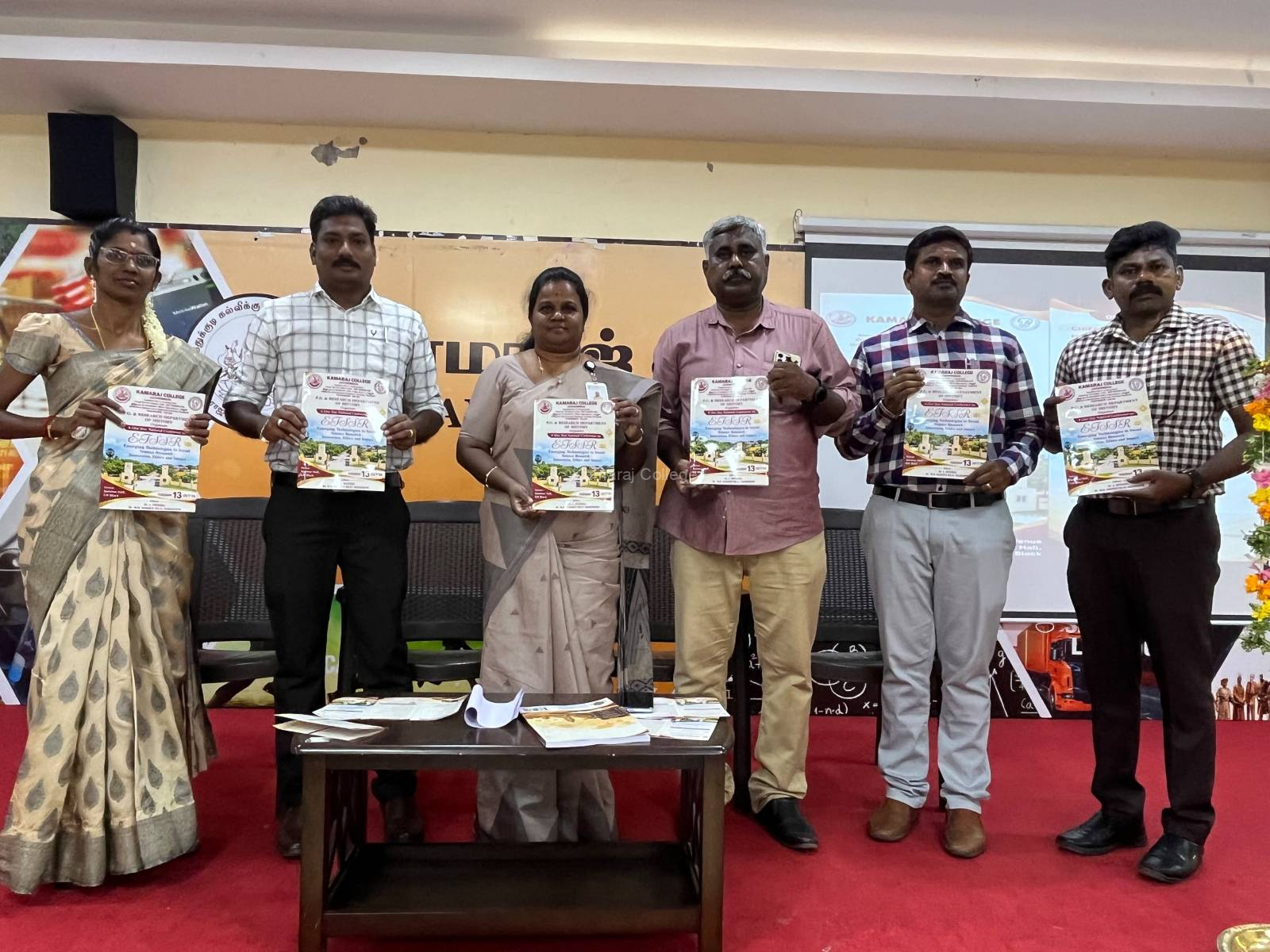
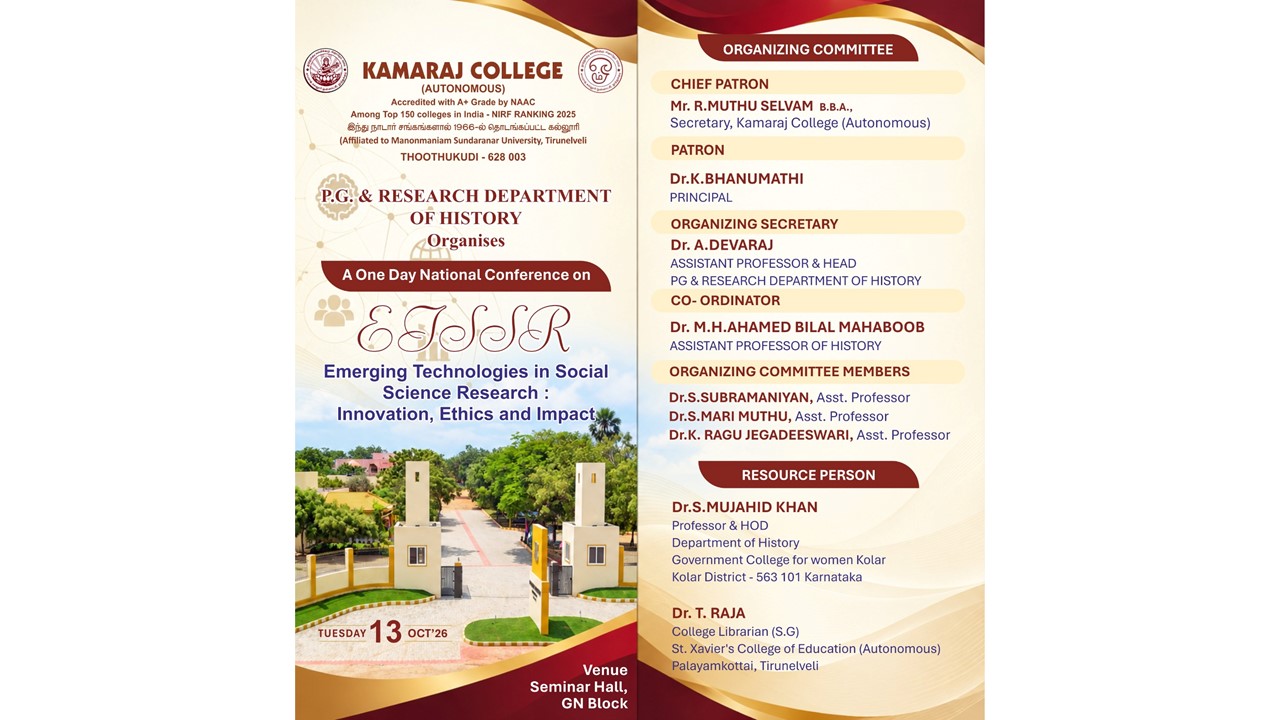
Social Science Research Conference 2026, officially titled “National Conference on Emerging Technologies in Social Science Research: Innovation, Ethics and Impact”, was organised by the Department of History, Kamaraj College (Autonomous), Thoothukudi, on 13 October 2026, at the Seminar Hall, AMMS Ganesan Nadar Block.
The conference was scheduled from 10:00 AM to 3:00 PM and aimed to promote scholarly discussion, research excellence, academic innovation and ethical research practices. The programme brought together distinguished academicians, resource persons, research scholars and participants to explore the changing landscape of social science research.
The conference featured expert lectures on historical and archival research, open access scholarly resources, research profile management, ethics and plagiarism. It also provided a platform for research paper presentations, academic discussions and constructive scholarly interaction.
The initiative reflected the institution’s commitment to strengthening research culture, encouraging interdisciplinary learning and promoting responsible academic practices.
National Conference on Emerging Technologies in Social Science Research
The National Conference on Emerging Technologies in Social Science Research: Innovation, Ethics and Impact provided an academic platform for examining contemporary research practices and their relevance to the social sciences.
Social science research plays an important role in understanding historical developments, human behaviour, institutions, social relationships and contemporary challenges.
The increasing availability of digital information, electronic scholarly resources and research management tools has created new opportunities for academic investigation.
The conference highlighted the importance of combining established research methodologies with modern scholarly resources and ethical academic practices.
Through expert lectures and research paper presentations, the programme encouraged participants to strengthen their research capabilities and engage in meaningful academic discussions.
Importance of Innovation, Ethics and Impact in Research
The central theme of the conference emphasised three important dimensions of contemporary scholarship: innovation, ethics and impact.
Innovation encourages researchers to explore new approaches, develop fresh perspectives and use appropriate technologies to strengthen academic investigation.
Research ethics ensures that scholarly activities are conducted with honesty, responsibility and respect for intellectual contributions.
Research impact highlights the importance of producing meaningful knowledge that contributes to academic understanding and wider society.
The Social Science Research Conference 2026 connected these principles with historical investigation, academic resource management and responsible scholarly communication.
Inaugural Session of the National Conference
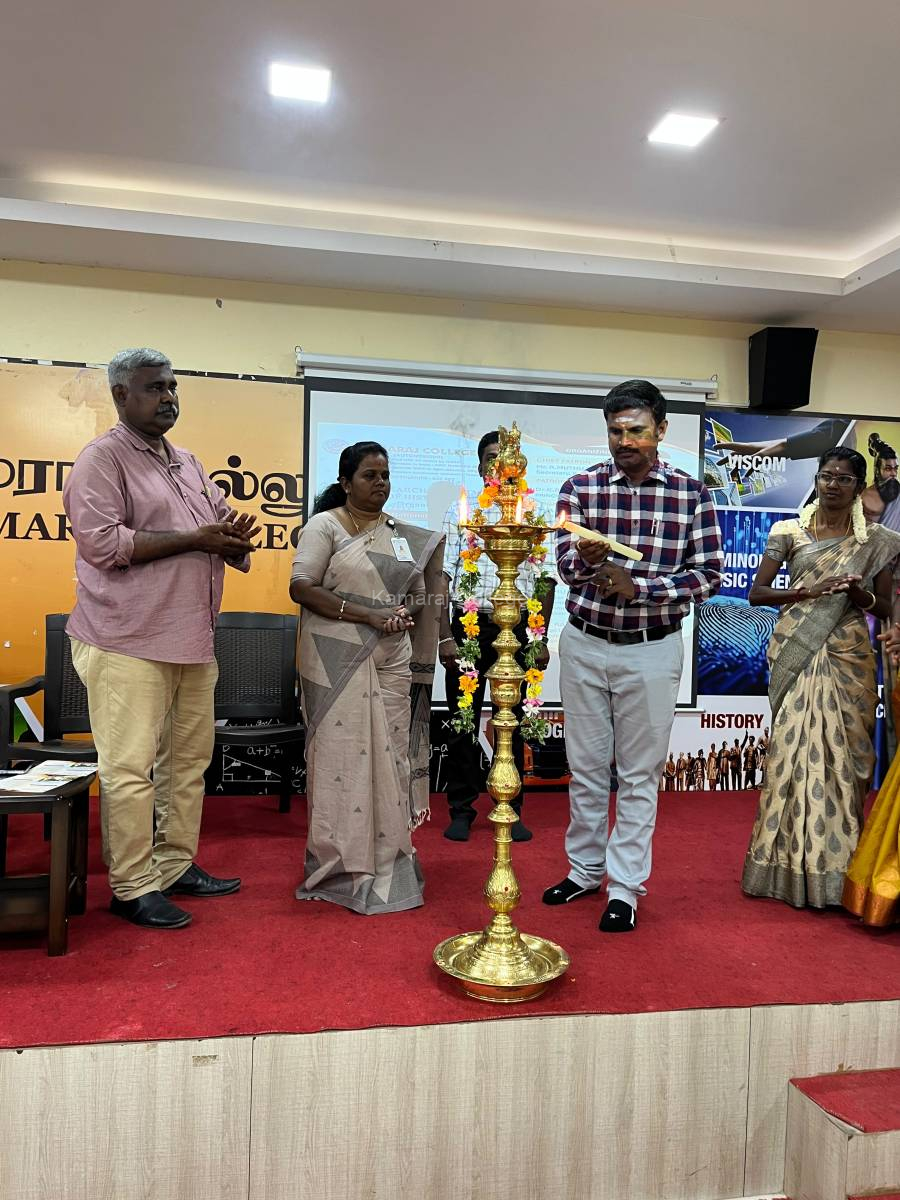
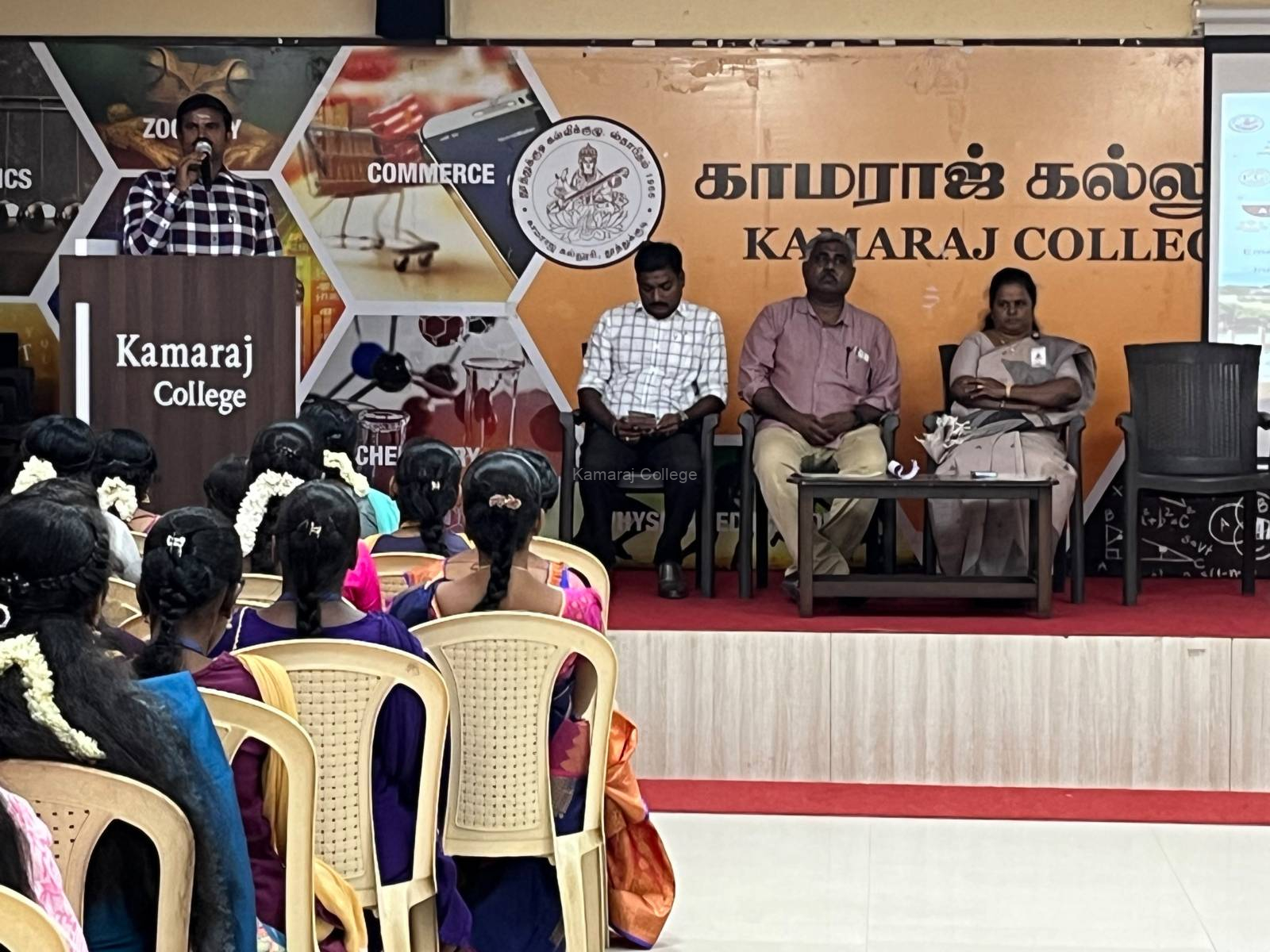
The inaugural proceedings commenced at 9:30 AM with a welcome address by Dr. A. Devaraj, Organising Secretary.
The inaugural session established the academic purpose of the conference and brought together the distinguished speakers and participants.
The proceedings included the presidential address by the Principal, keynote address by the Secretary and a formal vote of thanks.
The session marked the commencement of an academically enriching programme focused on research methodologies, scholarly resources and academic integrity.
Welcome Address by Dr. A. Devaraj
Dr. A. Devaraj, Organising Secretary, delivered the welcome address during the inaugural session.
He welcomed the distinguished guests, resource persons, academicians, research scholars and participants.
The inaugural proceedings highlighted the importance of providing opportunities for scholarly interaction and research-oriented academic development.
The welcome address formally introduced the conference proceedings and set the stage for the technical sessions.
Presidential Address by Dr. K. Bhanumathi
The presidential address was delivered by Dr. K. Bhanumathi, Principal, Kamaraj College (Autonomous), Thoothukudi.
Her participation reflected the institution’s commitment to promoting academic excellence, research development and scholarly engagement.
The presidential session formed an important part of the conference inauguration and reinforced the significance of research-oriented academic initiatives.
The programme demonstrated the institution’s emphasis on encouraging meaningful academic activities beyond conventional classroom learning.
Keynote Address by Mr. R. Muthu Selvam
The keynote address was delivered by Mr. R. Muthu Selvam, Secretary, Kamaraj College (Autonomous).
The keynote address formed a central component of the inaugural proceedings.
His participation highlighted the importance accorded to research, academic enrichment and institutional support for scholarly activities.
The address contributed to the formal inauguration of the national conference.
Vote of Thanks by Dr. S. Subramaniyan
The inaugural session concluded with a vote of thanks proposed by Dr. S. Subramaniyan.
The vote of thanks acknowledged the contributions of the distinguished guests, organisers and participants towards the inaugural proceedings.
Following the formal inauguration, the conference continued with its scheduled technical sessions.
Session I: Historical and Archival Research of Defence Studies
The first technical session commenced at 11:00 AM on the topic “Historical and Archival Research of Defence Studies during Hyder Ali and Tippu Sultan.”
The expert lecture was delivered by Dr. S. Mujahid Khan, Professor and Head, Kolar Government College for Women, Karnataka.
The session focused on the importance of historical evidence and archival research in understanding defence-related developments during the periods of Hyder Ali and Tippu Sultan.
The resource person highlighted the significance of examining historical sources and documentary evidence to develop a reliable understanding of past military and administrative developments.
The lecture provided valuable academic insights into historical research methodologies and the importance of evidence-based interpretation.
Expert Lecture by Dr. S. Mujahid Khan
Dr. S. Mujahid Khan shared his expertise on historical and archival research related to defence studies.
His lecture highlighted the importance of historical evidence in understanding military developments and administrative practices during significant periods of Indian history.
The session encouraged participants to recognise the value of systematic historical investigation and careful examination of documentary sources.
The expert lecture also reinforced the importance of evaluating historical materials critically before developing scholarly interpretations.
Historical Research during Hyder Ali and Tippu Sultan
The first technical session explored the significance of historical research concerning Hyder Ali and Tippu Sultan.
Their periods of rule provide important subjects for studying military organisation, defence strategies, political developments and administrative history in southern India.
Historical research on these subjects requires careful examination of available documentary evidence and an understanding of the broader historical context.
The session encouraged participants to appreciate the importance of archival investigation in reconstructing historical developments.
It also highlighted the relevance of defence studies as an interdisciplinary area connecting history, political developments and military institutions.
Importance of Archival Research in Social Sciences
Archival research is an important method of academic investigation, particularly in history and related social science disciplines.
Archives preserve records, documents and other materials that can provide valuable evidence about past events and institutions.
The Social Science Research Conference 2026 highlighted the importance of archival sources through its first technical session.
Researchers can use archival materials to examine historical developments, compare interpretations and develop evidence-based conclusions.
The lecture reinforced the importance of source evaluation, contextual understanding and systematic documentation in historical scholarship.
Historical Evidence and Research Methodology
The first technical session also highlighted the importance of research methodology in historical investigation.
Historical research requires scholars to identify relevant sources, examine their authenticity and interpret evidence within an appropriate context.
The use of reliable historical evidence contributes to the credibility and academic value of research findings.
Participants were encouraged to recognise that scholarly conclusions should be supported by careful investigation and critical analysis.
These principles are important not only in historical studies but also across the wider field of social science research.
Emerging Technologies and Historical Scholarship
The broader conference theme highlighted the growing relevance of emerging technologies in social science research.
Digital archives, electronic catalogues and online scholarly repositories can support researchers in locating historical materials and accessing academic information.
These developments create opportunities for improving research accessibility and scholarly collaboration.
The conference’s focus on archival research and modern information resources demonstrated the importance of connecting traditional research methods with contemporary academic tools.
The programme encouraged participants to appreciate how responsible use of technology can complement established research practices.
Session II: Open Access Resources, Profile Management, Ethics and Plagiarism
The second technical session commenced at 1:30 PM on the topic “Open Access Resources, Profile Management System, Ethics and Plagiarism.”
The session was delivered by Dr. T. Raja, Librarian (S.G.), St. Xavier’s College of Education (Autonomous), Palayamkottai, Tirunelveli.
The expert lecture focused on important aspects of contemporary academic research, including accessing scholarly resources, managing research profiles and maintaining ethical standards.
The resource person shared valuable insights into the responsible use of academic information and the importance of originality in scholarly work.
The session highlighted the role of research integrity in maintaining the credibility and quality of academic publications.
Expert Lecture by Dr. T. Raja
Dr. T. Raja provided valuable guidance on scholarly resources, research profile management, ethics and plagiarism.
His lecture introduced participants to important requirements of modern academic research.
The session emphasised the need to access reliable scholarly information and maintain accurate academic records.
It also highlighted the importance of following established ethical standards while preparing research papers and publications.
The lecture helped participants understand the relationship between information access, academic visibility and responsible research practices.
Understanding Open Access Scholarly Resources
An important component of the second technical session was the discussion on open access resources.
Open access scholarly resources provide opportunities for researchers to access academic literature without conventional subscription barriers.
These resources can support literature reviews, research planning and the identification of relevant scholarly publications.
The session highlighted the importance of using credible academic sources and evaluating the quality of available information.
Participants gained awareness of the role of open access resources in supporting academic research and knowledge dissemination.
Importance of Research Profile Management Systems
The second session also addressed research profile management systems.
Research profiles help academicians and scholars organise information about their academic contributions, publications and professional activities.
Maintaining accurate research profiles can improve the visibility of scholarly work and support academic communication.
The session highlighted the importance of managing research-related information systematically.
It also encouraged participants to recognise the value of maintaining consistent and reliable academic records.
Research Ethics and Academic Responsibility
Research ethics formed a major focus of the second technical session.
Ethical research practices require honesty, transparency, accountability and respect for intellectual contributions.
Researchers are expected to acknowledge relevant sources, present findings accurately and avoid misleading academic practices.
The session emphasised the importance of maintaining ethical standards throughout the research process.
The discussion reinforced the principle that academic credibility depends on both the quality of research and the integrity with which it is conducted.
Plagiarism Awareness and Prevention
The expert lecture addressed plagiarism as an important concern in scholarly writing and publication.
Plagiarism occurs when another person’s words, ideas or intellectual contributions are presented without appropriate acknowledgement.
The session highlighted the importance of originality, proper citation and responsible academic writing.
Participants were encouraged to recognise the need for accurate referencing and adherence to accepted research standards.
The discussion strengthened awareness of academic integrity and the importance of preventing unethical research practices.
Responsible Use of Digital Research Resources
The conference highlighted the importance of using digital academic resources responsibly.
Online scholarly databases, research repositories and digital information platforms have become valuable tools for academic investigation.
However, researchers must evaluate the credibility of sources and ensure that information is used appropriately.
The second technical session reinforced the importance of responsible information management and ethical scholarly communication.
These principles are essential for maintaining research quality in an increasingly digital academic environment.
Research Paper Presentation Session
The research paper presentation session commenced at 2:30 PM.
The session provided a platform for research scholars and participants to present their research findings, exchange ideas and receive constructive feedback.
Research paper presentations are an important component of academic conferences because they encourage the communication and discussion of scholarly work.
The session created opportunities for participants to engage with different research perspectives and strengthen their understanding of academic investigation.
It also encouraged researchers to present their findings clearly and respond constructively to academic observations.
Encouraging Research Innovation and Scholarly Exchange
The paper presentation session supported the conference’s broader objective of promoting innovation and scholarly interaction.
Academic discussions encourage researchers to examine different viewpoints and consider new approaches to their research subjects.
Constructive feedback can help identify areas for improvement and strengthen the presentation of research findings.
The Social Science Research Conference 2026 encouraged participants to appreciate the value of collaborative academic learning.
The session also reinforced the importance of intellectual openness and critical thinking in scholarly development.
Developing Research Presentation Skills
Research paper presentations provide opportunities for scholars to develop academic communication skills.
Effective presentations require researchers to organise their findings, explain their objectives and communicate their conclusions clearly.
The conference provided participants with a platform to practise these skills and engage in scholarly discussions.
The presentation session highlighted the importance of clarity, confidence and evidence-based communication.
Such experiences contribute to professional development and strengthen research capabilities.
Valedictory Session of the National Conference
The valedictory session commenced at 3:30 PM, marking the concluding phase of the conference proceedings.
The session began with a welcome address by Dr. K. Ragu Jegadeeswari, Assistant Professor of History.
The valedictory programme provided an opportunity to reflect on the academic significance of the conference and its contribution to scholarly development.
The session included the valedictory address by Dr. T. Raja and a formal vote of thanks.
Welcome Address by Dr. K. Ragu Jegadeeswari
Dr. K. Ragu Jegadeeswari, Assistant Professor of History, delivered the welcome address during the valedictory session.
The address marked the beginning of the concluding proceedings.
Her participation contributed to the formal organisation of the valedictory programme.
Valedictory Address by Dr. T. Raja
The valedictory address was delivered by Dr. T. Raja, Librarian (S.G.), St. Xavier’s College of Education (Autonomous), Palayamkottai, Tirunelveli.
He emphasised the importance of research, academic integrity and continuous learning.
The address reinforced the need for researchers to maintain dedication, honesty and professional responsibility in scholarly activities.
He also highlighted the significance of lifelong learning and continuous academic development.
The valedictory address provided a meaningful conclusion to the conference’s discussions on research methodologies, scholarly resources and ethical academic practices.
Vote of Thanks by Dr. M. H. Ahamed Bilal Mahaboob
The conference concluded with a vote of thanks proposed by Dr. M. H. Ahamed Bilal Mahaboob, Co-ordinator.
The vote of thanks acknowledged the contributions of the distinguished speakers, organisers and participants towards the successful conduct of the conference.
The concluding proceedings reflected the collaborative efforts involved in organising the national academic programme.
Importance of Interdisciplinary Social Science Research
The Social Science Research Conference 2026 highlighted the importance of interdisciplinary approaches in contemporary scholarship.
The conference connected historical and archival research with modern academic information systems and research ethics.
Historical investigation requires careful examination of evidence, while contemporary research also benefits from access to reliable scholarly resources and effective information management.
The combination of these themes demonstrated the value of integrating different research approaches.
The programme encouraged participants to recognise the importance of interdisciplinary knowledge and continuous academic development.
Role of Emerging Technologies in Academic Research
Emerging technologies continue to influence the ways researchers locate, organise, analyse and communicate scholarly information.
Digital repositories, electronic research databases and academic information systems can improve access to scholarly materials.
Research profile management systems can also support academic visibility and professional communication.
The conference theme encouraged participants to consider the opportunities and responsibilities associated with technology-supported research.
The expert sessions highlighted the importance of combining technological resources with critical thinking, source evaluation and ethical research practices.
Strengthening Research Culture at Kamaraj College
The conference reflected the commitment of Kamaraj College (Autonomous), Thoothukudi, to promoting research-oriented academic activities.
The Department of History organised the programme to encourage scholarly interaction and provide opportunities for academic enrichment.
The participation of distinguished resource persons contributed to the academic value of the conference.
The initiative highlighted the importance of creating platforms for research discussions, paper presentations and knowledge exchange.
Such academic programmes help strengthen research awareness and encourage continuous scholarly engagement.
Objectives of the National Conference
The major objectives of the Social Science Research Conference 2026 were:
- Promote scholarly discussion and research excellence in social sciences
- Encourage awareness of emerging technologies and contemporary research practices
- Strengthen understanding of historical and archival research methodologies
- Explore defence studies during Hyder Ali and Tippu Sultan
- Highlight the importance of evidence-based historical interpretation
- Introduce participants to open access scholarly resources
- Develop awareness of research profile management systems
- Promote research ethics and responsible academic practices
- Create awareness about plagiarism prevention and proper citation
- Provide a platform for research paper presentations and academic discussions
- Encourage constructive feedback and scholarly exchange
- Promote innovation, academic integrity and research impact
- Strengthen interdisciplinary learning and lifelong academic development
Conference Programme Highlights
- Official Title: National Conference on Emerging Technologies in Social Science Research: Innovation, Ethics and Impact
- Date: 13 October 2026
- Overall Programme Time: 10:00 AM to 3:00 PM
- Venue: Seminar Hall, AMMS Ganesan Nadar Block
- Organised by: Department of History
- Institution: Kamaraj College (Autonomous), Thoothukudi
- Organising Secretary: Dr. A. Devaraj
- Principal: Dr. K. Bhanumathi
- Secretary: Mr. R. Muthu Selvam
- Inaugural Welcome Address: Dr. A. Devaraj
- Presidential Address: Dr. K. Bhanumathi
- Keynote Address: Mr. R. Muthu Selvam
- Inaugural Vote of Thanks: Dr. S. Subramaniyan
- Session I Topic: Historical and Archival Research of Defence Studies during Hyder Ali and Tippu Sultan
- Session I Resource Person: Dr. S. Mujahid Khan, Professor and Head, Kolar Government College for Women, Karnataka
- Session II Topic: Open Access Resources, Profile Management System, Ethics and Plagiarism
- Session II Resource Person: Dr. T. Raja, Librarian (S.G.), St. Xavier’s College of Education (Autonomous), Palayamkottai, Tirunelveli
- Research Paper Presentations: Academic presentations and scholarly discussions
- Valedictory Welcome Address: Dr. K. Ragu Jegadeeswari, Assistant Professor of History
- Valedictory Address: Dr. T. Raja
- Valedictory Vote of Thanks: Dr. M. H. Ahamed Bilal Mahaboob, Co-ordinator
- Major Focus: Research Innovation, Historical Studies, Open Access Resources, Ethics, Plagiarism and Academic Impact
Learning Outcomes
The Social Science Research Conference 2026 provided participants with opportunities to:
- Understand the importance of innovation in contemporary social science research
- Recognise the value of historical and archival evidence
- Develop awareness of research methodologies used in defence studies
- Understand the historical significance of Hyder Ali and Tippu Sultan in defence-related research
- Appreciate the importance of critical source evaluation
- Gain awareness of open access scholarly resources
- Understand the importance of maintaining accurate academic research profiles
- Recognise the principles of research ethics and academic integrity
- Develop awareness of plagiarism prevention and responsible citation
- Strengthen research communication and presentation skills
- Appreciate the importance of constructive academic feedback
- Recognise the value of interdisciplinary research approaches
- Understand the role of emerging technologies in scholarly information access
- Develop commitment to responsible research and lifelong learning
Contribution to Sustainable Development Goals
The Social Science Research Conference 2026 supported the broader principles of the United Nations Sustainable Development Goals (SDGs) through its emphasis on quality education, research development, academic integrity and institutional collaboration.
The conference was particularly relevant to the following goals:
- SDG 4 – Quality Education: Promoting research-oriented learning, scholarly knowledge and continuous academic development.
- SDG 9 – Industry, Innovation and Infrastructure: Encouraging awareness of innovation and technology-supported research practices.
- SDG 16 – Peace, Justice and Strong Institutions: Reinforcing the importance of integrity, accountability and responsible academic conduct.
- SDG 17 – Partnerships for the Goals: Supporting scholarly interaction and collaboration among academic professionals and institutions.
The programme demonstrated the importance of research and academic collaboration in supporting broader educational and societal development.
Promoting Research Excellence and Lifelong Learning
The conference reinforced the importance of continuous academic learning and professional development.
Research excellence requires intellectual curiosity, systematic investigation, critical thinking and ethical responsibility.
The expert sessions encouraged participants to strengthen their understanding of historical evidence, modern scholarly resources and responsible academic practices.
The paper presentation session further supported academic development by providing opportunities for scholarly communication and constructive feedback.
The conference encouraged participants to pursue research with dedication, integrity and a commitment to lifelong learning.
Conclusion
The National Conference on Emerging Technologies in Social Science Research: Innovation, Ethics and Impact, organised by the Department of History, Kamaraj College (Autonomous), Thoothukudi, on 13 October 2026, at the Seminar Hall, AMMS Ganesan Nadar Block, was a meaningful academic initiative focused on research excellence, innovation and scholarly integrity.
The inaugural session featured the welcome address by Dr. A. Devaraj, presidential address by Dr. K. Bhanumathi, keynote address by Mr. R. Muthu Selvam and vote of thanks by Dr. S. Subramaniyan.
The first technical session, delivered by Dr. S. Mujahid Khan, highlighted the importance of historical and archival research in understanding defence studies during Hyder Ali and Tippu Sultan.
The second technical session, conducted by Dr. T. Raja, provided valuable insights into open access resources, research profile management, academic ethics and plagiarism prevention.
The research paper presentation session provided opportunities for scholarly interaction, academic discussion and constructive feedback.
The valedictory session included the welcome address by Dr. K. Ragu Jegadeeswari, valedictory address by Dr. T. Raja and vote of thanks by Dr. M. H. Ahamed Bilal Mahaboob.
Overall, the Social Science Research Conference 2026 successfully promoted research innovation, historical scholarship, ethical academic practices, scholarly communication and lifelong learning, encouraging participants to pursue meaningful research with dedication, integrity and intellectual curiosity.
Internal Link
- Kamaraj College (Autonomous), Thoothukudi – Explore more national conferences, departmental research activities, academic seminars and scholarly initiatives.
External Links
- University Grants Commission (UGC) – Information on higher education standards, academic research and research integrity in India.
- National Archives of India – Information on historical records, archival collections and research resources.
- INFLIBNET Centre – Information on academic resources, scholarly information services and research support.
- Directory of Open Access Journals (DOAJ) – Access to scholarly open access journals across academic disciplines.
- United Nations Sustainable Development Goals – Information on quality education, innovation, institutional development and global partnerships.