
ICMRET 2026: Powerful International Conference with 134 Research Papers

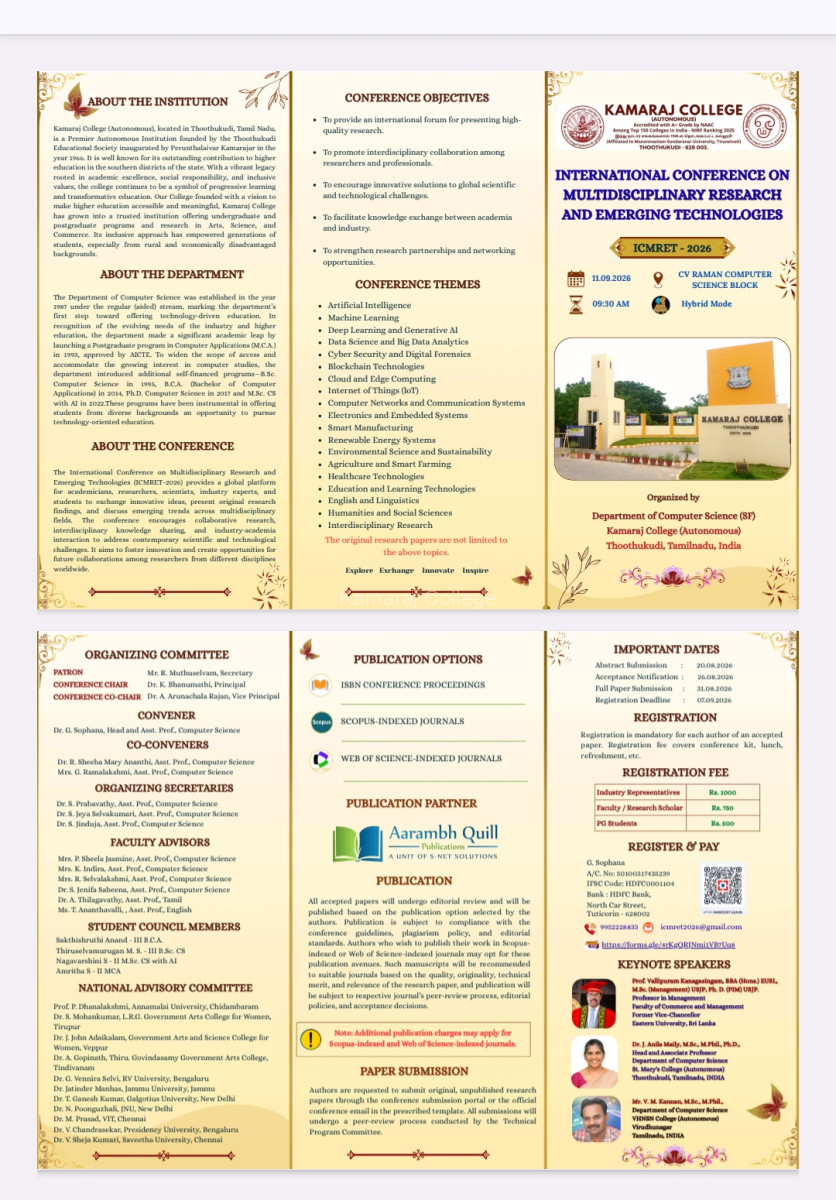
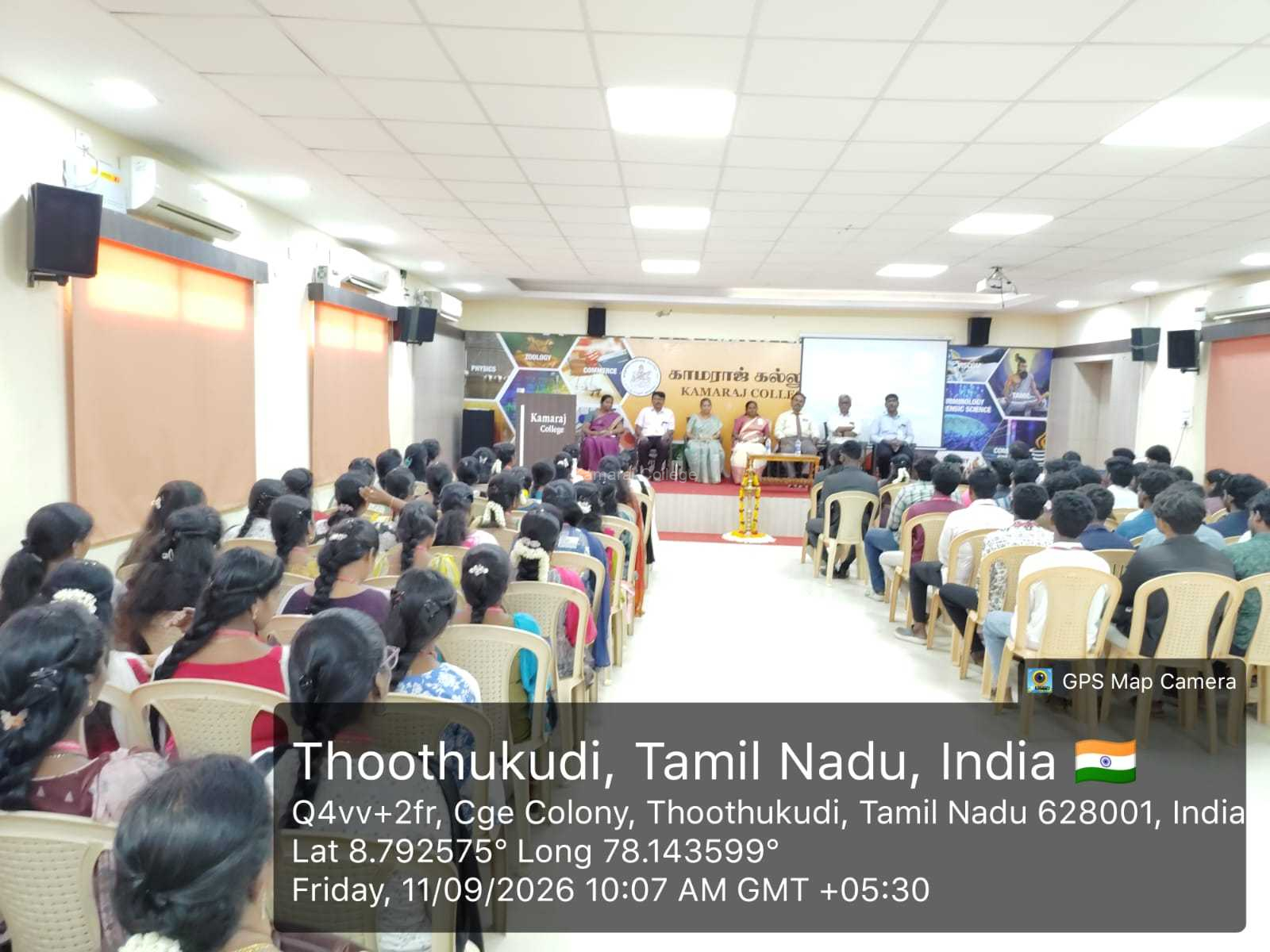
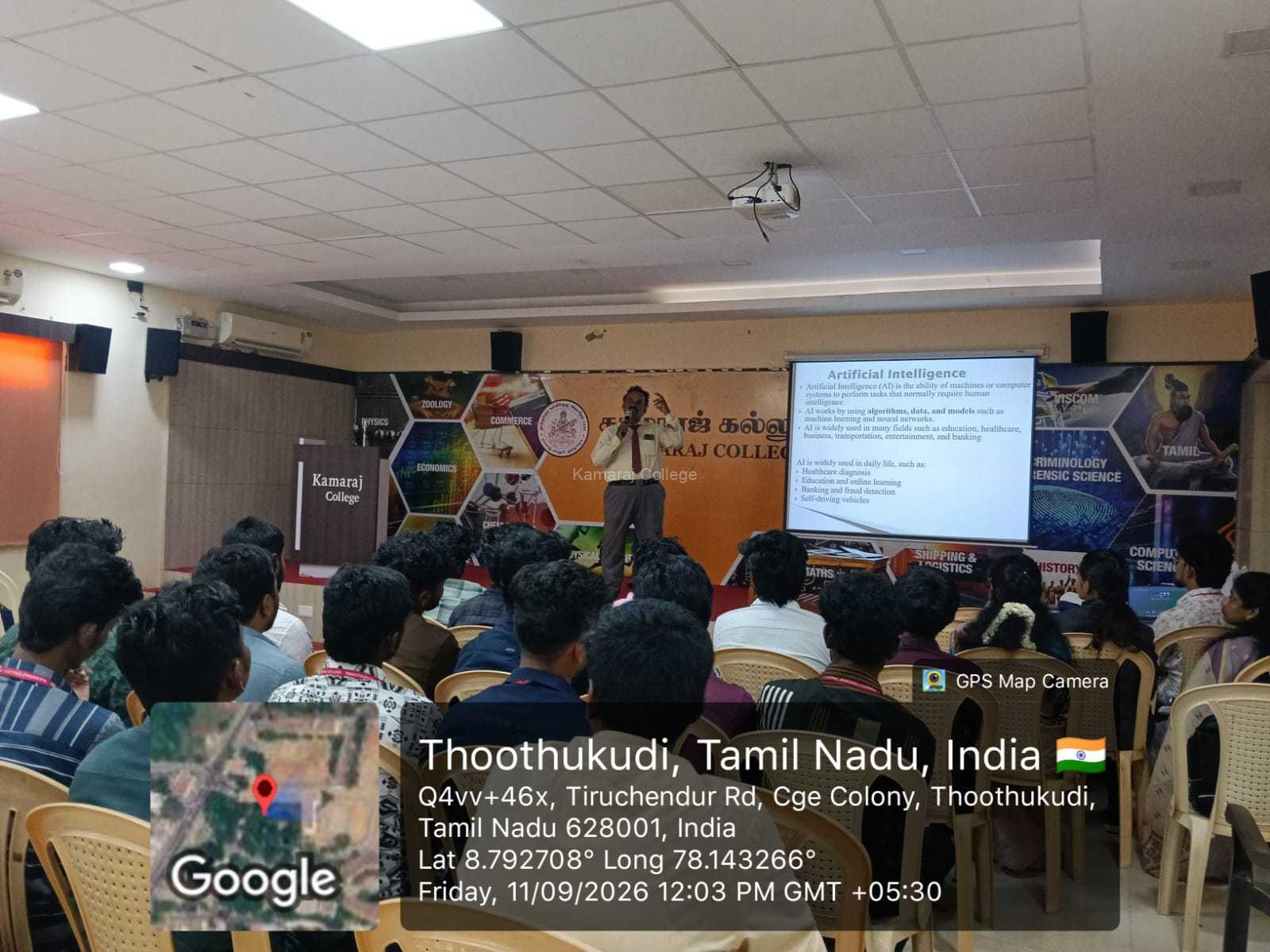
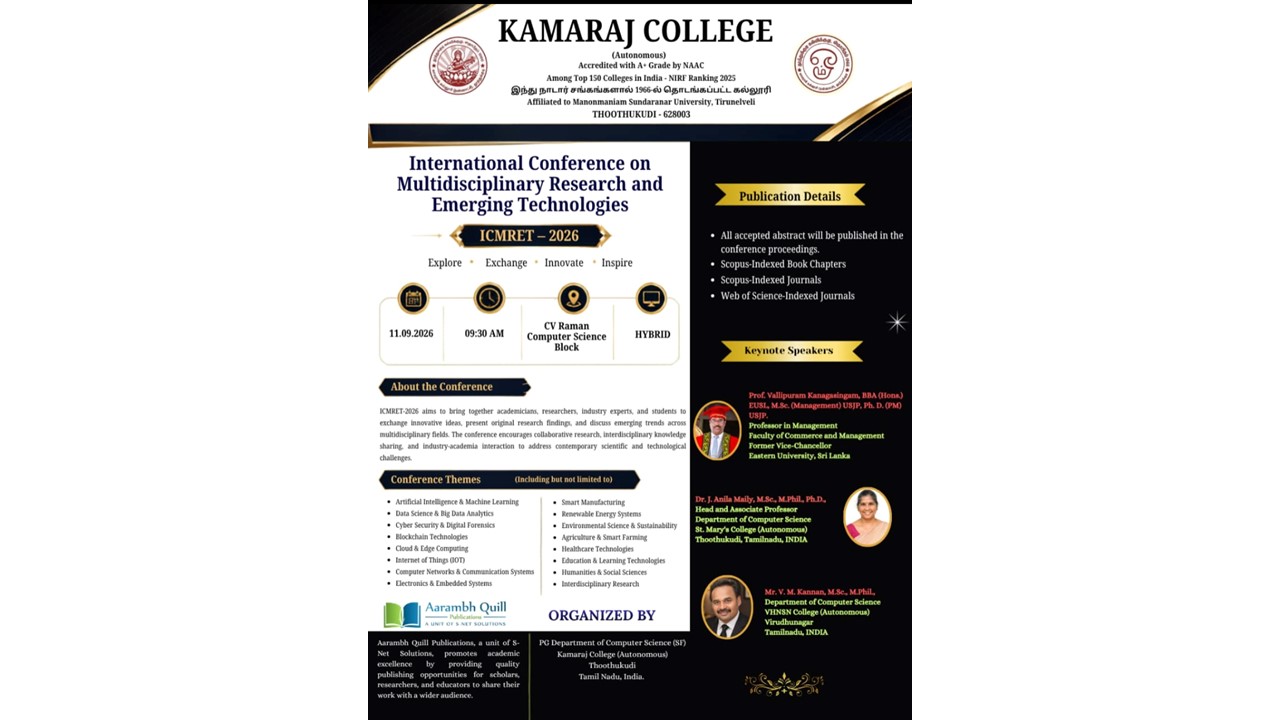
ICMRET 2026, the International Conference on Multidisciplinary Research and Emerging Technologies, was organised by the Department of Computer Science (SF), Kamaraj College (Autonomous), Thoothukudi, on 11 September 2026 in hybrid mode. The international conference brought together academicians, researchers, scientists, industry experts and students to exchange innovative ideas, present original research findings and explore emerging trends across multidisciplinary fields.
The conference provided a significant platform for interdisciplinary research, knowledge exchange, industry–academia interaction and research collaboration. With a total of 134 research papers received from 10 disciplinary categories, three distinguished keynote speakers and paper presentations conducted in both offline and online modes, the conference reflected wide academic participation and multidisciplinary engagement.
ICMRET 2026 at Kamaraj College
The International Conference on Multidisciplinary Research and Emerging Technologies (ICMRET–2026) was designed as an international academic forum where researchers and professionals from different disciplines could share knowledge and research outcomes.
The hybrid format enabled participation through both physical and virtual modes, widening opportunities for academic interaction.
The conference focused particularly on emerging technologies, multidisciplinary research and the growing importance of collaboration across traditional academic boundaries.
Objectives of ICMRET 2026
The conference was organised with the objective of strengthening research culture and facilitating meaningful interaction among academics, researchers and professionals.
The major objectives were:
- Provide an international forum for high-quality research
- Promote multidisciplinary and interdisciplinary collaboration
- Encourage innovative solutions to scientific and technological challenges
- Facilitate knowledge exchange between academia and industry
- Provide researchers with opportunities to present original research findings
- Explore emerging developments in technology and other disciplines
- Strengthen academic and professional networking
- Encourage future research partnerships
- Promote interaction among faculty members, researchers, scholars and students
- Create opportunities for international academic engagement
Inaugural Ceremony
The inaugural ceremony commenced with Tamil Thai Vazhthu, followed by the Prayer Song.
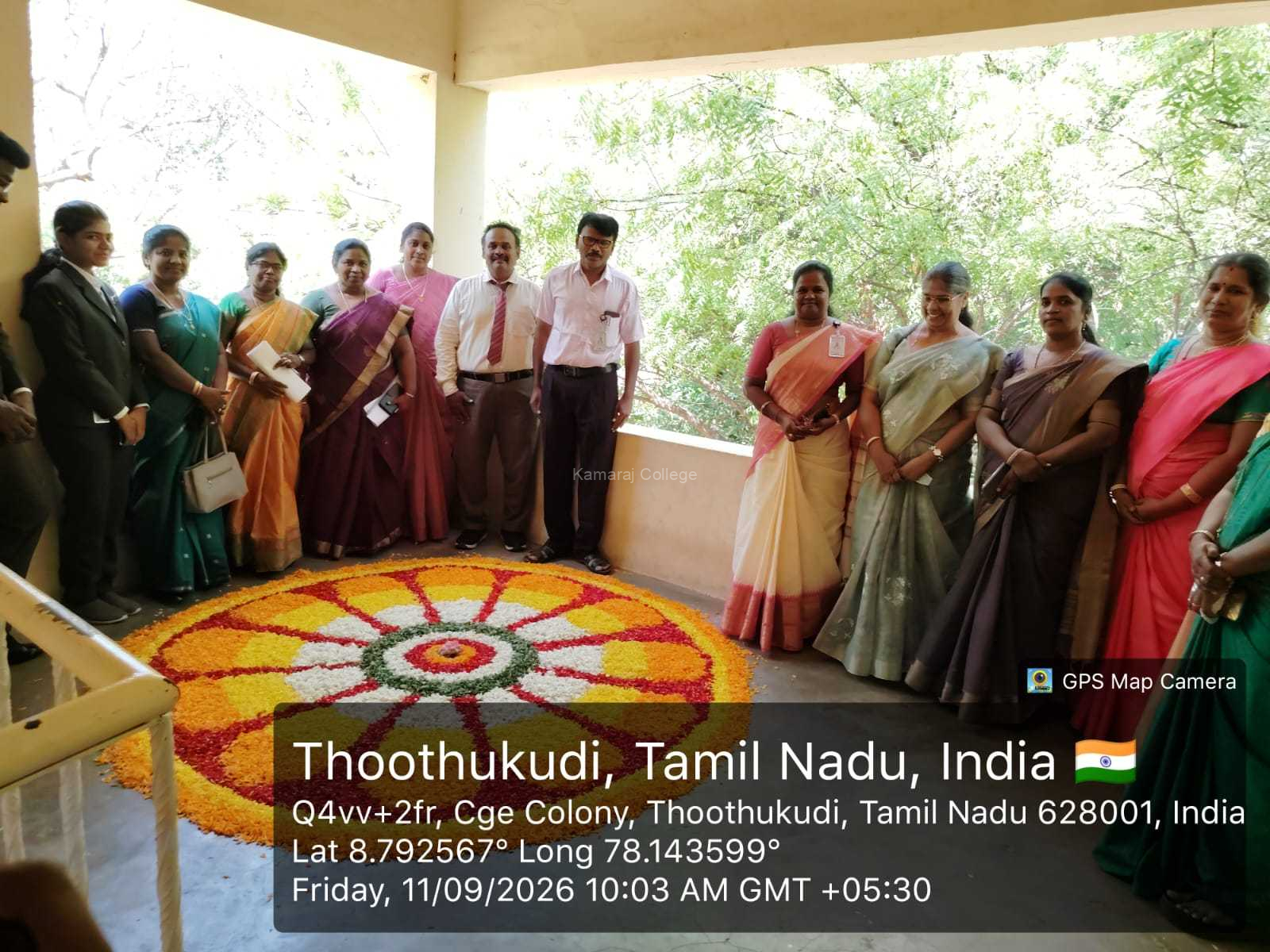
The dignitaries then lighted the ceremonial lamp, marking the formal inauguration of the conference and symbolising the pursuit of knowledge, wisdom and excellence.
Dr. G. Sophana, Convener and Head of the Department, formally welcomed the gathering and set the academic tone for the conference.
Honouring the Keynote Speakers
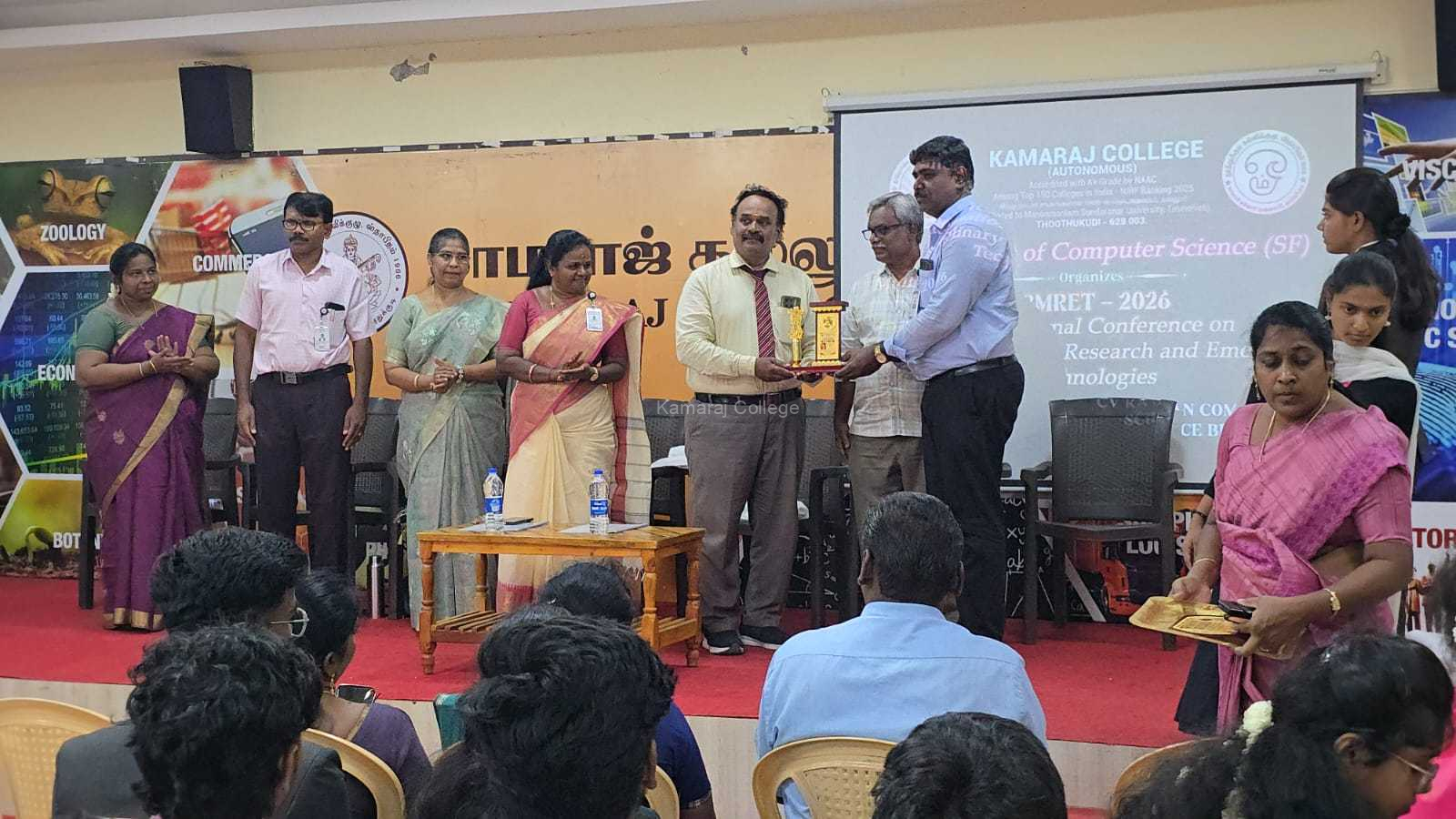
The distinguished keynote speakers were honoured during the inaugural programme.
Dr. J. Anila Maily, Head and Associate Professor, Department of Computer Science, St. Mary’s College (Autonomous), Thoothukudi, was honoured with a shawl and memento by Dr. K. Bhanumathi, Principal, and Dr. A. Arunachala Rajan, Vice-Principal.
Mr. V. M. Kannan, Assistant Professor of Computer Application, Department of Commerce, VHNSN College (Autonomous), Virudhunagar, was honoured with a shawl and memento by Prof. T. Ravi, Head of the Department, and Dr. S. Senthil, Vice-Principal.
Prof. Vallipuram Kanagasingam, Professor in Management, Faculty of Commerce and Management and Former Vice-Chancellor, Eastern University, Sri Lanka, joined the conference virtually from Sri Lanka as an international keynote speaker.
Recognition of Session Chairs
The session chairs were honoured as a mark of respect and gratitude for their academic contribution to the conference.
They were honoured by Sakthishruthi Anand, Student Council Vice-Chairman, and R. Ragul Pandian, Student Council Secretary.
Their involvement was important for the systematic conduct and academic evaluation of the technical and non-technical paper presentation sessions.
Presidential Address
The Presidential Address was delivered by Dr. K. Bhanumathi, Principal, Kamaraj College (Autonomous), Thoothukudi, and Conference Chair.
Her address highlighted the academic significance of the international conference and the importance of research, innovation and multidisciplinary knowledge exchange.
The Presidential Address reinforced the conference’s emphasis on creating meaningful opportunities for researchers to share ideas and explore new directions.
Release of Conference Proceedings
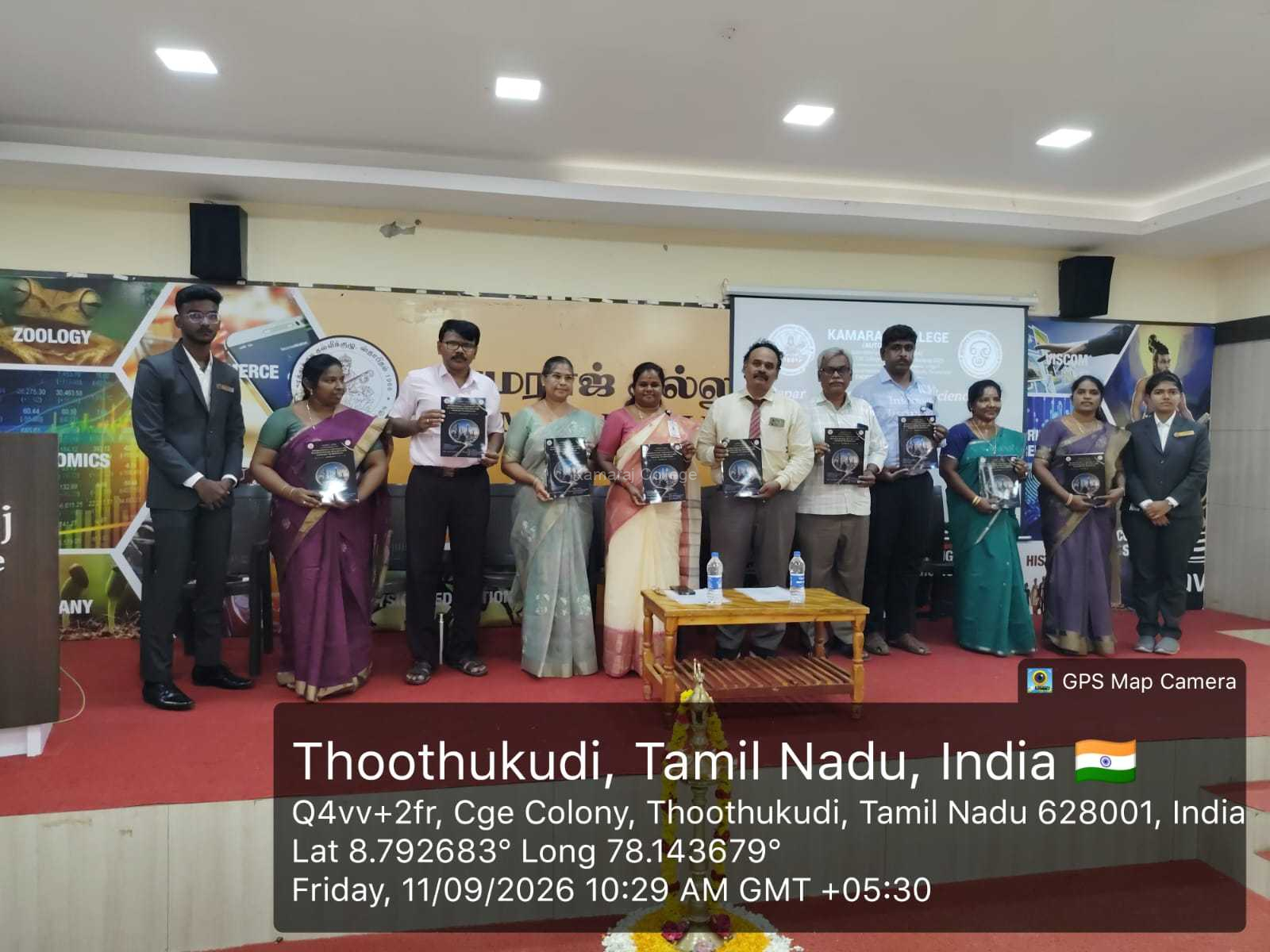
An important academic milestone of ICMRET 2026 was the formal release of the Conference Proceedings by Dr. K. Bhanumathi, Principal and Conference Chair.
The proceedings represented the scholarly contributions associated with the conference and marked an important component of its academic activities.
The release added significance to the inaugural programme and highlighted the research-oriented nature of the conference.
Felicitation Address
The Felicitation Address was delivered by Prof. T. Ravi, Head and Associate Professor, Department of Computer Science (Aided), Kamaraj College (Autonomous), Thoothukudi.
His address encouraged academic engagement and acknowledged the participation of researchers, keynote speakers and scholars in the conference.
Three Distinguished Keynote Sessions
A major academic highlight of ICMRET 2026 was the participation of three distinguished keynote speakers.
Their sessions addressed significant contemporary developments in Artificial Intelligence, Management, information security and cyber security.
The keynote presentations provided participants with expert perspectives and enriched the intellectual environment of the conference.
Keynote on Agentic AI
The first keynote address was delivered by Dr. J. Anila Maily on the topic “Agentic AI”.
The session introduced participants to an important emerging area within Artificial Intelligence.
The keynote provided an academic perspective on developments in AI and contributed to the conference’s focus on emerging technologies.
The session was particularly relevant to researchers and students interested in contemporary developments in Computer Science and Artificial Intelligence.
International Keynote from Sri Lanka
The international dimension of the conference was strengthened by the participation of Prof. Vallipuram Kanagasingam, Professor in Management, Faculty of Commerce and Management and Former Vice-Chancellor, Eastern University.
He joined online from Sri Lanka and delivered his keynote session virtually.
His presentation focused on Management and Artificial Intelligence, connecting technological developments with the field of management.
The session reflected the multidisciplinary vision of the conference by exploring the intersection between AI and management.
Keynote on AI and Cyber Security
The third keynote address was delivered by Mr. V. M. Kannan.
His session focused on the current scenario of Artificial Intelligence, security threats and cyber security.
The presentation highlighted contemporary technological developments and the security concerns associated with the rapidly changing digital environment.
The session added an important practical and security-oriented dimension to the conference.
Keynote Sessions and Academic Enrichment
Together, the three keynote sessions addressed different dimensions of emerging technology.
The sessions covered:
- Agentic AI
- Management and Artificial Intelligence
- Current Developments in Artificial Intelligence
- Security Threats
- Cyber Security
The diverse topics enabled participants to gain multidisciplinary perspectives on Artificial Intelligence and its growing influence across different domains.
134 Research Papers Received
A major achievement of ICMRET 2026 was the receipt of 134 research papers from different disciplines.
The substantial number of submissions reflected the wide academic participation and multidisciplinary character of the conference.
Computer Science contributed the largest number of research papers, while significant contributions were also received from Business Administration, Tamil, Mathematics, Commerce, History and other disciplines.
Discipline-Wise Research Paper Contributions
The 134 research papers received for the conference were distributed across the following disciplines:
- Computer Science: 80 Papers
- Business Administration: 15 Papers
- Tamil: 11 Papers
- Mathematics: 10 Papers
- Commerce: 7 Papers
- History: 6 Papers
- English: 2 Papers
- Education: 1 Paper
- Microbiology: 1 Paper
- Industrialist Category: 1 Paper
Total Research Papers: 134
The distribution clearly demonstrated the multidisciplinary scope of the conference.
Multidisciplinary Research Platform
The participation of researchers from a wide range of disciplines was one of the defining characteristics of the conference.
While Computer Science formed a major component, contributions from Management, Languages, Mathematics, Commerce, History, Education, Microbiology and industry broadened the academic scope.
This diversity encouraged participants to look beyond individual disciplines and appreciate the possibilities created through interdisciplinary research.
Paper Presentation Sessions
The paper presentation sessions formed an important component of ICMRET 2026.
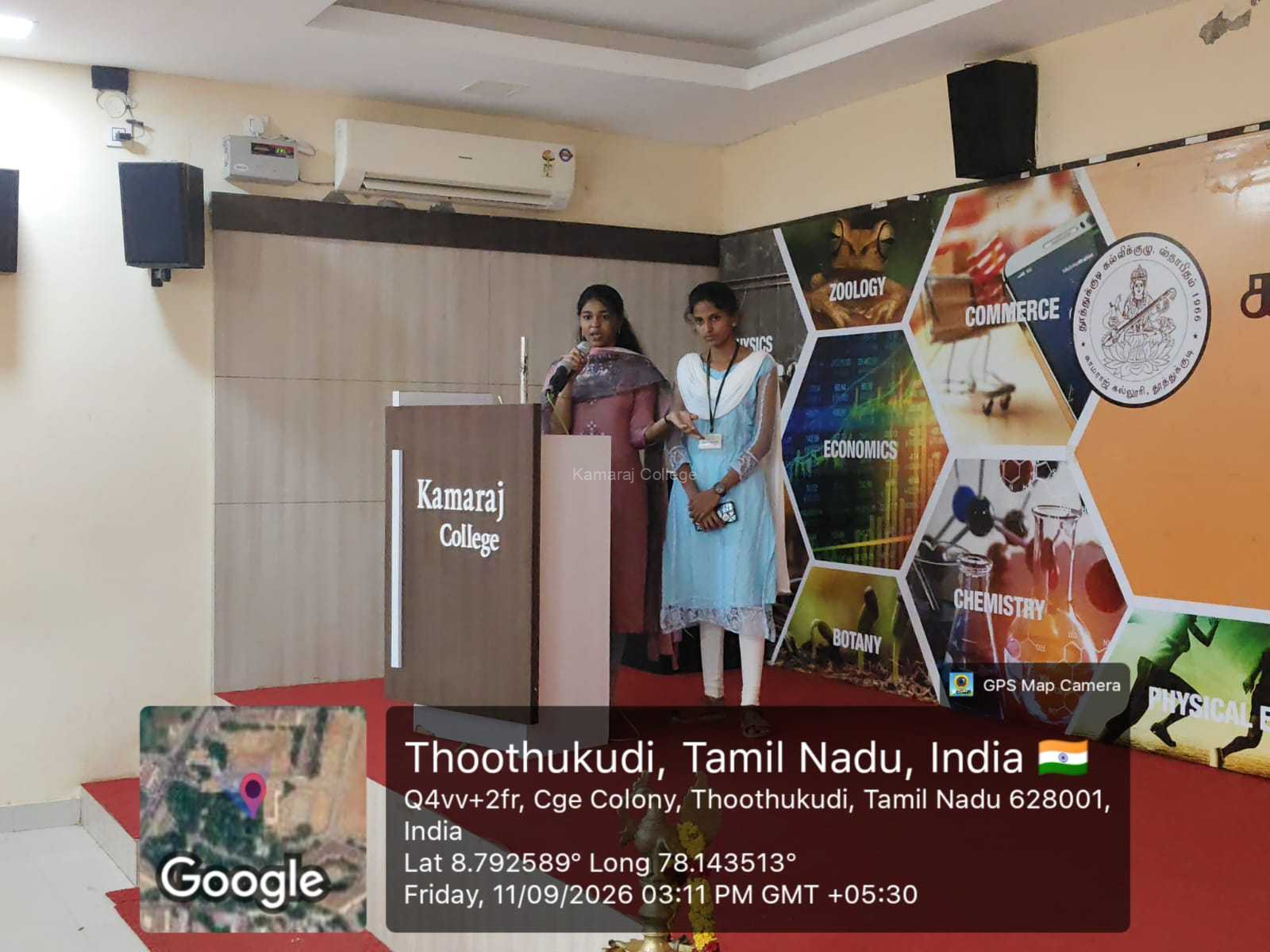
Researchers, faculty members and scholars were provided with opportunities to present their research findings and exchange academic ideas.
The sessions enabled presenters to communicate their research, engage in academic discussion and gain exposure to work being undertaken across different disciplines.
Hybrid Paper Presentations
In keeping with the hybrid nature of the international conference, paper presentations were conducted through both offline and online modes.
The hybrid approach enabled wider participation and provided flexibility for researchers who were unable to attend physically.
It also demonstrated how digital platforms can expand opportunities for academic interaction and research dissemination.
Technical and Non-Technical Session Chairs
The technical and non-technical sessions were chaired by:
- Dr. M. Gethsiyal Augusta
- Dr. Stella Janci Rani
- Dr. A. Thilagavathy
- Dr. R. Sheeba Mary Ananthi
- Dr. S. Jeya Selvakumari
Their academic contribution helped ensure the smooth and systematic conduct of the research paper presentation sessions.
Industry–Academia Interaction
One of the objectives of the conference was to strengthen interaction between academia and industry.
The participation of researchers, academicians, students, professionals and an industrial contributor created opportunities for diverse perspectives.
Such interaction can help researchers understand practical challenges while allowing research ideas to be viewed in wider professional and societal contexts.
Promoting Research Collaboration
International and multidisciplinary conferences create opportunities for researchers to identify shared areas of interest.
The interaction among participants from different disciplines helped create possibilities for academic networking and future collaboration.
By bringing multiple areas of knowledge together, ICMRET 2026 encouraged researchers to explore problems from interdisciplinary perspectives.
Innovation and Emerging Technologies
Emerging technologies are transforming academic research, industry and society.
The conference created a platform to discuss developments in areas such as Artificial Intelligence and cyber security while also accommodating research from humanities, management, commerce and science.
This multidisciplinary approach reflected the increasing importance of combining technological knowledge with insights from other academic fields.
Research Culture and Knowledge Exchange
The conference strengthened research culture by encouraging participants to present original work and engage with other researchers.
Paper presentations and keynote sessions provided complementary forms of academic learning.
While keynote speakers offered expert perspectives on emerging areas, research presenters contributed specialised findings from their respective disciplines.
Together, these activities created a vibrant environment for knowledge exchange.
Valedictory Function
The conference concluded with the Valedictory Function, bringing together dignitaries, organisers, keynote speakers, session chairs, researchers, paper presenters, faculty members and students.
The valedictory programme marked the successful completion of the academic sessions and provided an opportunity to recognise notable research contributions.
Best Paper Award
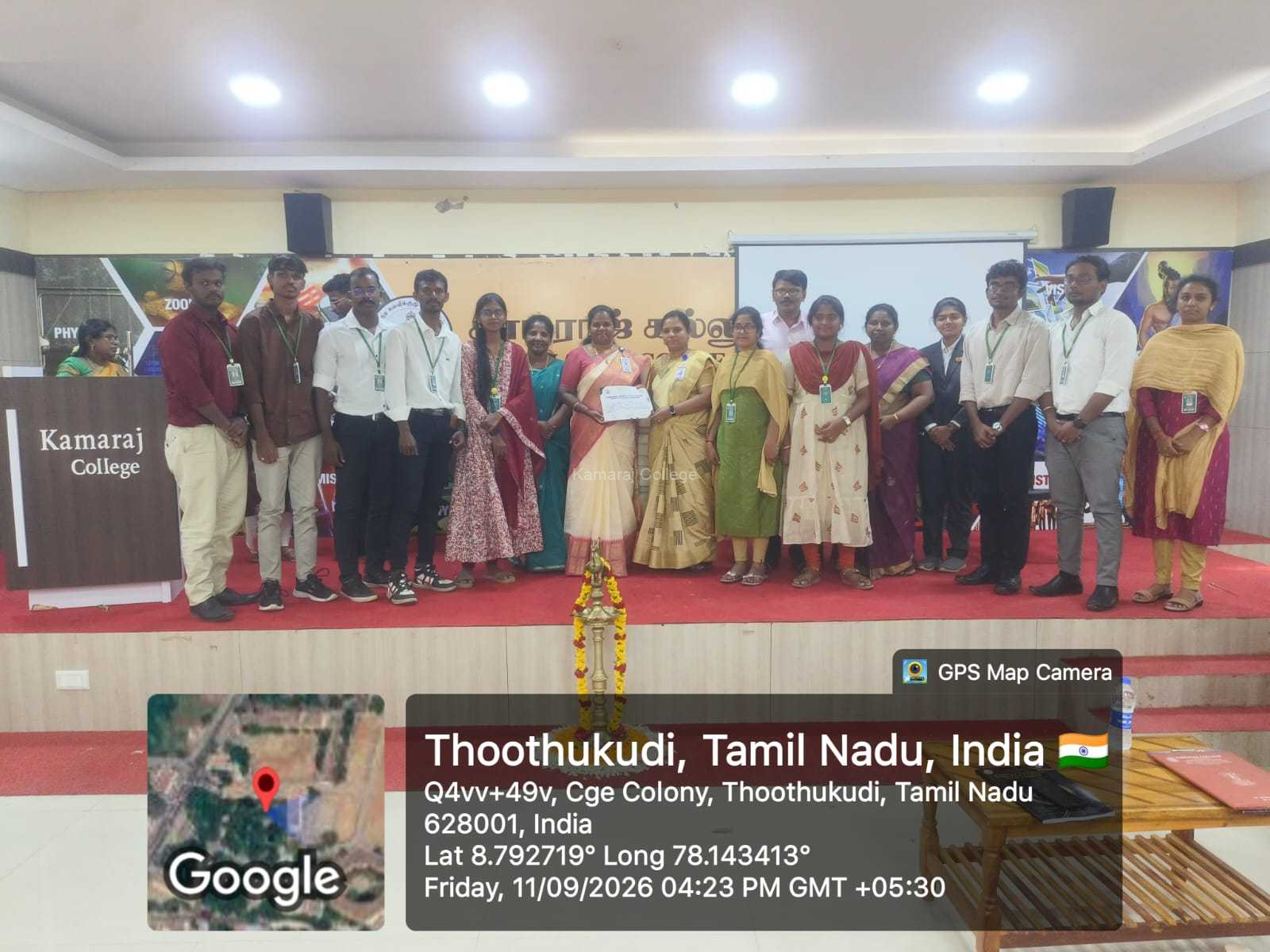
A significant highlight of the Valedictory Function was the presentation of the Best Paper Award.
The award was presented to:
- D. J. Mothilal
- T. Surya
- Dr. S. Amutha
The awardees were from The Madura College, Madurai.
Their research paper was titled:
“ASOIE: A Deterministic Rule-Based Self-Optimizing Inference Engine for Locally-Hosted Large Language Model Assistants.”
The award recognised the quality and contribution of their research presented at the conference.
Recognition of Research Excellence
The Best Paper Award reflected the conference’s emphasis on encouraging quality research and innovation.
Recognising notable research contributions can motivate scholars to pursue rigorous and meaningful academic work.
It also provides visibility to research that makes a significant contribution within the scope of the conference.
Vote of Thanks
The programme concluded with the Vote of Thanks delivered by Dr. S. Jinduja, Assistant Professor of Computer Science.
She expressed gratitude to the management, organising committee, keynote speakers, session chairs, paper presenters, participants and everyone who contributed to the successful completion of the conference.
The Vote of Thanks formally brought the proceedings of ICMRET 2026 to a close.
Conference Highlights
- Conference: International Conference on Multidisciplinary Research and Emerging Technologies – ICMRET 2026
- Date: 11 September 2026
- Venue: Kamaraj College (Autonomous), Thoothukudi
- Organised by: Department of Computer Science (SF)
- Mode: Hybrid
- Conference Chair: Dr. K. Bhanumathi, Principal
- Convener: Dr. G. Sophana, Head of the Department
- Felicitation: Prof. T. Ravi, Head and Associate Professor, Department of Computer Science (Aided)
- Keynote Speakers: 3
- Research Papers Received: 134
- Disciplines/Categories Represented: 10
- Major Themes: Multidisciplinary Research, Artificial Intelligence, Agentic AI, Management, Security and Cyber Security
- Paper Presentation: Offline and Online
- Major Academic Milestone: Release of Conference Proceedings
- Research Recognition: Best Paper Award
Conference Outcomes
Through ICMRET 2026, participants:
- Gained exposure to multidisciplinary research
- Explored emerging developments in Artificial Intelligence
- Learned about Agentic AI
- Gained perspectives on the relationship between Management and AI
- Developed awareness of security threats and cyber security
- Presented and discussed original research findings
- Participated in international academic interaction
- Engaged in interdisciplinary knowledge exchange
- Strengthened opportunities for academic networking
- Explored possibilities for future research collaboration
- Experienced hybrid research presentation and interaction
- Contributed to strengthening research culture
Overall, the conference promoted research, innovation, multidisciplinary collaboration, academic networking and knowledge exchange.
Conclusion
ICMRET 2026, organised by the Department of Computer Science (SF), Kamaraj College (Autonomous), Thoothukudi, on 11 September 2026, successfully created an international and multidisciplinary platform for research, innovation and academic interaction.
The conference featured three distinguished keynote speakers who addressed important contemporary areas including Agentic AI, Management and Artificial Intelligence, security threats and cyber security. International participation was strengthened by Prof. Vallipuram Kanagasingam, who joined virtually from Sri Lanka.
The receipt of 134 research papers from 10 disciplinary categories demonstrated the wide academic reach and multidisciplinary character of the conference. The hybrid paper presentation sessions enabled researchers and scholars to participate through both offline and online modes.
The release of the Conference Proceedings and presentation of the Best Paper Award further strengthened the academic significance of the programme.
Through keynote sessions, research presentations, interdisciplinary discussions and networking opportunities, ICMRET 2026 successfully fulfilled its vision of exploring, exchanging, innovating and inspiring through multidisciplinary research and emerging technologies.
The conference ultimately provided a valuable foundation for continued academic interaction, innovative research and future collaborative initiatives.
Internal Link
- Explore Kamaraj College – Learn more about research, conferences, academic activities and student development initiatives at Kamaraj College.
External Links
- University Grants Commission – Explore higher education, research and academic development initiatives in India.
- Ministry of Education, Government of India – Learn more about higher education, research, innovation and academic initiatives.