
Indian Knowledge System: 3 Powerful Links to Modern Computing
Report on Indian Knowledge System Guest Lecture
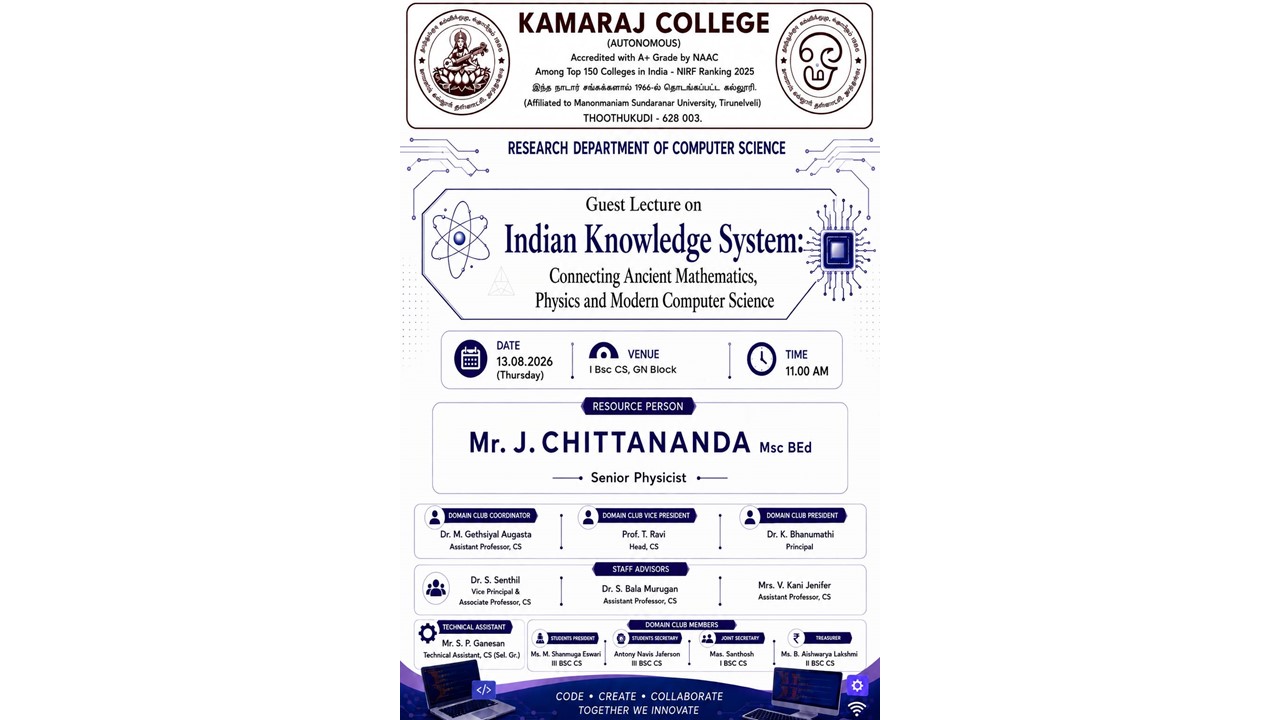
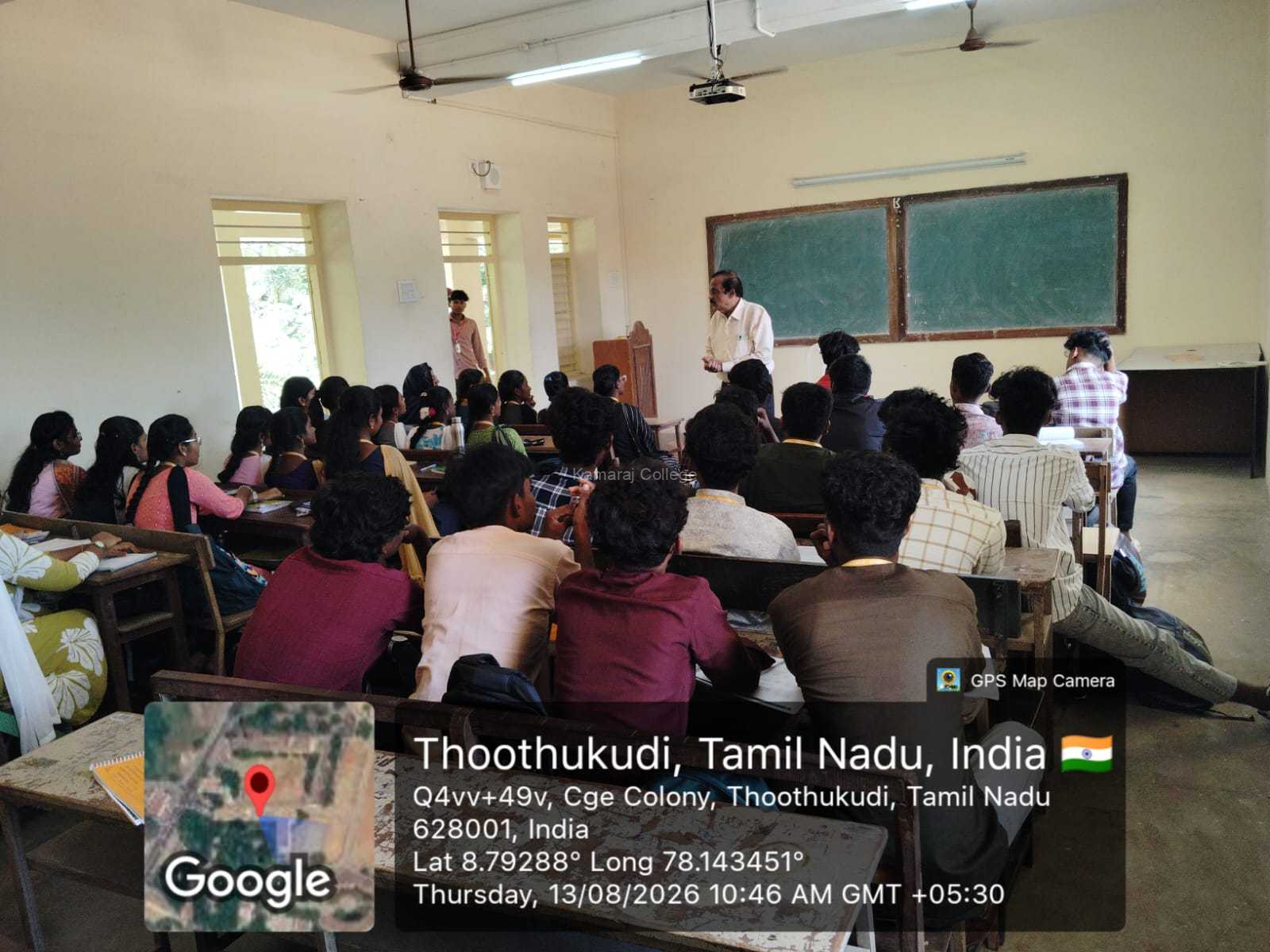
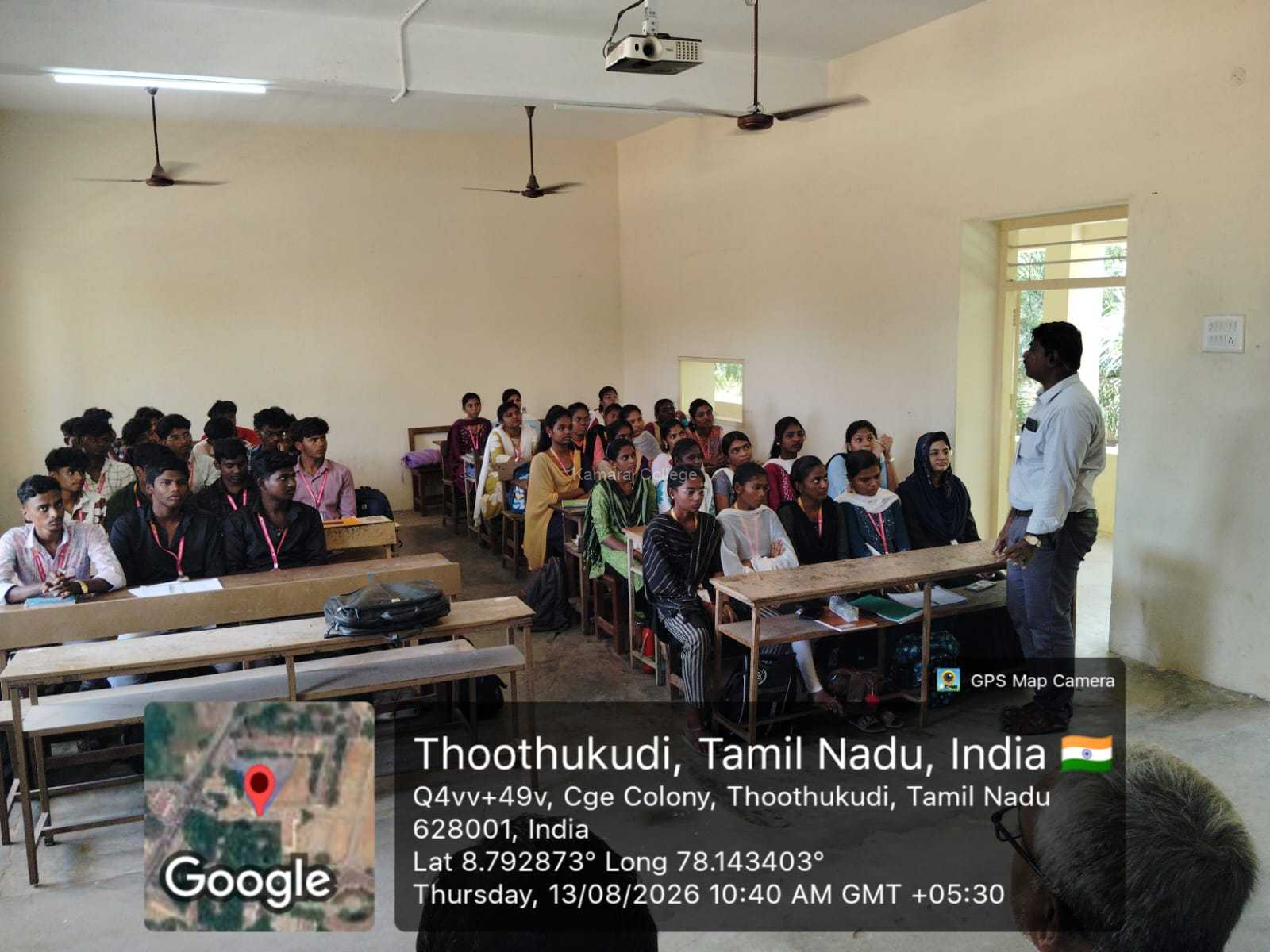
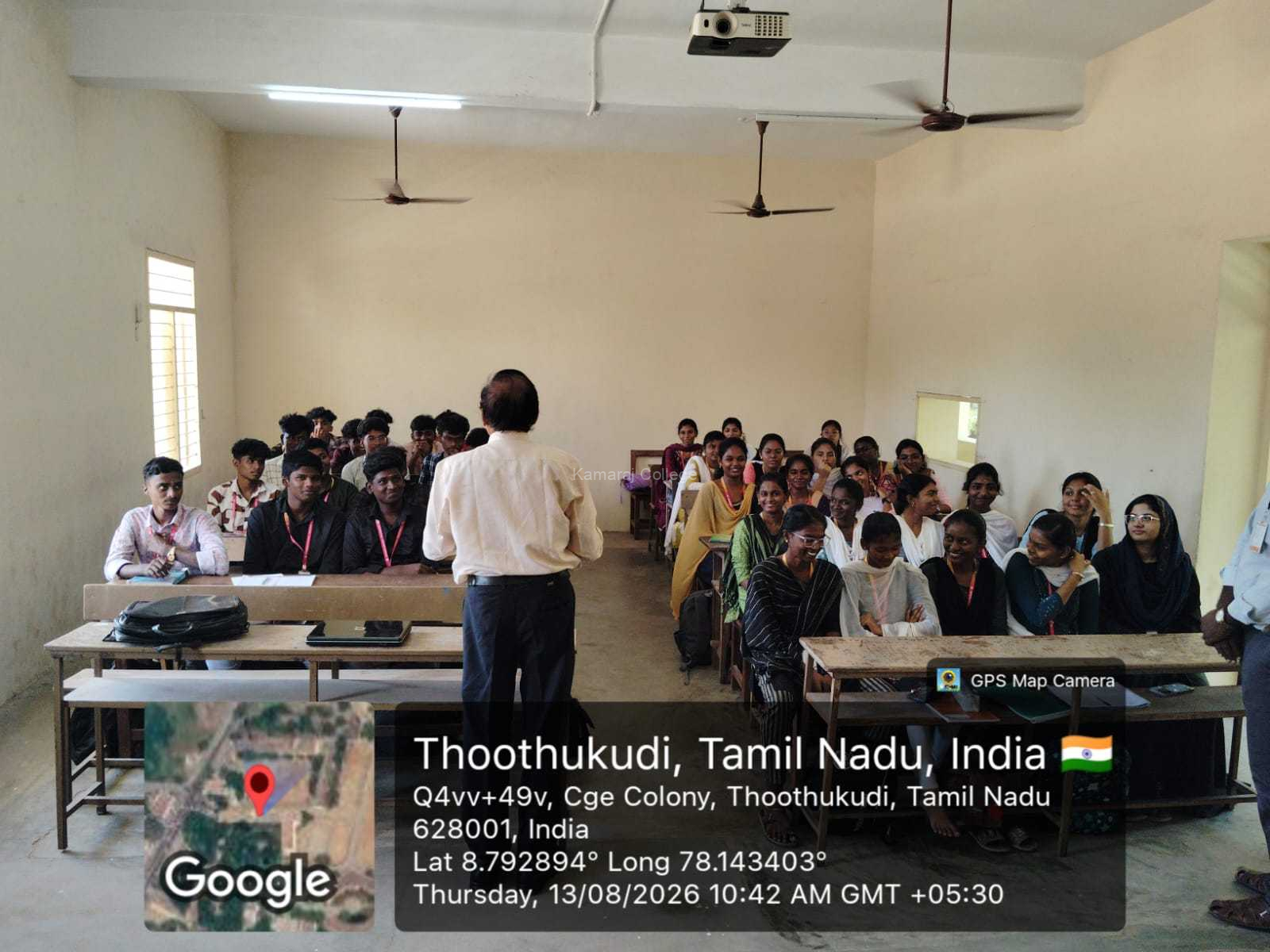
Indian Knowledge System was the focus of a guest lecture organized by the Research Department of Computer Science and Domain Club, Kamaraj College (Autonomous), Thoothukudi, on 13 August 2026. The programme commenced at 11.00 a.m. at I B.Sc. Computer Science, GN Block.
The guest lecture, titled “Indian Knowledge System: Connecting Ancient Mathematics, Physics and Modern Computer Science,” introduced students to the relationship between traditional knowledge and contemporary technology. Moreover, the session encouraged them to explore how ideas from mathematics and physics continue to influence modern scientific thinking.
Objectives of the Guest Lecture
The Indian Knowledge System guest lecture aimed to broaden students’ understanding of India’s intellectual traditions and their connections with modern computer science.
The key objectives included:
- Introduce students to the Indian Knowledge System
- Explore ideas from ancient Indian mathematics
- Understand concepts related to physics
- Connect traditional knowledge with modern computer science
- Encourage interdisciplinary learning
- Develop curiosity about the history of scientific thought
- Provide students with new academic perspectives
Thus, the programme created an opportunity for students to approach computer science from a broader interdisciplinary perspective.
Welcome Address
The programme began with the welcome address delivered by Ms. M. Shanmuga Eswari, III B.Sc. Computer Science.
She warmly welcomed the resource person, faculty members and students to the programme. In addition, she introduced the purpose of the session and set the stage for an engaging academic interaction.
Introduction of the Resource Person
Following the welcome address, Dr. S. Senthil, Vice Principal and Associate Professor, Department of Computer Science, introduced the resource person.
He presented Mr. J. Chittananda, M.Sc., B.Ed., Senior Physicist, to the gathering and shared a few words about his experience and contributions.
The introduction provided students with useful background about the speaker before the commencement of the guest lecture.
Exploring the Indian Knowledge System
Mr. J. Chittananda delivered an informative and engaging lecture on the Indian Knowledge System.
During his session, he shared ideas related to India’s traditional contributions to mathematics and physics. Furthermore, he discussed how the study of historical scientific ideas can provide useful perspectives for understanding modern developments.
The lecture encouraged students to view scientific knowledge as an evolving process in which ideas from different periods and disciplines can contribute to contemporary learning.
Connecting Mathematics, Physics and Computer Science
A major focus of the lecture was the relationship between mathematics, physics and modern computer science.
The resource person explained how mathematical reasoning forms an important foundation for computer science. Similarly, concepts from physics have contributed to scientific and technological developments.
Moreover, the session encouraged students to examine the connections between traditional mathematical thinking and present-day computational approaches.
Interdisciplinary Learning for Computer Science Students
The guest lecture demonstrated the value of interdisciplinary learning.
Computer science does not exist independently of other fields. Instead, it draws heavily from mathematics, logic, physics and other areas of knowledge. Therefore, understanding these connections can help students develop a broader approach to technology and problem-solving.
The Indian Knowledge System session encouraged participants to explore ideas beyond their regular curriculum and develop greater intellectual curiosity.
Traditional Knowledge and Modern Technology
Another important aspect of the lecture involved examining traditional knowledge in relation to modern technological developments.
The session encouraged students to study historical ideas critically and understand their context. At the same time, it motivated them to explore how mathematical and scientific thinking has developed across different periods.
As a result, students gained new perspectives on the relationship between India’s intellectual heritage and contemporary scientific education.
Developing Scientific Curiosity
The lecture provided students with an opportunity to think beyond conventional classroom learning.
Through the interaction, students gained exposure to:
- Indian intellectual and scientific traditions
- Mathematical reasoning
- Concepts from physics
- Foundations of computer science
- Interdisciplinary approaches to learning
- Connections between historical and modern knowledge
Consequently, the programme encouraged students to develop curiosity, analytical thinking and an interest in exploring the foundations of modern technology.
Programme Outcomes
The Indian Knowledge System guest lecture offered a meaningful learning experience for the participating students.
Through the session, students were able to:
- Gain awareness of India’s knowledge traditions
- Explore connections between mathematics and computer science
- Understand the interdisciplinary role of physics
- Develop new perspectives on scientific knowledge
- Recognize the importance of interdisciplinary learning
- Broaden their understanding beyond the regular curriculum
- Develop greater interest in scientific and technological exploration
Therefore, the lecture successfully encouraged students to connect different fields of knowledge and approach computer science from a wider perspective.
Vote of Thanks
The programme concluded with the Vote of Thanks delivered by Ms. Asma Chandhini, III B.Sc. Computer Science.
She expressed sincere gratitude to the resource person for sharing his knowledge and insights. She also thanked the faculty members, organizers and students for their support and active involvement in the programme.
Conclusion
Overall, the Indian Knowledge System guest lecture was an enriching and meaningful academic experience for the students of the Research Department of Computer Science.
The session by Mr. J. Chittananda encouraged students to explore the connections between ancient Indian mathematics, physics and modern computer science. Furthermore, the lecture broadened their academic outlook and demonstrated the value of interdisciplinary learning.
The programme successfully provided students with new ideas, wider perspectives and greater curiosity about the relationship between traditional knowledge and modern technological development.
Internal Links
External Links
- Indian Knowledge Systems – Explore resources and initiatives related to Indian knowledge traditions and interdisciplinary education.
- Ministry of Education, Government of India – Learn more about higher education, academic initiatives and educational development in India.