
5 Powerful Outcomes of the Mentor Mentee Meeting Department of Criminology


Mentor Mentee Meeting Department of Criminology
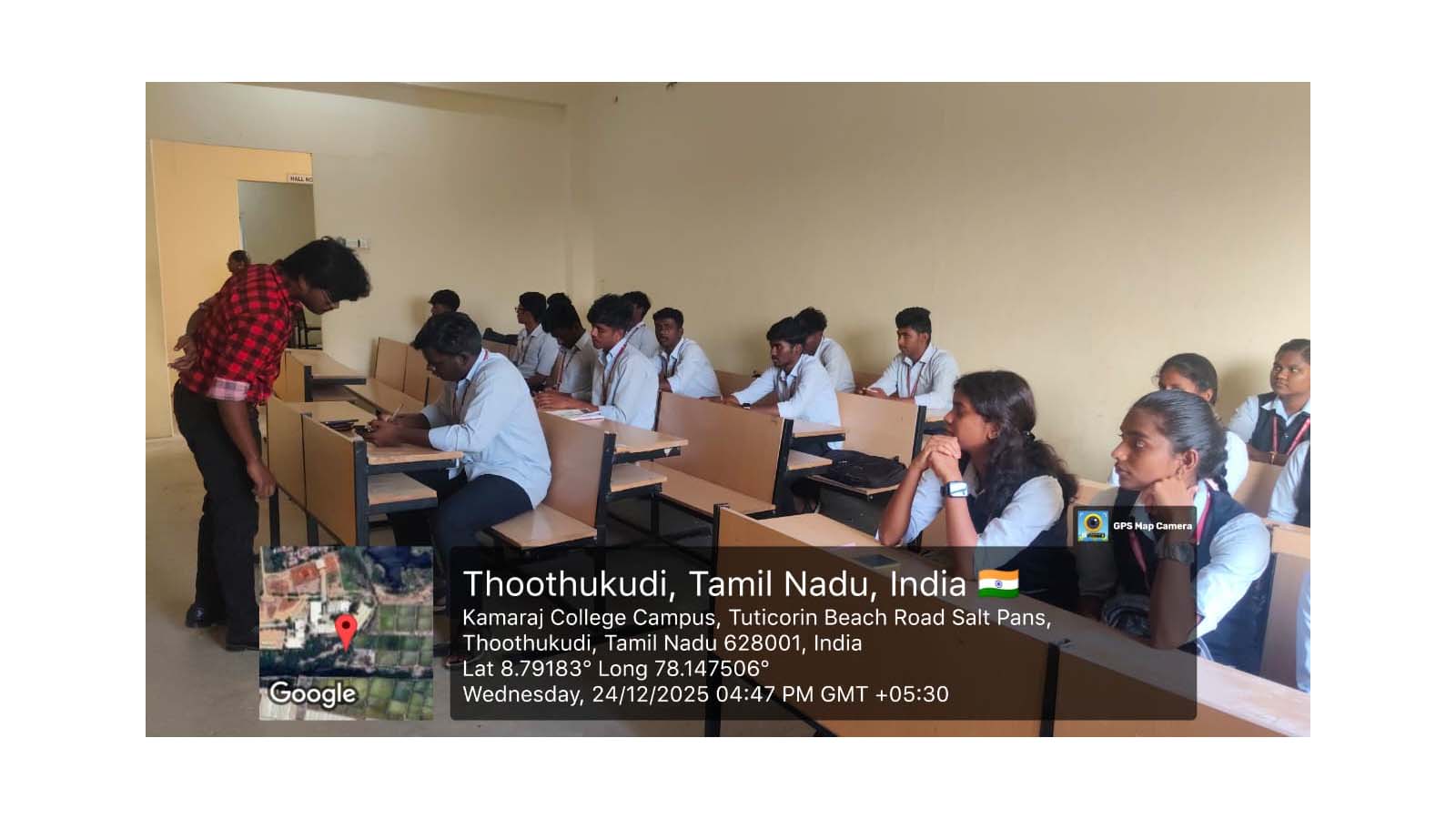
The Department of Criminology, Kamaraj College (Autonomous), Thoothukudi, successfully organized a Mentor–Mentee Meeting on 24 December 2025, from 4.30 p.m. to 5.30 p.m. at the Golden Jubilee Block. The meeting was conducted as part of the department’s continuous academic support system to ensure holistic student development through structured guidance and mentoring.
The Mentor Mentee Meeting Department of Criminology aimed to strengthen the relationship between faculty mentors and students, address academic and behavioural concerns, and provide clarity on upcoming academic responsibilities. Such meetings play a crucial role in nurturing discipline, accountability, and academic excellence among students.
Objectives of the Mentor Mentee Meeting Department of Criminology
The primary objectives of the meeting were clearly defined and student-centric. The department emphasized both academic progress and responsible conduct within the campus environment.
Key objectives included:
- Reviewing academic performance and semester examination outcomes
- Planning institutional activities, including the upcoming PTA meeting
- Reinforcing discipline and ethical conduct among students
- Guiding students on academic documentation and attendance protocols
The Mentor Mentee Meeting Department of Criminology served as an effective platform to address student concerns in a supportive and structured environment.
Discussion on PTA Meeting Planning
One of the major agenda points of the meeting was the planning of the Parent–Teacher Association (PTA) Meeting, scheduled for 05 January 2026. Faculty mentors explained the importance of parental involvement in academic progress and institutional communication.
Students were informed about:
- The purpose and structure of the PTA meeting
- Expected student participation and preparation
- The role of parents in academic monitoring and support
This discussion reinforced transparency and encouraged students to view the PTA meeting as a supportive academic initiative rather than a corrective measure.
Review of Semester Examination Results
A detailed discussion was held on semester examination results, focusing on both strengths and areas requiring improvement. Mentors provided constructive feedback and encouraged students to reflect on their academic performance.
Key academic guidance included:
- Identifying learning gaps and subject-specific challenges
- Improving study habits and time management
- Seeking academic support and faculty guidance proactively
The Mentor Mentee Meeting Department of Criminology helped students understand that academic performance is a continuous process requiring consistency and self-discipline.
Emphasis on Discipline and Campus Conduct
Maintaining discipline within the campus was strongly emphasized during the session. Faculty mentors reminded students that discipline is a core value of professional education, especially in a field like criminology that deals with law, justice, and social responsibility.
Students were strictly instructed to:
- Adhere to college rules and regulations
- Maintain respectful behaviour towards faculty and peers
- Follow ethical conduct within and outside the campus
This discussion aligned with the institution’s broader mission of producing socially responsible and ethically grounded graduates.
Guidance on Academic Documentation and Attendance
Another important aspect of the Mentor Mentee Meeting Department of Criminology was guidance on academic documentation. Faculty highlighted the importance of maintaining proper records to ensure smooth academic administration.
Students were instructed on:
- Proper maintenance of test notes and internal assessment records
- Timely submission of leave letters with valid reasons
- Regular attendance and accountability
This guidance aimed to instil organisational skills and academic responsibility among students.
Role of Mentorship in Student Development
Mentorship plays a vital role in higher education by offering personalised academic and emotional support. The meeting reaffirmed the department’s commitment to mentoring as a continuous and meaningful process.
Through initiatives like the Mentor Mentee Meeting Department of Criminology, students gain:
- Academic clarity and structured guidance
- Emotional support and confidence building
- Awareness of institutional expectations
Such interactions help bridge the gap between academic challenges and student potential.
Institutional Support and Best Practices
The meeting reflected the institution’s emphasis on structured mentoring, in line with best practices recommended by higher education bodies such as the
University Grants Commission and student mentoring frameworks promoted by the
Ministry of Education, Government of India.
For more departmental updates, students are encouraged to visit the official website of
Kamaraj College (Autonomous), Thoothukudi.
Conclusion
The Mentor Mentee Meeting Department of Criminology held on 24 December 2025 was highly effective and impactful, offering students clear academic direction, behavioural guidance, and institutional support. The meeting successfully fulfilled its objectives by strengthening mentor–mentee relationships and reinforcing the values of discipline, responsibility, and academic commitment.
Such initiatives continue to play a pivotal role in shaping confident, informed, and socially responsible students, aligning perfectly with the academic vision of the Department of Criminology and Kamaraj College.