
5 Inspiring Low Cost NSS Programme Activities


Low Cost NSS Programme
As part of its ongoing commitment to community development and social responsibility, Thoothukudi Kamaraj College (Autonomous) successfully conducted a Low-Cost, No-Expense Programme on 05 January 2026 from 10.30 a.m. to 01.00 p.m.. The programme was organised under the Thoothukudi Rural Development Programme on behalf of the National Service Scheme (NSS) Units 54 and 56.
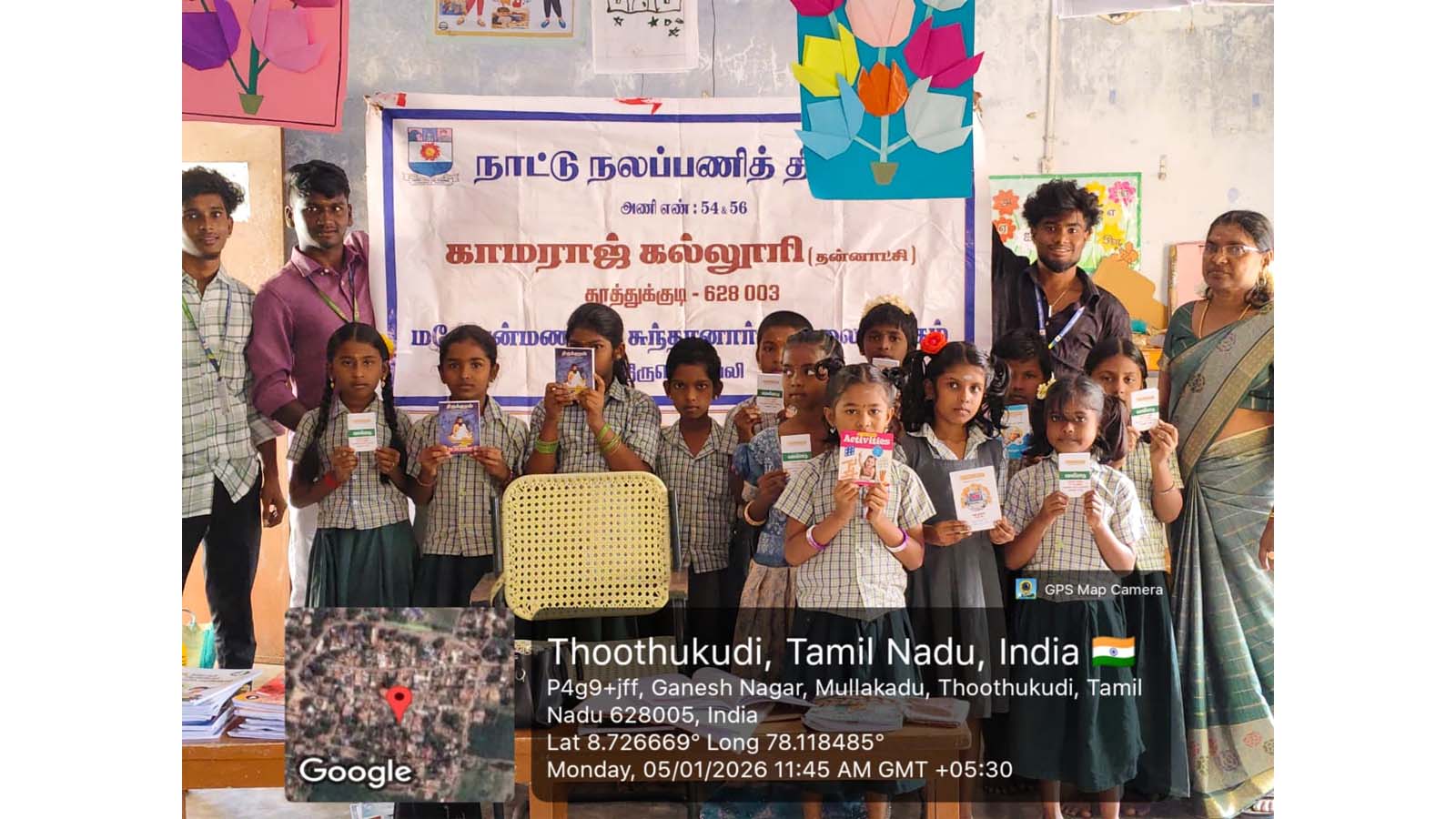
This Low Cost NSS Programme was carried out at Mullakadu Panchayat with the noble objective of supporting school students by distributing essential educational materials. The initiative highlighted the spirit of service, simplicity, and social awareness among NSS volunteers and reflected the institution’s strong emphasis on inclusive growth.
Objectives of the Low Cost NSS Programme
The programme was designed with clear and meaningful objectives aligned with the core values of the National Service Scheme. The key objectives included:
- Providing educational support to underprivileged school students
- Promoting the concept of low-cost and no-expense social initiatives
- Encouraging student volunteers to actively participate in rural development
- Strengthening community–institution relationships
- Instilling social responsibility and empathy among youth
Through these objectives, the programme aimed to make a tangible impact with minimal financial resources but maximum social value.
Role of NSS Units 54 and 56
The NSS Units 54 and 56 of Thoothukudi Kamaraj College played a vital role in planning and executing the programme. Under the guidance of dedicated NSS Programme Officers, student volunteers coordinated the logistics, identified beneficiary students, and ensured smooth distribution of materials.
The involvement of NSS units demonstrated how structured volunteerism can effectively address grassroots-level needs through thoughtful planning and teamwork.
Programme Activities and Implementation
As part of the Low Cost NSS Programme, educational materials were distributed to school students at Mullakadu Panchayat. The materials were carefully selected to support students’ academic needs and encourage continued learning.
Key activities undertaken during the programme included:
- Identification of beneficiary school students
- Distribution of notebooks and basic learning materials
- Interaction with students to motivate them towards education
- Awareness on the importance of regular schooling
Despite being a no-expense initiative, the programme was efficiently managed and executed with discipline and dedication.
Participation of Volunteers and Officers
The programme witnessed active participation from NSS Programme Officers and enthusiastic student volunteers. Their coordinated efforts ensured that the programme objectives were achieved effectively.
Volunteers displayed a strong sense of responsibility and compassion while engaging with school children. The experience helped students understand real-world challenges faced by rural communities and the importance of contributing positively to society.
Impact on School Students
The distribution of educational materials created a meaningful impact on the beneficiary students. Many students expressed happiness and gratitude for the support received, which would assist them in their academic journey.
The programme reinforced the idea that even small contributions, when made collectively, can bring about significant positive change. It also motivated school students to pursue their studies with renewed confidence.
Educational and Social Significance
The Low Cost NSS Programme stood as a strong example of sustainable social service. By focusing on education, the programme addressed one of the most critical aspects of rural development.
Educational empowerment plays a crucial role in shaping future generations, and such initiatives help bridge gaps in access to learning resources. The programme also aligned with national goals of inclusive education and youth participation in nation-building.
Institutional Support and Community Engagement
The successful execution of the programme was made possible by the continuous support of the college management and the cooperation extended by the local community at Mullakadu Panchayat.
For more details about NSS activities and institutional initiatives, visit:
https://www.kamarajcollege.ac.in
To learn more about the objectives and impact of the National Service Scheme, refer to:
National Service Scheme – Government of India
Learning Outcomes for NSS Volunteers
The programme offered valuable learning experiences for student volunteers, including:
- Understanding rural educational challenges
- Developing leadership and teamwork skills
- Learning the value of service without financial expectations
- Strengthening communication and organizational abilities
Such experiential learning opportunities contribute significantly to students’ personal and social development.
Conclusion
The Low Cost NSS Programme conducted on 05 January 2026 by NSS Units 54 and 56 of Thoothukudi Kamaraj College was a commendable initiative that successfully combined simplicity with social impact. Through the distribution of educational materials, the programme supported school students while fostering a culture of service among college volunteers.
The initiative reaffirmed that meaningful community service does not always require large budgets, but rather strong intent, coordination, and compassion. The college continues to uphold its mission of social responsibility through such impactful outreach programmes.