
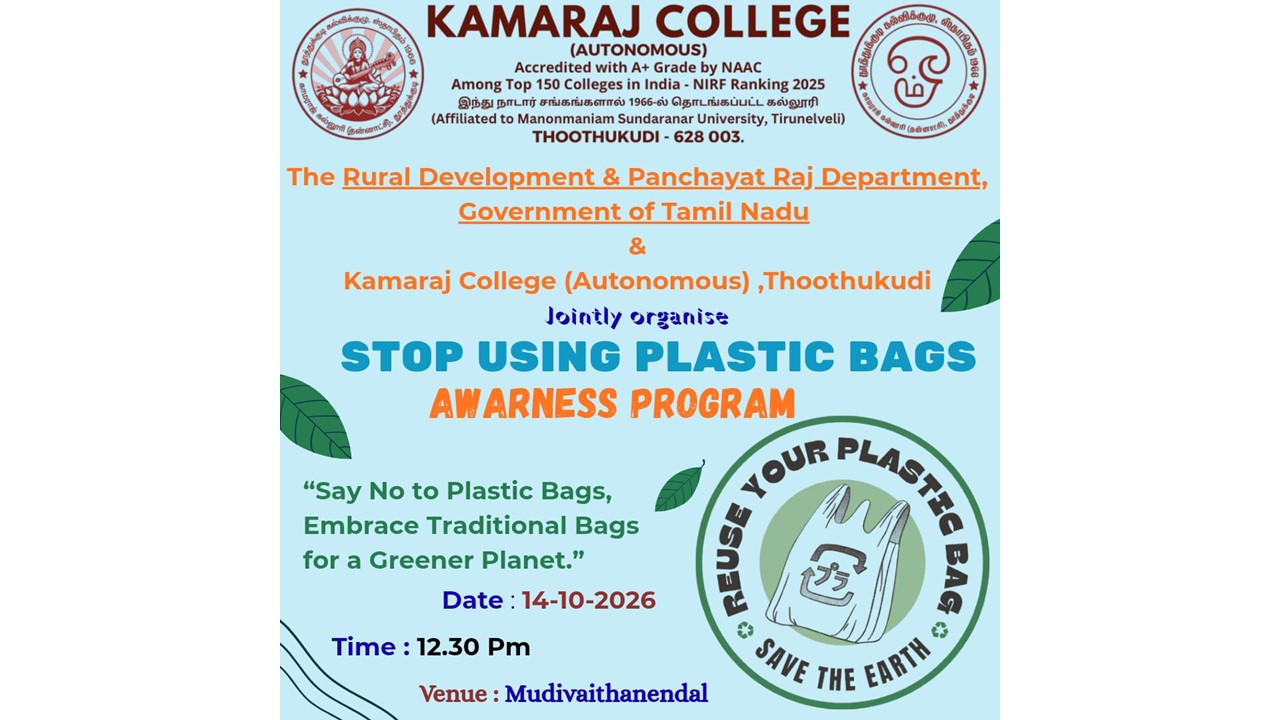
Plastic-Free Village Awareness Campaign: 5 Powerful Initiatives Benefiting Villagers
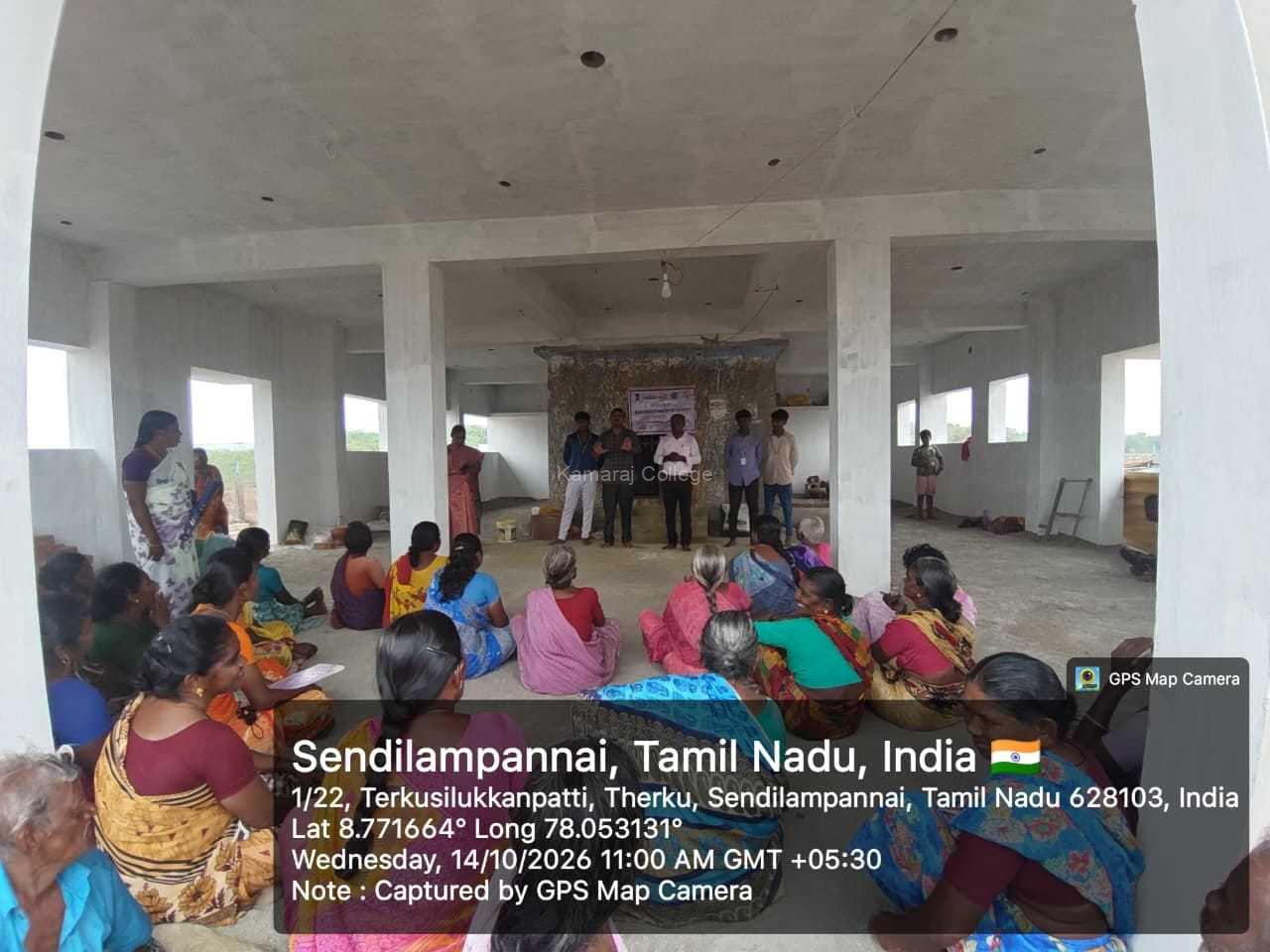
Plastic-Free Village Awareness Campaign was successfully organised by NSS Units 54, 56 and 146 of Kamaraj College (Autonomous), Thoothukudi, in association with the Tamil Nadu Rural Development Department, on 14 October 2026 (Wednesday), at South Silukkanpatti (தெற்கு சிலுக்கன்பட்டி) and Mudivaithanendal (முடிவைத்தானேந்தல்) Village Panchayats in Thoothukudi district.
The awareness initiative was conducted under the theme “ஞெகிழியைத் தவிர்ப்போம், நீடூழி வாழ்வோம்” (Avoid Plastic, Live Sustainably), with the objective of educating rural communities about the harmful effects of plastic pollution and the importance of adopting environmentally responsible practices.
The programme was organised under the guidance of the Secretary and Principal of Kamaraj College (Autonomous), with the active involvement of the NSS Programme Officers of Units 54, 56 and 146.
Ms. Catherine Mercy, District Panchayat Secretary and District Training Officer, Thoothukudi, participated as the chief guest and addressed the public on the harmful effects of plastic usage and the importance of protecting the environment for future generations.
The awareness activities also focused on public health, school education, roadside tree plantation, organic fertilisers and sustainable living practices.
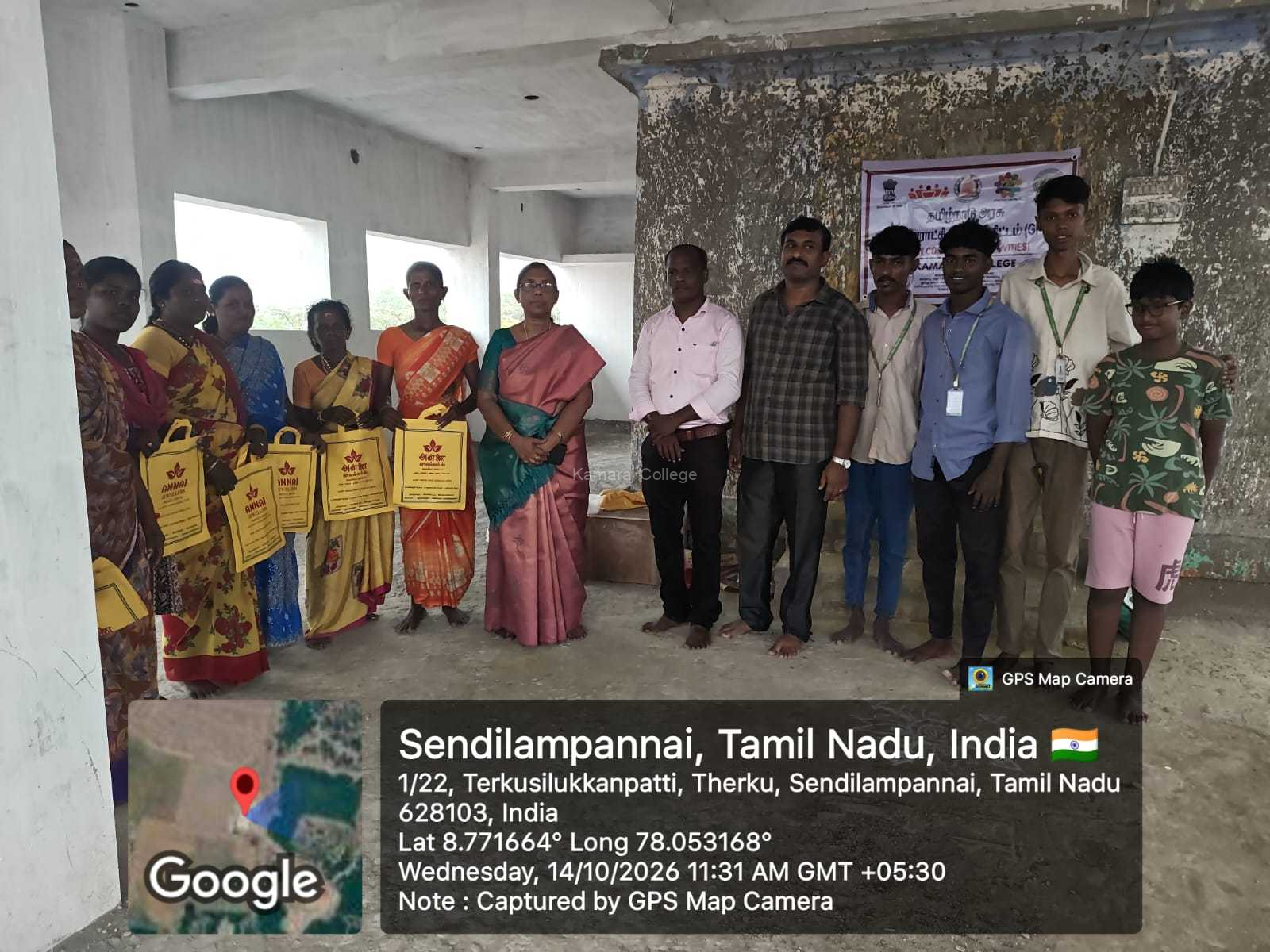
A total of 120 members of the public participated in the programme and benefited from the awareness activities. As a practical step towards reducing plastic usage, cloth bags were distributed to all participating members of the public.
Plastic-Free Village Awareness Campaign 2026
The Plastic-Free Village Awareness Campaign was conducted to promote environmental awareness and sustainable living among rural communities.
Plastic pollution has become a major environmental concern because discarded plastic materials can accumulate in public spaces, agricultural lands, waterways and natural ecosystems.
The campaign encouraged villagers to recognise the importance of reducing unnecessary plastic consumption and adopting reusable alternatives.
The awareness initiative highlighted the responsibility of individuals and communities in maintaining clean and healthy surroundings.
Through public awareness activities and direct community engagement, the programme encouraged villagers to contribute towards a cleaner and more sustainable environment.
Joint Initiative with Tamil Nadu Rural Development Department
The programme was conducted in association with the Tamil Nadu Rural Development Department, reflecting the importance of collaboration between educational institutions and rural development authorities.
The initiative aimed to strengthen environmental awareness and encourage responsible community participation in sustainable development activities.
The involvement of NSS volunteers and rural development representatives helped connect environmental education with practical community needs.
The programme demonstrated the value of institutional collaboration in promoting public welfare, environmental protection and responsible citizenship.
Awareness Activities at South Silukkanpatti and Mudivaithanendal
The awareness programme was organised in South Silukkanpatti and Mudivaithanendal Village Panchayats of Thoothukudi district.
The activities focused on encouraging residents to reduce plastic usage and adopt environmentally friendly practices.
The programme provided opportunities for direct interaction with members of the rural community and highlighted the importance of collective participation in environmental protection.
The awareness activities also addressed public health, education, tree plantation and organic farming practices.
By covering multiple aspects of community welfare, the programme reinforced the relationship between environmental protection and sustainable rural development.
Theme: Avoid Plastic, Live Sustainably
The campaign was conducted under the Tamil awareness theme “ஞெகிழியைத் தவிர்ப்போம், நீடூழி வாழ்வோம்”.
The message encouraged villagers to avoid unnecessary plastic consumption and adopt sustainable alternatives.
The theme highlighted the importance of protecting natural resources and maintaining a healthy environment for present and future generations.
The campaign reinforced the principle that simple changes in everyday habits can contribute to reducing plastic waste.
It also encouraged participants to recognise environmental protection as a shared responsibility.
Special Address by Ms. Catherine Mercy
Ms. Catherine Mercy, District Panchayat Secretary and District Training Officer, Thoothukudi, participated as the chief guest.
She addressed the members of the public and explained the harmful effects of plastic usage.
Her address highlighted the environmental problems associated with plastic pollution and the importance of protecting natural resources.
She also emphasised the responsibility of the present generation in safeguarding the well-being of future generations.
The special address encouraged villagers to understand the long-term importance of environmental conservation and sustainable living.
Awareness Address by NSS Programme Officer Mr. Anand
Mr. Anand, NSS Programme Officer, addressed the gathering and highlighted the importance of avoiding plastic bags.
He encouraged the public to adopt reusable cloth bags as an environmentally responsible alternative.
His awareness message focused on the practical steps individuals can take to reduce plastic waste in their daily lives.
The address reinforced the importance of replacing disposable plastic materials with reusable products.
The session encouraged villagers to develop sustainable habits and contribute towards a cleaner village environment.
Importance of Avoiding Single-Use Plastics
A major focus of the Plastic-Free Village Awareness Campaign was the need to reduce the use of disposable plastic materials.
Single-use plastic products often become waste after a short period of use and may remain in the environment for extended periods.
Improper disposal can contribute to littering, blocked drainage systems and pollution of land and water resources.
The programme encouraged villagers to recognise the environmental consequences of excessive plastic consumption.
Participants were motivated to adopt reusable alternatives and practise responsible waste management.
Promoting Reusable Cloth Bags
The campaign placed special emphasis on the use of cloth bags as an alternative to plastic carry bags.
Reusable cloth bags can help reduce dependence on disposable plastic products when used repeatedly and maintained properly.
The awareness programme encouraged residents to carry cloth bags while shopping and performing everyday activities.
The initiative demonstrated how practical alternatives can support environmental conservation.
As part of the programme, cloth bags were distributed to all participating members of the public, reinforcing the campaign’s message through a useful and practical activity.
Cloth Bag Distribution to Participants
The distribution of cloth bags was an important component of the awareness programme.
The organisers distributed reusable cloth bags to the participating public to encourage the reduction of plastic bag usage.
The activity helped translate environmental awareness into a practical action that participants could adopt in their daily routines.
The distribution reinforced the campaign’s central message of avoiding plastic and choosing sustainable alternatives.
It also demonstrated the importance of supporting awareness initiatives with practical measures.
Public Health and Community Hygiene Awareness
In addition to plastic pollution, the programme highlighted the importance of public health and community hygiene.
Clean surroundings and responsible waste disposal are essential for maintaining healthy living conditions.
The awareness activities encouraged villagers to recognise the relationship between environmental cleanliness and public health.
The programme reinforced the importance of maintaining hygienic surroundings and avoiding practices that contribute to environmental pollution.
Such awareness is particularly valuable in promoting healthier and more sustainable rural communities.
Awareness on School Dropouts and Educational Continuity
The programme also addressed the issue of school dropouts and the importance of continuing education.
Education plays a vital role in individual development, social progress and economic opportunities.
The awareness activities highlighted the importance of encouraging children to remain in school and continue their studies.
The initiative reinforced the value of education in building informed and responsible communities.
By including educational awareness alongside environmental activities, the programme adopted a broader approach to rural welfare and development.
Special Classes for School Students
As part of the programme, special classes were conducted for school students in the participating village communities.
The classes formed an important educational component of the rural awareness initiative.
The activity reflected the commitment of the NSS units to supporting student learning and community engagement.
Prizes were distributed to school students as part of the programme.
The initiative helped strengthen the connection between educational institutions and rural communities through student-oriented activities.
Roadside Tree Plantation Awareness
The campaign highlighted the importance of planting trees along roadsides and protecting the natural environment.
Trees contribute to environmental well-being by providing shade, supporting biodiversity and improving the quality of local surroundings.
Roadside tree plantation can contribute to greener village landscapes when suitable species are selected and properly maintained.
The awareness activities encouraged villagers to recognise the importance of tree planting and environmental conservation.
The programme reinforced the need for community participation in maintaining green and healthy surroundings.
Awareness on Organic Fertilisers
The programme also created awareness about the importance of using organic fertilisers.
Organic fertilisers can contribute to soil health by supplying nutrients and improving soil organic matter when appropriately used.
The awareness initiative encouraged villagers to understand the relevance of environmentally responsible agricultural practices.
The programme highlighted the relationship between soil conservation, sustainable agriculture and rural environmental protection.
This component strengthened the campaign’s broader focus on sustainable village development.
Environmental Protection for Future Generations
An important message of the Plastic-Free Village Awareness Campaign was the need to protect the environment for future generations.
The chief guest emphasised the importance of recognising the long-term consequences of plastic pollution.
Environmental protection requires responsible consumption, effective waste management and collective community participation.
The campaign encouraged villagers to understand that sustainable practices adopted today can contribute to healthier living conditions in the future.
The initiative reinforced the importance of preserving natural resources and reducing preventable environmental damage.
Community Participation and Environmental Responsibility
The programme encouraged members of the public to participate actively in environmental awareness activities.
Community participation is essential for achieving meaningful improvements in village cleanliness and sustainable living practices.
The awareness initiative highlighted the importance of collective responsibility in reducing plastic pollution.
Residents were encouraged to adopt practical measures such as using cloth bags, maintaining clean surroundings and supporting environmental conservation.
The participation of 120 members of the public reflected the programme’s community-oriented approach.
Recognition of Community Contributions
The organisers recognised members of the public who made noteworthy contributions during the programme.
Special prizes were presented to individuals who demonstrated outstanding participation and contribution.
The recognition encouraged community involvement and appreciated the efforts of participants.
Such gestures help strengthen public engagement and motivate individuals to take an active role in community welfare activities.
Distribution of Sweets to Participants
As part of the programme, sweets were distributed to the participants.
The distribution contributed to the community-oriented atmosphere of the awareness initiative.
The gesture reflected the organisers’ appreciation of the participation and cooperation extended by the villagers.
The activity formed part of the successful conclusion of the community programme.
Role of NSS Units 54, 56 and 146
The National Service Scheme Units 54, 56 and 146 of Kamaraj College (Autonomous) played an important role in organising the awareness programme.
The NSS Programme Officers of the three units coordinated the activities in association with the Tamil Nadu Rural Development Department.
The initiative reflected the NSS commitment to community service, environmental protection and social responsibility.
Through the programme, the NSS units contributed to creating awareness about plastic pollution, public health, education and sustainable rural practices.
The campaign demonstrated the importance of student-oriented community service initiatives in promoting positive social change.
Guidance of the College Administration
The programme was organised under the guidance of the Secretary and Principal of Kamaraj College (Autonomous), Thoothukudi.
Their guidance supported the organisation of the rural awareness initiative and the institution’s commitment to community welfare.
The programme reflected the college’s emphasis on environmental responsibility, social awareness and meaningful community engagement.
The involvement of the NSS units strengthened the connection between academic institutions and rural development activities.
Vote of Thanks by NSS Programme Officer Mr. Ayyanuraj
The programme concluded with a vote of thanks delivered by Mr. Ayyanuraj, NSS Programme Officer.
The vote of thanks acknowledged the contributions of the chief guest, organisers, NSS Programme Officers, participants and members of the village communities.
The concluding proceedings marked the successful completion of the awareness activities.
Participation of 120 Members of the Public
A significant highlight of the programme was the participation of 120 members of the public from the participating village communities.
The participants benefited from awareness activities covering plastic pollution, cloth bag usage, public health, educational continuity, roadside tree plantation and organic fertilisers.
The programme also included special classes for school students, prize distribution and the distribution of sweets.
The distribution of reusable cloth bags reinforced the campaign’s objective of promoting practical alternatives to plastic.
The active participation of the public contributed to the successful conduct of the programme.
Objectives of the Plastic-Free Village Awareness Campaign
The major objectives of the Plastic-Free Village Awareness Campaign were:
- Create awareness about the harmful effects of plastic pollution
- Encourage villagers to reduce unnecessary plastic consumption
- Promote reusable cloth bags as alternatives to plastic carry bags
- Highlight the importance of environmental protection for future generations
- Promote public health and community hygiene awareness
- Encourage educational continuity and create awareness about school dropouts
- Support school students through special educational activities
- Create awareness about roadside tree plantation
- Highlight the importance of organic fertilisers and sustainable agriculture
- Encourage active community participation in environmental conservation
- Strengthen collaboration between NSS units and rural development authorities
- Promote responsible citizenship and sustainable rural development
Programme Highlights
- Programme: Plastic-Free Village Awareness Campaign
- Tamil Theme: ஞெகிழியைத் தவிர்ப்போம், நீடூழி வாழ்வோம்
- Date: 14 October 2026
- Day: Wednesday
- Organised by: NSS Units 54, 56 and 146
- Institution: Kamaraj College (Autonomous), Thoothukudi
- Associated Department: Tamil Nadu Rural Development Department
- Locations: South Silukkanpatti and Mudivaithanendal Village Panchayats, Thoothukudi District
- Chief Guest: Ms. Catherine Mercy, District Panchayat Secretary and District Training Officer, Thoothukudi
- Awareness Address: Mr. Anand, NSS Programme Officer
- Vote of Thanks: Mr. Ayyanuraj, NSS Programme Officer
- Programme Coordination: NSS Programme Officers of Units 54, 56 and 146
- Institutional Guidance: Secretary and Principal, Kamaraj College (Autonomous)
- Public Participation: 120 Members of the Public
- Major Environmental Focus: Plastic Pollution Prevention and Reusable Cloth Bags
- Additional Awareness: Public Health, School Dropouts, Roadside Tree Plantation and Organic Fertilisers
- Educational Activity: Special Classes for School Students
- Recognition: Prizes for School Students and Outstanding Community Contributors
- Community Engagement: Distribution of Sweets
- Practical Initiative: Cloth Bags Distributed to All Participating Members of the Public
Learning Outcomes and Community Benefits
The Plastic-Free Village Awareness Campaign provided opportunities for participants to:
- Understand the environmental consequences of plastic pollution
- Recognise the importance of reducing single-use plastic consumption
- Develop awareness of reusable cloth bags and sustainable alternatives
- Understand the relationship between environmental cleanliness and public health
- Recognise the importance of protecting natural resources for future generations
- Gain awareness of the importance of continuing school education
- Understand the benefits of roadside tree plantation
- Develop awareness of organic fertilisers and environmentally responsible agriculture
- Appreciate the importance of community participation in environmental conservation
- Recognise the role of NSS volunteers in rural welfare activities
- Develop a greater sense of personal and collective environmental responsibility
- Adopt practical habits that support cleaner and healthier village communities
Contribution to Sustainable Development Goals
The Plastic-Free Village Awareness Campaign supported the broader principles of the United Nations Sustainable Development Goals (SDGs) through its emphasis on environmental conservation, public health, education and sustainable rural development.
The programme was particularly relevant to the following goals:
- SDG 3 – Good Health and Well-Being: Promoting public health awareness and cleaner living environments.
- SDG 4 – Quality Education: Encouraging educational continuity and supporting school students through special classes.
- SDG 11 – Sustainable Cities and Communities: Promoting cleaner, greener and environmentally responsible village communities.
- SDG 12 – Responsible Consumption and Production: Encouraging reduced plastic consumption and the use of reusable cloth bags.
- SDG 13 – Climate Action: Promoting environmental responsibility and awareness of sustainable practices.
- SDG 15 – Life on Land: Supporting awareness of tree plantation, soil health and environmental conservation.
- SDG 17 – Partnerships for the Goals: Strengthening collaboration between educational institutions and rural development authorities.
The initiative demonstrated how community awareness programmes can contribute to multiple dimensions of sustainable development.
Promoting Sustainable Rural Development
Sustainable rural development requires attention to environmental protection, public health, education and responsible resource management.
The Plastic-Free Village Awareness Campaign addressed these interconnected priorities through its community-oriented activities.
The programme encouraged villagers to recognise that environmental protection involves everyday choices and collective action.
By promoting reusable cloth bags, educational awareness, tree plantation and organic fertilisers, the initiative reinforced the importance of adopting sustainable practices.
The collaboration between the Tamil Nadu Rural Development Department and the NSS units demonstrated the value of coordinated efforts in supporting rural communities.
Conclusion
The Plastic-Free Village Awareness Campaign, organised by NSS Units 54, 56 and 146 of Kamaraj College (Autonomous), Thoothukudi, in association with the Tamil Nadu Rural Development Department, on 14 October 2026, was a meaningful environmental awareness and rural welfare initiative.
Conducted at South Silukkanpatti and Mudivaithanendal Village Panchayats, the programme promoted the message “ஞெகிழியைத் தவிர்ப்போம், நீடூழி வாழ்வோம்”, encouraging the public to avoid plastic and adopt sustainable alternatives.
Ms. Catherine Mercy, District Panchayat Secretary and District Training Officer, Thoothukudi, participated as the chief guest and highlighted the harmful effects of plastic pollution and the importance of protecting future generations.
Mr. Anand, NSS Programme Officer, emphasised the importance of replacing plastic bags with reusable cloth bags.
The programme also created awareness about public health, educational continuity, roadside tree plantation and organic fertilisers. Special classes were conducted for school students, and prizes were distributed to students and outstanding community contributors.
Reusable cloth bags were distributed to all participating members of the public, reinforcing the practical objective of reducing plastic usage.
The programme benefited 120 members of the public and concluded with a vote of thanks delivered by Mr. Ayyanuraj, NSS Programme Officer.
Overall, the Plastic-Free Village Awareness Campaign successfully promoted environmental responsibility, sustainable living, community participation and rural welfare, encouraging villagers to adopt practices that contribute towards a cleaner, healthier and greener future.
Internal Link
- Kamaraj College (Autonomous), Thoothukudi – Explore more NSS activities, environmental awareness programmes and rural community development initiatives.
External Links
- Rural Development and Panchayat Raj Department, Tamil Nadu – Information on rural development programmes and village panchayat initiatives.
- National Service Scheme (NSS) – Information on student volunteerism, community service and social responsibility.
- Tamil Nadu Pollution Control Board – Information on pollution prevention, plastic waste management and environmental protection.
- Swachh Bharat Mission – Information on cleanliness, sanitation and community hygiene initiatives.
- United Nations Sustainable Development Goals – Information on environmental sustainability, responsible consumption and community development.