
Vinayagar Chathurthi Celebration: 5 Inspiring Cultural Highlights
Vinayagar Chathurthi Celebration was held with devotion and enthusiasm at the Sri Raja Mugha Ganapathi Temple on the Kamaraj College (Autonomous), Thoothukudi campus, on 11 September 2026. The traditional celebration was organised by the Student Council with the support of the College Administration, faculty members and office staff. Students actively participated in the arrangements and contributed creativity, colour and enthusiasm to the programme.
The celebration featured traditional kolams, lighting of the kuthuvilakku, millet-based prasadam, student competitions and eco-friendly Vinayagar idols. The programme provided students with an opportunity to appreciate India’s rich cultural heritage while also promoting healthy traditional food practices and environmental responsibility.
Vinayagar Chathurthi Celebration at Kamaraj College
The Vinayagar Chathurthi Celebration brought together students, faculty members and staff in an atmosphere of devotion, cultural appreciation and harmony.
Traditional festivals form an important part of India’s cultural heritage. Celebrating them within the campus provides students with an opportunity to understand the values, customs and traditions associated with them.
The programme also demonstrated how traditional celebrations can incorporate contemporary values such as environmental responsibility and healthy living.
Objectives of the Celebration
The programme was organised with the objective of promoting cultural awareness and encouraging students to understand and appreciate traditional values.
The major objectives were:
- Promote awareness of India’s cultural heritage
- Encourage appreciation of traditional customs
- Provide students with opportunities for creative participation
- Promote unity and harmony on the campus
- Encourage healthy traditional food practices
- Create awareness about eco-friendly festival celebrations
- Promote environmental responsibility
- Encourage student participation in cultural activities
- Strengthen cooperation among students, faculty and staff
- Preserve and celebrate cultural values and traditions
Student Council Initiative
The programme was organised by the Student Council with the support of the College Administration, faculty members and office staff.
Students actively participated in the arrangements for the celebration.
Their involvement helped make the programme colourful and engaging while also providing them with experience in teamwork, coordination and collective responsibility.
The collaborative effort reflected the spirit of participation that characterised the celebration.
Colourful Traditional Kolams
One of the attractive features of the Vinayagar Chathurthi Celebration was the display of beautiful and colourful kolams created by the girl students.
The students demonstrated their creativity and artistic skills through their designs.
The kolams enhanced the traditional atmosphere of the celebration and attracted appreciation from the participants.
Such activities provide students with opportunities to express their creativity while remaining connected with traditional art forms.
Traditional Inauguration
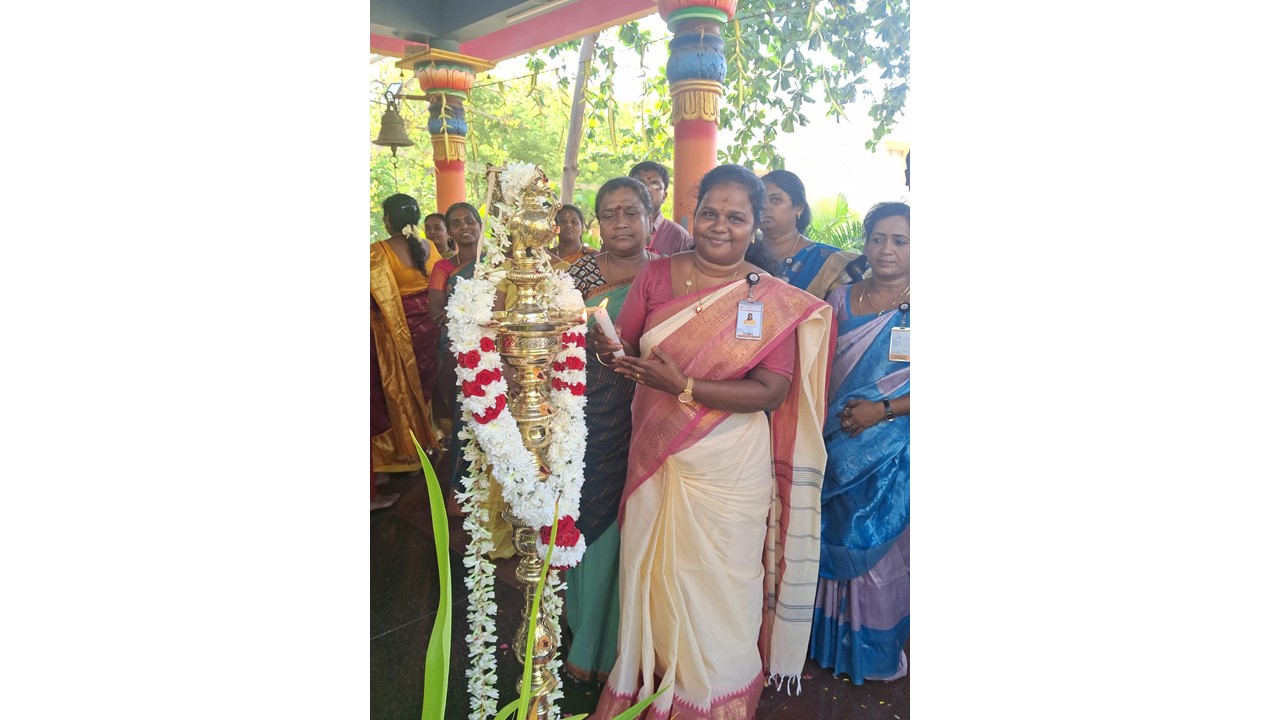
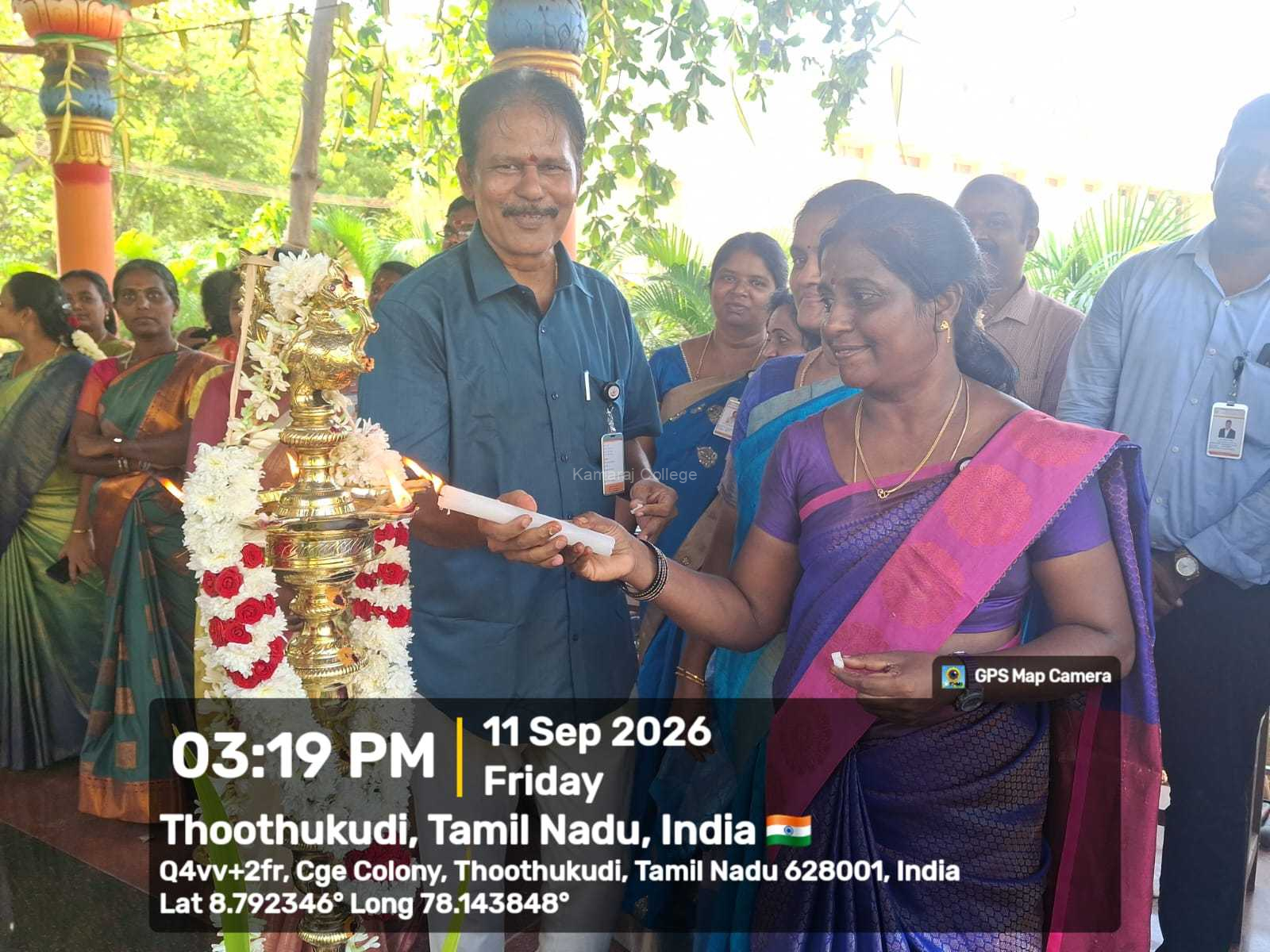
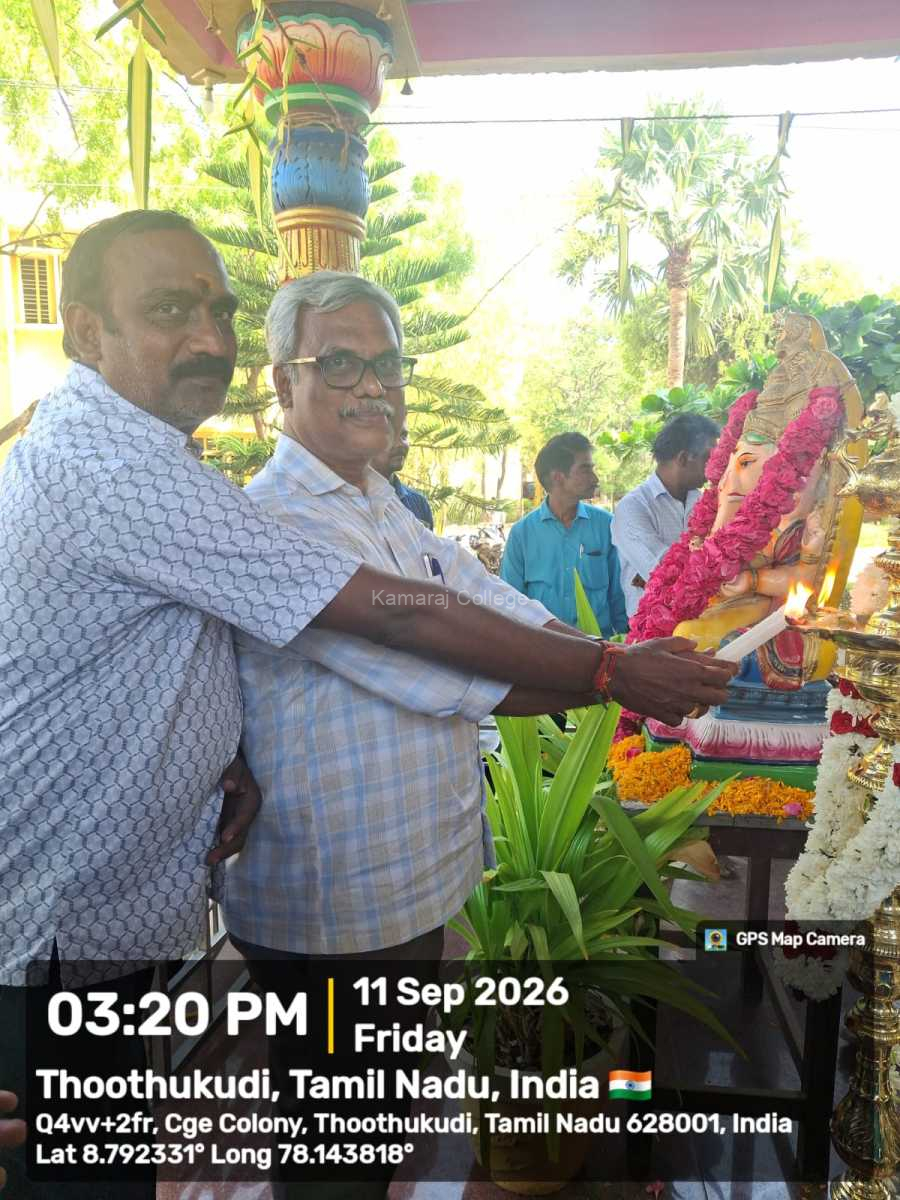
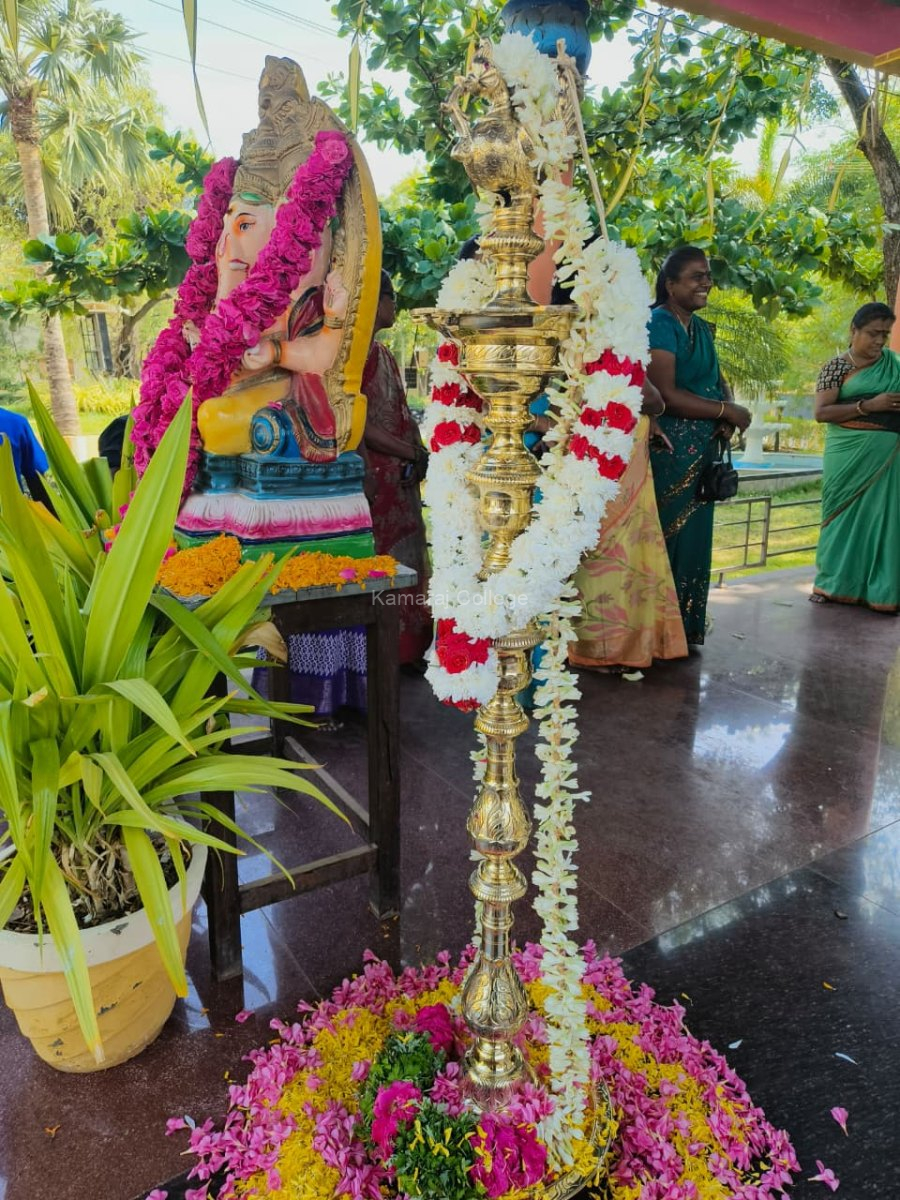
The celebration was inaugurated by Dr. K. Bhanumathi, Principal, by lighting the traditional kuthuvilakku.
The lighting of the traditional lamp marked the formal beginning of the programme.
The Vice-Principals, Heads of Departments, faculty members and office staff participated in the celebration.
Their presence added significance to the occasion and strengthened the sense of togetherness within the College community.
Celebration at Sri Raja Mugha Ganapathi Temple
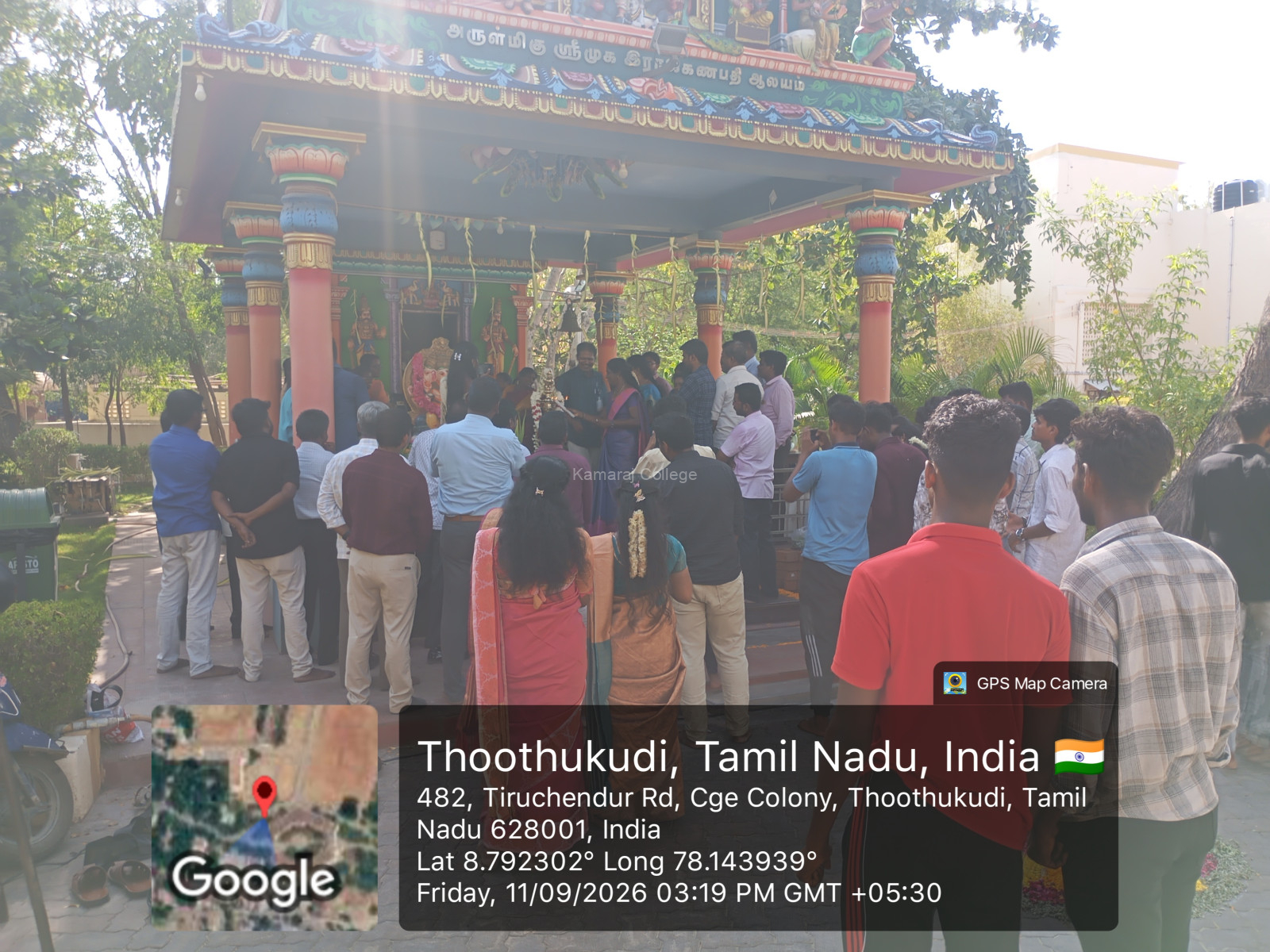
The programme was held at the Sri Raja Mugha Ganapathi Temple situated on the Kamaraj College campus.
The campus temple provided an appropriate traditional setting for the celebration.
Students, faculty members and staff joined together on the occasion, making the programme a shared cultural experience.
The celebration created an atmosphere of happiness, unity and collective participation.
Traditional Millet-Based Prasadam
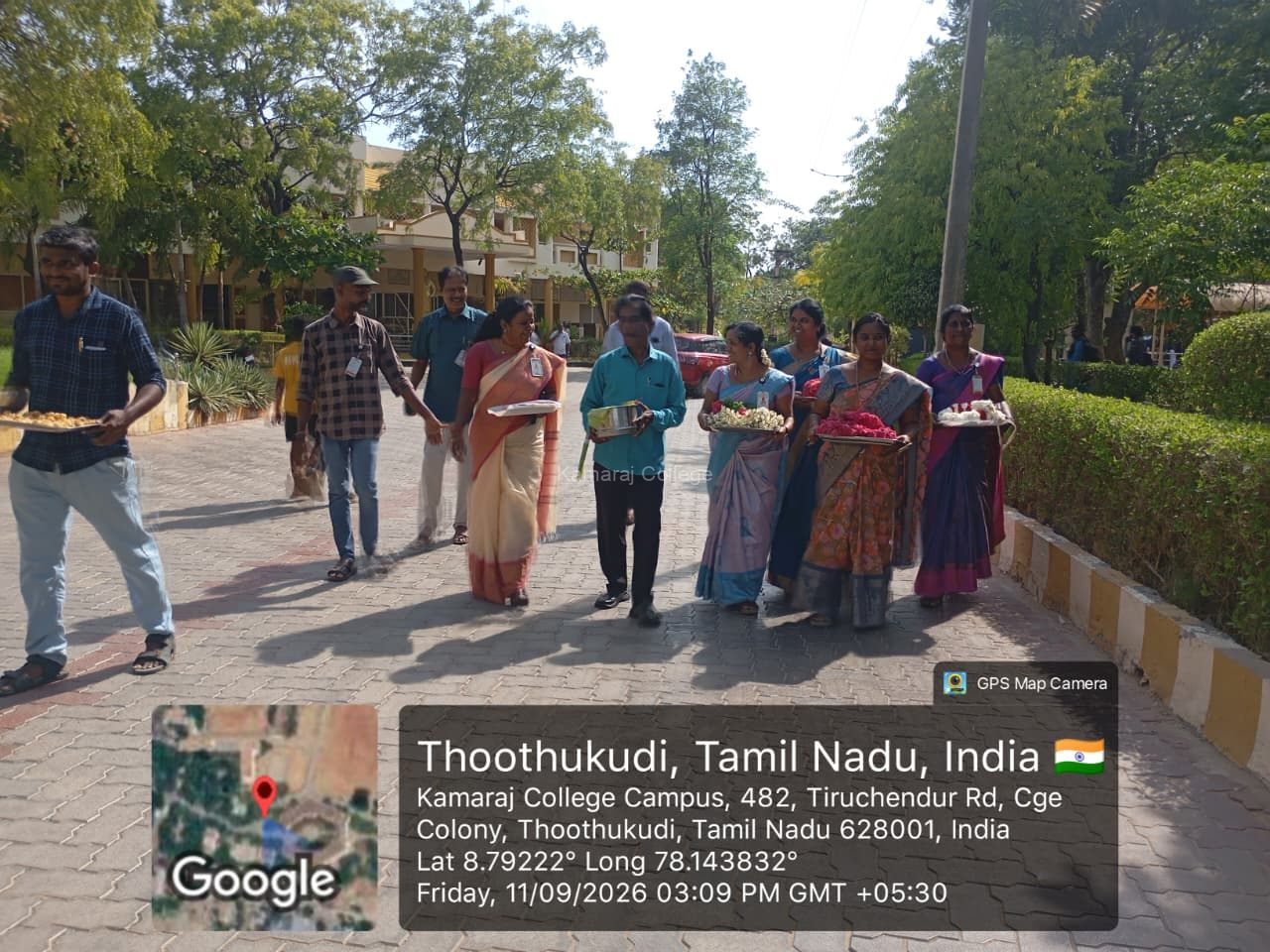
A distinctive feature of the celebration was the preparation and distribution of traditional millet-based food items as prasadam.
The initiative connected the festival celebration with awareness about healthy and traditional food practices.
Millets have long formed part of traditional food culture, and their inclusion in the celebration highlighted the value of preserving nutritious food habits.
The prasadam therefore added both cultural and health-oriented significance to the programme.
Promoting Traditional Food Practices
Traditional celebrations provide an opportunity to introduce students to food practices that form part of cultural heritage.
The millet-based food items served during the programme demonstrated how traditional food can be incorporated meaningfully into contemporary celebrations.
The initiative encouraged students to appreciate the connection between culture, food traditions and healthy living.
Thus, the celebration extended beyond cultural observance to include awareness of traditional dietary practices.
Vinayagar Chathurthi Competitions
Various competitions were conducted for students as part of the celebration.
The competitions encouraged active student participation and provided opportunities to express creativity and enthusiasm.
Such activities help transform cultural celebrations into participatory learning experiences.
Students were able to engage with the festival through creative activities rather than remaining only as spectators.
Prize Distribution
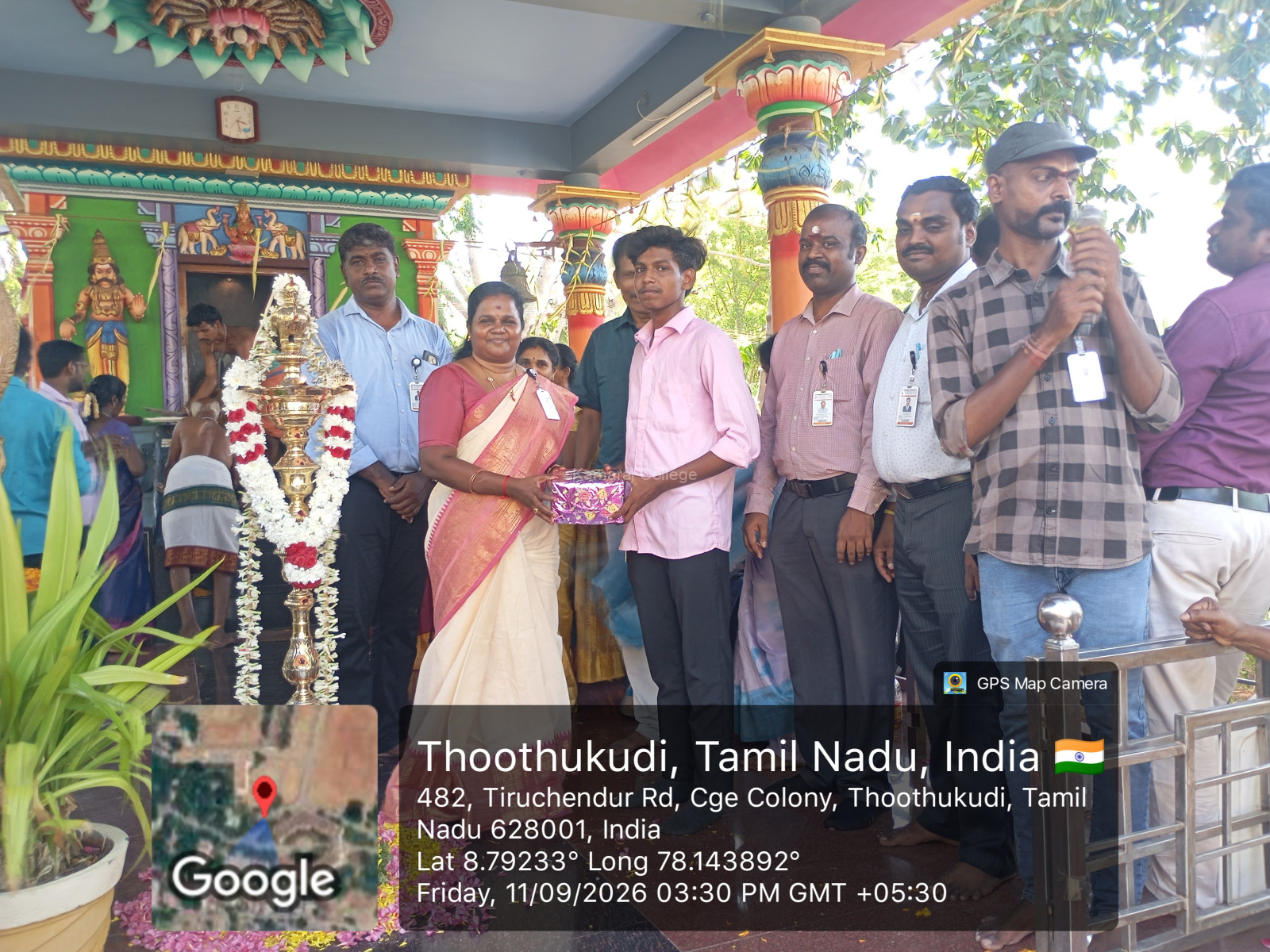
Dr. K. Bhanumathi, Principal, distributed prizes to the students who participated in the various Vinayagar Chathurthi competitions.
The recognition encouraged students and appreciated their involvement in the celebration.
Prize distribution also highlighted the importance of student participation in cultural and co-curricular activities.
The occasion provided encouragement for students to continue participating actively in future College programmes.
Eco-Friendly Vinayagar Idols
Environmental protection formed an important component of the Vinayagar Chathurthi Celebration.
Eco-friendly Vinayagar idols made without harmful chemicals were displayed during the programme.
The initiative demonstrated that traditional festivals can be celebrated while remaining conscious of environmental impact.
The display communicated a clear message about adopting sustainable and environmentally responsible practices.
Celebrating Tradition Responsibly
The eco-friendly initiative helped students understand that cultural traditions and environmental responsibility can complement each other.
Traditional celebrations can continue meaningfully while practices that may harm the environment are avoided.
The display of chemical-free Vinayagar idols encouraged participants to consider environmentally safer alternatives.
This added an important awareness dimension to the cultural programme.
Environmental Awareness
Educational institutions have an important role in encouraging environmentally responsible behaviour.
By incorporating eco-friendly practices into the celebration, the programme demonstrated environmental awareness through action.
Students could directly observe how sustainable choices can be included in traditional festivals.
The initiative therefore connected cultural heritage with environmental consciousness.
Understanding Cultural Heritage
The programme provided students with an opportunity to understand and appreciate India’s rich cultural heritage.
Traditional celebrations carry customs, artistic practices, food traditions and values that have been passed across generations.
Participating in such programmes can help students develop a deeper appreciation of these cultural elements.
The celebration therefore contributed to cultural learning beyond the classroom.
Promoting Unity and Harmony
Cultural celebrations provide opportunities for members of an institution to come together.
The participation of students, faculty members, Heads of Departments, Vice-Principals and office staff created a shared sense of celebration.
Such collective participation can strengthen unity, brotherhood, harmony and happiness within the campus community.
The programme therefore served both cultural and social purposes.
Student Creativity and Participation
Students played an active role throughout the celebration.
Their involvement in arrangements, kolam decoration and competitions contributed significantly to the programme.
Such participation helps students develop creativity, cooperation and a sense of responsibility.
It also provides opportunities for students to demonstrate talents that may not always be visible through regular academic activities.
Learning Beyond the Classroom
The Vinayagar Chathurthi Celebration provided an experiential learning opportunity beyond conventional classroom education.
Students learned about traditional art, food practices, environmental responsibility and cultural values through direct participation.
Such experiences contribute to holistic education by combining academic development with cultural and social awareness.
The programme therefore enriched students’ overall campus experience.
Preserving Cultural Values
Cultural traditions remain meaningful when younger generations understand and participate in them.
The celebration introduced students to traditional practices in an engaging campus environment.
Activities such as kolam decoration, traditional lamp lighting and millet-based food preparation reflected different aspects of cultural heritage.
The programme encouraged students to value and preserve these traditions.
Five Major Highlights of the Celebration
The Vinayagar Chathurthi Celebration featured five notable aspects:
- Traditional inauguration by lighting the kuthuvilakku
- Beautiful and colourful kolams created by girl students
- Traditional millet-based food distributed as prasadam
- Competitions and prize distribution for students
- Display of eco-friendly Vinayagar idols made without harmful chemicals
These elements combined cultural tradition, student creativity, healthy food practices and environmental responsibility.
Programme Highlights
- Programme: Sri Vinayagar Chathurthi Celebration
- Date: 11 September 2026
- Venue: Sri Raja Mugha Ganapathi Temple, Kamaraj College Campus
- Institution: Kamaraj College (Autonomous), Thoothukudi
- Organised by: Student Council
- Supported by: College Administration, Faculty Members and Office Staff
- Inaugurated by: Dr. K. Bhanumathi, Principal
- Traditional Inauguration: Lighting of the Kuthuvilakku
- Creative Activity: Colourful Traditional Kolams
- Traditional Food Initiative: Millet-Based Prasadam
- Student Engagement: Vinayagar Chathurthi Competitions
- Recognition: Prizes Distributed by the Principal
- Environmental Initiative: Eco-Friendly Vinayagar Idols Without Harmful Chemicals
- Primary Focus: Cultural Heritage, Unity, Healthy Traditions and Environmental Responsibility
Programme Outcomes
The Vinayagar Chathurthi Celebration resulted in several meaningful cultural and educational outcomes.
Through the programme, students:
- Developed greater appreciation of India’s cultural heritage
- Participated actively in traditional cultural activities
- Demonstrated creativity through colourful kolams
- Learned about traditional millet-based food practices
- Understood the importance of healthy traditional foods
- Participated enthusiastically in cultural competitions
- Received encouragement and recognition for their participation
- Gained awareness about eco-friendly festival practices
- Understood the importance of avoiding harmful chemicals in festival materials
- Developed greater environmental responsibility
- Experienced unity and collective participation within the College community
- Strengthened their appreciation of cultural values and traditions
Overall, the programme promoted cultural awareness, creativity, unity, healthy traditional practices and environmental consciousness.
Conclusion
The Vinayagar Chathurthi Celebration held at the Sri Raja Mugha Ganapathi Temple, Kamaraj College (Autonomous), Thoothukudi, on 11 September 2026 was celebrated with devotion, enthusiasm and active participation.
Organised by the Student Council with the support of the College Administration, faculty members and office staff, the programme brought together the College community in a meaningful celebration of tradition and cultural heritage.
Dr. K. Bhanumathi, Principal, inaugurated the celebration by lighting the traditional kuthuvilakku. The Vice-Principals, Heads of Departments, faculty members and office staff participated in the programme.
The colourful kolams created by the girl students enhanced the traditional atmosphere, while the preparation and distribution of millet-based prasadam highlighted healthy and traditional food practices. Prizes were also distributed by the Principal to students who participated in the various competitions.
The display of eco-friendly Vinayagar idols made without harmful chemicals conveyed an important message about celebrating traditional festivals in an environmentally responsible manner.
Overall, the celebration successfully combined cultural heritage, student creativity, traditional food practices, environmental awareness, unity and harmony, providing students with a memorable opportunity to understand and appreciate the richness of Indian cultural traditions.
Internal Link
- Explore Kamaraj College – Learn more about cultural, student development and campus activities at Kamaraj College.
External Links
- Ministry of Culture, Government of India – Explore initiatives related to India’s cultural heritage, traditions and cultural awareness.
- MyGov India – Explore citizen initiatives and awareness programmes related to culture, environment and national development.