
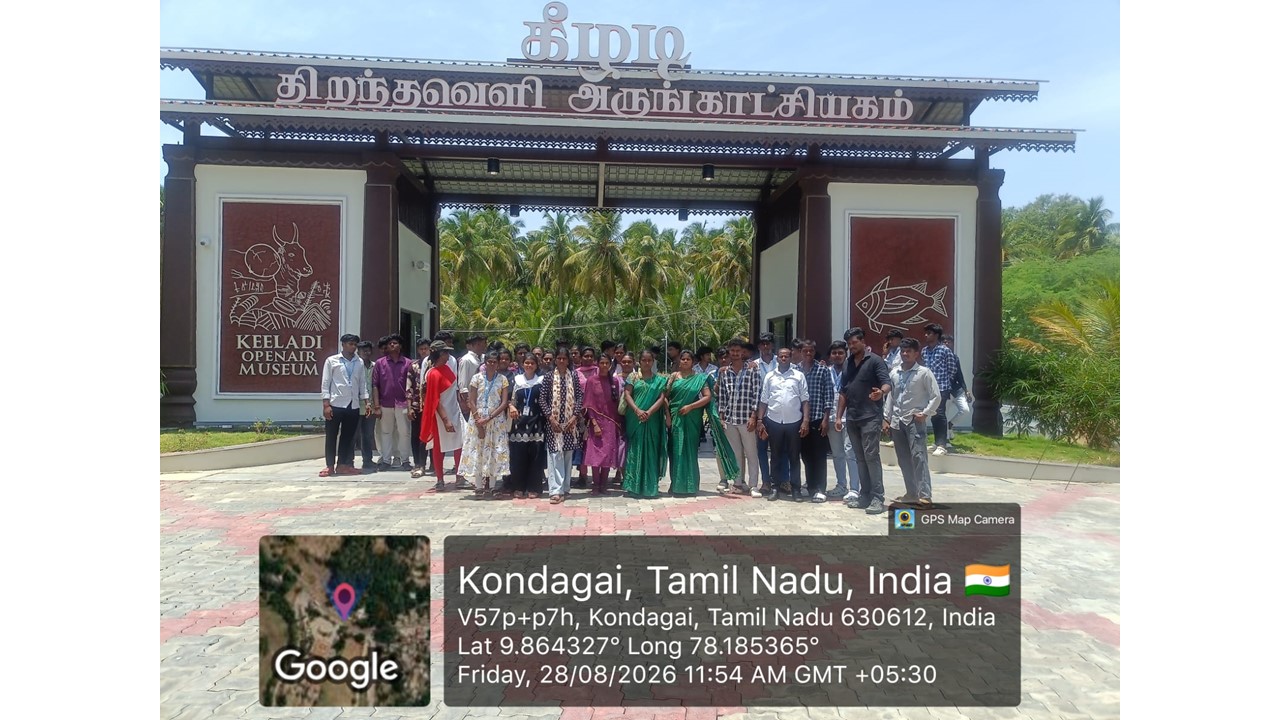
Keezhadi Field Visit 2026: 50 Students Explore Ancient Tamil Heritage
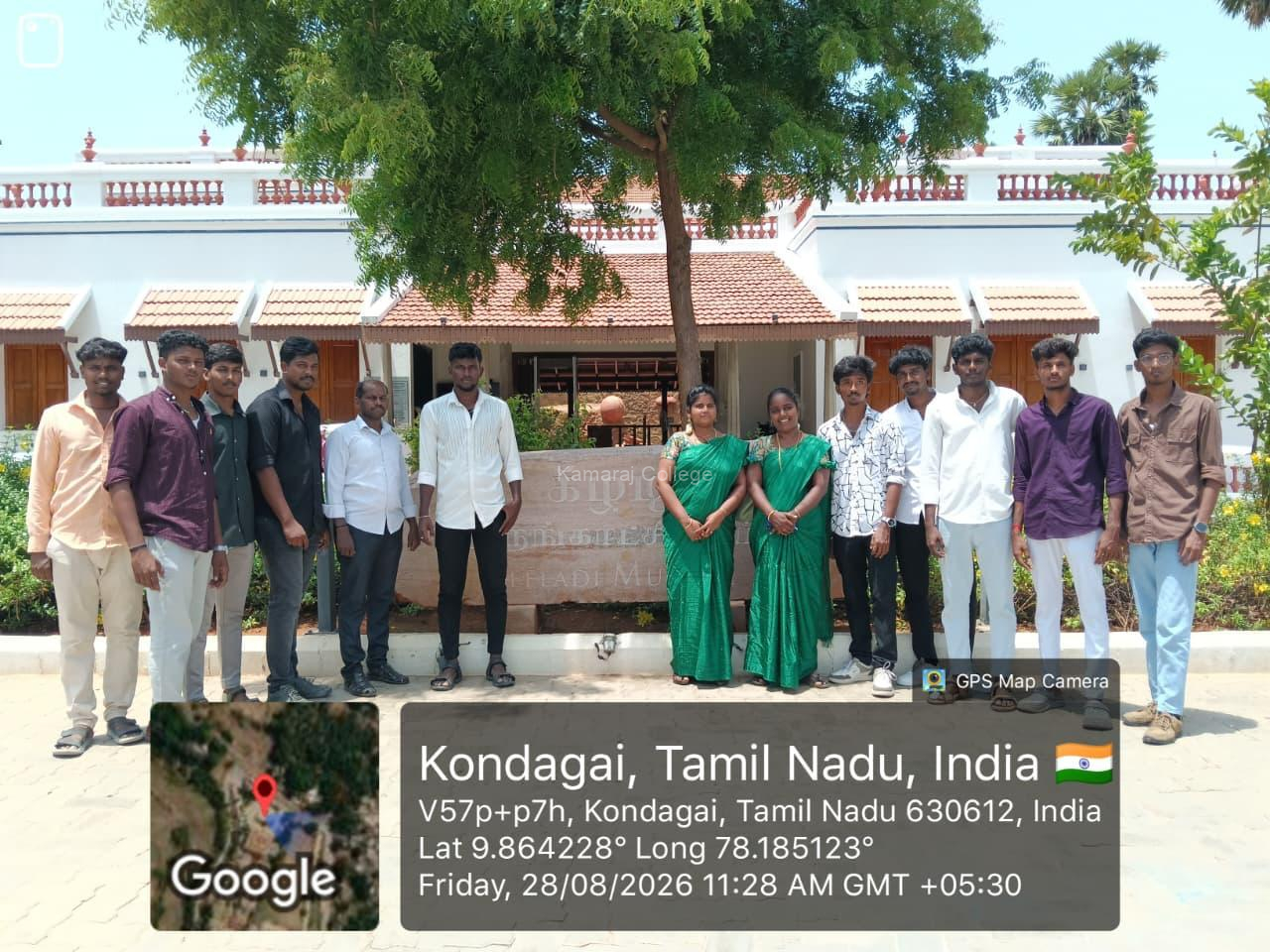
Report on Keezhadi Field Visit
Keezhadi Field Visit was organized by the Department of Economics and Public Administration, Kamaraj College (Autonomous), Thoothukudi, on 28 August 2026 as an educational field study programme for the students.
A total of 50 students participated in the visit and explored the Keezhadi Archaeological Museum and the Keezhadi archaeological excavation sites in the Madurai–Sivagangai region.
The educational visit provided students with an opportunity to observe archaeological evidence connected with the life, culture and heritage of ancient Tamil society. Moreover, the students were able to connect their classroom learning with archaeological evidence and gain a deeper understanding of Tamil history.
Objectives of the Field Visit
The Keezhadi Field Visit aimed to provide students with practical exposure to archaeology, history and the cultural heritage of Tamil society.
The major objectives were:
- Provide experiential learning beyond the classroom
- Introduce students to archaeological evidence from Keezhadi
- Develop awareness of ancient Tamil life and culture
- Help students understand the importance of archaeological excavations
- Connect classroom learning with field-based observation
- Encourage historical inquiry and research-oriented thinking
- Develop an appreciation of Tamil heritage
- Encourage students to preserve and value historical resources
Thus, the visit combined academic learning with direct observation and provided students with a meaningful educational experience.
Visit to Keezhadi Archaeological Museum
As part of the Keezhadi Field Visit, the students visited the Keezhadi Archaeological Museum.
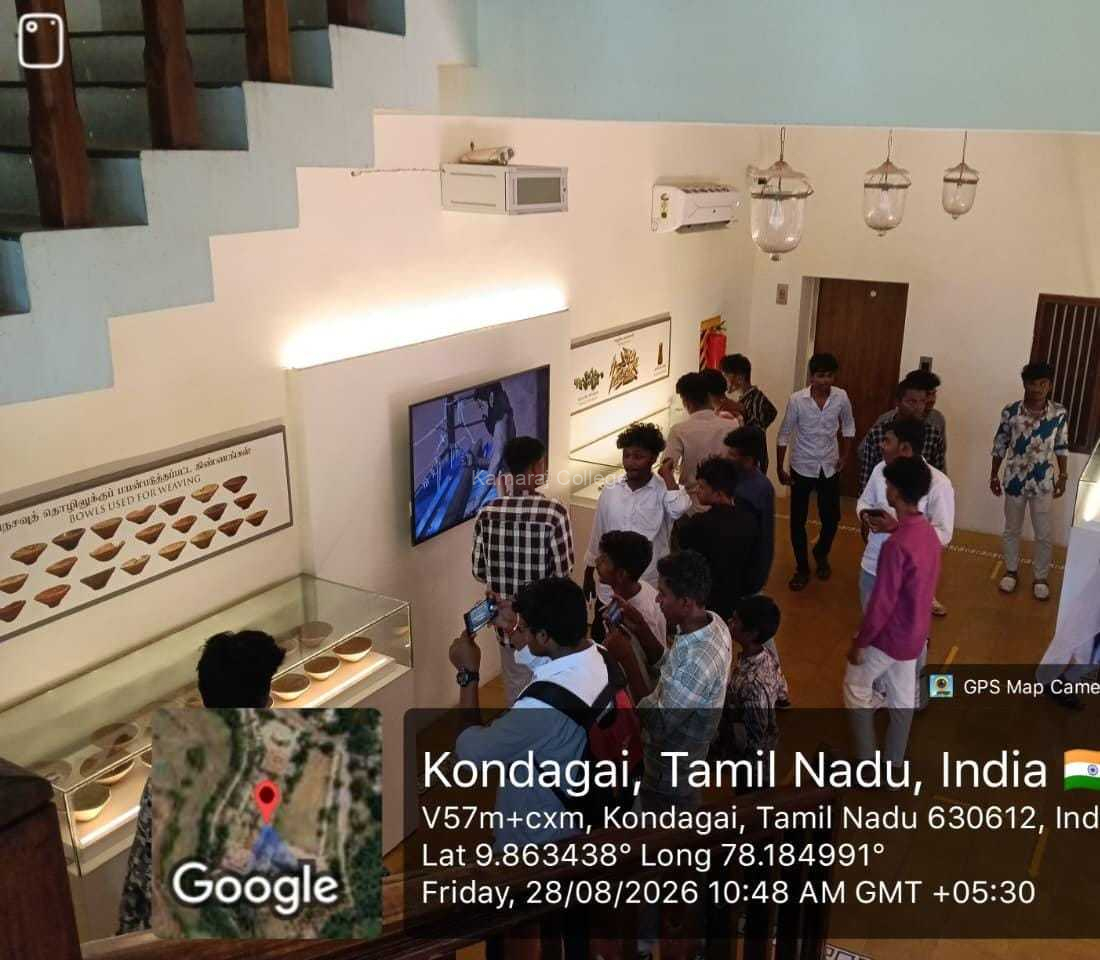
The museum displays several artefacts recovered during archaeological excavations at Keezhadi. Students observed these exhibits with great interest and learned about their historical significance.
The exhibits provided valuable evidence about the social, cultural and material life of the people who lived in the region during ancient times.
Furthermore, seeing the artefacts directly enabled students to understand history in a more engaging way than classroom learning alone.
Exploring Ancient Artefacts
The museum displayed a wide range of archaeological objects recovered from the Keezhadi excavations.
Students observed:
- Ancient objects used in everyday life
- Coins
- Weapons
- Ornaments
- Pottery and earthenware
- Other archaeological remains
The students examined these objects enthusiastically and learned how archaeological discoveries help researchers reconstruct the lives of people from earlier periods.
The artefacts also provided students with insights into the lifestyle, occupations, craftsmanship, economic activities and cultural practices of ancient Tamil society.
Understanding the Lifestyle of Ancient Tamils
One of the important learning experiences during the visit was understanding the lifestyle of the ancient Tamil people.
The archaeological objects helped students visualize how people lived, worked and interacted in the past.
Items used in daily life offered clues about the social and economic conditions of the period. Similarly, pottery, ornaments and other artefacts reflected the craftsmanship and cultural practices of the people.
As a result, students gained a clearer understanding of how archaeological evidence contributes to the study of history.
Learning through the 3D Museum
The students also visited the 3D museum section, which provided an engaging visual learning experience.
Visuals and presentations related to the Keezhadi excavations, ancient Tamil lifestyle, culture and heritage were presented to the students.
The three-dimensional experience helped them understand archaeological concepts in an interesting and accessible manner.
Moreover, the visual presentations enabled students to imagine the social environment and everyday life of people who lived in the region centuries ago.
Discovering Ancient Tamil Heritage
The 3D presentations provided students with a broader perspective on the historical importance of Keezhadi.
Students learned about the life, culture and traditions of ancient Tamil society through visual representations.
This experience helped them understand that archaeological discoveries are not merely ancient objects. Instead, each discovery provides evidence that can help explain the lifestyle, skills and social practices of earlier communities.
Consequently, the students developed greater interest in Tamil history and cultural heritage.
Visit to the Archaeological Excavation Sites
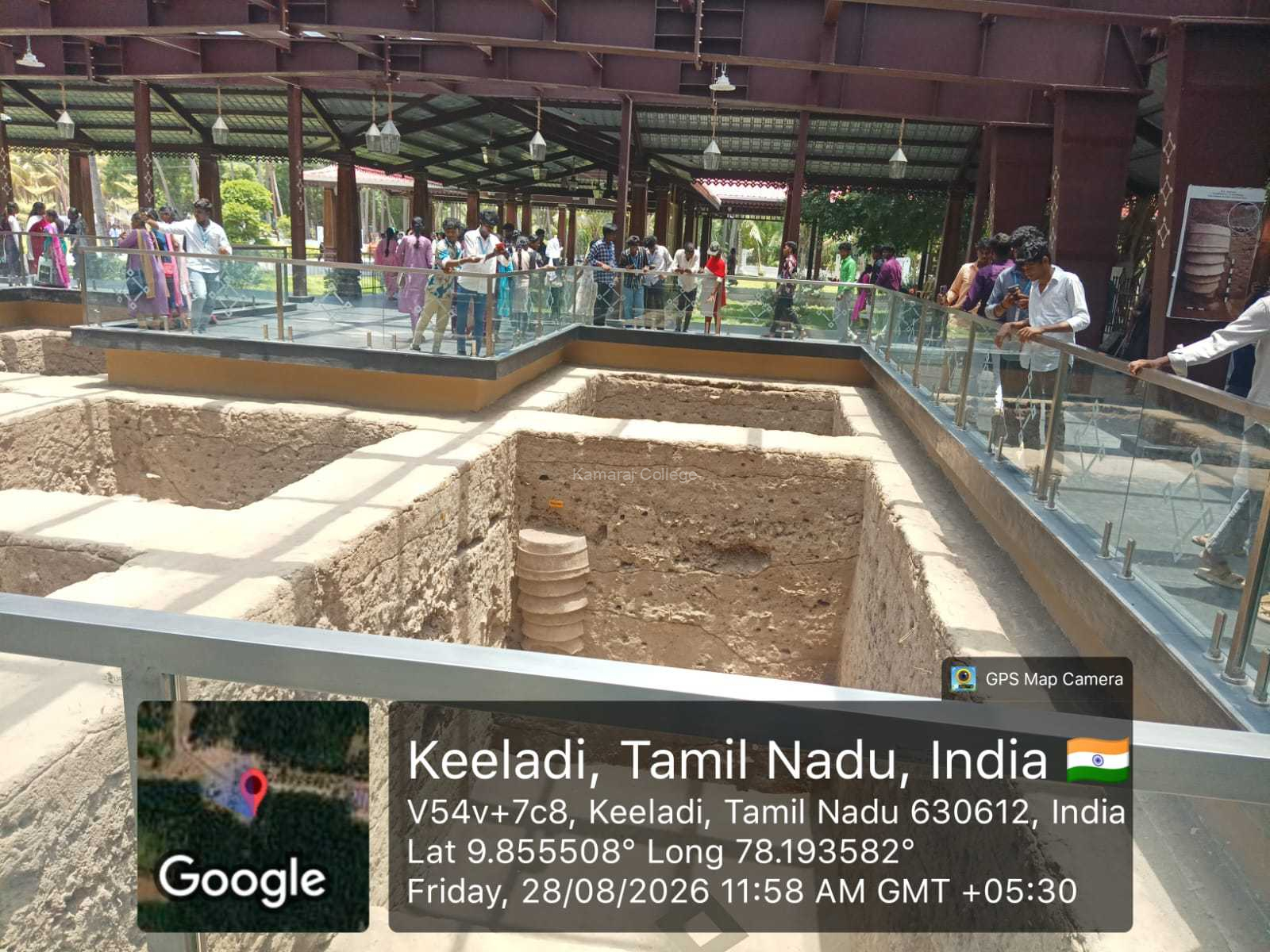
Following the museum visit, the students proceeded to the Keezhadi archaeological excavation sites.
They had an opportunity to directly observe the areas where archaeological investigations had been carried out.
Students also viewed the excavation trenches and pits and learned how archaeological sites are systematically explored.
The field exposure enabled them to understand the practical nature of archaeological research and the careful methods involved in recovering historical evidence.
Understanding Archaeological Excavation
The visit to the excavation sites helped students understand how evidence of ancient settlements can remain beneath the ground for centuries.
They observed the excavation areas and learned how researchers study different layers of soil and recover objects that provide information about earlier periods.
This direct exposure added practical value to their understanding of history.
Furthermore, students recognised the importance of careful observation, documentation, preservation and research in archaeological studies.
Academic Guidance at the Excavation Site
During the visit to the archaeological site, a Tamil Professor provided detailed explanations to the students.
The professor explained various aspects of the lifestyle of ancient Tamils, the objects they used, their occupations, cultural practices and everyday activities.
This academic guidance helped students interpret what they observed at the excavation site.
Instead of merely viewing the archaeological remains, students were able to understand their historical context and significance.
Moreover, they interacted with the faculty and clarified their doubts regarding the archaeological discoveries and ancient Tamil society.
Connecting Classroom Learning with Field Experience
A major benefit of the Keezhadi Field Visit was the opportunity to connect classroom learning with direct field experience.
Students usually learn historical concepts through textbooks, lectures and other academic resources. However, visiting an archaeological museum and excavation site allowed them to see physical evidence related to the topics they study.
This direct observation made historical concepts more understandable and memorable.
Furthermore, students were able to ask questions, discuss their observations with faculty members and clarify their doubts.
Thus, the field visit transformed theoretical knowledge into an experiential learning opportunity.
Relevance to Economics and Public Administration Students
The field visit was particularly meaningful for students of Economics and Public Administration because understanding society requires knowledge of its historical development.
The artefacts and archaeological evidence provided insights into the economic and social life of ancient communities.
For Economics students, such evidence can help create awareness of earlier forms of production, occupation, trade, craftsmanship and material life.
Similarly, Public Administration students can gain a broader understanding of the development of settlements, social organization and the importance of preserving public heritage.
Therefore, the visit offered an interdisciplinary learning experience.
Developing Historical Awareness
The visit strengthened students’ awareness of the importance of history and archaeology.
By directly viewing ancient objects and excavation sites, students understood how archaeological evidence contributes to the reconstruction of the past.
They also realised the importance of preserving museums, excavation sites and historical objects for future generations.
Consequently, the programme encouraged a stronger sense of responsibility towards heritage conservation and historical preservation.
Encouraging Research-Oriented Thinking
The Keezhadi Field Visit also encouraged students to develop a research-oriented approach.
Archaeological studies depend on evidence, observation and careful interpretation. Therefore, visiting the excavation sites introduced students to the importance of analysing physical evidence before drawing conclusions.
The students observed archaeological materials, listened to explanations and raised questions to clarify their understanding.
Such experiences can strengthen curiosity, critical thinking, observation and research skills among students.
Interactive Learning Experience
The field visit encouraged active interaction between students and faculty members.
Students asked questions about the objects displayed in the museum and the archaeological evidence found at Keezhadi.
Faculty members provided explanations and helped students connect their observations with historical concepts.
This interaction made the educational visit more meaningful because students actively participated in the learning process instead of remaining passive observers.
Role of Faculty Members
The faculty members of the Department of Economics and Public Administration coordinated the field visit and guided the students throughout the programme.
Their support ensured that the students could make effective use of the educational opportunity.
The faculty members encouraged students to observe the exhibits carefully, understand their significance and clarify their doubts.
Thus, their guidance contributed significantly to the academic value and smooth conduct of the field study.
Key Highlights of the Field Visit
- Date: 28 August 2026
- Organized by: Department of Economics and Public Administration
- Total Participants: 50 Students
- Major Destination: Keezhadi Archaeological Museum
- Field Exposure: Keezhadi Archaeological Excavation Sites
- Special Experience: 3D Museum
- Artefacts Observed: Coins, weapons, ornaments, pottery and ancient objects
- Academic Focus: Ancient Tamil lifestyle, culture, occupations and heritage
- Learning Method: Observation, interaction and field-based learning
Programme Outcomes
The Keezhadi Field Visit provided several valuable learning outcomes.
Through the visit, students:
- Gained direct exposure to archaeological evidence
- Observed ancient coins, weapons, ornaments and pottery
- Learned about the lifestyle of ancient Tamil society
- Understood the historical significance of Keezhadi
- Experienced visual learning through the 3D museum
- Observed archaeological excavation sites and trenches
- Connected classroom knowledge with field experience
- Clarified their doubts through interaction with faculty
- Improved their historical awareness
- Developed observation and research-oriented thinking
- Gained greater appreciation for Tamil cultural heritage
Overall, the programme successfully combined knowledge, observation and practical experience.
Conclusion
The Keezhadi Field Visit organized by the Department of Economics and Public Administration, Kamaraj College (Autonomous), Thoothukudi, on 28 August 2026 was a valuable educational experience for the 50 participating students.
The visit to the Keezhadi Archaeological Museum enabled students to observe ancient objects, coins, weapons, ornaments, pottery and other archaeological discoveries.
Meanwhile, the 3D museum provided an engaging visual understanding of the Keezhadi excavations, ancient Tamil lifestyle and cultural heritage.
The students also visited the archaeological excavation sites and trenches, where they gained direct exposure to the process and significance of archaeological research.
Furthermore, academic explanations helped them understand the lifestyle, occupations, material culture and everyday activities of ancient Tamil society.
Most importantly, the field visit enabled students to connect the historical concepts learned in the classroom with physical archaeological evidence. It also encouraged them to ask questions, clarify doubts and develop a research-oriented approach.
Overall, the Keezhadi Field Visit successfully combined knowledge and experience and became a meaningful educational journey that strengthened students’ historical awareness, research thinking and appreciation of Tamil heritage.
Internal Link
External Links
- Tamil Nadu Department of Archaeology – Explore information about archaeological excavations, museums and heritage sites across Tamil Nadu.
- Archaeological Survey of India – Learn more about archaeological research, monuments and the preservation of India’s cultural heritage.