
VOC Port Industrial Visit: 10 Powerful MBA Logistics Lessons
Introduction
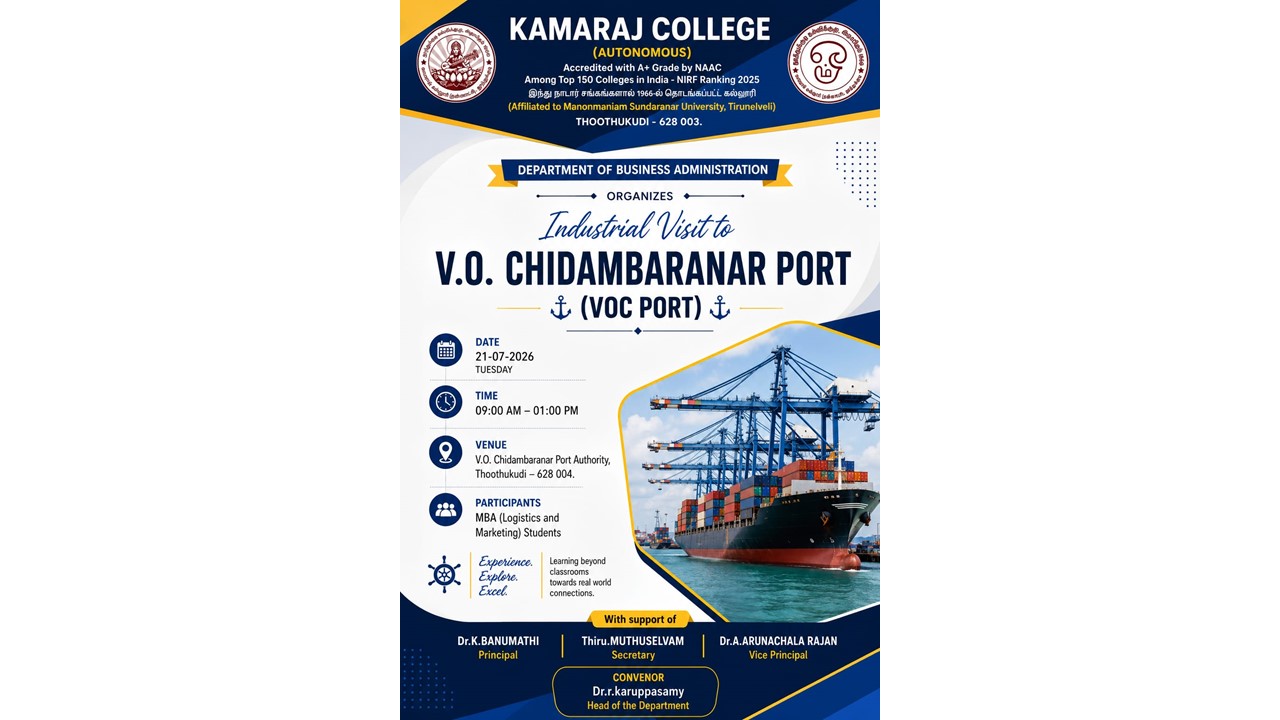
The VOC Port Industrial Visit was successfully organized by the Department of Business Administration of Kamaraj College (Autonomous), Thoothukudi for MBA students specializing in Logistics and Marketing on 21 July 2026.
The students visited V.O. Chidambaram Port Authority and Raja Agencies Container Freight Station. The visit provided practical exposure to port operations, cargo handling, vessel operations, container freight station activities and export import documentation.
Objectives of the Industrial Visit
The VOC Port Industrial Visit was organized to help MBA students understand real-world logistics and shipping operations.
The major objectives of the VOC Port Industrial Visit were:
- To provide practical exposure to port operations
- To help students understand cargo handling activities
- To introduce students to berthing infrastructure and port facilities
- To create awareness about vessel operations during loading and unloading
- To explain warehousing and storage practices at a Container Freight Station
- To help students understand export and import cargo documentation
- To connect classroom learning with real-time logistics and shipping practices
The VOC Port Industrial Visit helped students understand the practical relevance of international logistics, shipping management and supply chain operations.
Visit to the Information Centre
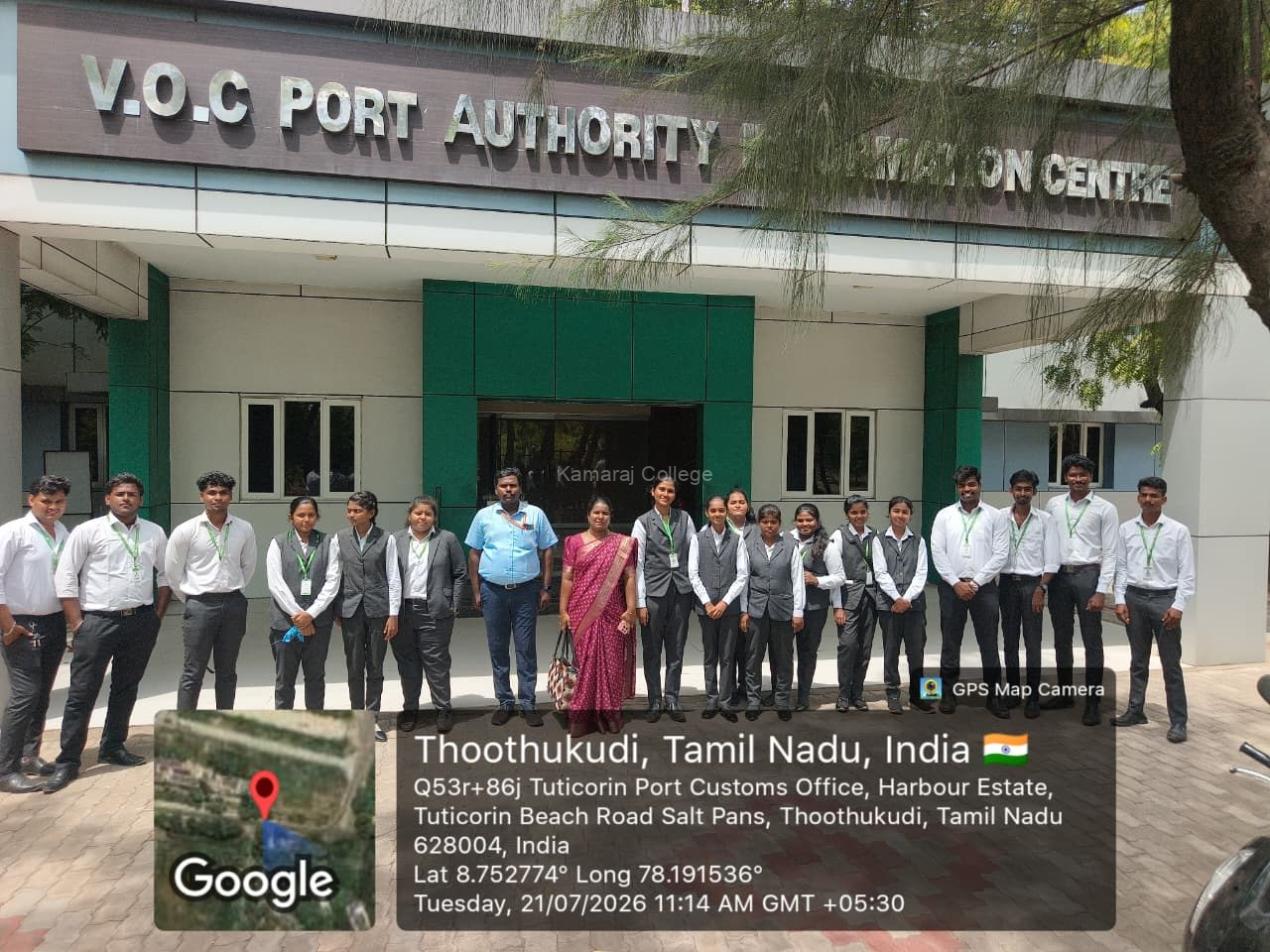
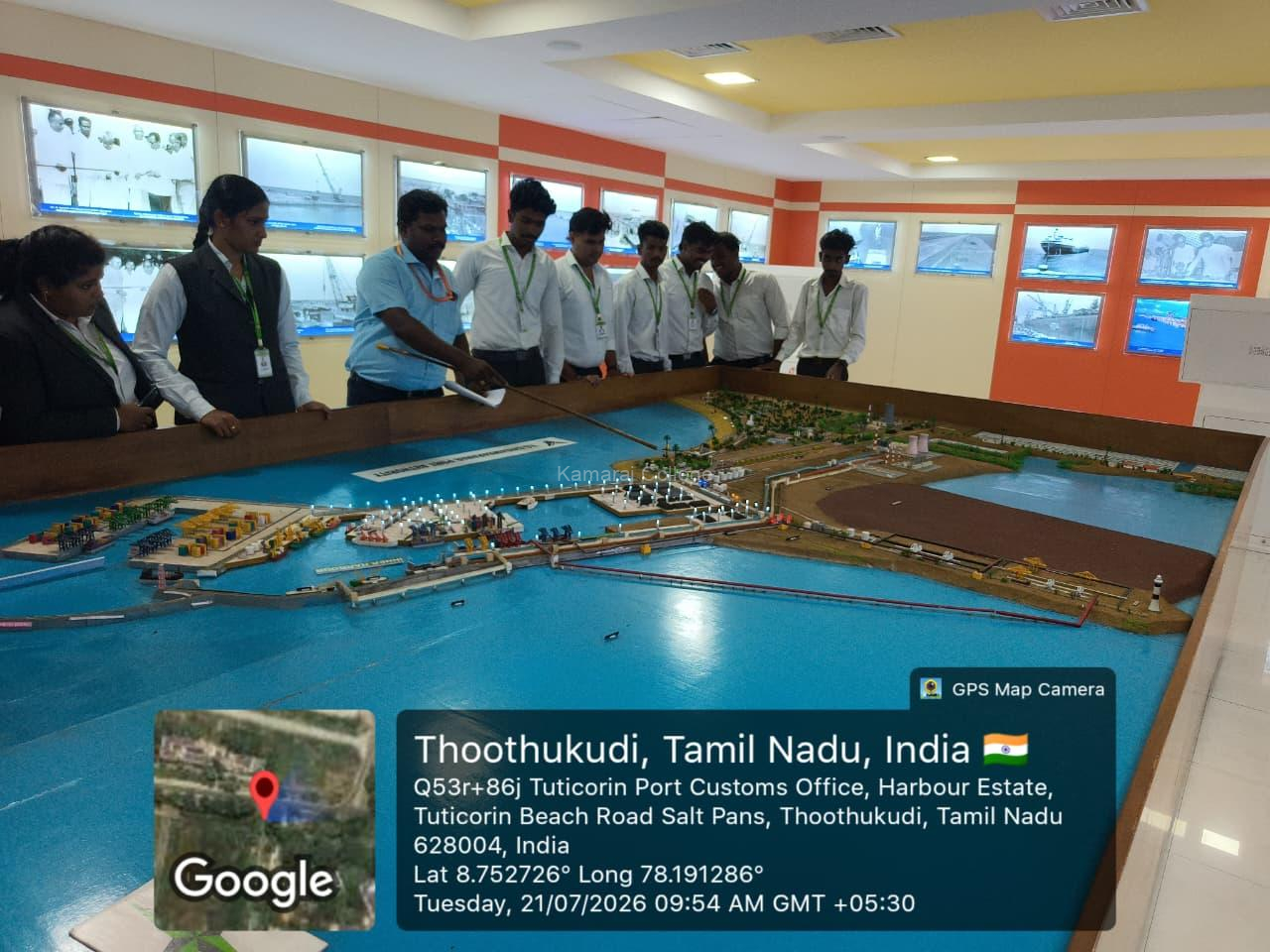
The VOC Port Industrial Visit began at the Information Centre of V.O. Chidambaram Seaport. A port official briefed the students on the history of the port, its construction, current operations and facilities.
The students received valuable information about the establishment of the port and its role in trade and cargo movement. The briefing helped them understand how ports support regional, national and international commerce.
This session gave a strong foundation for the remaining part of the visit.
Audio Visual Presentation on Port Expansion
The students were shown a short audio visual presentation on the expansion plans of the port. The presentation helped them understand the future development of port infrastructure and the importance of capacity expansion in maritime trade.
Through this presentation, students learned how modern ports plan for growth, efficiency and improved cargo movement. It also helped them understand the long-term importance of port development in logistics and international business.
Observation of Port Operations
After the briefing, the students proceeded to the operational area of the port. They observed the working environment of the port and gained a firsthand understanding of cargo movement and berthing activities.
The VOC Port Industrial Visit gave students practical exposure to how port operations are managed on a large scale. They were able to observe the movement of cargo, infrastructure facilities and the coordination required for port activities.
This direct observation made the learning experience more meaningful.
Visit to Berths 1, 2, 4 and 5
As part of the VOC Port Industrial Visit, the students observed Berths 1, 2, 4 and 5. This helped them understand the berthing infrastructure and the scale of cargo-handling capacity at the port.
The students learned how different berths support loading and unloading operations. They also gained awareness about the importance of proper infrastructure in handling large volumes of cargo efficiently.
This experience helped students relate their logistics curriculum to real port operations.
Guided Tour of a Docked Vessel
A special highlight of the VOC Port Industrial Visit was the opportunity given to the students to board a docked vessel. The students were taken through a guided tour of the ship.
During the vessel visit, they gained insight into onboard operations and understood how vessels function while berthed for loading and unloading cargo. This experience helped students visualize the connection between ships, ports and cargo movement.
The guided tour was highly informative and gave students a rare practical learning opportunity.
Understanding Cargo Handling Capacity
The VOC Port Industrial Visit helped students understand the scale of cargo-handling operations at the port. They observed how port infrastructure supports the movement of goods and how different facilities contribute to smooth cargo operations.
The students learned that cargo handling involves proper planning, equipment, documentation, safety measures and coordination among different departments.
This practical exposure strengthened their understanding of logistics management and port operations.
Visit to Raja Agencies Container Freight Station
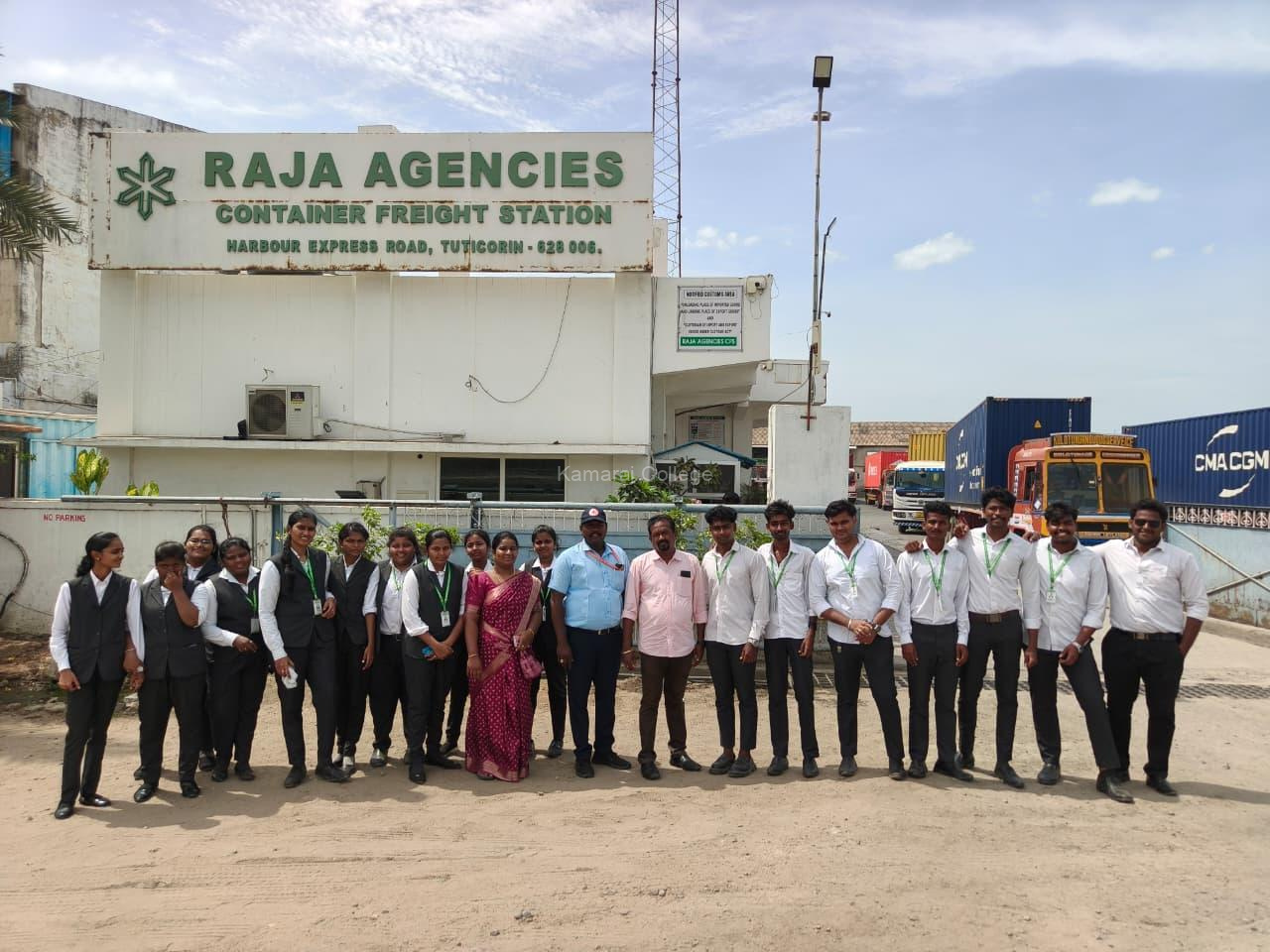
The industrial visit concluded at Raja Agencies Container Freight Station, located close to the port. The students observed the functioning of the Container Freight Station and learned about its role in export and import cargo movement.
The visit helped students understand how CFS facilities support port operations by handling cargo before shipment and after unloading. It also gave them a practical view of warehousing, storage and documentation processes.
This part of the visit was highly useful for students specializing in Logistics and Marketing.
Warehousing and Storage Practices
At Raja Agencies CFS, students observed warehousing and storage practices. They learned how goods are stored, arranged and managed before further movement.
The students understood that proper warehousing is an important part of logistics and supply chain management. The visit helped them see how storage facilities support export and import operations.
This practical learning added value to their understanding of inventory movement and logistics coordination.
Export and Import Cargo Processing
The students were shown how export and import cargo is processed and documented at the Container Freight Station. They learned about the handling of export cargo before shipment and import cargo after unloading.
The visit helped students understand the importance of documentation in international trade. It also introduced them to the procedures involved in cargo verification, storage, movement and clearance.
This exposure was directly connected to their MBA curriculum in logistics and shipping.
Learning on Export Import Documentation
The VOC Port Industrial Visit gave students practical awareness about export import documentation. They understood that documentation is essential for the smooth movement of goods across ports and international trade channels.
Students learned that accurate records, proper procedures and timely coordination are important in logistics operations. This helped them understand the professional responsibility involved in shipping and supply chain management.
The visit made theoretical concepts more clear and practical.
Connection with MBA Curriculum
The industrial visit strongly complemented the theoretical concepts covered in the MBA curriculum. Topics such as international logistics, shipping management, port operations, container handling and export import documentation were experienced in a real-world setting.
The students were able to connect classroom learning with actual industry practices. This practical exposure improved their understanding of how logistics systems function in business and trade.
The visit made their academic learning more industry-oriented and application-based.
Benefits for Students
The visit provided several valuable benefits to the MBA students.
- Students gained practical exposure to port operations
- They understood berthing infrastructure and cargo-handling capacity
- They observed real-time logistics and shipping activities
- They received insight into onboard vessel operations
- They learned about warehousing and storage practices at CFS
- They understood export and import cargo processing
- They connected MBA logistics concepts with real industry practices
These benefits helped students improve their practical knowledge, industry awareness and professional readiness.
Outcome of the Industrial Visit
The VOC Port Industrial Visit successfully provided students with valuable exposure to port and logistics operations.
The major outcomes of the visit were:
- Improved understanding of port construction, facilities and operations
- Practical exposure to berths, vessels and cargo-handling activities
- Awareness about the role of Container Freight Stations in logistics
- Better understanding of warehousing and storage practices
- Knowledge of export and import cargo documentation
- Improved understanding of international logistics and shipping concepts
- Enhanced industry readiness among MBA Logistics and Marketing students
The visit was informative, practical and highly beneficial for the students.
Conclusion
The VOC Port Industrial Visit organized by the Department of Business Administration on 21 July 2026 to V.O. Chidambaram Port Authority and Raja Agencies Container Freight Station concluded successfully.
The visit provided MBA students with firsthand exposure to port operations, cargo handling, berthing infrastructure, vessel functioning, warehousing, storage, container handling and export import documentation. It helped reinforce classroom learning and gave students a clear understanding of the practical aspects of logistics and shipping.
Overall, the industrial visit reflected the commitment of Kamaraj College to experiential learning, industry exposure, logistics education and professional skill development.
Internal Link
Kamaraj College (Autonomous), Thoothukudi