
MASCO Visit Grand Success with 4 Key Learning Outcomes
MASCO Visit – Programme Overview
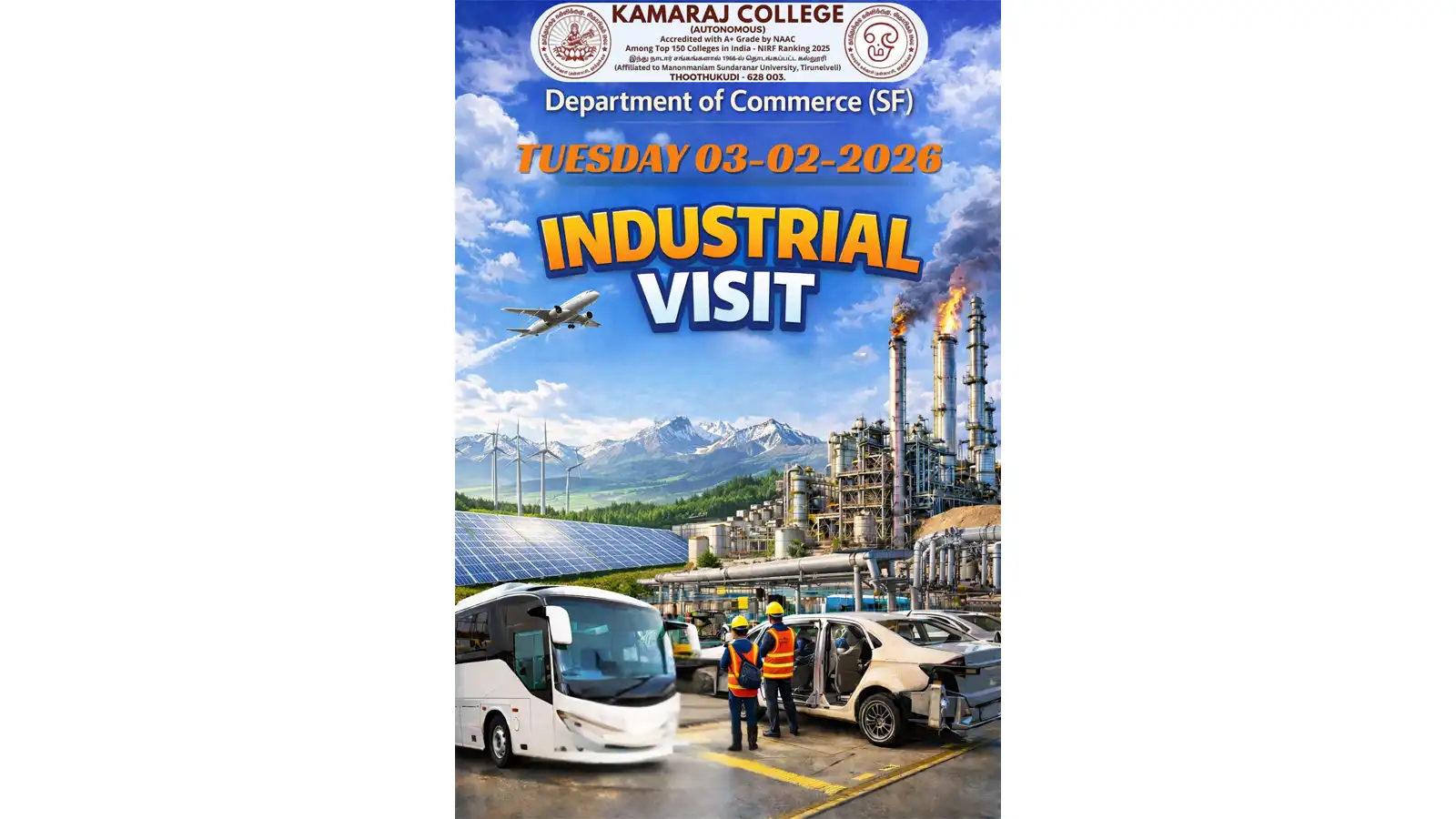
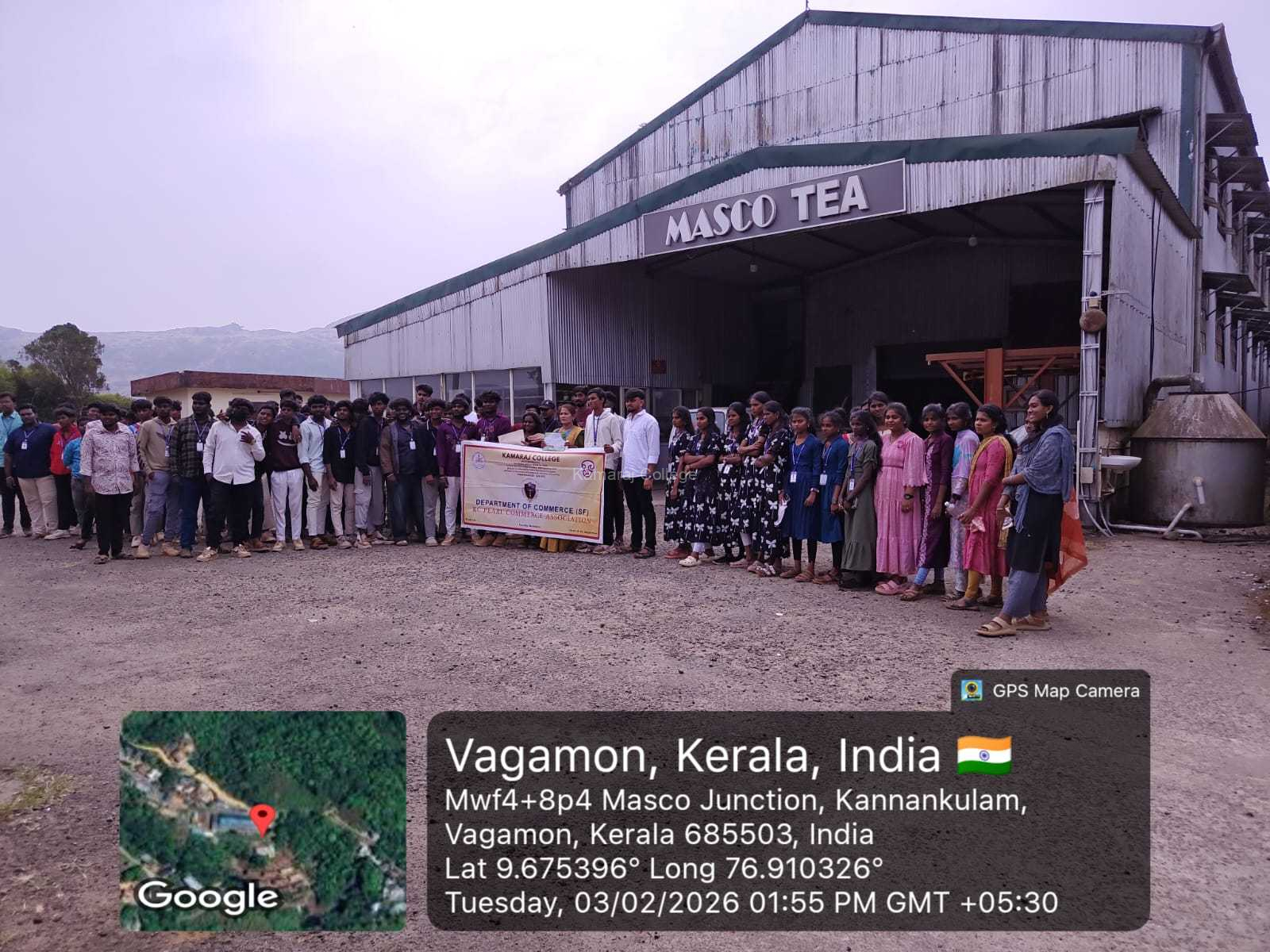
The Department of Commerce (SF), Kamaraj College (Autonomous), Thoothukudi, organized a one-day MASCO Visit on 03 February 2026 from 09.00 a.m. to 04.00 p.m. The industrial exposure programme was conducted at Malanad Co-Operative Tea Factory (MASCO), Vagamon, located in Idukki District, Kerala.
The visit formed part of the department’s experiential learning initiatives aimed at strengthening industry–academia linkage and enhancing practical exposure among undergraduate commerce students.
Objectives of the MASCO Visit
The MASCO Visit was organized with specific academic and professional objectives:
- To provide practical exposure to cooperative and industrial management systems
- To understand tea processing and production management frameworks
- To examine quality assurance, hygiene, and safety standards
- To bridge classroom theory with real-time industrial practices
The initiative aimed to strengthen conceptual clarity through observation and direct industry interaction.
Participation Details
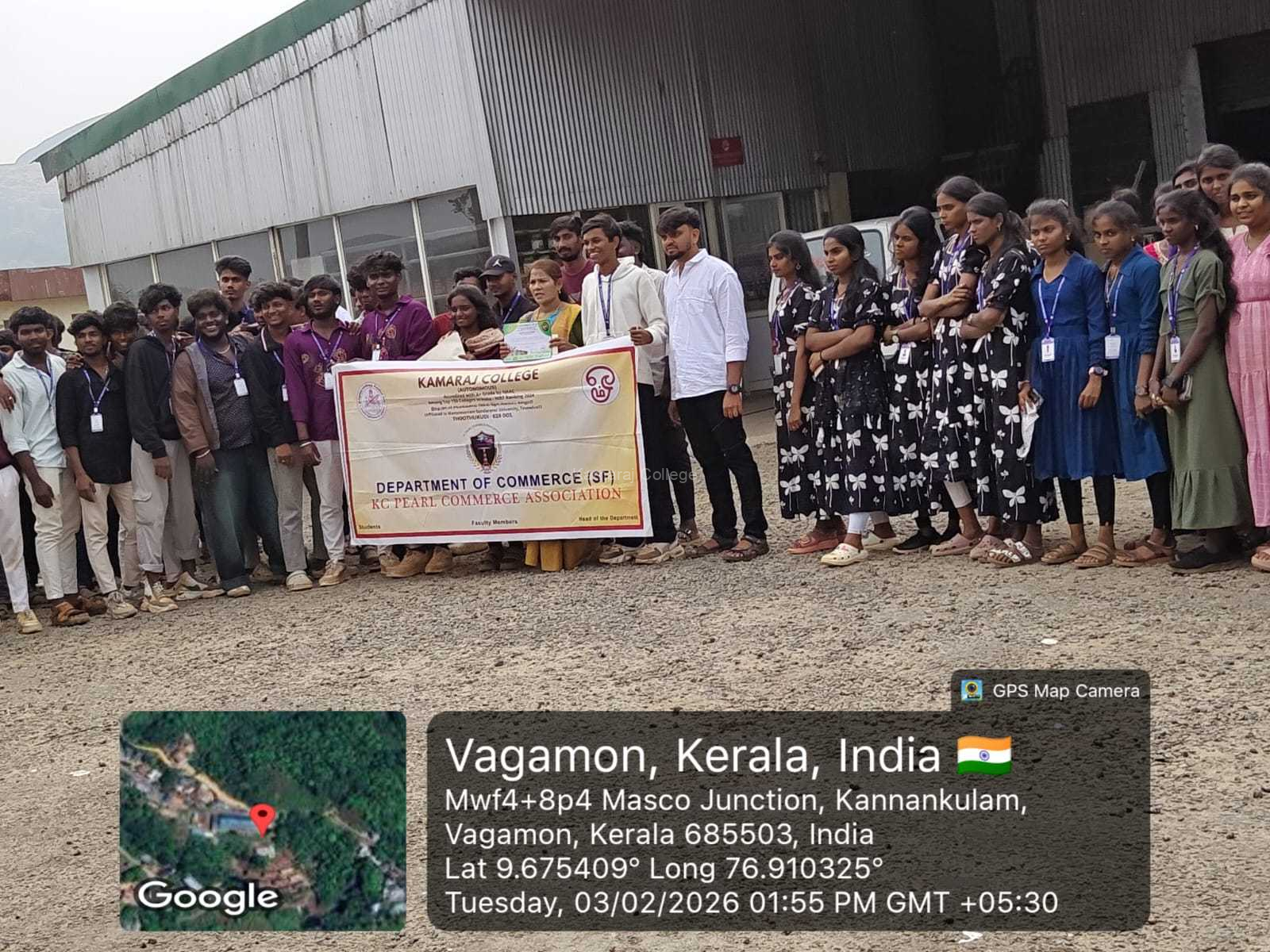
A total of 85 students from the following programmes participated in the MASCO Visit:
- I B.Com (Banking and Finance)
- I B.Com (Banking and E-Commerce)
- I B.Com (Corporate Secretaryship)
The students were accompanied by two faculty members who facilitated academic discussions and ensured structured learning throughout the programme.
Profile of Malanad Co-Operative Tea Factory (MASCO)
Malanad Co-Operative Tea Factory (MASCO) operates under a cooperative-based manufacturing model. The factory processes green tea leaves collected from member plantations and markets finished products under its brand name.
The cooperative structure emphasizes:
- Shared ownership among growers
- Democratic decision-making
- Equitable profit distribution
- Support for rural agricultural communities
This business model provided students with meaningful exposure to participatory governance and sustainable enterprise systems.
Industrial Exposure and Production Process
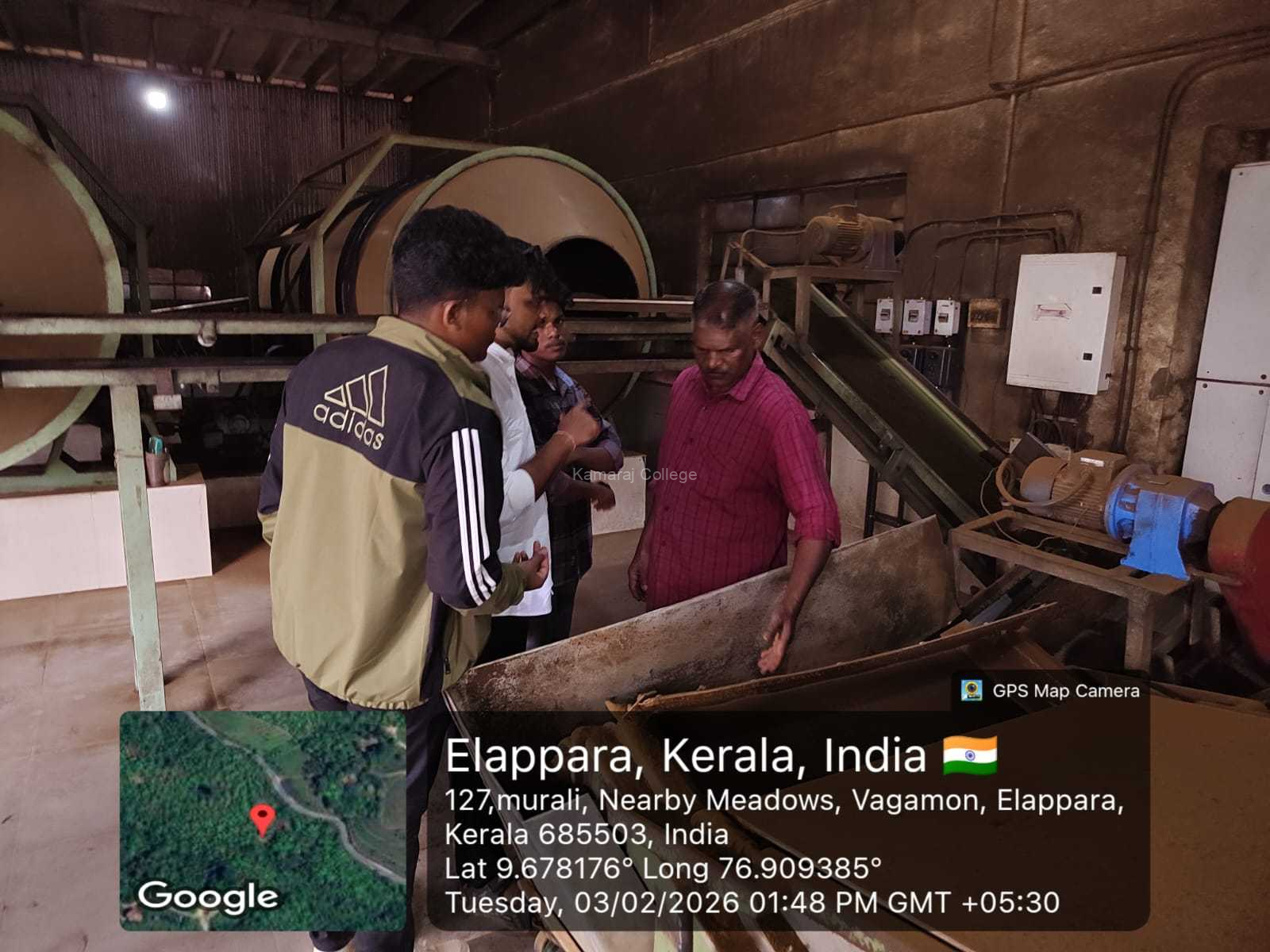
The MASCO Visit commenced with an induction session conducted by factory officials. The session outlined the organizational structure, procurement system, and operational workflow.
Students were guided through various stages of tea production:
- Withering of freshly plucked tea leaves
- Rolling and fermentation processes
- Drying and moisture control
- Grading and sorting
- Packaging and dispatch
Detailed explanations were provided regarding temperature regulation, hygiene standards, and quality monitoring procedures.
Quality Control and Safety Standards
One of the key learning components of the MASCO Visit was understanding the importance of quality assurance in food manufacturing.
Students observed:
- Systematic quality testing
- Inventory management practices
- Compliance with food safety norms
- Workplace safety measures
These practical insights helped students relate subjects such as production management, cost accounting, and business organization to real-world scenarios.
Measurable Learning Outcomes
The MASCO Visit resulted in significant academic and professional learning outcomes:
- Enhanced understanding of cooperative business models
- Improved knowledge of production planning and inventory systems
- Better analytical ability to connect theory with practice
- Increased awareness of rural industrial enterprises
Students gained clarity on how commerce principles operate within manufacturing environments.
Relevance to Commerce Education
Industrial visits play an important role in commerce education by offering hands-on exposure to real business operations. Through the MASCO Visit, students observed:
- Supply chain coordination
- Cost management mechanisms
- Brand marketing strategies
- Operational efficiency techniques
Such experiences prepare students for careers in manufacturing, banking, finance, and corporate governance.
Institutional Commitment to Experiential Learning
The organization of the MASCO Visit highlights the academic vision of Kamaraj College in promoting outcome-based education.
Internal Link:
Kamaraj College (Autonomous), Thoothukudi
The institution consistently integrates classroom learning with practical exposure to ensure industry readiness.
Understanding Cooperative Development
Cooperative enterprises contribute significantly to rural economic development. Exposure to such models enriches commerce students’ understanding of inclusive growth and shared prosperity.
Further information on cooperative frameworks can be accessed at:
External Links:
National Cooperative Development Corporation
Ministry of Cooperation, Government of India
Conclusion
The MASCO Visit conducted on 03 February 2026 provided structured exposure to tea manufacturing processes and cooperative governance systems. The interaction with industry professionals facilitated experiential learning and strengthened analytical understanding among students.
The programme successfully integrated theoretical instruction with practical observation, contributing meaningfully to competency development. The management of MASCO appreciated the discipline and active participation of the students and extended full cooperation throughout the visit.
The Department of Commerce (SF) remains committed to organizing such industry-oriented programmes that enhance academic excellence and professional readiness.