
Innovation to Funding Grand Success with 5 Strategic Insights
Innovation to Funding – Faculty Development Programme Overview
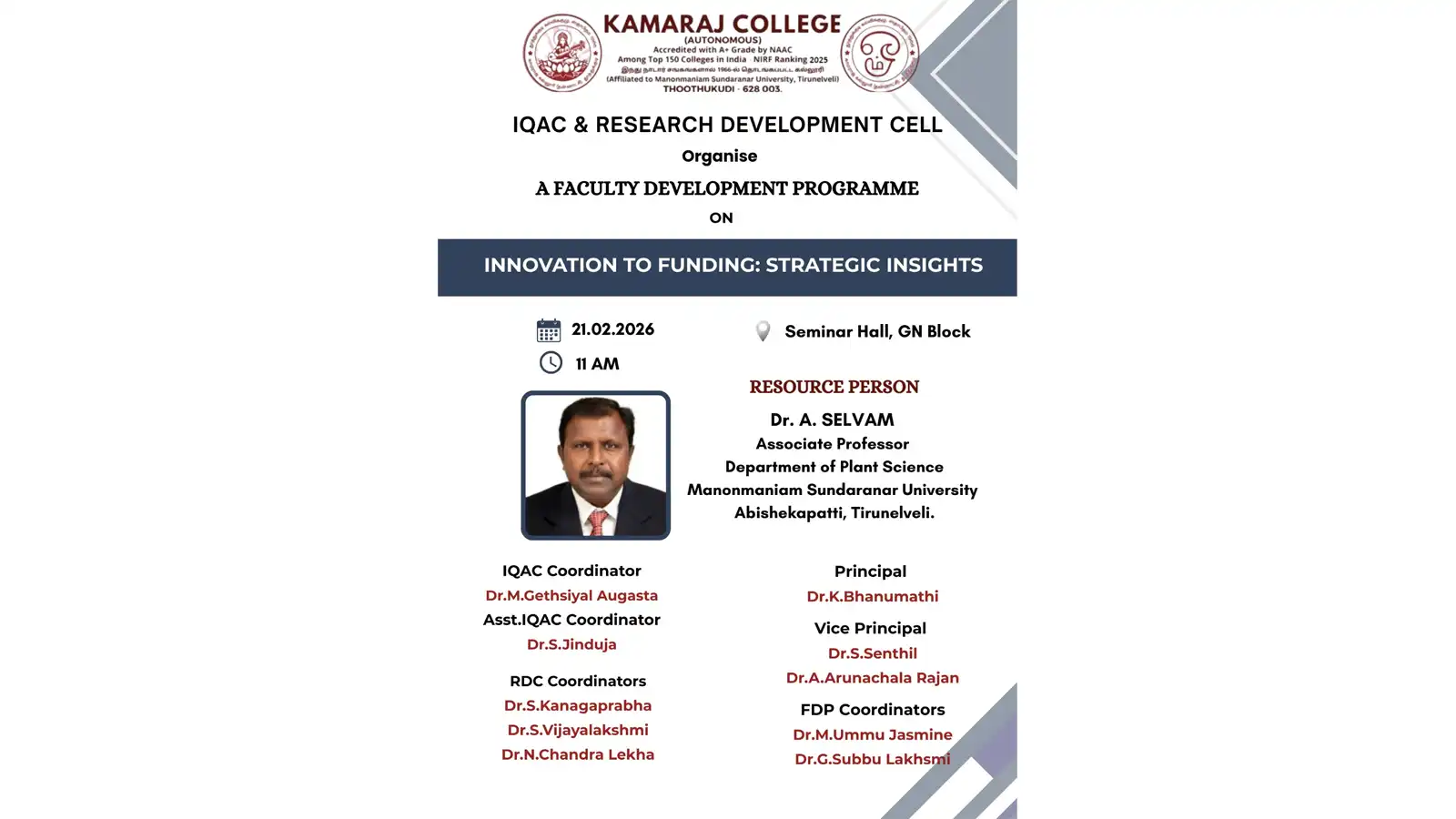
The Internal Quality Assurance Cell (IQAC) and the Research Development Cell of Kamaraj College (Autonomous), Thoothukudi jointly organized a Faculty Development Programme titled “Innovation to Funding: Strategic Insights” on 21 February 2026 from 11.00 a.m. to 01.00 p.m. at the AMMS Ganasan Nadar Block.
The programme was designed to strengthen research culture among faculty members by providing structured guidance on converting innovative academic ideas into externally funded research projects. The initiative reflects the institution’s continued commitment to academic excellence and research-driven growth.
Objectives of Innovation to Funding
The primary objective of Innovation to Funding was to equip faculty members with practical strategies for research proposal development and funding acquisition.
The programme focused on:
- Understanding funding opportunities at national and international levels
- Developing effective research proposals
- Enhancing interdisciplinary collaboration
- Strategic planning for funded projects
- Strengthening institutional research output
Such initiatives contribute to long-term academic development and institutional accreditation goals.
Resource Person and Expert Insights
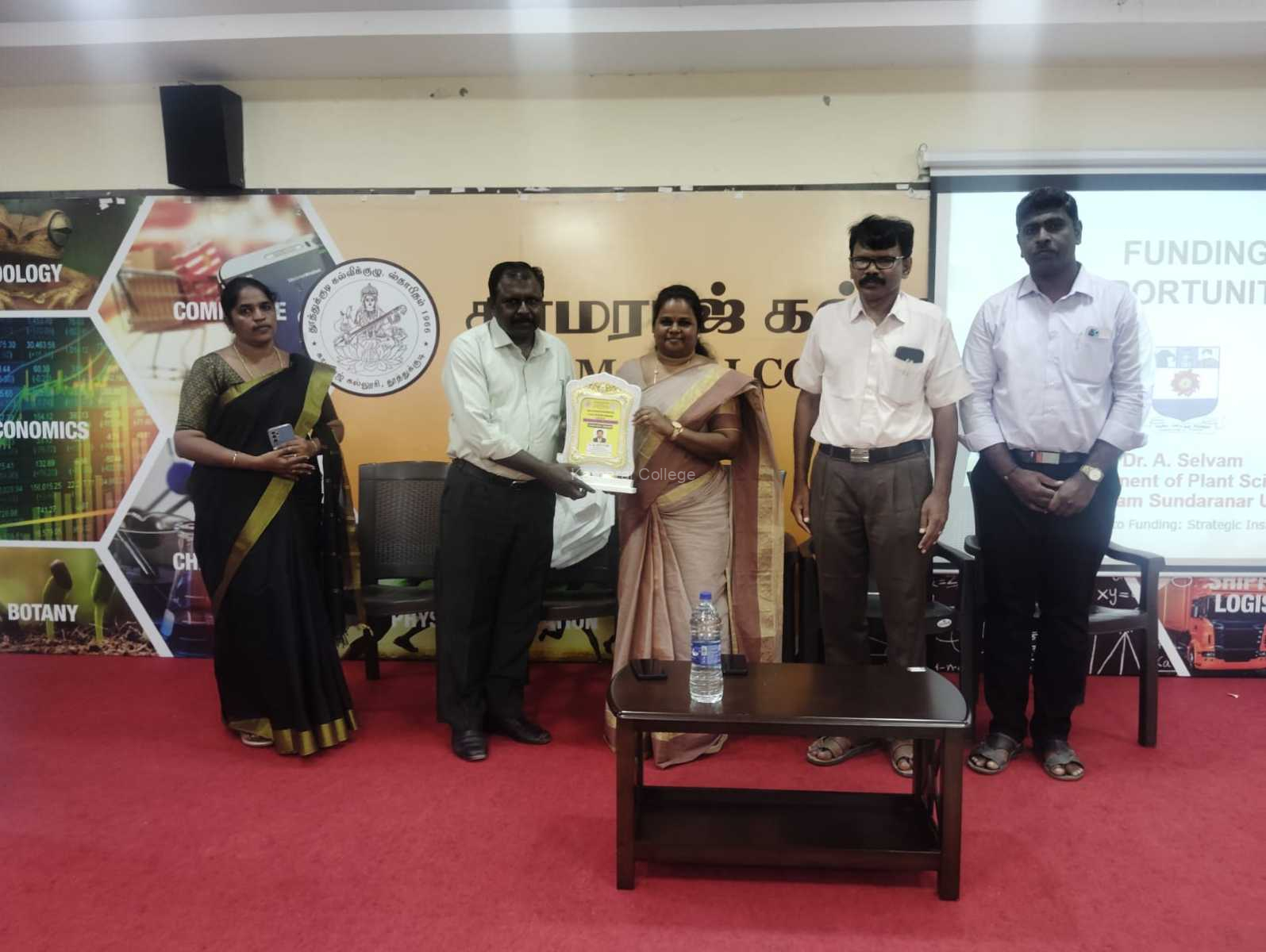
The session featured Dr. A. Selvam, Associate Professor, Department of Plant Science, Manonmaniam Sundaranar University, Tirunelveli, as the resource person.
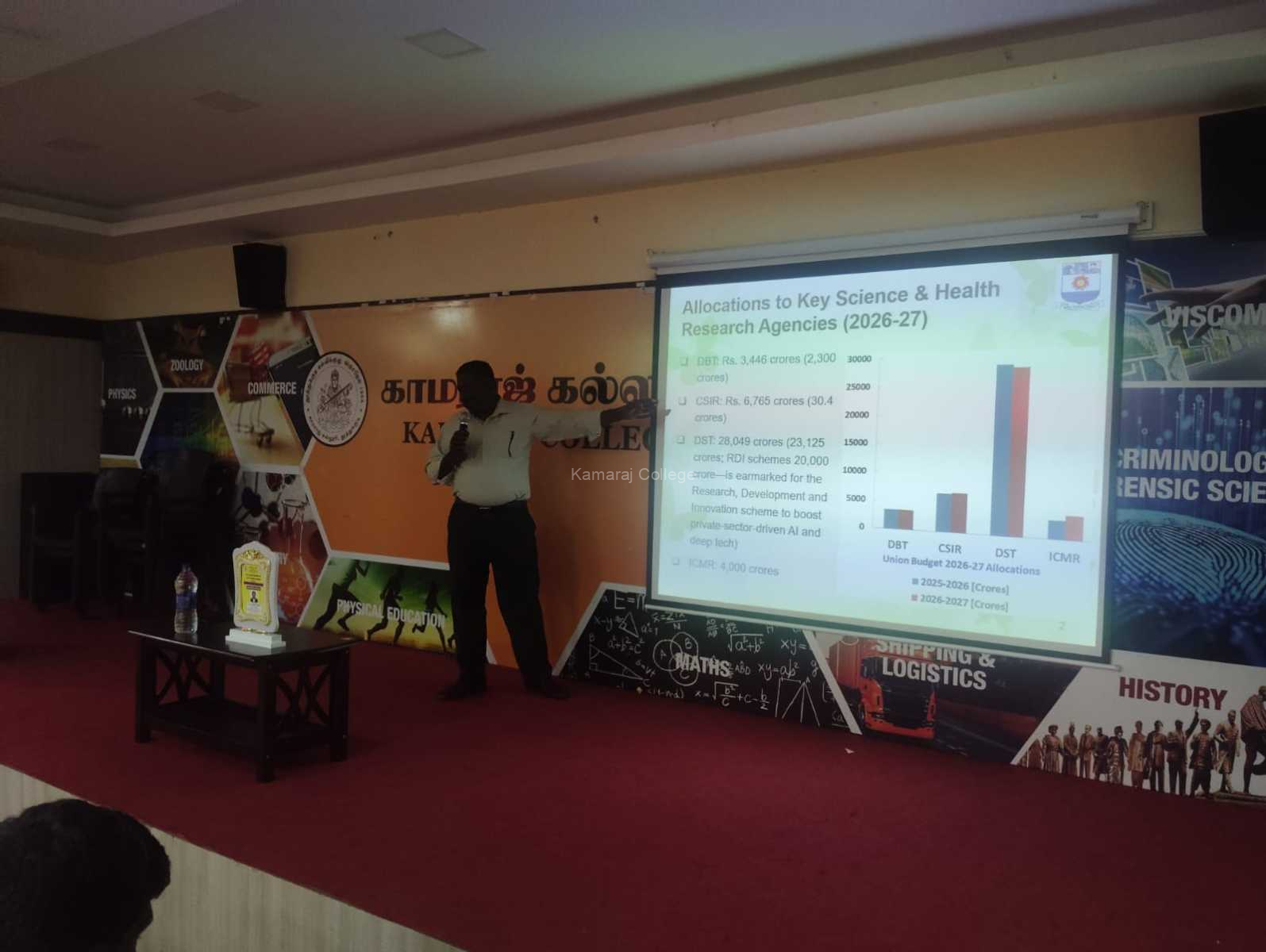
Dr. Selvam delivered a comprehensive lecture on transforming innovative concepts into fundable research proposals. He emphasized the importance of:
- Identifying research gaps
- Aligning proposals with funding agency priorities
- Preparing structured objectives and methodologies
- Budget justification and timeline planning
His presentation combined theoretical guidance with practical examples drawn from funded research experiences.
Funding Opportunities and Research Agencies
During the Innovation to Funding session, participants were introduced to various funding bodies and schemes available for higher education institutions.
Key funding sources discussed included:
- Department of Science and Technology (DST)
- University Grants Commission (UGC)
- Indian Council of Agricultural Research (ICAR)
- International collaborative grants
Faculty members were encouraged to actively explore competitive grants to enhance institutional research visibility.
External Links:
Department of Science & Technology
University Grants Commission
Interdisciplinary Research and Innovation
A significant aspect of Innovation to Funding was the emphasis on interdisciplinary collaboration. Dr. Selvam highlighted how collaborative research across departments increases funding success rates and produces impactful outcomes.
Faculty members were advised to:
- Engage in cross-disciplinary dialogue
- Develop collaborative research teams
- Integrate applied research approaches
- Focus on socially relevant themes
The interactive session encouraged faculty members to rethink conventional research models and adopt innovative strategies.
Interactive Discussion and Faculty Engagement
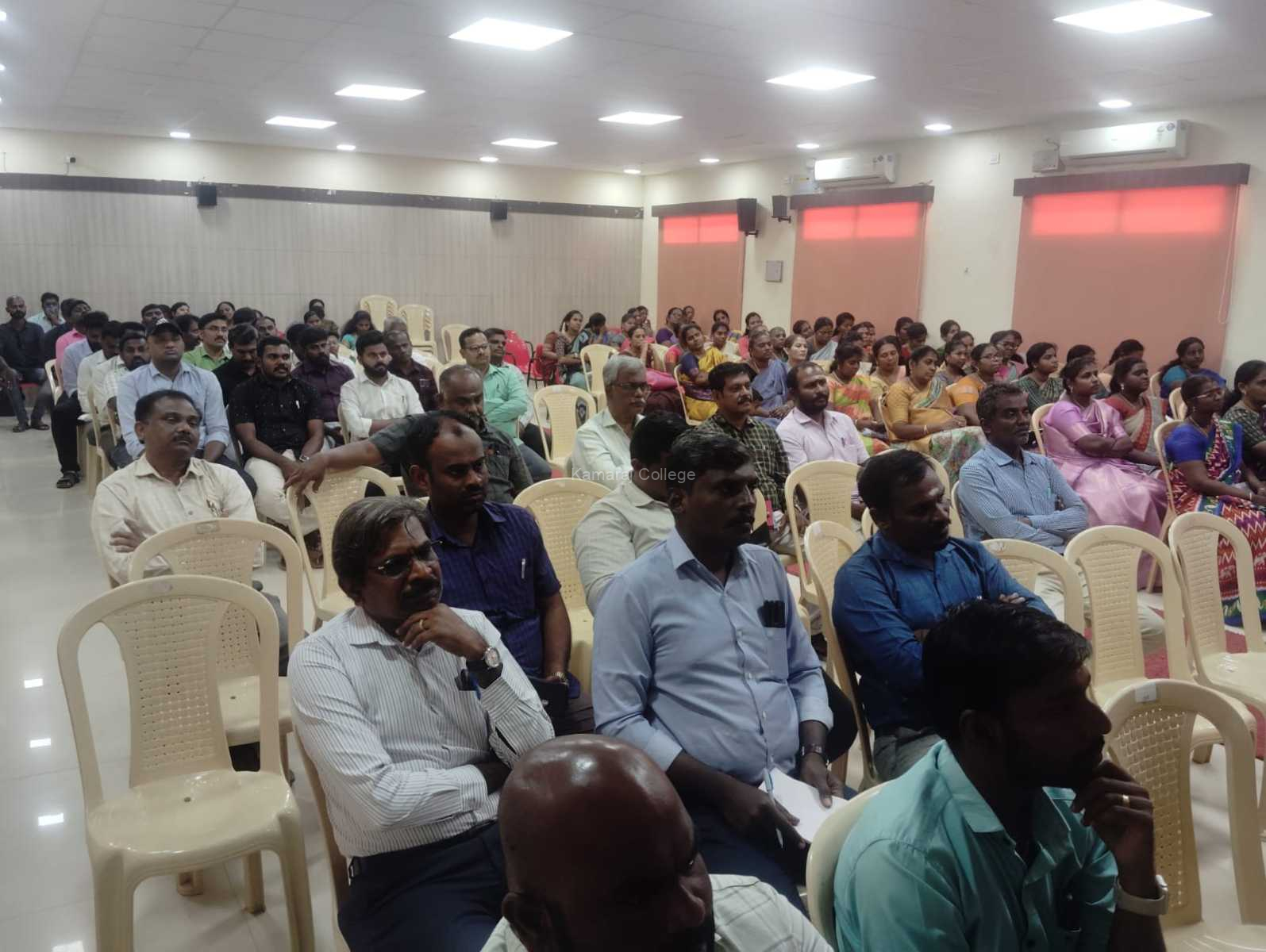
The Innovation to Funding programme witnessed active participation from faculty members across various departments. The session included open discussions where participants clarified doubts regarding:
- Proposal rejection and revision strategies
- Ethical approvals and compliance
- Institutional support mechanisms
- Time management for research alongside teaching
The interactive format enhanced clarity and provided practical solutions to common research challenges.
Role of IQAC and Research Development Cell
The organization of Innovation to Funding reflects the proactive role of IQAC and the Research Development Cell in strengthening institutional research culture.
Internal Link:
Kamaraj College (Autonomous), Thoothukudi
Through structured Faculty Development Programmes, the institution aims to:
- Increase funded research projects
- Improve publication quality
- Enhance national and international collaborations
- Support NAAC and accreditation goals
Impact and Outcomes
The Innovation to Funding session provided valuable insights into research planning and funding strategies. Faculty members expressed motivation to:
- Submit research proposals to funding agencies
- Develop interdisciplinary research clusters
- Strengthen innovation-driven academic culture
The programme successfully created awareness about systematic research planning and grant acquisition processes.
Conclusion
The Faculty Development Programme titled Innovation to Funding conducted on 21 February 2026 served as a strategic academic initiative aimed at enhancing research excellence. With expert guidance from Dr. A. Selvam, faculty members gained clarity on funding mechanisms, proposal writing strategies, and interdisciplinary research opportunities.
The programme reaffirmed the institution’s commitment to academic innovation and externally funded research. It stands as a significant step toward strengthening research output and fostering a culture of innovation within the college community.
The event concluded with a formal vote of thanks, appreciating the contributions of the resource person, organizers, and faculty participants.