
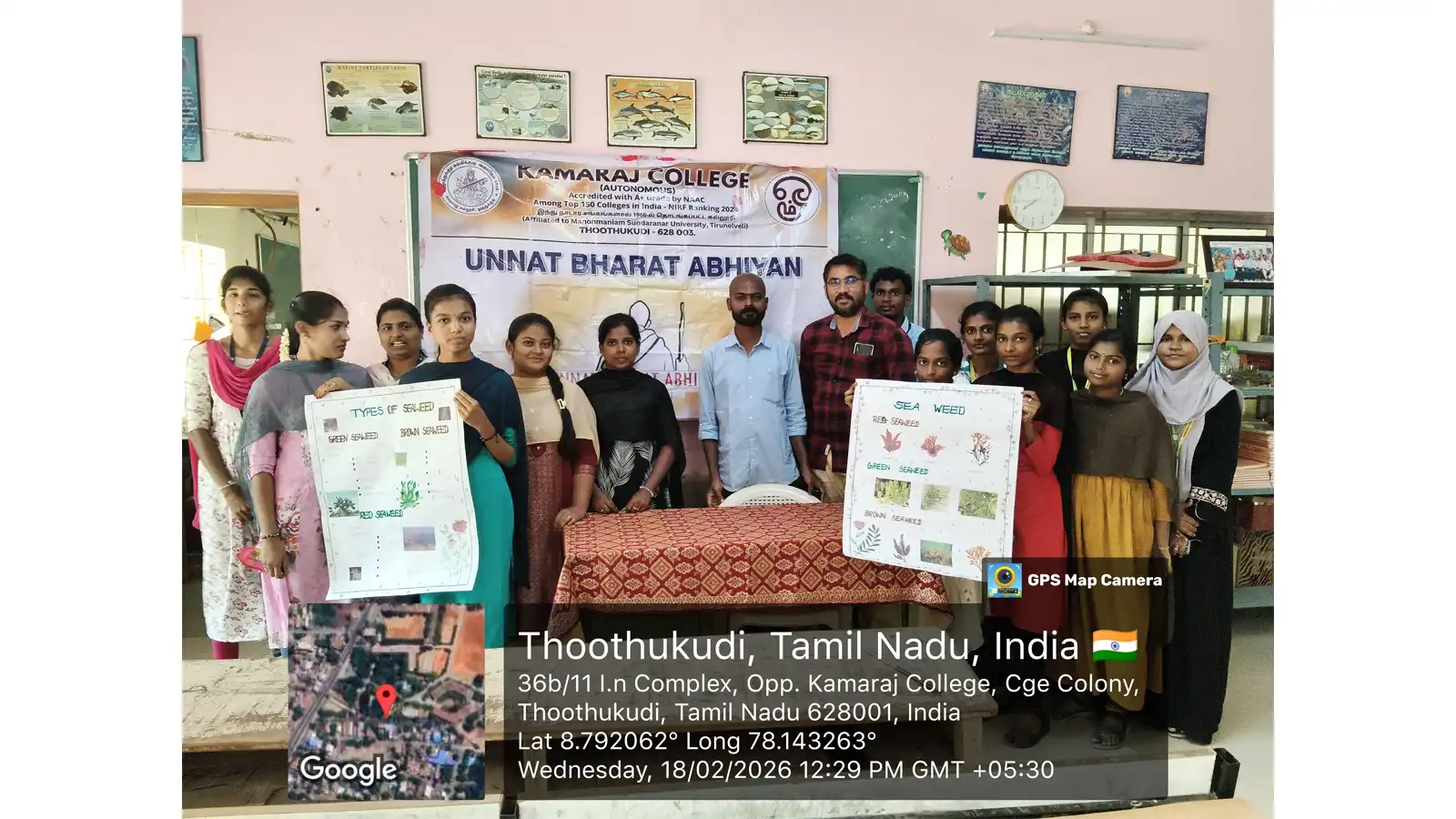
Seaweed Training Camp Grand Success with 3 Skill Modules
Seaweed Training Camp – Programme Overview
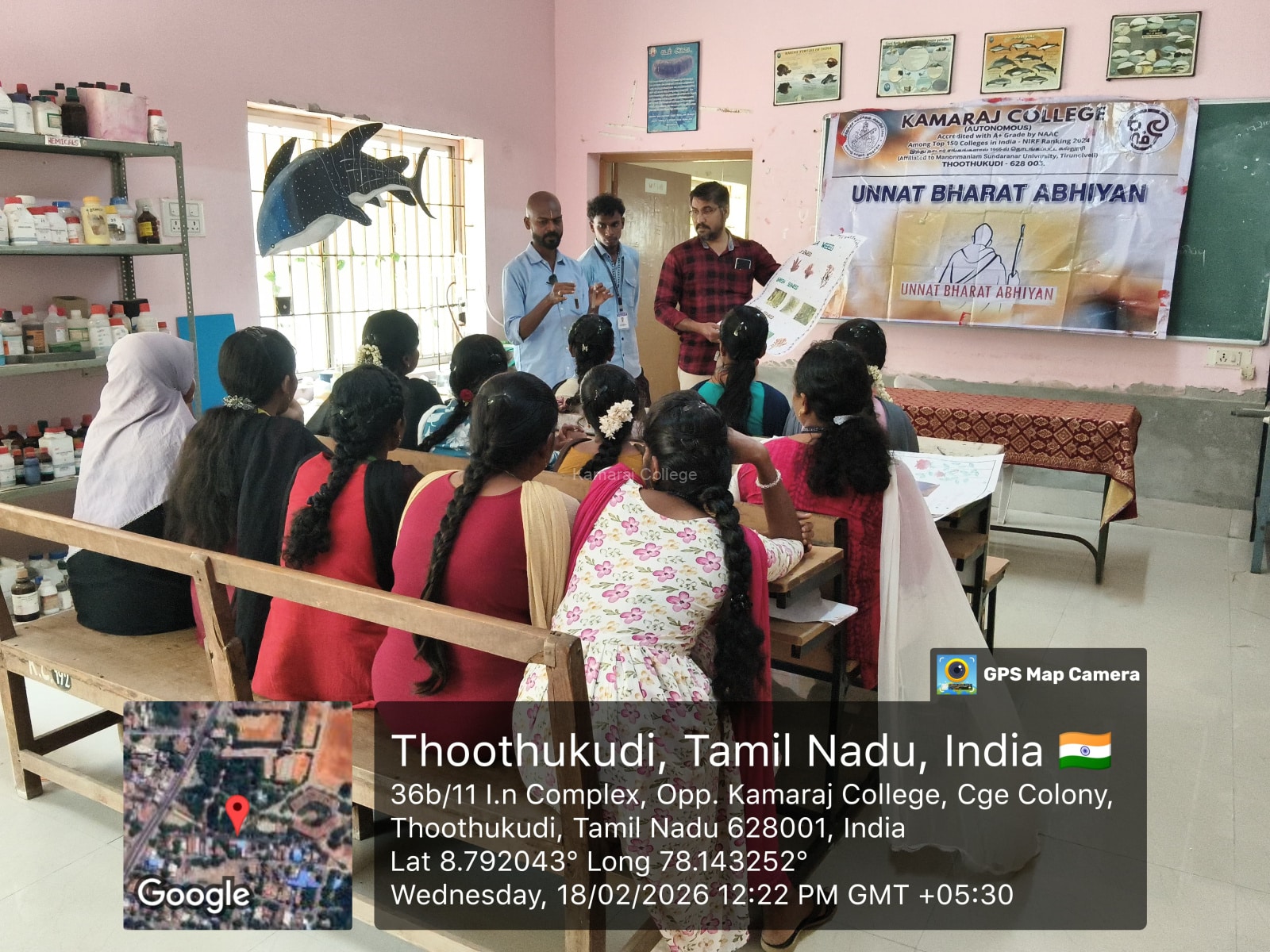
On 18 February 2026, from 11.30 a.m. to 01.30 p.m., the Seaweed Training Camp was conducted under the Seaweed Project of Unnat Bharat Abhiyan by Kamaraj College (Autonomous), Thoothukudi.
The practical training programme focused on equipping rural women with hands-on skills in sustainable production and seaweed-based entrepreneurship. The initiative aimed at strengthening rural livelihood opportunities through scientific application of marine resources.
Objectives of the Seaweed Training Camp
The primary objective of the Seaweed Training Camp was to provide practical, income-oriented training to women from village panchayats and promote sustainable rural development.
The key objectives included:
- Training in preparation of natural fertilizer
- Demonstration of fish feed production techniques
- Preparation of value-added seaweed products
- Encouraging rural entrepreneurship and self-employment
The programme was structured to ensure clarity, accessibility, and practical relevance for rural participants.
Practical Modules Covered in the Training
The Seaweed Training Camp included three major skill modules designed to enhance income generation opportunities:
- Natural Fertilizer Preparation: Participants learned methods of preparing organic fertilizer using seaweed extracts, highlighting its agricultural benefits.
- Fish Feed Production: Demonstrations were conducted on processing seaweed into nutritious fish feed suitable for aquaculture.
- Value-Added Seaweed Products: Women were trained in producing commercially viable products derived from seaweed resources.
Each module was conducted with step-by-step explanations and live demonstrations.
Participation and Community Engagement
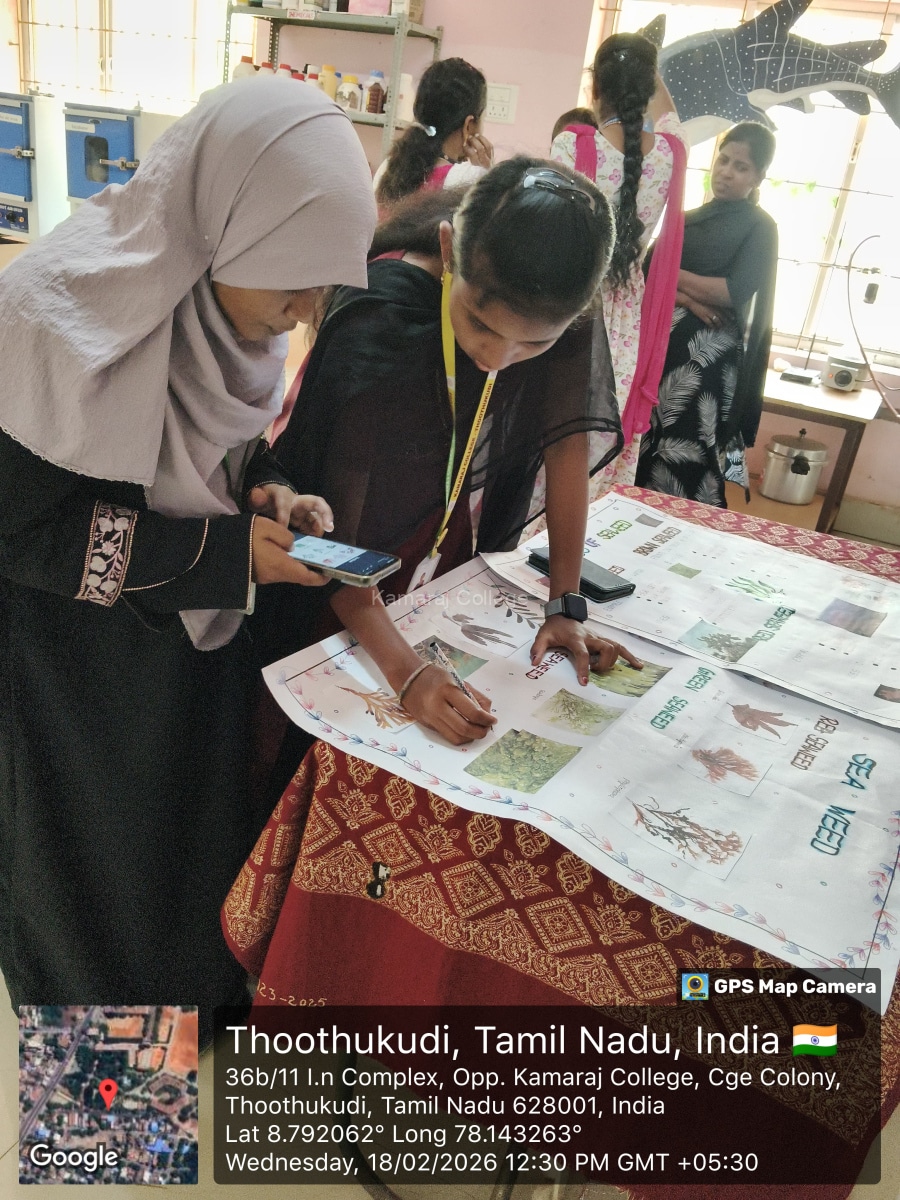
Women trainees from adopted village panchayats actively participated in the Seaweed Training Camp. The session was interactive, allowing participants to ask questions and clarify practical doubts.
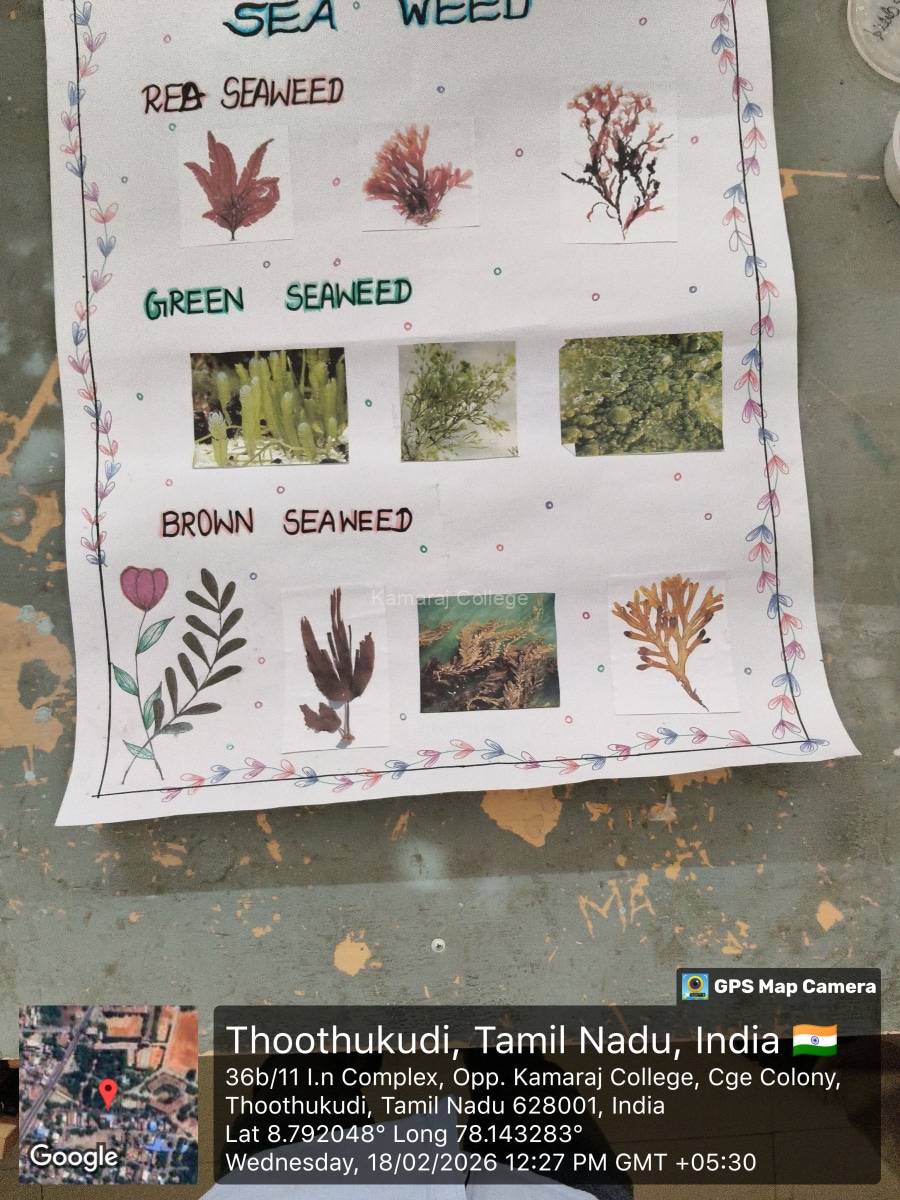
To enhance understanding among rural participants, Zoology students prepared informative posters and visual aids. These posters simplified scientific concepts and helped bridge the gap between academic knowledge and community application.
The initiative reflected strong student-community collaboration.
Role of Faculty Coordinators
The Seaweed Training Camp was jointly organized under the guidance of:
- Dr. J. Nagarajan, Coordinator of the Seaweed Project
- Dr. P. Pounraj, Unnat Bharat Abhiyan Coordinator
Their leadership ensured systematic planning, effective execution, and meaningful community outreach.
The trained student instructors continue to provide follow-up hands-on training to women in village panchayats at various stages, ensuring sustainability of the initiative.
Institutional Commitment to Rural Development
Kamaraj College (Autonomous), Thoothukudi consistently promotes rural empowerment through structured outreach programmes under Unnat Bharat Abhiyan.
Internal Link:
Kamaraj College (Autonomous), Thoothukudi
The Seaweed Training Camp stands as a practical example of integrating academic knowledge with rural livelihood enhancement.
Significance of Seaweed in Sustainable Development
Seaweed has emerged as a valuable marine resource with applications in agriculture, aquaculture, food, and biotechnology. Training rural communities in seaweed-based production contributes to sustainable economic growth.
Further information regarding national rural development initiatives can be accessed through:
External Links:
Unnat Bharat Abhiyan
Ministry of Food Processing Industries
Measurable Outcomes of the Seaweed Training Camp
The Seaweed Training Camp achieved significant outcomes:
- Improved technical knowledge among rural women
- Enhanced confidence in self-employment initiatives
- Strengthened student involvement in community service
- Promotion of sustainable marine resource utilization
The practical orientation ensured long-term benefits for participants.
Overall Impact
The Seaweed Training Camp successfully combined academic expertise, student involvement, and rural empowerment. By equipping women with practical production skills, the initiative contributed to economic resilience and sustainable development.
The continuation of hands-on training by student instructors ensures the long-term impact of the programme.
Conclusion
The Seaweed Training Camp conducted on 18 February 2026 marked a meaningful step toward strengthening rural livelihoods through scientific and sustainable practices. The collaborative efforts of faculty members, student instructors, and women trainees highlight the institution’s dedication to community development and applied learning.
The initiative stands as a model of how higher education institutions can effectively support rural empowerment and skill development.