
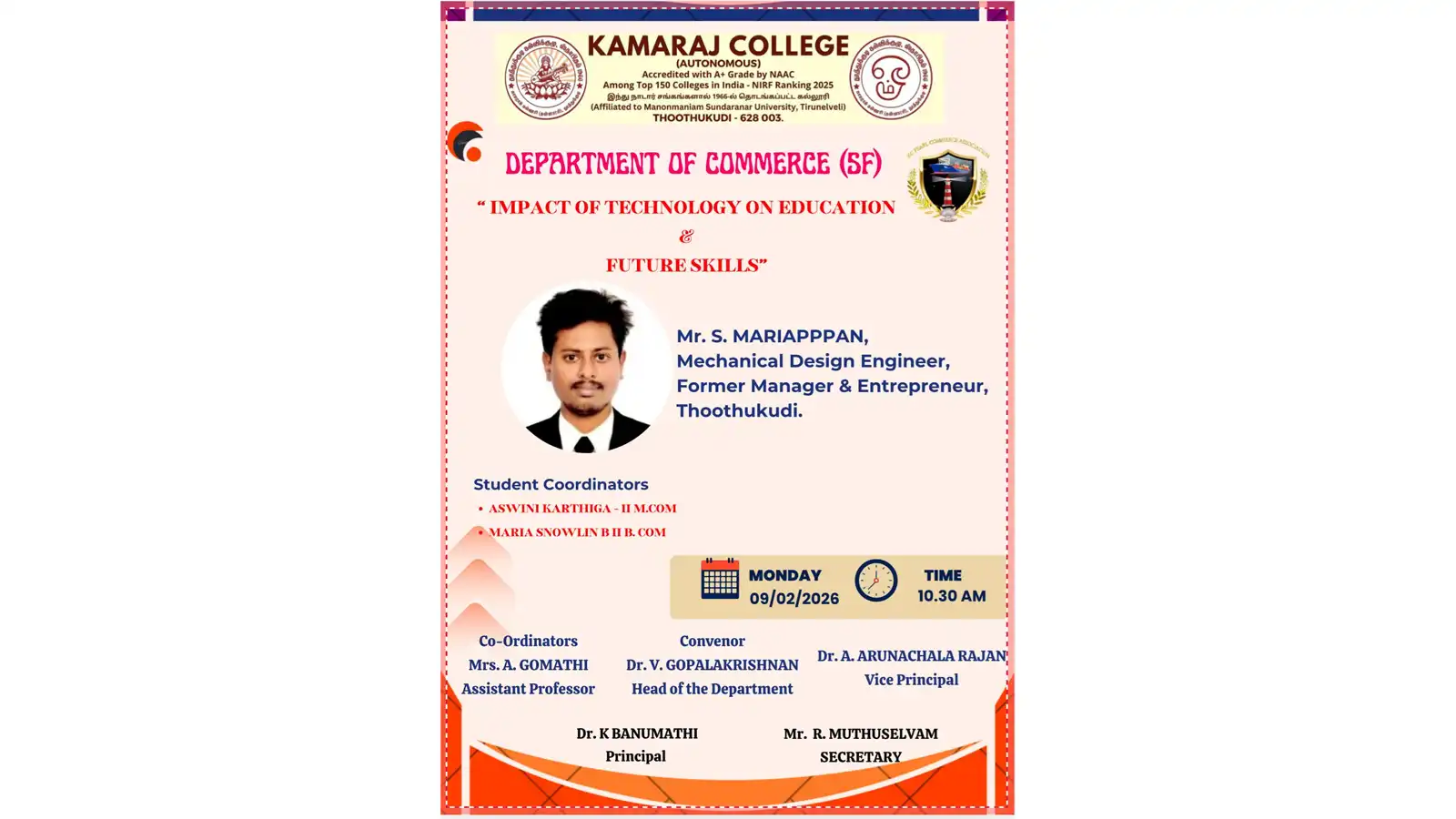
Technology in Education Grand Success with 67 Students
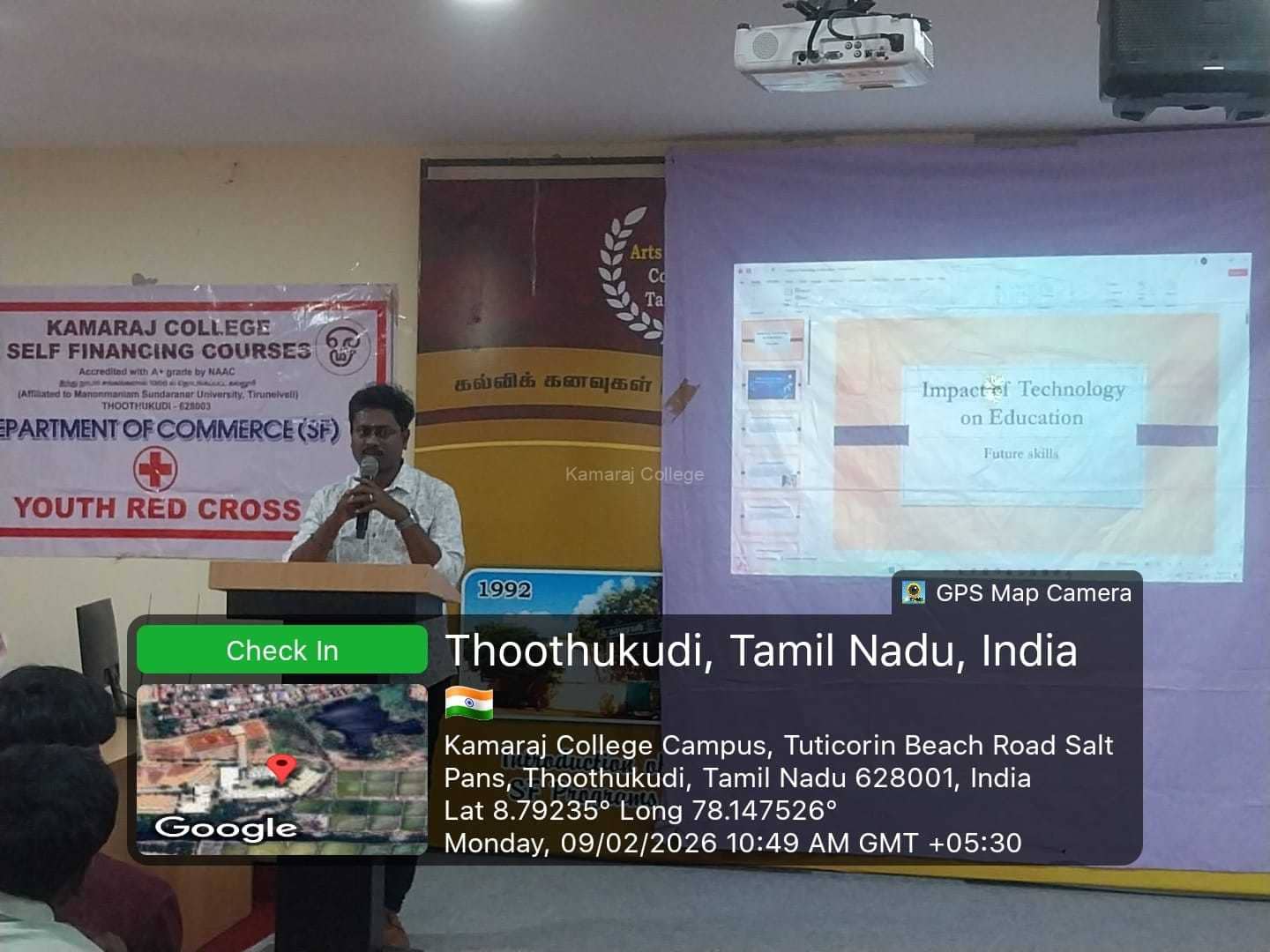
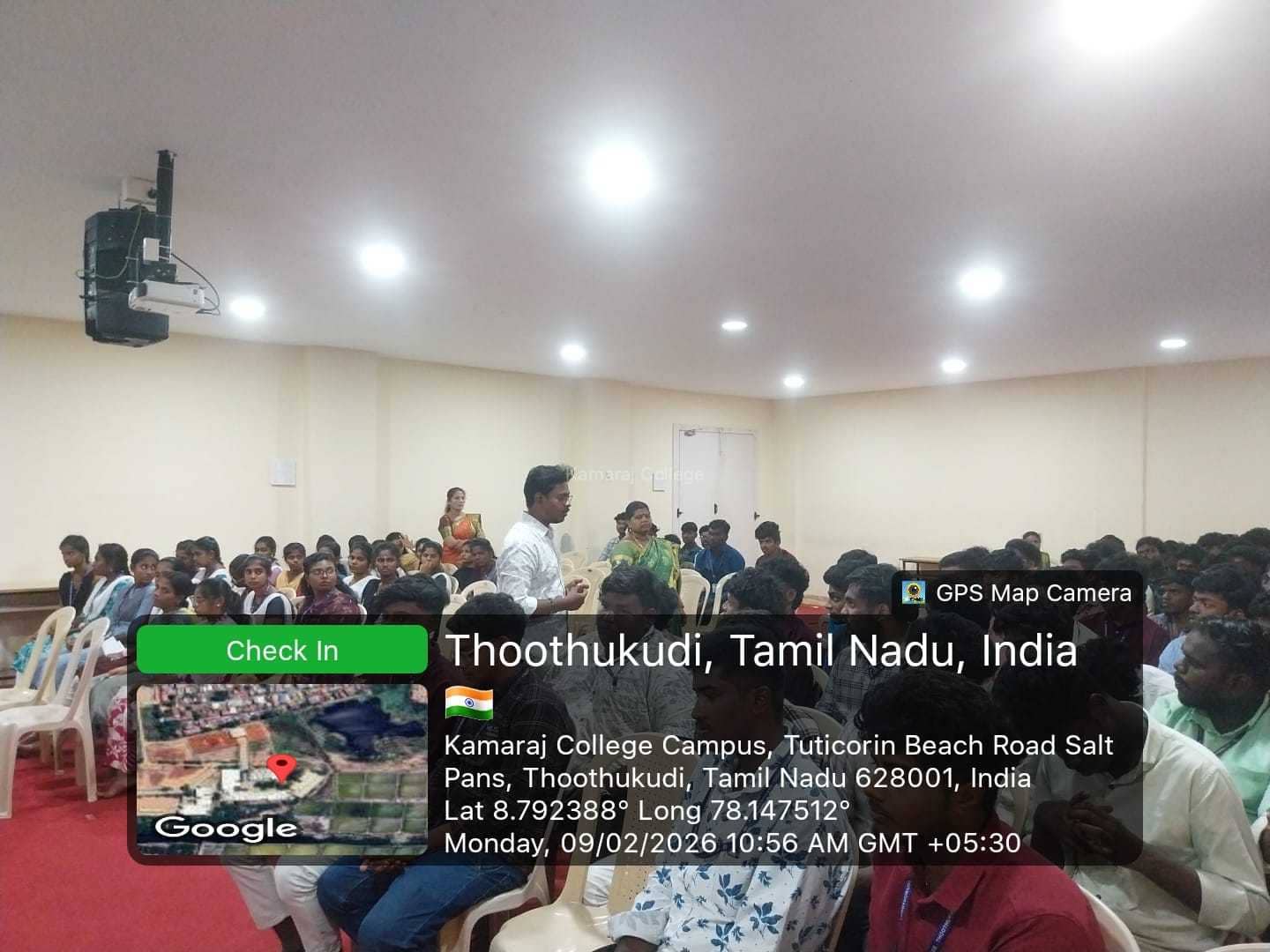
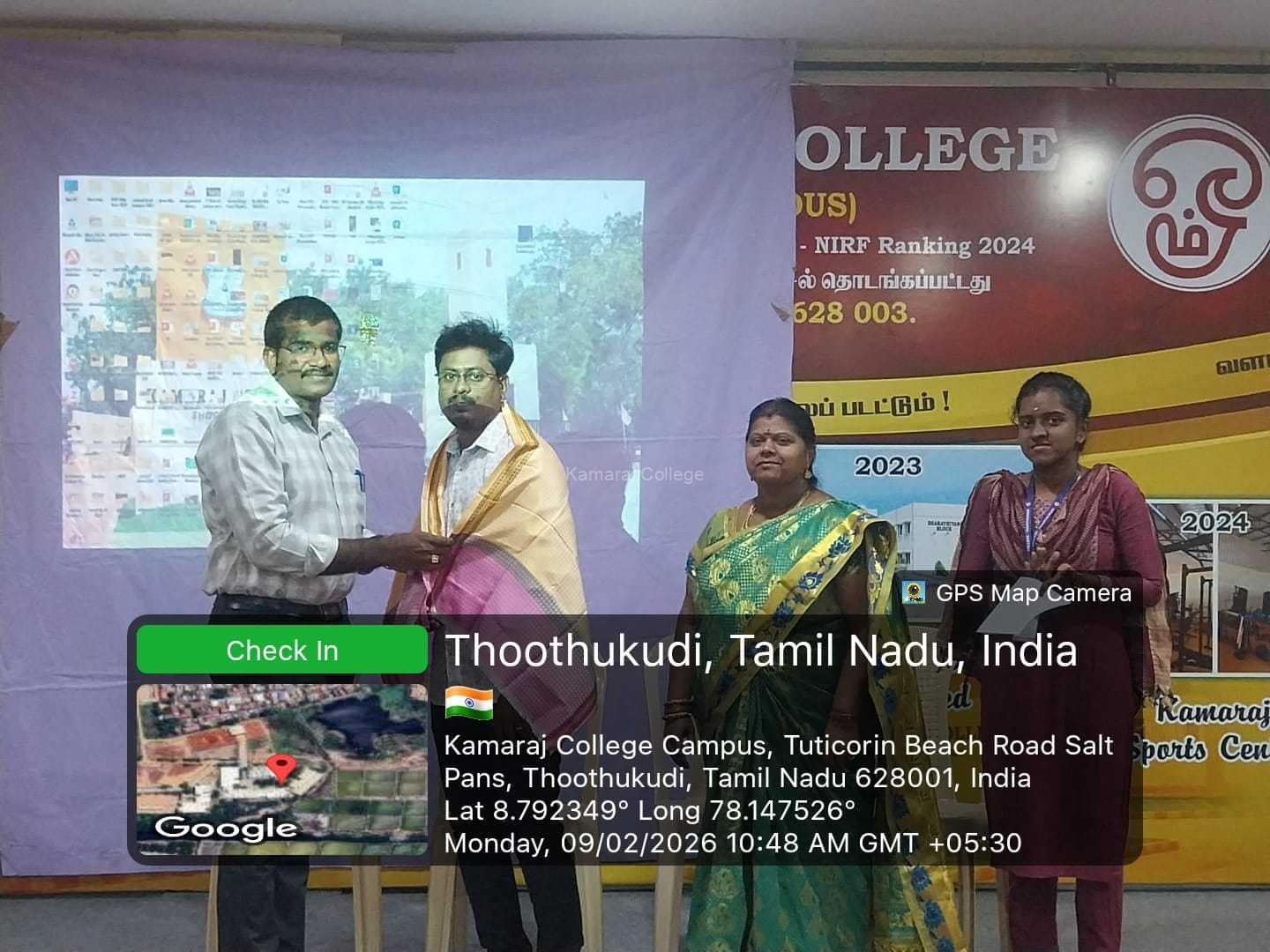
Technology in Education – Programme Overview
The Department of Commerce (Self Finance), Kamaraj College (Autonomous), Thoothukudi, organized a programme titled “Impact of Technology on Education & Future Skills” on 09 February 2026, from 10.00 a.m. to 12.00 p.m., at the Golden Jubilee Block.
The Technology in Education programme was conducted with the objective of creating awareness among students about emerging technological trends and equipping them with future-ready skills required in a rapidly evolving professional environment.
Objectives of the Technology in Education Programme
The primary objective of the Technology in Education programme was to help students understand how digital transformation influences academic learning and career development.
The key objectives included:
- Understanding contemporary technological trends
- Recognizing the impact of automation and digital platforms
- Encouraging continuous skill upgradation
- Developing innovation and critical thinking abilities
The programme aligned with the institution’s focus on outcome-based education and employability enhancement.
Inaugural Session and Welcome Address
The programme commenced with Tamil Thai Vazhthu, invoking unity and positivity. The welcome address was delivered by Ms. Aswini Karthiga D., II M.Com, who warmly welcomed the dignitaries, faculty members, and students.
In her address, she highlighted the transformative influence of technology in education and emphasized the importance of adaptability in a competitive job market.
Chief Guest and Presidential Address
The Chief Guest for the Technology in Education programme was Mr. S. Mariappan, Mechanical Design Engineer, Former Manager, and Entrepreneur, Thoothukudi. He was honoured during the inaugural session in recognition of his professional achievements and academic contributions.
In his Presidential Address, Mr. S. Mariappan elaborated on how technological advancements such as:
- Automation
- Digital learning platforms
- Artificial intelligence tools
- Data-driven decision making
are reshaping education systems and employment landscapes.
He encouraged students to cultivate practical skills, problem-solving capabilities, and entrepreneurial thinking to remain relevant in the evolving professional ecosystem.
HOD’s Address on Digital Adaptability
The Head of the Department, Dr. V. Gopalakrishnan, delivered the HOD’s address. He stressed the importance of adapting to digital transformation and nurturing innovation among students.
He emphasized that success in the modern workforce requires:
- Technological proficiency
- Communication skills
- Analytical thinking
- Continuous learning
The address reinforced the need for a proactive approach toward skill development.
Student Participation and Learning Outcomes
The Technology in Education programme witnessed active participation from students. A total of 67 students benefited from the session.
The measurable learning outcomes included:
- Improved awareness of emerging technologies
- Understanding of industry expectations
- Enhanced motivation toward skill development
- Clarity on career planning in a digital economy
The interactive session provided practical insights and encouraged students to align their academic preparation with industry requirements.
Vote of Thanks and Conclusion
The vote of thanks was delivered by Ms. Maria Snowlin B., II B.Com A, who expressed gratitude to the management, the Chief Guest, faculty members, and students for their active support and participation.
The programme concluded with the National Anthem, marking a dignified and meaningful closure.
Institutional Commitment to Future Skills Development
Kamaraj College (Autonomous), Thoothukudi consistently organizes programmes focusing on future skills and digital transformation to prepare students for global challenges.
Internal Link:
Kamaraj College (Autonomous), Thoothukudi
The Technology in Education initiative reflects the institution’s commitment to nurturing competent and industry-ready graduates.
Relevance of Technology in Modern Education
Technology has become an integral part of academic and professional environments. Institutions must continuously adapt to emerging trends to remain competitive.
Further information regarding digital initiatives and technological advancement can be accessed through:
External Links:
Digital India Programme
Ministry of Electronics and Information Technology
Overall Impact of the Technology in Education Programme
The Technology in Education programme was highly enriching and provided students with valuable industry insights. It encouraged them to embrace digital transformation and focus on acquiring future-ready competencies.
Conclusion
The Technology in Education programme conducted on 09 February 2026 proved to be a meaningful academic initiative. By integrating industry perspectives with academic discourse, the session strengthened students’ understanding of technological evolution and its impact on education and careers.
The event successfully empowered students to develop future skills necessary for personal growth and professional success.