
5 Powerful AI Tools for Research at Kamaraj College


AI Tools for Research Session at Kamaraj College
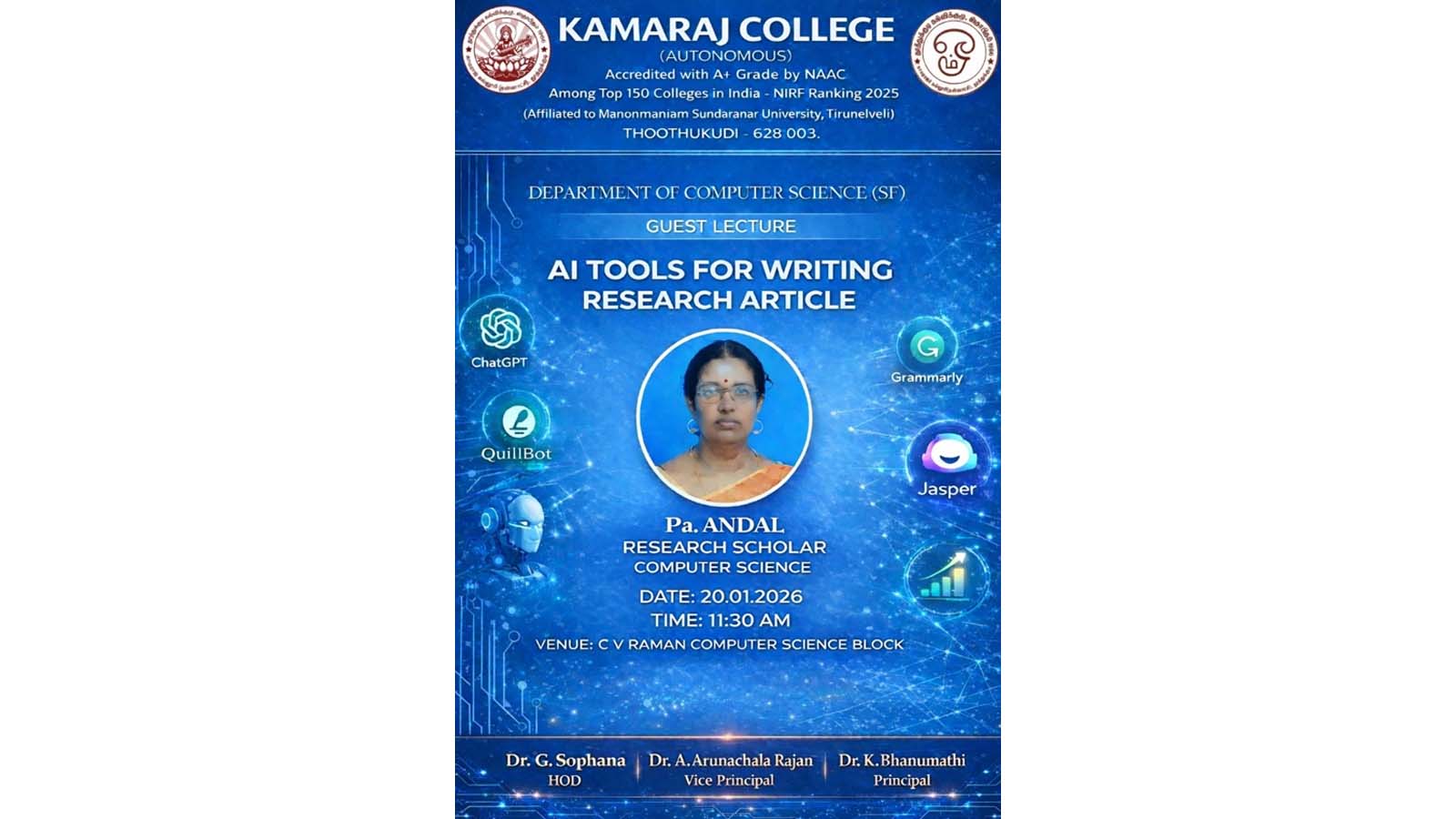
The Department of Computer Science (SF), Kamaraj College (Autonomous), Thoothukudi, organized a highly informative guest lecture on AI Tools for Research on 20th January 2026 from 11.00 a.m. to 01.00 p.m. at the C. V. Raman Computer Science Block. The programme aimed to introduce postgraduate students and faculty members to the growing role of artificial intelligence in academic research writing.
AI Tools for Research session provided practical insights into how modern researchers can use AI tools to enhance the quality, efficiency, and accuracy of research articles. It also emphasized ethical usage, originality, and responsible academic practices.
Inauguration and Welcome
The resource person was formally welcomed and honoured by the Head of the Department, Dr. G. Sophana, who highlighted the importance of adapting to technological advancements in academic research. He emphasized that mastering digital tools is no longer optional but essential for producing impactful scholarly work.
The dignitaries expressed their appreciation for the initiative and encouraged students to make the best use of the learning opportunity.
About the Resource Person
AI Tools for Research session was led by Mrs. Pa. Andal, a research scholar from the Department of Computer Science, Madurai Kamaraj University. With strong academic experience and research expertise, she brought valuable real-world insights into the effective use of AI tools for academic writing and research documentation.
Her approachable teaching style and practical demonstrations made the session both informative and engaging for the participants.
Key Themes of the AI Tools for Research Session
The lecture focused on how artificial intelligence can assist researchers throughout the research writing process. The key areas covered included:
- Literature review assistance using AI-powered research tools
- Grammar, clarity, and academic tone improvement
- Reference management and citation formatting
- Plagiarism detection and originality enhancement
- Research paper structuring and formatting
Participants were introduced to several AI-based platforms that support researchers in drafting, editing, and refining academic content while maintaining scholarly integrity.
Hands-on Demonstration and Practical Learning
A major highlight of the programme was the hands-on demonstration of popular AI tools used in research writing. Mrs. Andal explained how these tools could be used responsibly to improve productivity without compromising academic honesty.
Students learned how to:
- Draft abstracts and introductions using structured prompts
- Refine language and coherence in technical documents
- Generate outlines for research papers and dissertations
- Check citations and references for accuracy
- Maintain originality through proper paraphrasing techniques
The interactive nature of the AI Tools for Research session encouraged students to ask questions and clarify doubts, making the learning experience more effective.
Student Participation and Engagement
Postgraduate students and faculty members actively participated in the programme on AI Tools for Research. The session sparked curiosity and enthusiasm among students, many of whom expressed interest in exploring AI tools further for their research projects and publications.
Students shared that the session helped them:
- Understand ethical AI usage in research
- Improve academic writing confidence
- Save time during research documentation
- Enhance clarity and structure in papers
- Prepare for journal submissions
The programme also promoted a culture of innovation and continuous learning within the department.
Academic Impact and Institutional Vision
This initiative reflects the department’s commitment to integrating emerging technologies into academic practice. By organizing sessions on AI Tools for Research, the institution aims to equip students with future-ready skills that align with global academic standards.
The Department of Computer Science (SF) continues to focus on:
- Skill-based and technology-driven education
- Research excellence and publication support
- Industry and academic collaboration
- Promoting innovation and digital literacy
Such programmes strengthen the institution’s reputation as a center for academic excellence and research-oriented learning.
Learning Resources and References
Internal Links:
External Links:
Conclusion
The guest lecture on AI Tools for Research held on 20th January 2026 at Kamaraj College (Autonomous), Thoothukudi, proved to be a valuable academic initiative. The session successfully equipped students and faculty with practical knowledge on using AI responsibly for writing high-quality research articles.
Through expert guidance, interactive demonstrations, and thoughtful discussions, the programme inspired participants to explore new dimensions in research writing while maintaining ethical standards. The event marked another step forward in the institution’s mission to foster innovation, research excellence, and academic growth.