
5 Positive Outcomes of Commerce Industrial Visit at KDHP


Commerce Industrial Visit
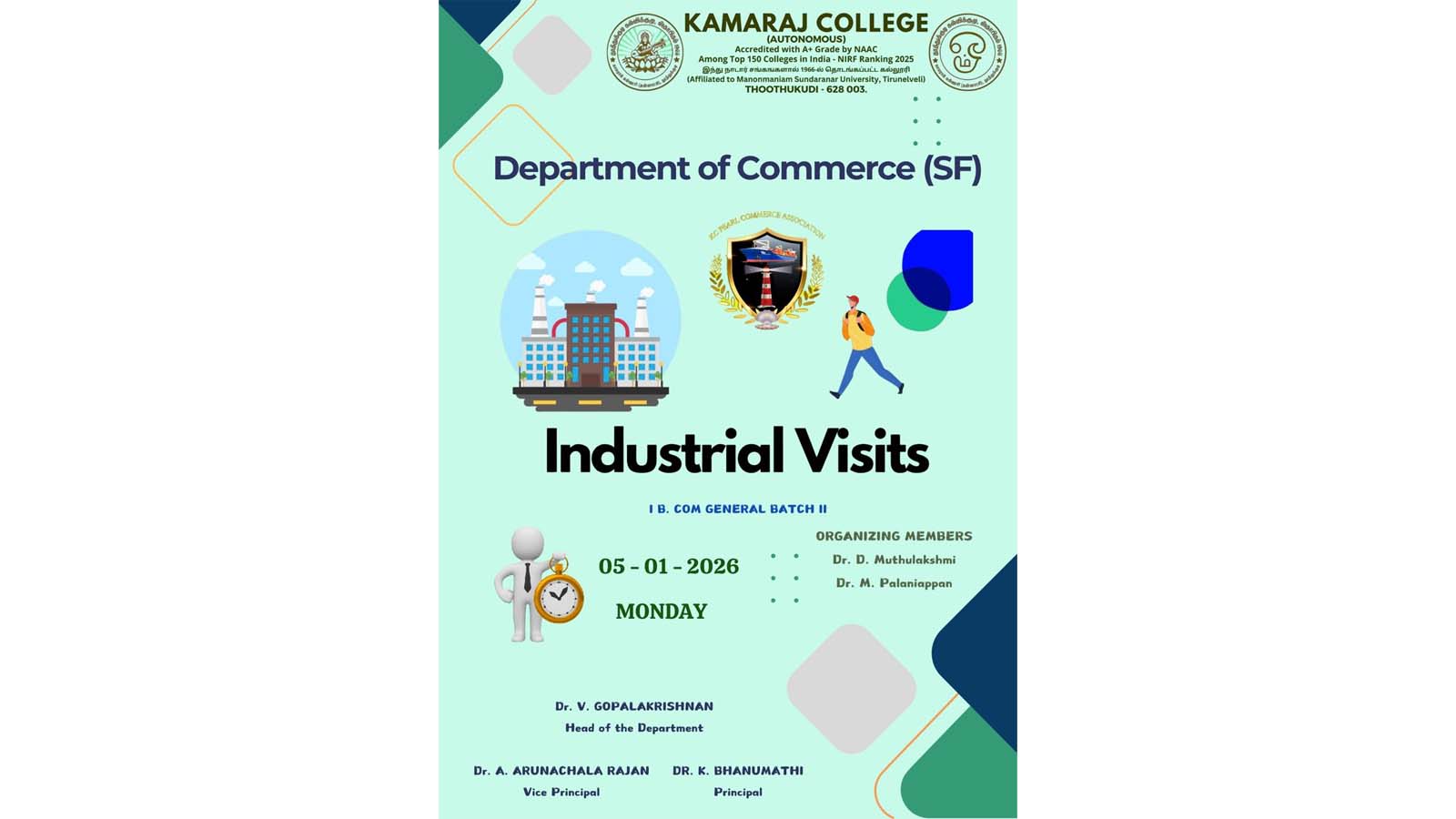
The Department of Commerce Self Financing, Kamaraj College Autonomous, Thoothukudi, organized a purposeful one-day Commerce Industrial Visit to Kannan Devan Hills Plantations Company Private Limited, Mattupetty, Idukki District, Kerala, on 05 January 2026 from 10.00 a.m. to 02.00 p.m.. The visit was planned as part of experiential learning to expose students to real-world industrial and corporate practices beyond the classroom.
A total of 46 students from the Corporate Secretaryship programme, accompanied by two faculty members, actively participated in the visit. The programme offered students an opportunity to understand industrial operations, organizational management, and sustainable business practices through direct observation and interaction.
Objectives of the Commerce Industrial Visit
The primary goal of the Commerce Industrial Visit was to bridge the gap between academic learning and industry exposure.
- To provide hands-on industrial experience
- To understand tea plantation and processing operations
- To observe participatory management practices
- To gain insights into branding and retail strategies
- To understand sustainability and ethical business models
Profile of Kannan Devan Hills Plantations
Kannan Devan Hills Plantations Company Private Limited, popularly known as KDHP, is a privately owned Indian tea plantation and consumer goods company headquartered in the Idukki District of Kerala. The company was established in 2005 following the exit of Tata Tea Limited from its plantation operations in Munnar.
KDHP markets its products under the well-known Ripple Tea brand. The product portfolio includes a wide range of teas, essential oils, aromatic products, incense sticks, and coffee, catering to both domestic and international markets.
Induction Session and Orientation
The Commerce Industrial Visit commenced with an interactive induction session conducted by company officials. During this session, students were introduced to the organizational structure, functional departments, and operational workflow of KDHP.
The management clearly explained the stages of tea processing, including leaf collection, withering, fermentation, drying, grading, packaging, and distribution. Special emphasis was placed on the company’s strict hygiene standards, safety practices, and quality control mechanisms followed within the factory premises.
Historical Background and Growth
KDHP carries a rich legacy spanning over 136 years, dating back to the British colonial era. On 1 April 2005, the company formally succeeded Tata Tea Limited after a major restructuring exercise during the tea industry crisis of 2004–2005.
As part of this transition, plantation assets were transferred to KDHP under a participatory ownership model, making it the largest employee-owned tea plantation company in the world. This transformation marked a significant milestone in Indian plantation history.
Participatory Management System
One of the most striking aspects of the Commerce Industrial Visit was KDHP’s participatory management system.
- Nearly 60 percent of the company’s share capital is owned by employees
- Almost the entire workforce are shareholders
- Worker and staff representatives serve on the Board of Directors
- Best-performing employees are nominated to the Board annually
This unique structure promotes transparency, accountability, and a strong sense of ownership among employees. The system was conceptualized by the company’s Founding Managing Director, Late Mr. T. V. Alexander.
Scale of Operations
KDHP employs over 12,000 personnel across 12 functional departments and manages plantations covering 23,783 hectares in the High Ranges of the Idukki District. The company plays a vital role in Kerala’s tea sector, accounting for 24.3 percent of the total tea cultivation area and contributing 31.5 percent of the state’s total tea production.
Branding, Retail, and Digital Expansion
Although KDHP initially focused on B2B operations, it entered the retail market in 2010 with the launch of the Ripple Tea brand. The company strengthened its digital presence by launching an e-commerce platform in 2015, followed by an independent online portal in 2020.
KDHP expanded into branded retail through Chai Bazar outlets in Munnar in 2018, which were later extended through a franchise model with an outlet in Kumily, Kerala.
Environmental Responsibility
The company’s commitment to sustainability was clearly highlighted during the visit.
- Rainforest Alliance Certification for sustainable tea cultivation
- USDA Organic certification for select plantation areas
- Fairtrade certification since 2009
- Trustea certification for all estates and factories
These initiatives reflect KDHP’s dedication to ethical sourcing and environmental conservation.
Factory Visit and Student Experience
After the induction session, students were provided with lunch and refreshments. They were then permitted to enter the factory premises to observe the tea manufacturing process firsthand. This practical exposure helped students understand production workflows, quality standards, and industrial discipline.
Conclusion
The Commerce Industrial Visit to Kannan Devan Hills Plantations proved to be a highly enriching academic experience. It enhanced students’ practical knowledge, strengthened their understanding of corporate operations, and exposed them to sustainable business models. The visit successfully complemented classroom learning and left a lasting impact on the students’ professional outlook.